


Advocacy in Action
Dairy order
California Farm Bureau will join Dairy Cares and other agricultural organizations to make public comments on the California State Water Resources Control Board’s updated dairy order to address waste discharge in the Central Valley.
The update came after two months of review and meetings with stakeholders. The order was set to be heard and voted on at the board meeting this week.
Waters of the U.S.
The American Farm Bureau Federation is backing proposed changes to the federal definition of “waters of the United States,” or WOTUS, saying the revisions would provide clearer limits on which waters and private properties fall under federal regulation.
The U.S. Environmental Protection Agency and U.S. Army Corps of Engineers announced the supplemental proposal earlier this month, opening a 30-day public comment period following its publication in the Federal Register.
The proposal builds on a 2025 rulemaking aimed at revising the WOTUS definition after the U.S. Supreme Court’s 2023 decision in Sackett v. EPA. The new language would narrow the scope of waters subject to federal jurisdiction compared with the agencies’ earlier proposal.
Wolves, beef labeling
President Donald Trump signed an executive order Sept. 4 aimed at changing federal policies that affect ranchers, with a focus on wolf protections, compensation for livestock losses and how beef is labeled.
The order gives federal agencies 90 days to review rules that affect ranchers and recommend changes intended to improve their finances and access to markets. It also directs agencies to work toward lowering grocery prices for consumers.
One of the biggest changes could involve gray wolves and Mexican wolves.
The Interior Department has 90 days to determine whether the two types of wolves have recovered enough to be removed from federal protection under the Endangered Species Act. If the department finds that they have met the recovery standards, it is directed to begin the process of removing or reducing their federal protections.
The order also calls for recommendations to Congress on delisting the wolves and directs the administration to work with states on removing them from state lists of protected species and changing rules governing when wolves can be killed to protect livestock.
The order does not immediately remove the wolves from federal protection. Instead, it starts a review that could lead to those changes.
In addition, the order calls for the Agriculture and Interior departments to review how ranchers’ claims for livestock losses caused by predators are investigated and paid.
The administration said the goal is to make those claims easier to evaluate and process. The agencies are specifically told to consider evidence beyond the presence of bleeding beneath an animal’s skin when determining whether a wolf attack caused a livestock death.
The order also directs the Interior Department to consider changing the rules governing when wolves can be killed.
The goal is to give federal officials more flexibility to respond to immediate threats to people or livestock, including situations in which a particular wolf can be identified as the source of the problem.
The order also puts country-of-origin labeling for beef back on the table. Within 90 days, the Agriculture Department is directed to review whether the federal government has the authority to require beef sold in the United States to carry mandatory country-of-origin labels. The department must also study the economic effects of such a requirement.
After that review, the Agriculture Department could propose new regulations or ask Congress to change the law to require the labels. Trump’s order also tells federal agencies to make sure the changes they pursue benefit consumers through lower food prices when possible.
Trade dispute
Canada imposed retaliatory tariffs last week on roughly $20 billion of U.S. goods, including a range of agricultural and manufactured products, following the U.S. decision to impose 50% tariffs on Canadian goods in several sectors.
In response, the Trump administration announced plans to ban imports of certain Canadian products, including alcoholic beverages, whey and dairy products, and other commodities.
The escalation follows a breakdown in negotiations between the countries over the U.S.-Mexico-Canada Agreement and other trade challenges, with both sides seemingly growing further apart as the row deepens.


In this edition…
• View full issue
• Vineyard workers feel wine industry pain
• El Niño increases chances of winter storms and floods
• Everyone wins when farms invest in their employees
• New DWR director discusses water resiliency plans
• Irrigation can't shield tomatoes from extreme heat
• Owl study assesses rat management in nut orchards
• What is the best strategy to manage Botryosphaeria?
• Wage-and-hour questions from the field
• Vineyard adaptation to heat an economic balancing act
• Advocacy in Action: Dairy, water, wolves and trade
• Are irrigation jets right for your orchard or vineyard?
• Training aims at preventing heat illness in farmworkers

Labor
California Farm Bureau has joined more than 450 agricultural organizations in a letter urging Congress to support H.R. 9535, the Securing Agriculture’s Workforce Act.
SAWA would streamline the application and renewal processes of the H-2A temporary agricultural workers program, reduce program costs and codify recent reforms to the Adverse Effect Wage Rate, the minimum wage that agricultural employers must pay H-2A temporary foreign guestworkers and domestic workers in corresponding employment. It would also expand H-2A eligibility to dairy and other year-round agricultural operations that cannot currently use the seasonal program.
In addition, the legislation would allow experienced farmworkers who lack legal status to obtain temporary legal work authorization after completing required vetting.
To help Farm Bureau strengthen its advocacy for workforce reform, identify producers who could benefit from SAWA and share stories with lawmakers, take the H-2A survey at www.cfbf.com/ag-advocacy/all-issues/securing-agricultures-workforce-act.
Meanwhile, Farm Bureau joined the Southeastern Legal Foundation, National Council of Agricultural Employers and other farm groups last month in support of Sun Valley Orchards, a New Jersey farm, in filing a “friend of the court” brief before the U.S. Supreme Court.
Congress allowed the secretary of labor to take action to ensure employers follow the requirements of the H-2A program. The law says the secretary may impose appropriate penalties and ask for court orders requiring compliance. But it does not say that the U.S. Department of Labor may create its own internal court system, decide cases inside the agency and issue final orders without first proving its case in a regular federal court.
In the Sun Valley case, the Labor Department did just that and hit the farm with more than $556,000 in penalties and back wages. The amicus brief stresses that Congress did not give the Labor Department the power to make a final, binding decision through the internal process. Rather, the department should use the existing judicial process. The U.S. Supreme Court will hold oral argument Nov. 10.
Fire equipment
Assembly Bill 2075 by Assemblymember Steve Bennett, D-Ventura, would update fire-prevention equipment requirements for internal combustion engines and motorized equipment operating on forest brush- and grass-covered lands.
The bill would generally require operators to keep a fully equipped backpack pump-type fire extinguisher and enough round-point shovels for each person on-site within 25 feet of the equipment. Motorized vehicles used for land work would instead be required to carry one 46-inch round-point shovel and one fire extinguisher.
Of importance to California farmers is that AB 2075 directs the state Board of Forestry and Fire Protection to develop separate, scaled requirements for rangeland operations based on factors such as the operation’s type and size, terrain, vegetation and fuel load. Recent amendments also require the board to consult with the Range Management Advisory Committee. This language was added after California Farm Bureau and the California Cattlemen’s Association raised concerns about applying a one-size-fits-all standard to ranching operations.
AB 2075 passed the Assembly 73-0 and the Senate Natural Resources and Water Committee 6-0. After it was amended, the bill was returned for a second reading and awaits a final Senate floor vote. If approved, it must return to the Assembly for concurrence before advancing to the governor.
Climate funds
Subcommittee 2 of the Senate Budget and Fiscal Review Committee held a hearing to review the state budget and its impacts on natural resources, environmental protection and energy.
The June budget package allocated $1.25 billion from the Greenhouse Gas Reduction Fund, or GGRF, for wildfire mitigation and $115 million for zero-emission vehicle incentive programs. Several GGRF allocations were deferred, including $250 million that could be redirected to other programs supporting environmental goals.
The hearing included discussion of how remaining GGRF dollars could be used, including for water projects, agricultural grant programs and transportation projects.
California Farm Bureau provided public comments urging legislators to prioritize agricultural programs when determining how to allocate the remaining GGRF funds.
Gualala River
California Farm Bureau’s legal team is preparing a comment letter opposing the North Coast Regional Water Quality Control Board’s draft water code section 13267 information order.
Released July 13, the draft order would require 26 landowners owning 1,000 or more acres within the Gualala River watershed in Sonoma and Mendocino counties to inventory, assess and prioritize rural roads on their properties.
The draft order is based largely on research conducted some 25 years ago and would impose significant costs on affected landowners due to the extensive level of detail required for the assessment of road networks across their properties.
The estimated cost of compliance ranges from about $3,800 to $4,800 per mile of road assessed. Water board staff has indicated there is a strong likelihood similar informational orders will be expanded to other watersheds throughout the North Coast region.
Farm Bureau’s comment letter opposes the draft order as written and asks for revisions to ensure that any requirements are supported by current science and appropriately tailored to achieve the board’s objectives. Farm Bureau also seeks support from North Coast region county Farm Bureaus through sign-ons. Written comments on the draft order are due Aug. 21.
Endangered species
California Farm Bureau and a coalition of western water-supply and farming groups filed a “friend of the court” brief this month urging the full U.S. 9th Circuit Court of Appeals to rehear Yurok Tribe v. U.S. Bureau of Reclamation.
The case turns on when Section 7 of the federal Endangered Species Act requires a federal agency to modify the operation of a water project to protect a listed species.
The issue has significant implications for western farms, water districts, communities and tribes that rely on federally managed water projects, and it continues to arise during periods of water scarcity and conflicts involving ESA compliance. The amicus brief asks that the 9th Circuit hear the case on the bench and restore one uniform rule.
Meanwhile, the California Fish and Game Commission unanimously determined at its meeting last week that listing the northern population of the western spadefoot as threatened and the southern population as endangered under the California Endangered Species Act may be warranted.
The western spadefoot is an amphibian found in wetland and upland habitats throughout the Central Valley, Sierra Nevada foothills and coastal California south of the San Francisco Bay Area. The listing petition identifies habitat loss, fragmentation, disease, invasive species and climate change as primary threats.
The U.S. Fish and Wildlife Service proposed listing both populations as threatened under the federal Endangered Species Act in 2023 but has not issued a final decision.
California Farm Bureau in 2024 supported proposed federal exceptions for routine livestock ranching, certain grazing used for habitat management and wildfire fuel-reduction activities.
The western spadefoot will receive full protections under state law during its candidacy. The California Department of Fish and Wildlife will conduct a 12-month status review before the commission votes on whether to formally list the two populations.
State law provides an exception for incidental take resulting from otherwise lawful, routine and ongoing agricultural activities, provided the take is reported to CDFW within 10 days.
Dairy order
California Farm Bureau’s legal team signed onto a coalition letter from Dairy Cares for written comments on the revised state dairy order for the Central Valley.
The revised draft order, which the California State Water Resources Control Board released in June, is designed to protect groundwater from nitrate contamination caused by dairy manure.
The order introduces stricter nitrogen limits, requires dairies to provide drinking water for nitrate-affected wells, regulates manure application to cropland and mandates tighter nitrogen monitoring to ensure dairy manure retention ponds do not leach at rates that impact groundwater. The water board will meet Sept. 15 to consider adopting it.
Lily bulbs
California Farm Bureau submitted comments this past spring on the North Coast Regional Water Quality Control Board’s draft waste discharge requirements for commercial lily bulb operations in the Smith River Plain of Del Norte County.
Farm Bureau’s comments focused on the draft’s compliance with the water code and the California Environmental Quality Act.
The North Coast water board earlier this month certified the final environmental impact report and adopted the proposed lily bulb order.
More information can be found at www.waterboards.ca.gov/northcoast/water_issues/programs/agricultural_lands/lily/.

In this edition…
• Expected almond crop yield slightly smaller this year
• Cyclospora fallout hits California farmers
• Memory loss on the farm is more than a health issue
• State regulator: 'We should fight to keep our farms'
• California startup advances in Ag Innovation Challenge
• Almond hulls being tested for use as food ingredient
• Wolf reports show continued livestock losses, more packs
• Nonprofit program aims to bring more rice to delta
• Mothballing offers middle ground in wine downturn
• Dial 811 first to protect your land, workers and neighbors
• Could coastal citrus mites destroy your crop in weeks?
• Zinc, boron, manganese and their role in nut production
• More funds devoted to stop sharpshooter
• Advocacy in Action: Labor, fire equipment, climate funds, Gualala River, endangered species, dairy order, lily bulbs
• Meeting to address risk in uncertain times
New World screwworm
The U.S. Department of Agriculture said last week that it plans to invest $25 million in a sterile fly facility in Douglas, Arizona, to help combat the threat of New World screwworm, or NWS.
The announcement came after USDA’s decision last month to begin a phased reopening of southern ports for livestock imports.
Douglas has historically served as the primary entry point into Arizona and the western U.S. for livestock arriving from Sonora, Mexico. Sonora remains free of any reported NWS cases and is expected to maintain high standards for livestock moving through the state. The new sterile fly facility is intended to provide an additional layer of protection as livestock imports resume.
All livestock entering through Douglas will also be subject to inspection and treatment to reduce the risk of NWS spreading from there. There have been 42 total NWS cases detected in the United States—nearly all in Texas—since the first detection on June 3.
The border has been closed to livestock imports since last year, but several industry groups have expressed concerns that a prolonged closure could have long-term impacts on U.S. livestock processing and production. The phased reopening is scheduled to begin Aug. 24 but may be paused if additional risks are identified before or after reopening.
Food labeling
California Farm Bureau joined more than 250 organizations and businesses last month in a letter urging Congress to establish a uniform federal standard for food ingredient labeling. The coalition argues that the current patchwork of state and local labeling requirements creates unnecessary compliance challenges for food producers and manufacturers.
The letter calls on Congress to establish consistent national labeling requirements, reaffirm the U.S. Food and Drug Administration’s role as the primary authority on food and ingredient safety and modernize the framework for the “generally recognized as safe” designation. The issue has received increased attention in recent years as states and local governments have pursued their own food ingredient labeling and regulatory requirements.
Wildfire and forest health
The California Wildfire and Forest Resilience Task Force has released its draft Wildfire and Landscape Resilience Action Plan, outlining strategies to reduce wildfire risk and improve forest health across California through 2031.
California Farm Bureau submitted comments supporting the plan’s emphasis on expanding timber harvesting, prescribed grazing and biomass markets while recommending several improvements.
Farm Bureau urged the task force to ensure the plan’s treatment acreage goals fully recognize the role of private timberlands, establish firm timelines for streamlining overlapping timber harvest plan reviews, recognize the Forest Practice Act as sufficient environmental review for timber operations and ensure private landowners have direct access to new block grant funding programs.
The public comment period closes Aug. 7. The draft plan is available for review at https://actionplan2026.wildfiretaskforce.org/.
Conservation land management
California Farm Bureau is closely tracking Assembly Bill 53 by James Ramos, D-San Bernadino. The bill affects how conservation lands can be managed and transferred involving federally recognized tribes. Del Norte County Farm Bureau has been closely engaged on the issue and raising awareness of its potential impacts.
AB 53 started as an unrelated military tax exemption bill. In June, it was gutted and amended in the Senate into a new subject matter entirely—tribal eligibility for state wildlife conservation programs and management of conservation lands. As amended, the bill added tribes as eligible recipients of state grants and loans for riparian and wetland habitat programs. The bill also added an exemption allowing conservation lands to be sold or transferred to a tribe outside the standard restrictions that normally govern disposal of conservation lands.
California Farm Bureau sent a letter of concern on June 23 to the Senate Natural Resources and Water Committee. The organization’s concern is narrow but significant: The land-transfer exemption could allow conservation land under an active agricultural lease—including rice and cattle operations—to be transferred to a tribe with no requirement to honor the existing lease or compensate the lessee for unrecovered capital investment in the land, including levees, water delivery infrastructure and land preparation.
Farm Bureau raised the concern about the risk of a legal “taking” under the state’s just compensation clause and pointed to Assembly Bill 2356, which sought to transfer Tolowa Dunes State Park to the Tolowa Dee-ni’ Nation, as a precedent that Farm Bureau did not want repeated for leased farmland.
Amendments taken ahead of the July 2 Senate Natural Resources and Water Committee hearing addressed Farm Bureau’s concerns by removing the land-transfer exemption from the bill entirely. There is currently no mechanism in AB 53 for transferring leased agricultural land to a tribe. The amendments did add nonoperative language saying the Legislature intends to pursue future legislation to create “a faster public process” for the California Department of Fish and Wildlife to return qualifying lands to tribes.
The July 2 amendments resolved Farm Bureau’s immediate concern. But the new intent language suggests the underlying policy goal hasn’t disappeared as Ramos continues his efforts on the bill. At a minimum, the policy will likely resurface in a future bill. AB 53 is now in the Senate Appropriations Committee. Farm Bureau continues to monitor the bill and is engaging with the committee, which has the heaviest influence on what could still happen to the policies stated in AB 53.
Transmission line
California Farm Bureau and San Joaquin County Farm Bureau worked with Pacific Gas & Electric Co. to develop an agricultural communication plan that was adopted in July by the California Public Utilities Commission as part of PG&E’s northern San Joaquin transmission line.
In approving the transmission line, the CPUC considers the cost of the line, the route and the environmental impact report, which is developed under a separate track.
Landline service
AT&T is pursuing several regulatory actions to reduce or eliminate its obligation to provide traditional copper landline service. The efforts are particularly concerning for rural Californians who lack reliable cellular or internet service and depend on landlines for emergency communications, including access to 911.
The Federal Communications Commission has tentatively approved AT&T’s request to discontinue copper landline service for at least 184,000 California homes by July 2027. However, concerns remain about whether AT&T’s proposed replacement technology, known as AT&T Phone–Advanced, can provide dependable service in rural areas and during emergencies or power outages.
Procedures remain available to modify the FCC’s approval. California Farm Bureau joined coalition comments arguing that allowing AT&T to discontinue service is premature without stronger assurances that rural customers will retain access to reliable communications and emergency services.
Endangered species
The U.S. Fish and Wildlife Service in July finalized two additional revisions to regulations implementing the federal Endangered Species Act. The changes follow a recently finalized rule rescinding the regulatory definition of “harm” under the ESA.
One rule eliminates the option of automatically extending most protections for endangered species to newly listed threatened species, commonly known as the “blanket rule.” Instead, protections for threatened species will be determined on a species-by-species basis.
The second rule revises the process for designating critical habitat, allowing an area to be excluded when the benefits of exclusion outweigh the benefits of designation, provided the exclusion would not result in the species’ extinction.

In this edition…
- 'Rough' peach crop caps a bitter season
- Processed tomato growers hope for market recovery
- Young farmer reflects on her agricultural leadership
- State's farmers seek fairness in trade talks with Canada
- From the Fields: Rod Chamberlain, Riverside County mango and vegetable farmer
- From the Fields: Joe Valente, San Joaquin County winegrape grower
- From the Fields: Trevor Airola, Calaveras County rancher
- From the Fields: Ken Mitchell, Sacramento County squab producer
- Latest campaign positions walnuts as fresh produce
- Feds release Colorado River framework for next 10 years
- Tomato variety key to controlling fusarium stem rot
- Ruling: State can withhold quarantined dairy locations
- Study: Napa wine compliance costs near 18% of production
- Farm Bureau eyes screwworm, food labeling, wildfires, landlines and endangered species
- Planning for retirement: A guide for young farmers
- View full issue
Grazing regulations
California Farm Bureau submitted comments on the U.S. Bureau of Land Management’s proposed revisions to its federal grazing regulations. The proposal is intended to modernize grazing administration and improve land health management while reflecting current grazing practices and on-the-ground management needs.
Farm Bureau generally supports the proposed rule and its effort to update decades-old regulations. In its comments, Farm Bureau recommended several targeted improvements, including clarifying key definitions, refining programmatic language to reduce ambiguity, and ensuring the regulations can be implemented consistently and effectively.
Farm Bureau also emphasized the important role public lands grazing permittees play in producing food and fiber, maintaining healthy working landscapes and reducing wildfire risk through vegetation management. The organization encouraged BLM to adopt regulations that support sound land stewardship and the long-term viability of livestock grazing on public lands.
Wild horses
The U.S. Bureau of Land Management will launch a nationwide wild horse and burro private care placement blitz beginning July 23. Since the early 1970s, BLM has found homes for nearly 300,000 wild horses and burros through various adoption and sale programs. The blitz includes three in-person events. The one nearest to California is in Clovis, New Mexico. An online gallery was also launched for horses and burros that will be available at certain pickup locations, including in California. BLM estimated there were more than 85,000 wild horses and burros in the U.S. as of early 2026. More information can be found at www.blm.gov/whb.
Endangered Species Act
California Farm Bureau continues to monitor developments in a rule rescinding the regulatory definition of “harm” under the federal Endangered Species Act.
The U.S. Department of the Interior and the U.S. Department of Commerce have finalized the rule, marking a significant change in how the law may be applied to activities affecting species listed as threatened and endangered.
The ESA prohibits the unauthorized “take” of listed species, including actions that harass, harm, pursue, hunt, shoot, wound, kill, trap, capture or collect protected wildlife. While the statute itself does not define “harm,” federal regulations adopted more than 40 years ago interpreted the term to include significant habitat modification or degradation that indirectly injured or killed wildlife by impairing essential behaviors such as breeding, feeding or sheltering.
According to the Department of the Interior, rescinding the regulatory definition returns the ESA to its statutory text and original congressional intent by focusing enforcement on actual take of listed species rather than indirect habitat modification. Supporters, including California Farm Bureau and a broad coalition of agricultural, water and business organizations, believe the change will provide greater regulatory certainty for farmers, ranchers, water managers and landowners by reducing unnecessary permitting, consultation and mitigation requirements while maintaining the ESA’s core protections for threatened and endangered species.
The rule is also one of the first major ESA actions to rely on the U.S. Supreme Court’s 2024 decision in Loper Bright Enterprises v. Raimondo, which overturned the longstanding Chevron deference doctrine and limited the ability of federal agencies to broadly interpret statutes beyond their text. The final rule is scheduled to take effect Sept. 14 unless implementation is delayed through ongoing litigation. Several tribal and environmental organizations have filed legal challenges.
In this edition…
• Researchers study potential of agave crop
• Investigadores estudian el potencial del cultivo de agave
• California grazing sector threatened as goat herder wage soars to $240K
• California's pest prevention system needs an update
• Mechanical harvest research bolsters table olive prospects
• Overnight guests add key revenue stream for farms
• Advocacy in Action: Grazing, wild horses and the Endangered Species Act
• Smart sprayers slash farm labor and herbicide costs
• How will early blooms and light crop affect navel orangeworms?
• Finding her second act: Former dancer builds new life with U-pick raspberry farm
• Bountiful Finds: A curated collection of goods made by Farm Bureau members
• Now in season: You can grill just about anything
• The scenic route: Pit stops at California farms and ranches
• Grape expectations: Sweet flavor with healthy twist
• A life in motion: Avocado farmer helped revolutionize the modern skateboard
• Imagine this: Students tell stories about agriculture
• AI in agriculture: Balancing innovation and new risk
• Workforce training program seeks input from employers

New dairy order
The California State Water Resources Control Board last month released a revised draft order that would significantly change how Central Valley dairies are regulated for groundwater impacts in California.
After a review of the 2013 dairy general waste discharge requirements, state regulators concluded that most groundwater nitrogen impacts come from manure applied to cropland rather than lagoons. Estimates show about 94% of nitrogen loading is from land application of manure compared to roughly 4% from lagoons and 2% from production areas. As a result, a revised dairy order has been drafted to update management practices, manure application rates and whole-farm nitrogen balance.
To support this shift, dairies would be required to submit additional operational data, including herd size, feed and milk production, fertilizer use, crop yields, manure applications and irrigation water. Regulators would use this information to calculate a whole-farm nitrogen balance to track nitrogen flow through each operation and potential groundwater impacts. One of the most significant concerns in the proposal involves the attempt to categorize existing dairies and new dairies. Farmers who consolidate dairies could be treated as a “new dairy,” potentially triggering stricter requirements and shorter compliance timelines.
The proposal also introduces new lagoon-related data requirements. Dairies would be required to estimate the depth of the lowest point of each existing manure retention pond and explain how that estimate was determined. This information would need to be submitted to the Central Valley Water Board within six months of notice. In addition, many dairies would be required to conduct seepage testing of lagoons every three years, with results certified by a licensed engineer or geologist. No dedicated funding is included to help offset compliance costs.
The new draft order shifts toward more intensive monitoring, reporting and groundwater risk evaluation across dairy operations. Written comments are due by noon on July 30. The state water board will meet on Sept. 15 to consider adopting the order.
Grizzly bear reintroduction
 California Farm Bureau continues to oppose Senate Bill 1305, the California Grizzly Recovery Assessment Act, by state Sen. Laura Richardson, D-Inglewood. The bill passed the Assembly Water, Parks and Wildlife Committee last week and now heads to the Assembly Appropriations Committee, where it is expected to be heard in August.
The measure would require the California Department of Fish and Wildlife to develop a roadmap evaluating whether reintroducing grizzly bears to California would be feasible and advisable. During the committee hearing, Assemblymembers Juan Alanis, R-Modesto; Mark Gonzalez, R-Indio; and Heather Hadwick, R-Redding, raised concerns about the proposal, citing California’s ongoing struggles responding to conflicts with gray wolves and other apex predators, public safety concerns, and CDFW’s existing funding and staffing challenges.
Farm Bureau is working alongside the California Cattlemen’s Association, Rural County Representatives of California and California State Association of Counties to oppose the bill.
H-2A reform
California Farm Bureau joined nearly 300 agricultural organizations in supporting the introduction of the Securing Agriculture’s Workforce Act of 2026, bipartisan legislation to modernize and improve the H-2A agricultural guest worker program.
House Agriculture Committee Chairman GT Thompson, R-Pa., introduced H.R. 9535 last week.
The bill would make broad changes to the H-2A program by codifying recent reforms to the Adverse Effect Wage Rate, the minimum hourly wage that agricultural employers must pay H-2A guest workers and domestic workers in corresponding employment.
The measure also expands H-2A eligibility to year-round agricultural operations such as dairy farms and creates a process for experienced agricultural workers already in the United States to earn legal status while continuing to work in agriculture.
The legislation includes several provisions intended to streamline the H-2A program and reduce costs for agricultural employers.
Thompson unveiled the bill during a press conference alongside lawmakers and American Farm Bureau Federation President Zippy Duvall. The legislation was introduced with bipartisan support, including from four Democratic cosponsors.
Court victory
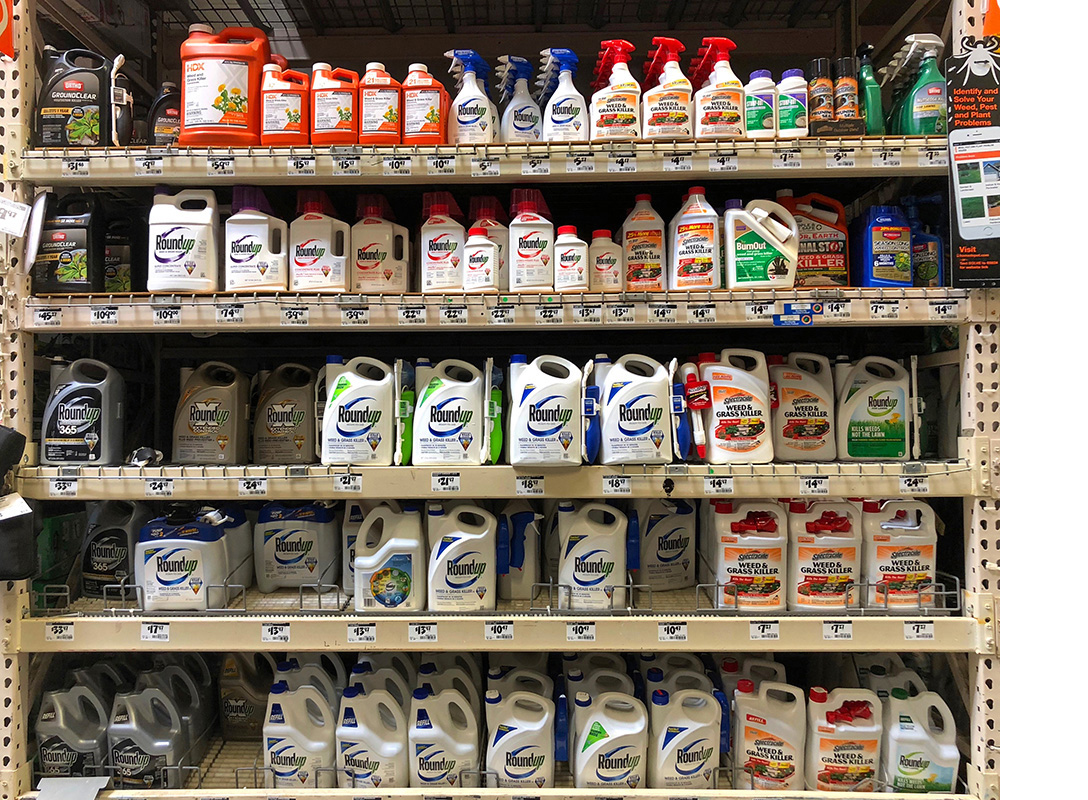 The U.S. Supreme Court issued its opinion last month in Monsanto Co. v. John L. Durnell. California Farm Bureau, along with 12 other state Farm Bureaus, submitted in March an amicus brief in the case, telling the court that the Federal Insecticide, Fungicide, and Rodenticide Act prevents states from imposing additional or different labeling requirements on pesticides.
In its decision, the nation’s highest court agreed with Farm Bureau’s position and disagreed with the decision by the Missouri Court of Appeals. The Supreme Court’s opinion affirms that federal law regulating the sale and labeling of pesticide products bars failure-to-warn lawsuits in state courts.

In this edition…
• Mussels plague farms and water districts
• California awards $2 million to curb attacks by wolves
• To protect groundwater, policies need reality check
• Early crop boosts prospects for California pear growers
• From the Fields: Jim Durst, Yolo County farmer
• From the Fields: By Jim Rickert, Shasta County rancher and farmer
• From the Fields: Mark Hall, Kern County table grape grower
• From the Fields: Ian Garrone, Monterey County mushroom farmer
• Growers look to grafted watermelons to battle pests
• It's not too soon to prepare for screwworm response
• Advocacy in Action: New dairy order, grizzly bear reintroduction, H-2A reform and a Supreme Court victory
• Supplies of dairy heifers expected to recover in 2027
New World screwworm
The U.S. Department of Agriculture has confirmed 12 cases of New World screwworm, or NWS, within the United States as of June 15. Confirmed detections include eight cattle cases, two goat herds and one sheep flock in Texas, and a dog in southeastern New Mexico. USDA, along with state animal health officials, continues surveillance, detection and mitigation efforts to limit further spread.
The risk to California remains low. However, producers should remain informed and vigilant. To date, the Mexican states closest to California and Arizona remain free of NWS detections, although more than 27,000 cases have been confirmed in Mexico since the pest was first detected there in late 2024.
NWS is a parasitic fly whose larvae infest living animals by burrowing into flesh and feeding on living tissue. The pest can affect livestock, pets, wildlife and, in rare instances, people. If left untreated, infestations can cause severe injury and death.
The United States successfully eradicated NWS in 1966 using sterile insect release programs and later eliminated a localized outbreak in the Florida Keys in 2017. Following the reemergence of NWS in southern Mexico, USDA suspended imports of live cattle, bison and horses from Mexico and has supported extensive sterile fly releases and eradication efforts. Despite these efforts, approximately 2,000 active cases remain in Mexico.
USDA continues to lead a coordinated “one health” response involving federal, state and international partners. Officials emphasize that NWS is not a food-safety issue, and the current risk to animals and people in the United States remains very low.
The California Department of Food and Agriculture encourages livestock owners to inspect livestock, horses and pets daily for wounds or unusual fly activity; clean, treat and cover wounds immediately; monitor animal movement requirements and restrictions; and contact a veterinarian or local CDFA district office immediately if unusual larvae are observed in an animal wound.
USDA support
California Farm Bureau last week joined more than 100 agricultural organizations in a letter urging congressional appropriators to provide additional funding and staffing support for local U.S. Department of Agriculture offices of the Farm Service Agency and Natural Resources Conservation Service.
The coalition highlighted growing concerns that staffing reductions, retirements and workforce attrition have led to delays and service disruptions in USDA field offices across the country, including in California. These offices play a critical role in administering farm programs, conservation assistance, disaster relief and technical support for farmers.
According to the letter, several USDA agencies have experienced significant workforce losses during the past year, creating challenges for producers seeking timely access to programs and services. The coalition urged Congress to provide adequate funding to help maintain staffing levels and ensure farmers and ranchers can continue receiving the support they need.
California Farm Bureau will continue advocating for resources that strengthen USDA’s ability to deliver essential services to agricultural communities.
Fungicide strategy
California Farm Bureau joined an extension request in a letter to the U.S. Environmental Protection Agency last week, urging it to consider a 90-day deadline extension for a comment period on its draft fungicide strategy.
The measure is intended to identify practical, science-based protections that fungicide users can adopt to safeguard more than 1,000 federally endangered and threatened species.
Farm Bureau has previously commented on past strategies, urging consideration on the impacts farmers could face from overly onerous and complicated regulatory requirements. The organization welcomes member feedback as it determines priorities and comments for the rule.
Colorado River
The U.S. Senate Committee on Energy and Natural Resources held an oversight hearing last week focused on the future of the Colorado River Basin and ongoing negotiations about water allocations and reservoir operations.
The seven basin states have been working for more than a year to develop a long-term agreement governing water use and storage after existing operating guidelines expire. However, states have thus far been unable to meet federal deadlines for reaching a consensus, increasing the possibility that the U.S. Department of the Interior may ultimately establish its own framework for future river operations.
During the hearing, lawmakers expressed frustration with the slow pace of negotiations and continuing uncertainty surrounding one of the nation’s most important water supplies. Committee Chairman Mike Lee, R-Utah, cautioned that states pursuing litigation against one another about Colorado River operations should not expect additional federal funding support from Congress.
Meanwhile, Alex Padilla, D-California, emphasized the importance of maintaining sufficient water levels in Lake Mead, a critical reservoir that helps provide water to more than 20 million people across California, Arizona and Nevada.
Whether basin states ultimately reach a negotiated agreement or the Interior Department steps in with its own proposal remains one of the most significant water policy questions facing the West.
Employment technology
Two bills regulating the use of artificial intelligence and workplace technology, which California Farm Bureau opposes, advanced out of the Assembly Labor and Employment Committee and will be heard in the Assembly Privacy and Consumer Protection Committee.
Senate Bill 947 by Jerry McNerney, D-Stockton, would regulate the use of automated decision-making systems in the workplace, including many low-risk workforce management tools commonly used by employers. Farm Bureau is concerned the bill would create significant compliance obligations and increased legal liability for employers using modern technologies to support personnel management and business operations.
Senate Bill 951 by Eloise Gómez Reyes, D-Colton, would expand California’s Worker Adjustment and Retraining Notification Act by imposing new notification requirements on employers when workforce reductions are alleged to be connected to the implementation of technology or automation. Farm Bureau believes the proposal would create additional regulatory burdens and uncertainty for employers making operational decisions.
SB 947 passed the committee on a 5-1 vote on June 10, while SB 951 passed on a 5-2 vote the same day.


In this edition…
• Labor expenses push farmers to automate
• Policymakers, ag leaders gather to discuss key issues
• Regulatory costs put Napa County wine future at risk
• CCA Today: Managing soil health using biostimulants
• Counties struggle with new abandoned orchard law
• On the Record: How farmers can help fight wildfires
• Virtual workshop on disaster relief funding is July 9
• Local farmers grow malting barley for brewing beer
• How can growers monitor and control citrus scale pests?
• Water uniformity tool helps farmers identify savings
• Fix poor infiltration with gypsum and water tests
• Dial 811 first to protect your land, workers and neighbors
• Advocacy in Action: Farm Bureau tackles New World screwworm, USDA support, fungicide strategy, Colorado River and employment technology
Labor
Four bills that California Farm Bureau opposes advanced out of their respective houses last week, raising concerns about increased costs, workplace management and regulatory accountability.
Assembly Bill 2646 by Assemblymember Maggy Krell, D-Sacramento, would establish a $19.75 minimum wage for agricultural employees working in California under the H-2A temporary agricultural worker visa program and California residents performing the same work in the same county.
Farm Bureau opposes the bill due to concerns that it would significantly increase labor costs for agricultural employers already facing some of the highest labor expenses in the nation. The bill passed by a 58-16 vote and now moves to the Senate.
Assembly Bill 2227 by Assemblymember Damon Connolly, D-Sacramento, would substantially increase the surety bond requirements for California-licensed farm labor contractors.
Farm Bureau is concerned that the measure would significantly increase operating costs and create additional financial and administrative burdens for contractors that provide critical workforce services to agricultural employers. The bill passed by a 51-20 vote and now moves to the Senate.
Assembly Bill 1883 by Isaac Bryan, D-Culver City, would significantly limit employers’ ability to use common workplace safety, security and management tools, including productivity monitoring technology and worksite access monitoring systems. The bill also grants enforcement authority to the labor commissioner and creates a private right of action allowing employees to bring lawsuits for alleged violations.
Farm Bureau opposes the measure due to concerns that it would restrict employers’ ability to manage operations and maintain safe workplaces while increasing litigation risks. AB 1883 passed by a 52-12 vote and now moves to the Senate.
Senate Bill 1123 by Scott Wiener, D-San Francisco, would allow state agencies to bypass Standardized Regulatory Impact Assessment, or SRIA, requirements for major regulations if the agency determines that the anticipated benefits of a regulation outweigh its costs. The SRIA process is intended to provide policymakers and stakeholders with a transparent assessment of the economic impacts of proposed regulations.
Farm Bureau opposes the bill because it would reduce accountability and limit meaningful review of the costs major regulations may impose on employers, businesses and consumers. SB 1123 passed by a 26-8 vote and moves to the Assembly.
Farm Bureau continues to work with legislators and partners to oppose the bills and advocate for policies that support a stable and affordable farm workforce.
Immigration
The U.S. Senate has delayed consideration of a Republican-led reconciliation package focused on immigration enforcement and border security, missing its original June 1 target date.
The roughly $70 billion proposal would provide additional funding for the U.S. Department of Homeland Security, U.S. Immigration and Customs Enforcement, and U.S. Customs and Border Protection.
Because the legislation is being considered through the budget reconciliation process, it can pass the Senate with a simple majority vote rather than the typical 60-vote threshold.
The delay is reportedly tied to concerns among some Republican senators regarding a $1 billion White House funding request for planned ballroom and security improvements, as well as a $1.8 billion Department of Justice “anti-weaponization” fund. Senate leaders are expected to resume consideration of the package following the congressional recess.
Forest management
Two bills that address forest management and wildfire mitigation advanced out of the Assembly last week.
Assembly Bill 2494 by Assemblymember Chris Roger, D-Eureka, would make significant changes to the management priorities of California’s 14 demonstration state forests, which encompass about 85,000 acres and serve as living laboratories for forestry research, education and resource management practices.
California Farm Bureau, joined by more than a dozen county Farm Bureaus, opposes the bill due to concerns about its potential impacts on active forest management and demonstration forest operations.
The bill passed the Assembly on a party-line vote and moves to the Senate. Farm Bureau continues to work with stakeholders and legislators on amendments as the bill advances through the legislative process.
Assembly Bill 2410 by Assemblymember Stan Ellis, R-Bakersfield, would exempt certain critical fuels reduction projects from the California Environmental Quality Act through Jan. 1, 2030, when those projects are in communities within high fire threat districts or very high fire hazard severity zones. The bill would codify an existing exemption previously established through an executive order issued by Gov. Newsom.
Farm Bureau supports the bill as a tool to help accelerate wildfire mitigation efforts and reduce barriers to critical fuels management projects. The bill passed the Assembly with bipartisan support and moves to the Senate.
In this edition…
• New school sawmill spurs logging interest
• H-2A rule change puts spotlight on work visa program
• Feedback needed to assess state veterinary shortage
• Nutrition program benefits growers and inmates alike
• From the Fields: Josh Barton, San Joaquin County walnut, almond and olive farmer
• From the Fields: Matt Stayer, Shasta County beekeeper and queen breeder
• From the Fields: Jerry Maltby, Colusa County rancher, feedlot operator and rice farmer
• From the Fields: Tiffany Holbrook, Sonoma County egg and poultry producer
• Growers use pressure bombs to fine-tune irrigation
• State targets sharpshooters from Costco grapevines
• Moth damage rises as growers await new insecticide
• Advocacy in Action: California Farm Bureau tackles labor, immigration and forest management
• Four farm safety priorities this National Safety Month






.svg.png)
