


To protect groundwater, policies need reality check
Photo/Christine Souza


By Ron Peterson
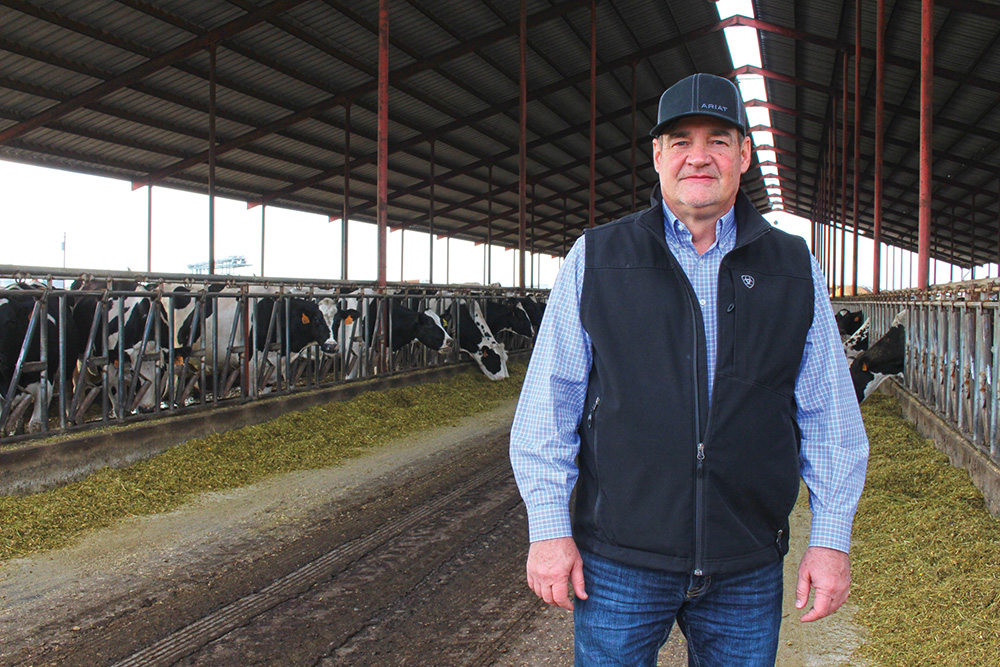
As a dairy farmer in the Central Valley, I understand the importance of protecting groundwater. My family lives here. Our employees live here. We drink the same water and raise our children in the same communities that rely on clean and safe drinking water. We share the goal of protecting groundwater quality and ensuring a sustainable future for agriculture and our rural communities.
 It is with this shared commitment to the future that dairy farmers are closely reviewing the California State Water Resources Control Board’s 2026 revised draft dairy order. While we wholeheartedly agree that we need to protect our vital groundwater resources, the reality is that many of the measures being proposed are extraordinarily complex, costly and difficult to implement at a time when California dairy farmers already face immense economic pressure and are doing more than we ever have to ensure the longevity of the land for generations to come.
The state water board’s proposal represents a dramatic shift in how dairies would be regulated, imposing new requirements that could fundamentally change how dairy farms operate. To build a successful regulatory path, we need to balance our shared environmental goals with the demands of keeping family farms viable.
For many California dairy farms, profit margins are virtually nonexistent due to rising labor costs, higher feed prices, increasing energy expenses, volatile milk markets and a growing list of regulatory requirements that have already stretched many dairy families to their limits. Every year, more California dairies close their doors.
The new dairy order, which calls for extensive, complicated whole-farm nitrogen accounting, increased reporting metrics and stricter groundwater monitoring, will add significant new compliance costs and operational burdens that many farms simply cannot absorb. Specifically, the order restricts how much manure dairies can apply to their own forage crops, requiring many dairies to export their calculated surplus manure off-site. (See related news.)
As someone who has operated an anaerobic digester for the past three years, I know firsthand that digesters have been an excellent tool to help the industry reduce greenhouse gas emissions while also producing renewable energy. But digesters are not a practical or economical option for every dairy. California’s dairy industry is incredibly diverse, and there is no one-size-fits-all solution for manure management.
Today, some dairies can export excess manure to neighboring farms or other users who can beneficially use those nutrients. But under the proposed order, many more dairies could be looking for places to send excess manure. That raises an important question: Will there be enough available land, infrastructure and demand to handle it? A system that works for some dairies today could become much more difficult when more dairies compete for the same outlets.
Dairy farmers understand the need to improve nutrient management. The challenge is that the infrastructure and markets needed to accomplish what the order envisions do not yet exist at the scale being contemplated.
One of the biggest concerns is that while the proposal recognizes that readily available solutions for managing excess dairy manure remain limited, the burden remains largely on dairy farmers to figure out how to comply. There is currently no large-scale, economically viable system capable of handling the potential excess manure produced by California dairy farms. Compost markets face severe constraints. Transportation costs are substantial. Processing technologies remain expensive. Alternative end uses are still developing.
The practicality of implementation also deserves careful consideration. The timelines the state water board has established for compliance are ambitious, and many of us question whether they are realistically achievable. Even if dairy farmers are ready to move forward, will there be enough qualified engineers, consultants and technical professionals available to design, permit and construct the projects needed to meet the deadlines?
Another important point is that although the revised proposal now recognizes that land application of manure is the primary source of dairy-related nitrate loading to groundwater, additional lagoon requirements are also being proposed. These future requirements apply to existing lagoons without groundwater connection and those that may have hydraulic continuity with groundwater, as well as new or reconstructed manure retention ponds. As a result, dairies may face significant new requirements for land application and manure storage infrastructure.
California dairy families have a long history of working constructively with the state. During the past two decades, we have adapted to some of the strictest environmental standards in the world.
In addition to installing digesters, many dairy farmers have adopted improved nutrient management practices, irrigation efficiency measures, cover cropping, soil health programs and conservation practices designed to improve water quality and reduce environmental impacts. The dairy industry has partnered with regulators, researchers and environmental organizations to develop innovative solutions and continually improve stewardship practices.
These efforts have required significant financial commitments from dairy families and demonstrate the industry’s willingness to be part of the solution.
As the state finalizes the dairy order, success should ultimately be measured not only by the goals it sets but by whether those goals can realistically be achieved. California dairy farmers want to continue improving groundwater protection, but the regulatory framework must reflect the practical realities on the ground, including available technology, infrastructure, engineering capacity and achievable implementation timelines.
California dairy farmers want to remain partners in protecting groundwater. We ask policymakers to recognize the progress that has already been made, understand the challenges that remain and work with us to develop solutions that are environmentally effective and practical for the family farms that produce California’s milk.
Ron Peterson, a dairy farmer who also grows silage crops and almonds and raises beef cattle in Stanislaus County, is second vice president of the California Farm Bureau. He can be reached at rpeterson@cfbf.com.

In this edition…
• Mussels plague farms and water districts
• California awards $2 million to curb attacks by wolves
• To protect groundwater, policies need reality check
• Early crop boosts prospects for California pear growers
• From the Fields: Jim Durst, Yolo County farmer
• From the Fields: By Jim Rickert, Shasta County rancher and farmer
• From the Fields: Mark Hall, Kern County table grape grower
• From the Fields: Ian Garrone, Monterey County mushroom farmer
• Growers look to grafted watermelons to battle pests
• It's not too soon to prepare for screwworm response
• Advocacy in Action: New dairy order, grizzly bear reintroduction, H-2A reform and a Supreme Court victory
• Supplies of dairy heifers expected to recover in 2027





.svg.png)
