


It's not too soon to prepare for screwworm response
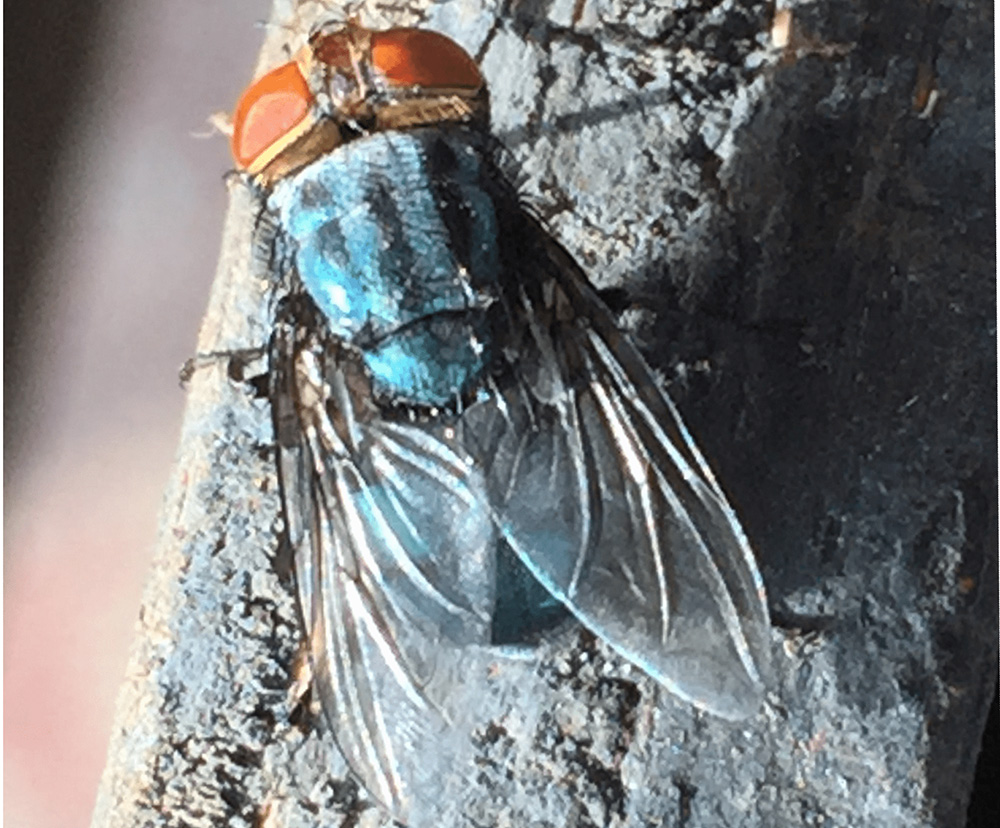
About the size of a housefly, female New World screwworm adults seek wounds in warm-blooded animals in which to lay eggs.
Photo/Courtesy of U.S. Department of Agriculture


By Vicky Boyd
As the New World screwworm expands into the U.S. from Mexico, California’s pest exclusion leaders already have developed a response plan that includes trapping and education. The flesh-eating parasite, which was confirmed in one dog in New Mexico and more than two dozen cattle, sheep and goats in Texas in June, has yet to be found in California.
 But Alec Gerry, a University of California, Riverside, veterinary entomology professor and Cooperative Extension specialist, said producers should prepare now for the pest’s potential arrival by becoming familiar with identification and prevention.
“We haven’t had these screwworms in the U.S. for so long that we’ve forgotten what we need to watch for,” he said. “Animal producers at this point should be learning about screwworm and how to identify it and how to protect their animals from it.”
Gerry was referring to the last major New World screwworm outbreak in 1972, which was the worst since the U.S. Department of Agriculture declared it eradicated in 1966 after a decades-long campaign. In 1972, California, Arizona, New Mexico, Texas, Oklahoma and Arkansas reported screwworm infestations totaling about 96,000 cases, with Texas confirming 90,000 alone.
Within California, the pest was confirmed in Imperial, San Diego, San Bernardino and Riverside counties.
Veterinarian Tom Talbot, who is also a cattle rancher in Inyo County, said he can remember screwworm infestations as a child in the early 1960s. The infestations were caught early, and most livestock made a complete recovery.
Photo/Courtesy of U.S. Department of Agriculture
“We’d treat them and lost very few animals,” Talbot said.
Since the 1972 outbreak, a multinational effort that released millions of sterile flies weekly drove the New World screwworm back to south Panama. But the pest breached Panama’s swamp and jungle barrier in 2022 and began moving north again.
Female adult screwworms, which are flies about the size of a housefly, lay eggs in open wounds of warm-blooded animals, including livestock, wildlife, pets and, in rare instances, humans. The opening doesn’t have to be large and can be as small as a tick-feeding site, Gerry said.
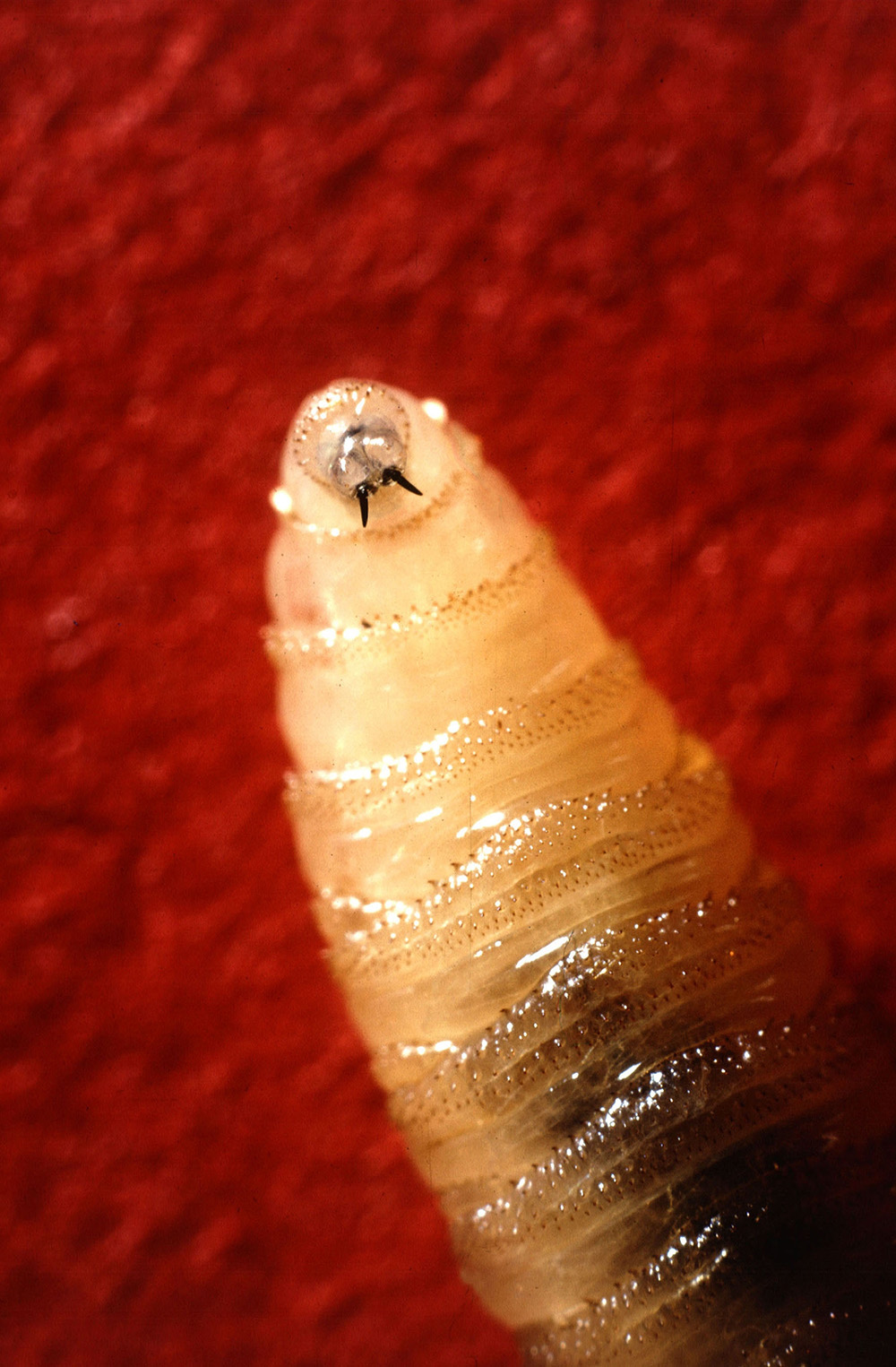
The larvae, or maggots, use sharp mouth hooks to tear into the host’s flesh and feed on only living tissue. As they do so, the flesh decays and emits a foul odor. Secondary bacterial infections also may invade the enlarging wound, creating a potentially life-threatening situation if the animal isn’t treated promptly.
To monitor California’s southern border, where screwworms are likely to first enter the state, Gerry and UC Riverside colleague Amy Murillo are running a series of detection traps. One is a sticky trap baited with Swarmlure, a synthetic screwworm attractant. The other is cone-shaped and uses the same lure.
They placed the traps in Imperial, San Diego, Riverside and Los Angeles counties. With $507,000 in funding from the California Department of Food and Agriculture, the researchers also plan to evaluate different trap designs.
Should trap checkers find a suspicious fly, Gerry said they’d send it to the USDA National Veterinary Services Laboratories in Ames, Iowa, for polymerase chain reaction genetic testing and official confirmation.
Gaby Maier, a UC Davis veterinary epidemiologist and associate professor of beef cattle herd health and production, recommended producers monitor the screwworm’s U.S. status on the USDA website screwworm.gov.
“It’s more likely to get here than not, so it’s not too soon to start thinking about how to prepare for it,” she said.
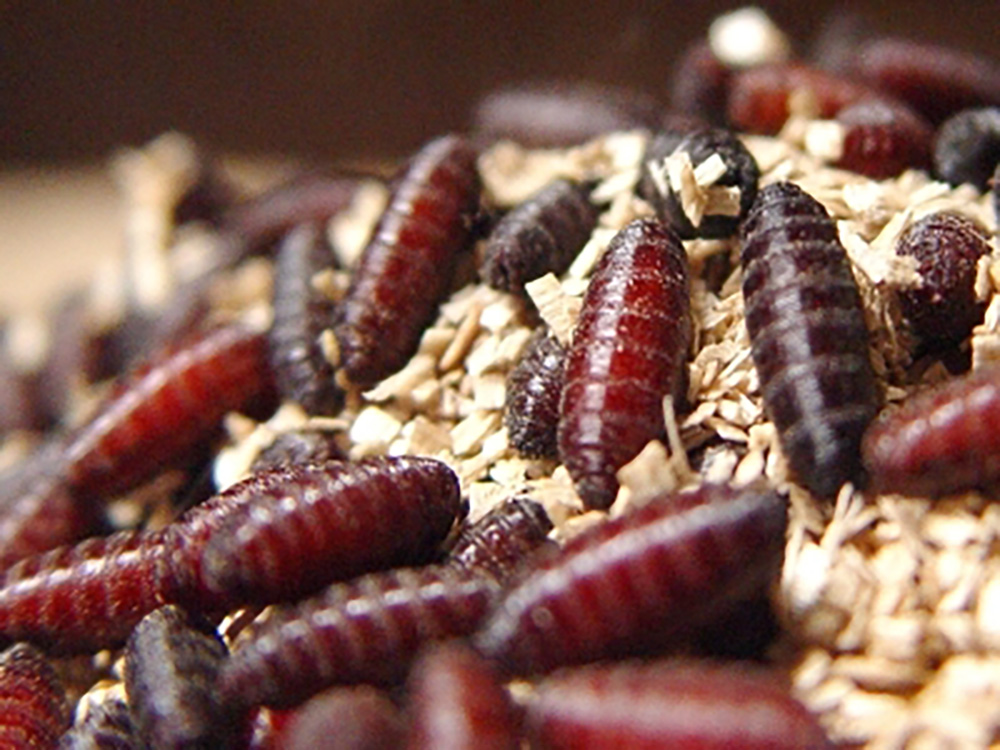
Photo/Courtesy of U.S. Department of Agriculture
She and Talbot suggested producers be more vigilant in observing their animals, particularly if they receive a load from an outside source such as an auction barn. Look for animals that may seem “off,” and then inspect them more closely, Maier said.
In some cases, such as with an umbilicus, or navel, an infestation may be obvious. But she said other small infestations may be hidden by the skin and won’t be as apparent. The earlier an infestation is caught, the easier it is to treat and for the animal to make a complete recovery, Maier said.
If possible, schedule practices that cause wounds, such as castration, ear tagging or branding, for colder months when fly populations are lower, Talbot said. Dehorning isn’t as much of a concern as it once was, as many producers have moved to naturally polled cattle breeds.
“Any time you’re going to create an open wound, especially in the season when there are flies, you want to monitor it closely and use a product that will repel flies,” he said.
Calving also may be high risk because the calf’s wet umbilicus is attractive to female screwworms as an egg-laying site. In fact, the first screwworm in the U.S. was confirmed in the umbilical area of a 3-week-old calf southwest of San Antonio, Texas.
Scheduling calving for a different time of year when fly populations are lower may be a challenge because calving frequently is tied to available feed, said Talbot, who chairs the California Cattlemen’s Association Animal Health and Well-Being Committee. Many producers along the coast are “fall calvers,” with animals being born from September through November. The fall could carry a little more risk should screwworms be present.
Winter calving, such as in the Bishop area of Inyo County, occurs from about January through March when temperatures are colder and flies aren’t as big a concern.
If an animal becomes infested with New World screwworm, Maier and Talbot recommended working with a veterinarian to determine the best treatment. The U.S. Food and Drug Administration has issued conditional and emergency-use authorizations for a number of drugs that target New World screwworm.
But Maier cautioned against using the drugs as preventatives because the practice is not sustainable and could lead to the screwworm developing resistance.
“Use them judiciously,” she said.
Vicky Boyd is a reporter in Modesto. She can be reached at agalert@cfbf.com.


In this edition…
• Mussels plague farms and water districts
• California awards $2 million to curb attacks by wolves
• To protect groundwater, policies need reality check
• Early crop boosts prospects for California pear growers
• From the Fields: Jim Durst, Yolo County farmer
• From the Fields: By Jim Rickert, Shasta County rancher and farmer
• From the Fields: Mark Hall, Kern County table grape grower
• From the Fields: Ian Garrone, Monterey County mushroom farmer
• Growers look to grafted watermelons to battle pests
• It's not too soon to prepare for screwworm response
• Advocacy in Action: New dairy order, grizzly bear reintroduction, H-2A reform and a Supreme Court victory
• Supplies of dairy heifers expected to recover in 2027





.svg.png)
