


Early crop boosts prospects for California pear growers
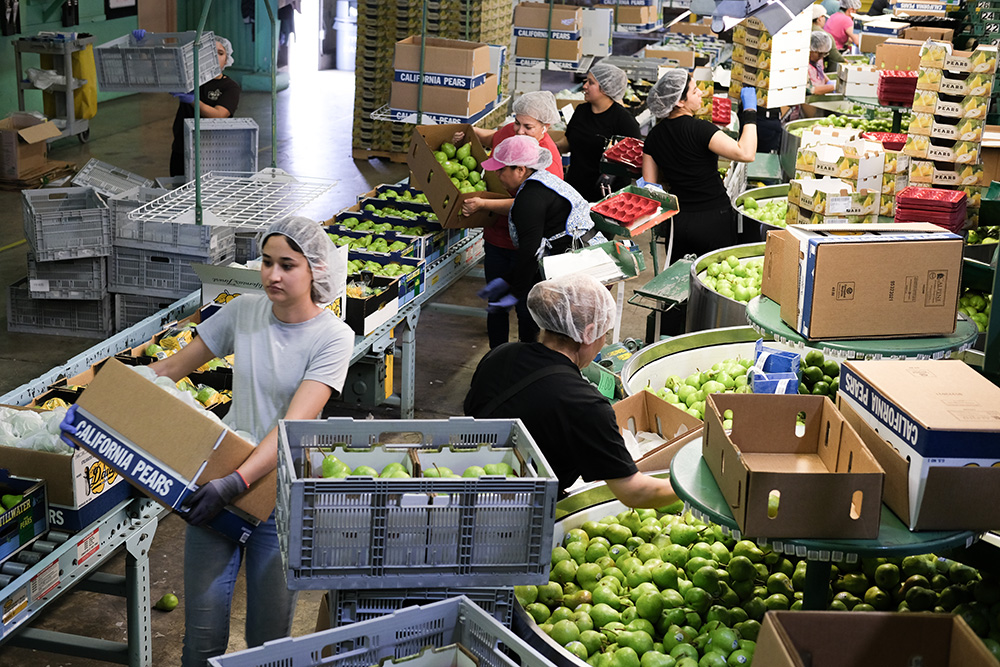
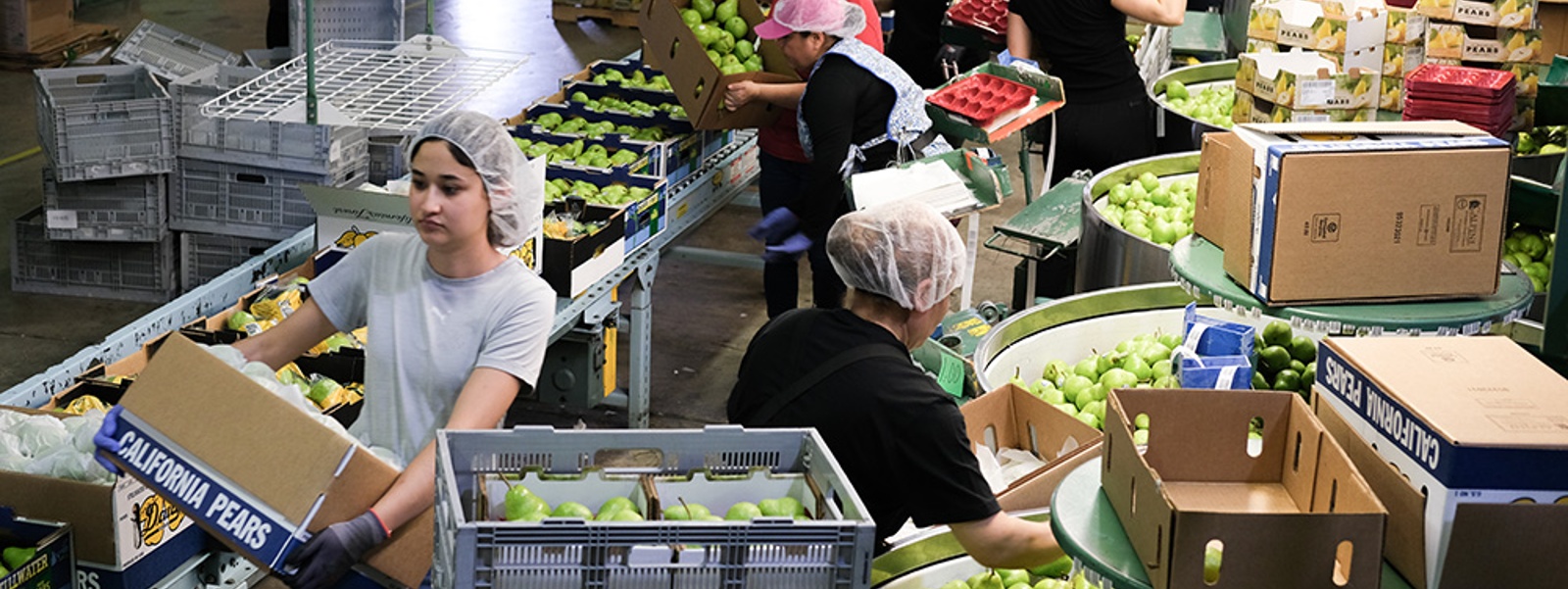
Employees pack Bartlett pears last week at Stillwater Orchards’ packinghouse in Courtland. California is expected to harvest 91,000 tons of Bartlett pears this year, down 15% from last year.
Photo/Caleb Hampton


By Caleb Hampton
The first U.S.-grown pears to be harvested this year began shipping to retailers and canneries last week as the season kicked off in Sacramento County.
After a historic spring heat wave, pears and other California crops matured faster than usual this year. Growers along the Sacramento River started picking Bartlett pears, the state’s top variety, on June 29, about two weeks earlier than average.
“This is the earliest we’ve seen in a long time,” said Ryan Elliot, a sixth-generation pear grower and operational manager at Stillwater Orchards in Courtland.
The California season is short, with growers aiming to sell most of their crop before September, when they lose market share to pears from the Pacific Northwest.
Justin Bloss, sales and marketing manager at Lodi-based Rivermaid Trading Co., California’s top pear supplier, said this year’s early harvest could benefit growers in the state by lengthening their market window.
“It’s really a blessing,” Bloss said.
A decline in pear imports this year has also made growers optimistic.
During the past decade, the volume of Argentine pears sold in the U.S. more than doubled, last year surpassing the amount of California-grown Bartletts sold to the fresh market, according to the California Pear Advisory Board.
Argentine pears are harvested during the U.S. winter, and historically they supplied North American stores when domestic pears were out of season. In recent years, however, pears from Argentina, which are treated with an anti-ripening agent to extend their storage life, began encroaching on California’s season.
Chris Zanobini, the pear board’s executive director, said imports depressed crop prices last year and caused a major retailer to cancel a deal with California growers due to excess inventory.
As of last week, imports were down 38% from last year, according to the pear board. Zanobini said the decline may be due to Argentina harvesting a smaller crop this year and exporters in the country prioritizing markets that do not have their own domestic pear supply.
“We’re in a much better position than we were last year at this time,” Zanobini said. “It looks like the market is ready for our crop.”
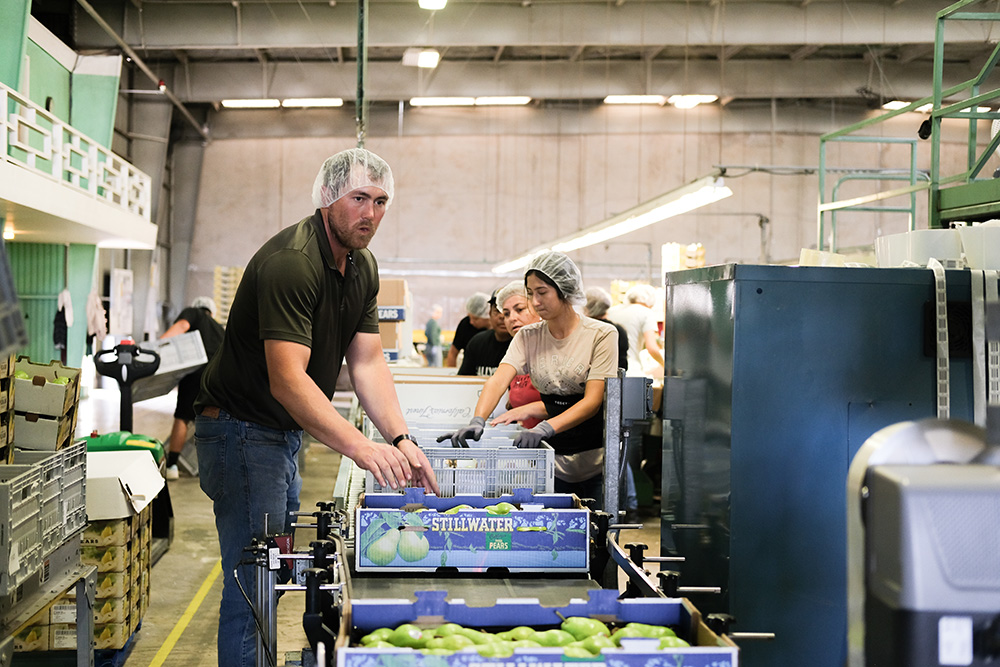
Photo/Caleb Hampton
California’s pear crop is also smaller this year. Growers are expected to harvest about 91,000 tons of Bartletts, according to the pear board, down 15% from last year’s 107,000 tons.
While fresh market prices fluctuate throughout the season, growers said they expect prices will remain stable this year, although low yields could hurt their profits.
“You need both” high yields and strong pricing to make a profit growing pears, Elliot said. He added that it’s also important to have buyers lined up for the entire crop.
In recent years, about a third of California’s pear crop was shipped to fresh market retailers and about two-thirds were sold to processors, with the latter providing stability for growers through long-term contracts.
The bankruptcy last year of 139-year-old processed foods giant Del Monte Foods—one of two major processors that purchased California pears—and the company’s closure this year of its cannery in Modesto left some growers potentially lacking a buyer for much of their crop.
In April, the pear board announced that Lodi-based cooperative Pacific Coast Producers, the state’s largest pear processor, planned to purchase “a significant portion” of Del Monte’s pear volume this year following PCP’s licensing of some of Del Monte’s shelf-stable fruit product brands.
Zanobini said PCP committed to purchasing 75,000 tons of California pears this year, which due to the small crop size will likely exceed the amount growers can supply.
“That is essentially equivalent to what we sold last year to both PCP and Del Monte,” Zanobini said.
California pears are grown primarily in two regions, with growers along the Sacramento River supplying most of the fruit and those in Lake and Mendocino counties harvesting a slightly later crop. According to the pear board, pears are grown by about 60 family farms in California, some of whom began cultivating the fruit shortly after the Gold Rush.
Despite the decline in imports and stability in the processed market this year, growers said they face numerous pressures.
Christopher Chan, manager at Lincoln Chan Farms and Wallace Chan Farms in Courtland, said rising input costs have made it difficult for growers to remain profitable. Chan said the high cost of labor in California combined with fuel and fertilizer costs that surged this spring as a result of the U.S.-Israeli war with Iran were especially challenging.
“The margins are so small,” Chan said. “It’s a high-risk and high-value crop, and even the slightest drop in yield will really affect the bottom line.”
During the past 30 years, the fourth-generation grower saw his family’s pear acreage drop from 800 to 250, mirroring a statewide trend. Since 2000, California has lost more than half its pear trees, with acreage declining from 10,610 to 3,800.
“It’s a tough game,” Chan said.
In recent years, the California pear industry has sought to educate consumers about the unique quality of its fruit.
Since 2020, growers in the state have collectively pledged not to treat their fruit with 1-methylcyclopropene, or 1-MCP, an ethylene inhibitor used by many suppliers to delay ripening. Bartletts naturally ripen within several days of being picked, but those treated with 1-MCP can remain green for weeks or months.
“It’s possible that the fruit will never get to that soft, juicy stage,” said Elizabeth Mitcham, emeritus director of the University of California Postharvest Research and Extension Center.
California growers said the use of 1-MCP by other suppliers has hurt the state’s pear industry by enabling imported fruit to linger in stores. They said the prevalence of pears treated with the chemical may also discourage consumers from purchasing the fruit in general.
“It just tastes like cardboard,” Chan said. “After that, what reason do you have to go buy another one?”
This year, the pear board has been in discussions with individual suppliers in Argentina and the Pacific Northwest about signing on to California’s pledge not to use the anti-ripening agent.
“Hopefully by next year we can come out with a joint pledge that says California and these entities don’t use 1-MCP,” Zanobini said.
Because use of the chemical is not disclosed on fruit labels, growers said, the only way consumers can be certain of purchasing pears that ripen naturally is to take advantage of the California season, which typically runs from July through October.
“It’s always going to be the freshest product,” Elliot said.
Caleb Hampton is an editor at Ag Alert. He can be reached at champton@cfbf.com.

In this edition…
• Mussels plague farms and water districts
• California awards $2 million to curb attacks by wolves
• To protect groundwater, policies need reality check
• Early crop boosts prospects for California pear growers
• From the Fields: Jim Durst, Yolo County farmer
• From the Fields: By Jim Rickert, Shasta County rancher and farmer
• From the Fields: Mark Hall, Kern County table grape grower
• From the Fields: Ian Garrone, Monterey County mushroom farmer
• Growers look to grafted watermelons to battle pests
• It's not too soon to prepare for screwworm response
• Advocacy in Action: New dairy order, grizzly bear reintroduction, H-2A reform and a Supreme Court victory
• Supplies of dairy heifers expected to recover in 2027





.svg.png)
