


From the Fields: Jim Durst, Yolo County farmer
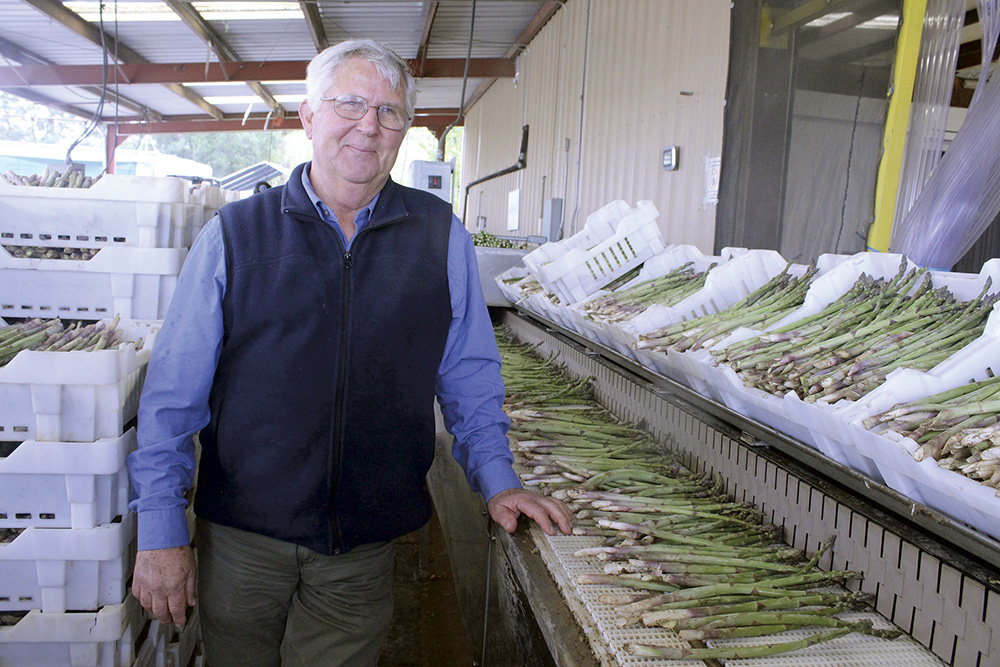
Photo/Ching Lee


By Jim Durst
Yolo County farmer
We’re an asparagus grower, and we also grow fresh-market tomatoes, melons, watermelons, winter squash, alfalfa and grain. That’s our rotation and the makeup of our cropping system.
Our season has been going quite well. Crops are looking good, and we’re expecting normal or above-normal yields this year.
I think overall vegetable crops throughout the country have been compromised somewhat by the weather. We had some warm weather starting in March, with a couple of weeks that pushed some crops. Our asparagus came on early and fast. Our asparagus started about two weeks early. It only has so much energy stored in its roots. Once it uses that energy, it’s time for it to go into its renewal cycle. You stop harvesting and let it grow out again.
One of our primary crops is cherry tomatoes. We’re starting our tomato harvest, and within about 10 days we’ll be up to around 30% of our normal production. Generally, by the Fourth of July or around July 10, we’re at 100% production. But this year, that’s been pushed up a few days. Because we’re a fresh-market operation, we do sequential plantings. We start planting in late March and continue all the way through July 1, so we’re still transplanting while we’re already harvesting. Our season runs from July through October. As one planting starts to taper off, another planting comes into production, allowing us to maintain a steady volume throughout the season.
Tomatoes take up a large part of our summer, but we also grow watermelons and a few mixed melons. Those three crops require a huge crew, take up all of our refrigeration space and occupy most of our facilities. Because we’re a fresh-market operation, we also have to prepare all of the packaging ahead of time. Fresh-market growers have a lot of preseason preparation to make sure that once harvest begins, everything is ready and you don’t get caught without the boxes you need.

In this edition…
• Mussels plague farms and water districts
• California awards $2 million to curb attacks by wolves
• To protect groundwater, policies need reality check
• Early crop boosts prospects for California pear growers
• From the Fields: Jim Durst, Yolo County farmer
• From the Fields: By Jim Rickert, Shasta County rancher and farmer
• From the Fields: Mark Hall, Kern County table grape grower
• From the Fields: Ian Garrone, Monterey County mushroom farmer
• Growers look to grafted watermelons to battle pests
• It's not too soon to prepare for screwworm response
• Advocacy in Action: New dairy order, grizzly bear reintroduction, H-2A reform and a Supreme Court victory
• Supplies of dairy heifers expected to recover in 2027





.svg.png)
