


Nonprofit program aims to bring more rice to delta
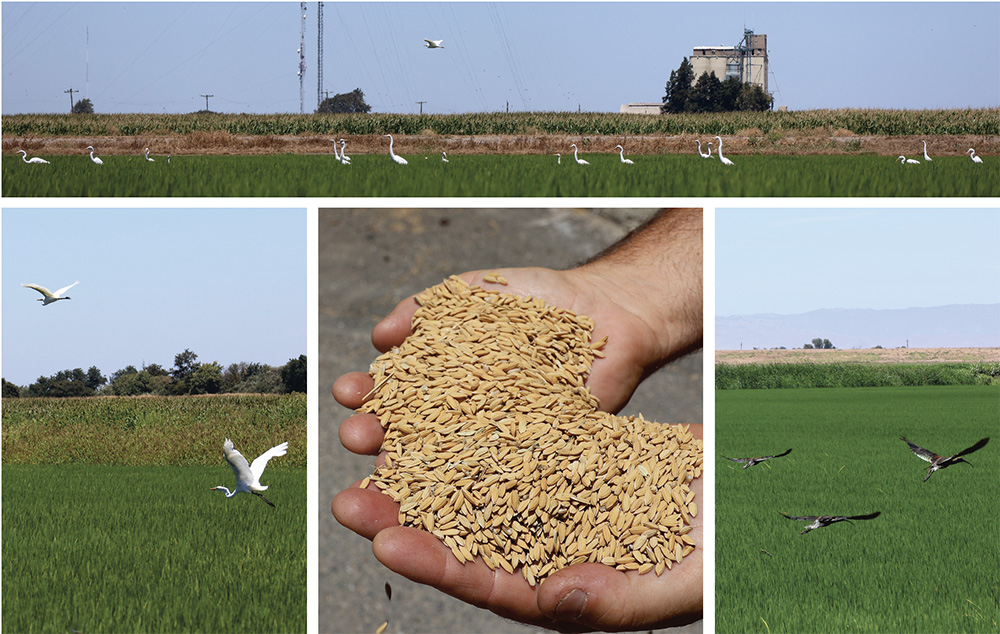
The Nature Conservancy’s 9,200-acre Staten Island Preserve in the Sacramento-San Joaquin Delta in San Joaquin County includes 4,500 acres of rice acreage. The crop provides a surrogate wetland habitat for sandhill cranes, white-faced ibises and other migratory birds. The environmental nonprofit launched a program in 2019 offering financial aid to delta farmers interested in growing rice.
Photos/Manola Secaira


By Manola Secaira
Corn has long been a staple crop in the Sacramento-San Joaquin Delta. But in recent years, reports have shown a change in the region’s agricultural makeup as more delta farmers turn to rice—a move supported by state dollars.
Jerred Dixon, manager of the Nature Conservancy’s 9,200-acre Staten Island Preserve in San Joaquin County, is a fifth-generation farmer whose family grew corn when he was growing up in the area. Now, he oversees the Staten Island farm’s rice crop, which spans 4,500 acres, and encourages other delta farmers to consider rice as well—for its financial potential and environmental benefits.
“It’s economically viable, and it’s also helping protect what is still here,” he said.
When the Nature Conservancy first purchased the land in 2001, the environmental nonprofit envisioned a place that could financially sustain itself through agriculture while protecting the region’s native wildlife. Rice is key to that goal because rice farmers such as Dixon flood their fields during the growing season, creating habitat for species that rely on wetlands that once covered the region.
Growing rice also helps address subsidence in the region—a problem that corn, inversely, can worsen. Dixon said corn farmers drain their fields during the summer months, which dries out the land. It then oxidizes and subsides.
“Eventually, we’ll be subsided so far that we’re not going to be able to afford to pay for those levees to hold back that water,” Dixon said.
The Nature Conservancy launched its rice crop conversion program in 2019. Funded by a $4.3 million Sacramento-San Joaquin Delta Conservancy grant, the program offers financial aid for delta farmers seeking to transition their acreage to rice. That money can fund important work needed to prepare farmland for cultivating rice, including land-leveling and installing water infrastructure. Participants receive $400 an acre and are required to grow rice continuously for three years and maintain at least 10% as mudflat habitat for migratory birds.
The Staten Island farm has become one example of what that looks like. In July, white-faced ibises, egrets and many other species dwell in the fields and prepare to brood over their eggs.
“We have a foot of water on top of the ground where we have rice growing,” Dixon said. “But the beauty of it is we have a ton of nested waterfowl here right now.”
Of the 25,000 acres of rice the nonprofit estimates are in the delta, the acreage supported by its program amounts to 5,530.
“You get the revenue off it, you stop subsidence, you have this greenhouse gas benefit,” Dixon said. “And then you also have this habitat that produces awesome stuff throughout the whole year.”
Dixon said for many farmers, it’s not a lack of interest that prevents them from growing rice. It’s often the cost of the transition.
“It costs $1,000 an acre to convert corn to rice in the delta for the leveling costs and water structures,” he said. “That takes a little while to pay back … because we’re working on very thin margins.”
Although delta rice acreage is increasing, it’s still relatively new to the region. California Rice Commission CEO Tim Johnson estimated that of the 475,000 acres of rice planted in California this year, about 95% of it is in the Sacramento Valley, where it’s been grown for more than a century. Most of what’s grown is Calrose rice, often used for sushi, sold domestically and internationally.
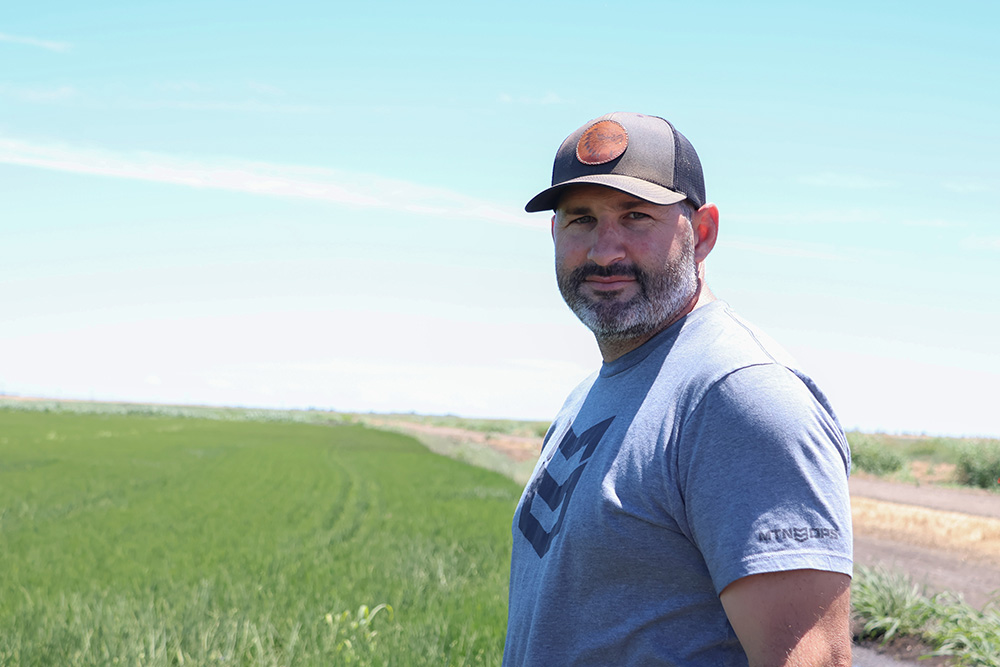
Photo/Manola Secaira
Johnson said Sacramento Valley rice fields have also served a conservation purpose. Infrastructure such as levees and dams along with other human development has led California to lose more than 90% of the historical wetlands many native species depend on for survival. He said the aquatic nature of growing rice has replicated the benefits of lost wetlands.
“In the Sacramento Valley, rice has really become that surrogate wetland,” Johnson said.
Every year, an estimated 5 million to 7 million ducks and geese use the rice fields along the Pacific Flyway as winter habitat, feeding on leftover rice grains, insects and weed seeds, he said. These fields also provide important habitat and food for roughly 200 other species, he added.
Johnson said the commission has provided farmers with guidelines for adjusting their practices to support conservation efforts, such as flooding their fields during the winter to decompose rice straw instead of burning it.
“We can manage that winter flooding in ways that not only benefits waterfowl but also shorebirds,” he said.
Ben Leacox, general manager at Zuckerman Family Farms in Stockton, started transitioning the farm’s McDonald Island acreage from corn to rice in 2020. He said the decision to move toward rice was influenced by the cost of corn production going up and a desire to find an alternative rotational crop.
He said he’s also interested in the environmental benefits of rice.
Before starting the transition to rice in 2020, he’d learned about its ability to reverse subsidence and keep the land healthy. With the help of the Nature Conservancy program starting in 2024, he said it has been possible to invest more in rice and convert rented ground for the crop.
“McDonald Island is one of the most subsided and deepest islands in the delta, so trying to find a way to have this island survive into the future was top of mind,” Leacox said.
He said the Nature Conservancy program has helped make the transition to rice possible in the delta, where farmers face higher startup costs than those who have grown rice in the Sacramento Valley for years. Unlike long-established rice fields that have been gradually leveled over generations, delta farmland has not received the same decades of investment and preparation.
“We’re coming in and having to do all of that work up front, purchase all the equipment to start,” Leacox said. “The up-front costs are significant.”
Dixon said growing rice is only half the equation. After harvest, the rice must be processed, and about 90% of delta rice is shipped to the northern Sacramento Valley for drying and storage, adding significant transportation costs.
He said he’s hopeful that as rice becomes a bigger presence in the delta, growers can create their own infrastructure and someday market their rice as delta-grown.
“It’s sustainable, bird-friendly—that’s the future,” Dixon said.
Manola Secaira is a staff writer for Ag Alert. She can be reached at msecaira@cfbf.com.

In this edition…
• Expected almond crop yield slightly smaller this year
• Cyclospora fallout hits California farmers
• Memory loss on the farm is more than a health issue
• State regulator: 'We should fight to keep our farms'
• California startup advances in Ag Innovation Challenge
• Almond hulls being tested for use as food ingredient
• Wolf reports show continued livestock losses, more packs
• Nonprofit program aims to bring more rice to delta
• Mothballing offers middle ground in wine downturn
• Dial 811 first to protect your land, workers and neighbors
• Could coastal citrus mites destroy your crop in weeks?
• Zinc, boron, manganese and their role in nut production
• More funds devoted to stop sharpshooter
• Advocacy in Action: Labor, fire equipment, climate funds, Gualala River, endangered species, dairy order, lily bulbs
• Meeting to address risk in uncertain times





.svg.png)
