


Advocacy in Action: Grazing, wild horses and the Endangered Species Act
Photo/Licensed image



Grazing regulations
California Farm Bureau submitted comments on the U.S. Bureau of Land Management’s proposed revisions to its federal grazing regulations. The proposal is intended to modernize grazing administration and improve land health management while reflecting current grazing practices and on-the-ground management needs.
Farm Bureau generally supports the proposed rule and its effort to update decades-old regulations. In its comments, Farm Bureau recommended several targeted improvements, including clarifying key definitions, refining programmatic language to reduce ambiguity, and ensuring the regulations can be implemented consistently and effectively.
Farm Bureau also emphasized the important role public lands grazing permittees play in producing food and fiber, maintaining healthy working landscapes and reducing wildfire risk through vegetation management. The organization encouraged BLM to adopt regulations that support sound land stewardship and the long-term viability of livestock grazing on public lands.
Wild horses
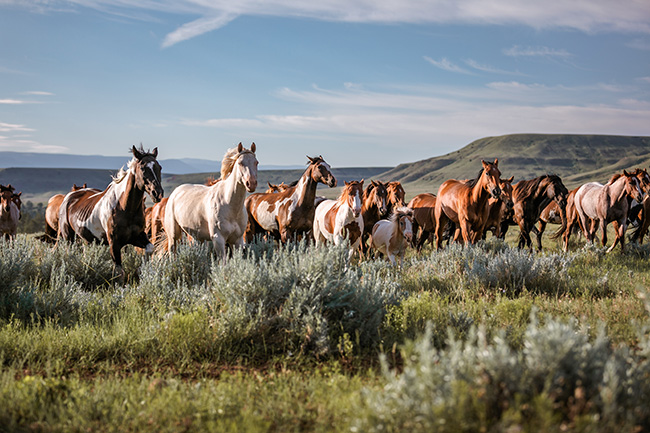
The U.S. Bureau of Land Management will launch a nationwide wild horse and burro private care placement blitz beginning July 23. Since the early 1970s, BLM has found homes for nearly 300,000 wild horses and burros through various adoption and sale programs. The blitz includes three in-person events. The one nearest to California is in Clovis, New Mexico. An online gallery was also launched for horses and burros that will be available at certain pickup locations, including in California. BLM estimated there were more than 85,000 wild horses and burros in the U.S. as of early 2026. More information can be found at www.blm.gov/whb.
Endangered Species Act
California Farm Bureau continues to monitor developments in a rule rescinding the regulatory definition of “harm” under the federal Endangered Species Act.
The U.S. Department of the Interior and the U.S. Department of Commerce have finalized the rule, marking a significant change in how the law may be applied to activities affecting species listed as threatened and endangered.
The ESA prohibits the unauthorized “take” of listed species, including actions that harass, harm, pursue, hunt, shoot, wound, kill, trap, capture or collect protected wildlife. While the statute itself does not define “harm,” federal regulations adopted more than 40 years ago interpreted the term to include significant habitat modification or degradation that indirectly injured or killed wildlife by impairing essential behaviors such as breeding, feeding or sheltering.
According to the Department of the Interior, rescinding the regulatory definition returns the ESA to its statutory text and original congressional intent by focusing enforcement on actual take of listed species rather than indirect habitat modification. Supporters, including California Farm Bureau and a broad coalition of agricultural, water and business organizations, believe the change will provide greater regulatory certainty for farmers, ranchers, water managers and landowners by reducing unnecessary permitting, consultation and mitigation requirements while maintaining the ESA’s core protections for threatened and endangered species.
The rule is also one of the first major ESA actions to rely on the U.S. Supreme Court’s 2024 decision in Loper Bright Enterprises v. Raimondo, which overturned the longstanding Chevron deference doctrine and limited the ability of federal agencies to broadly interpret statutes beyond their text. The final rule is scheduled to take effect Sept. 14 unless implementation is delayed through ongoing litigation. Several tribal and environmental organizations have filed legal challenges.
In this edition…
• Researchers study potential of agave crop
• Investigadores estudian el potencial del cultivo de agave
• California grazing sector threatened as goat herder wage soars to $240K
• California's pest prevention system needs an update
• Mechanical harvest research bolsters table olive prospects
• Overnight guests add key revenue stream for farms
• Advocacy in Action: Grazing, wild horses and the Endangered Species Act
• Smart sprayers slash farm labor and herbicide costs
• How will early blooms and light crop affect navel orangeworms?
• Finding her second act: Former dancer builds new life with U-pick raspberry farm
• Bountiful Finds: A curated collection of goods made by Farm Bureau members
• Now in season: You can grill just about anything
• The scenic route: Pit stops at California farms and ranches
• Grape expectations: Sweet flavor with healthy twist
• A life in motion: Avocado farmer helped revolutionize the modern skateboard
• Imagine this: Students tell stories about agriculture
• AI in agriculture: Balancing innovation and new risk
• Workforce training program seeks input from employers






.svg.png)
