


Researchers study potential of agave crop
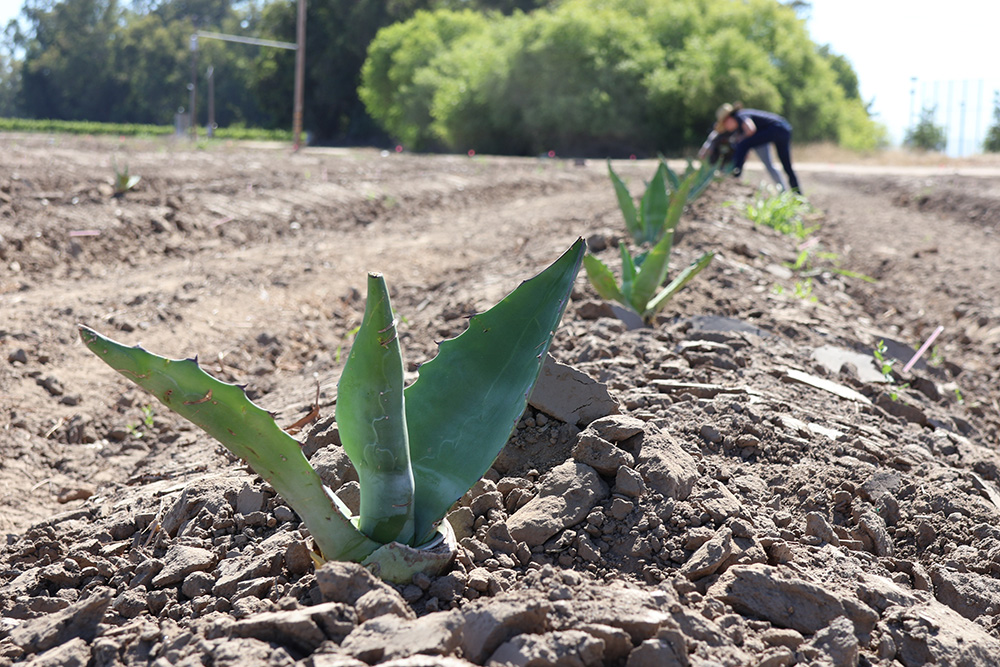
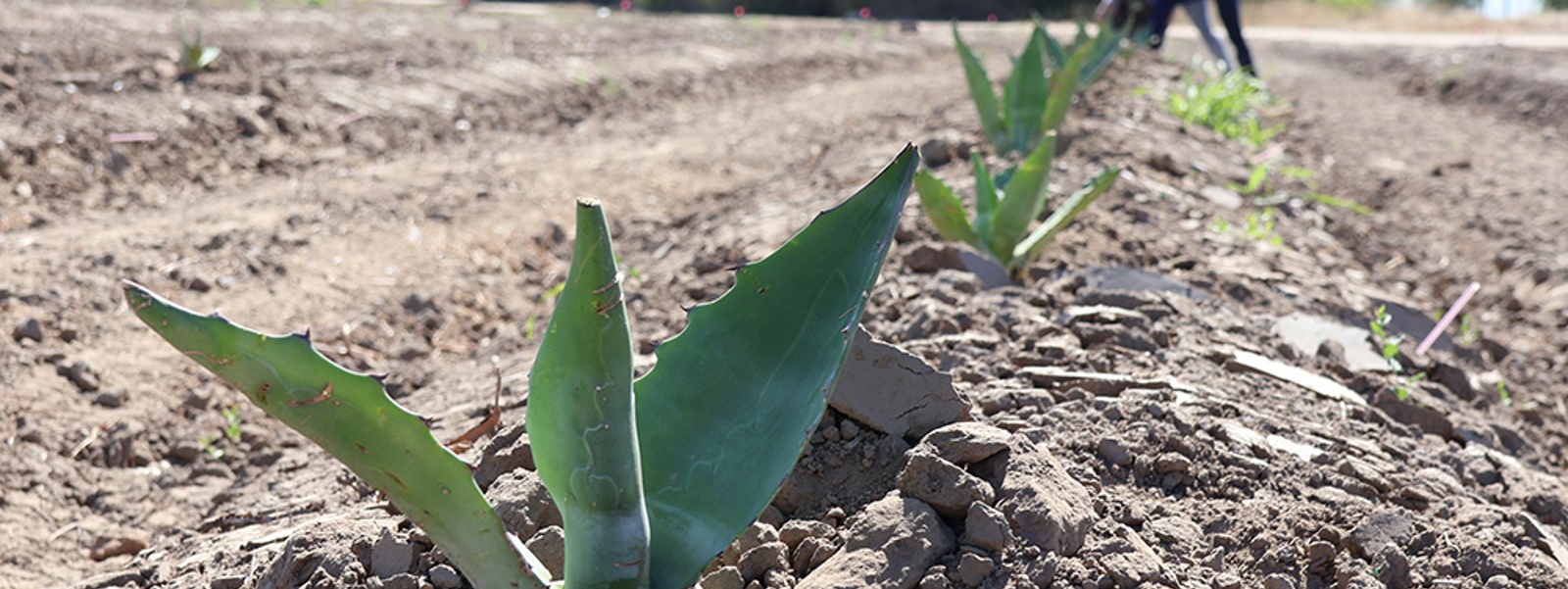
Volunteers plant young offshoots of 20 agave varieties during a Madera Community College event in June. Agave experts in California are researching which varieties of the crop, which is commonly grown in parts of Mexico, are best suited to grow in the Central Valley and other parts of California.
Photo/Manola Secaira


Este artículo está disponible en español. Léalo aquí.
By Manola Secaira
On a hot morning in June, dozens of agave plants took root in the soil of Madera County.
The plant has long been grown in parts of Mexico to make tequila and mezcal. But in California, it’s only more recently gotten attention from Central Valley farmers seeking options as they face water shortages and the prospect of fallowing land.
 Researchers say agave could be a useful option for farmers with limited water supplies. The drought-resilient crop has demonstrated commercially viable yields with less than a tenth of the water usage needed for many tree crops. To help farmers, experts are ramping up research on cultivating agave in California and exploring various potential markets for the crop.
For starters, experts said making agave a California crop requires understanding what practices traditionally used to grow the plant may need to be altered for the state’s environment.
Madera Community College worked with researchers to develop and begin offering an agave growers course last fall. In June, volunteers at the college planted 20 agave varieties in a test plot, which will feed into research efforts to better understand the succulent.
“We want to see which ones, depending on the variety, will thrive in the Central Valley so we could take the risk for the farmers,” MCC President Ángel Reyna said. “The first year, we’ll water it some, but not as much as other crops. And then after the first year, we won’t water it as much, if at all. And then we’re going to see which ones will thrive after that.”
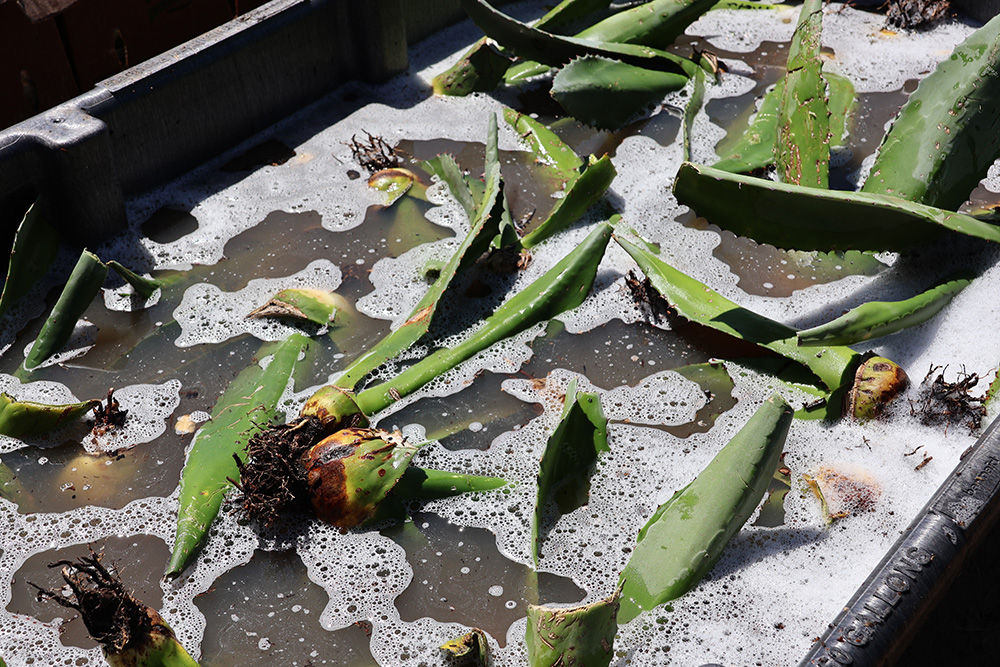
Ofelia Lichtenheld, an agronomist and owner of the San Diego County farm and plant nursery Agave Farm, coached volunteers at the planting event on how to set the young agave offshoots in the ground. Lichtenheld’s nursery supplied the plants for MCC. She said she was excited about agave’s future in California.
“I knew this would have to happen because of the drought and having a plant so perfect for this climate,” she said in Spanish. “Californians have always been very creative.”
Agave’s footprint in California, while still small, has increased markedly within the past few years. A University of California, Davis, survey found around 50 acres of the crop were grown in California before 2023. A new report found that by 2025 that number grew to more than 600 acres across 31 counties, although Westlands Water District, which covers more than 600,000 acres in western Fresno and Kings counties, reported 1,010 acres of agave last year.
“Farmers are looking to diversify to plants that don’t require a lot of water, and agave is one of them,” Reyna said.
Yessica Viridiana Fernandez Galicia, a UC Davis researcher focused on diversified agave production, is developing guidelines for prospective agave growers in California.
Among other advice, she said she often needs to convince California farmers not to give their agave too much water.
“It’s a practice that we need to get out of the heads of the farmers,” she said in Spanish. “It’s a matter of reconfiguring that this plant doesn’t use much water, it doesn’t use many inputs.”
Samuel Sandoval Solis, a fellow UC Davis agave researcher, said the water demands of agave are so little that researchers are looking to develop a manual for growing agave without any irrigation.
“I have seen growers… in the high desert, in the northeast part of Los Angeles County, having agaves in a place where the rainfall is about 3 to 6 inches, which is basically no rainfall at all, growing agaves with a dry farm, without any supplemental irrigation,” he said.
Photo/Manola Secaira
Lichtenheld said determining the best variety for a particular environment is also important. She often hears from growers interested in purchasing more well-known varieties, such as the Blue Weber grown in Mexico for tequila.
But she said there are more kinds of agave—other than the handful most growers know—that might be better suited to their needs.
“There’s an incredible diversity of agaves,” Lichtenheld said. “In my nursery right now, I have 38 varieties.”
To be successful, she said growers need to choose based on local growing conditions, as some agaves grow more easily in parts of the state where the climate could negatively affect the more popular varieties. She’s seen the agaves mapisaga and atrovirens, for example, are more resilient to winter frost events.
Researchers are also looking at different postharvest uses for the plant, which are not limited to spirits.
“Right now, what everyone knows is tequila,” Lichtenheld said.
Fernandez Galicia, the UC Davis scientist, said there are more than a hundred documented uses for agave in Mexico. They include making other beverages such as pulque or aguamiel and repurposing the plant fiber for other uses, including construction. Her own research has proven the potential economic viability of making syrup from agave.
“Current consumption trends show that young people don’t consume alcohol like in the past,” she said. “It’s changing, the consumption trend, but that’s not a limitation.”
Among the volunteers planting agave at MCC this past June was Alberto Nuñez, a small grower starting out in San Diego who already has some agaves in the Mexican state of Jalisco that his family helps maintain.
Nuñez said Lichtenheld introduced him to varieties he didn’t know existed. He’s already testing a few to see what grows best in San Diego. He said he’s eager to explore other uses for the agave, including creating materials out of the plant fibers.
“I’m learning a lot,” he said. “We have to figure out what works where.”
Reyna said many Central Valley growers who’ve emigrated from Mexico come from the agave-growing states of Jalisco or Oaxaca. With that experience, they can also provide valuable expertise related to the plant’s uses and cultural significance.
“Being able to bring the cultural aspect of agave to California … and to be able to bring it to the community where there’s a lot of Hispanic Latinos that have the connection to either mezcal or to tequila, I think it’s a powerful thing,” Reyna said.
MCC will open its own distillery later this year, where students can learn the process of turning their agave crop into a spirit. By next year, Reyna wants to open the distillery up to people beyond the school. He said he hopes it can provide an entry into the market for small growers.
Lichtenheld said she sees a bright future for agave in California—even if that dream is still in its infancy.
“This plant has a lot of uses,” she said. “It’s a tremendous source of satisfaction for me that we can share these plants that are so magnificent, so resilient with the world.”
Manola Secaira is a staff writer for Ag Alert. She can be reached at msecaira@cfbf.com.

In this edition…
• Researchers study potential of agave crop
• Investigadores estudian el potencial del cultivo de agave
• California grazing sector threatened as goat herder wage soars to $240K
• California's pest prevention system needs an update
• Mechanical harvest research bolsters table olive prospects
• Overnight guests add key revenue stream for farms
• Advocacy in Action: Grazing, wild horses and the Endangered Species Act
• Smart sprayers slash farm labor and herbicide costs
• How will early blooms and light crop affect navel orangeworms?
• Finding her second act: Former dancer builds new life with U-pick raspberry farm
• Bountiful Finds: A curated collection of goods made by Farm Bureau members
• Now in season: You can grill just about anything
• The scenic route: Pit stops at California farms and ranches
• Grape expectations: Sweet flavor with healthy twist
• A life in motion: Avocado farmer helped revolutionize the modern skateboard
• Imagine this: Students tell stories about agriculture
• AI in agriculture: Balancing innovation and new risk
• Workforce training program seeks input from employers





.svg.png)
