


A life in motion: Avocado farmer helped revolutionize the modern skateboard
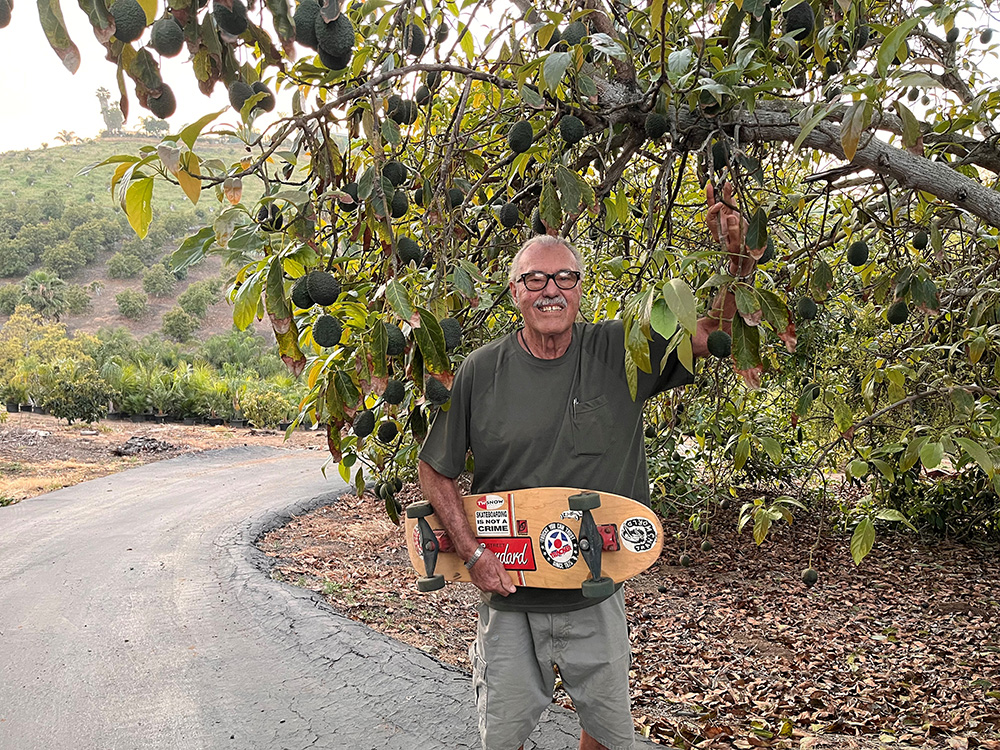
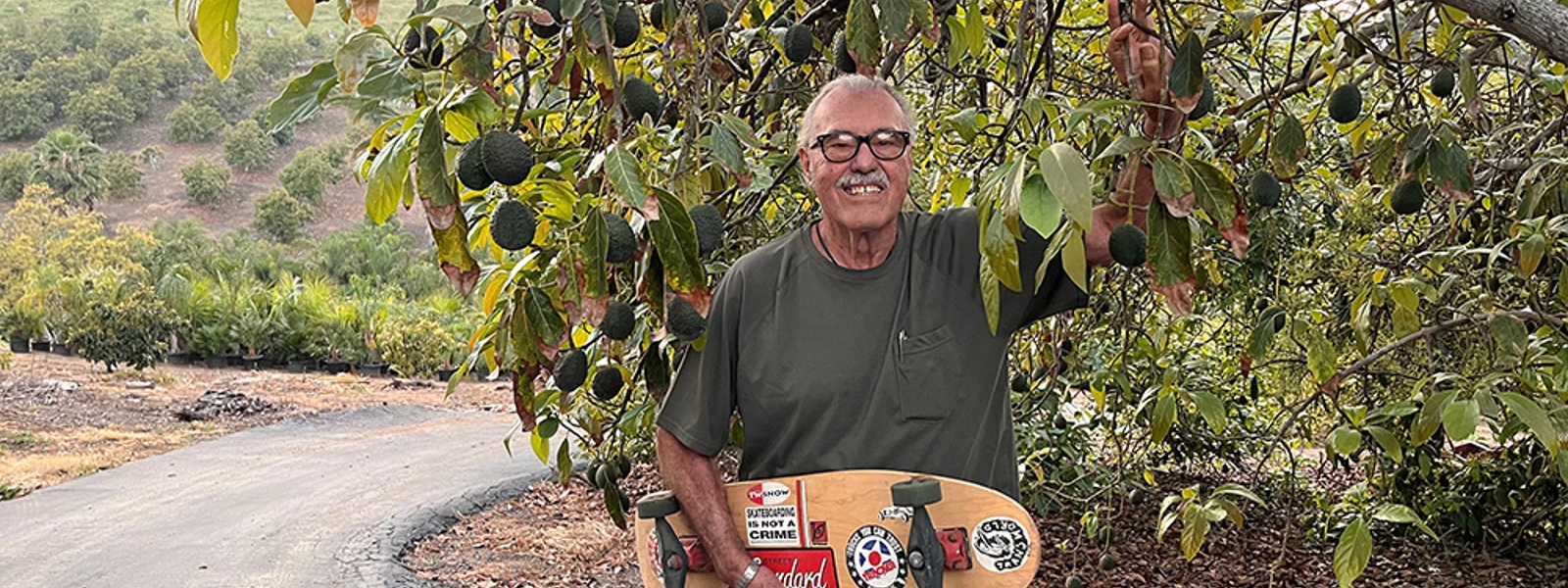
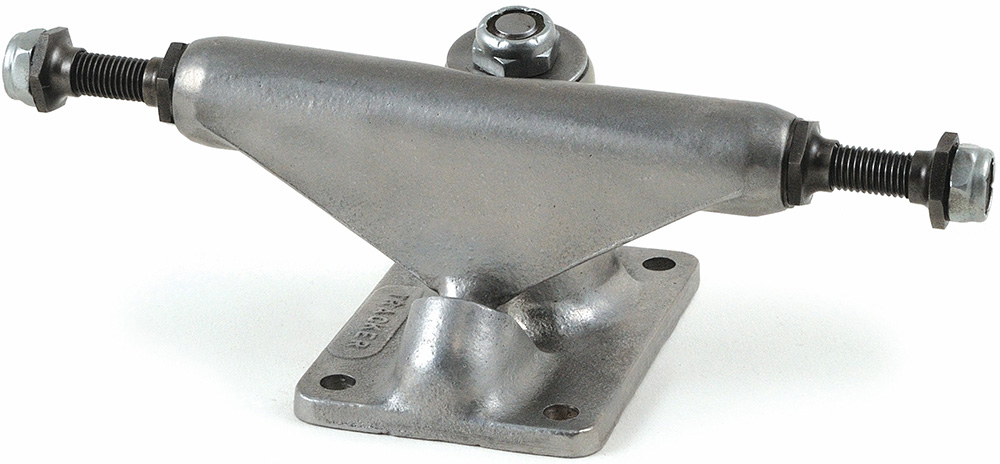
Before becoming a farmer, Larry Balma and his company, Tracker Trucks, in 1975 built the first modern skateboard truck, the T-shaped metal part that connects the wheels to the board and allows riders to steer and control the board’s direction. It set a new standard.
Photo/Louise Balma


By Manola Secaira
 Long before Larry Balma was tending avocado trees in San Diego County, he helped transform the sport of skateboarding.
In many ways, his career has mirrored the evolution of skateboarding, both undergoing continual reinvention.
“When I tell people about my life, they go, ‘Oh, my God, how many lives has he lived here?’” he said. “Between climbing telephone poles to fishing to manufacturing in several different industries and now, a farmer.”
In 1975, he co-founded Tracker Trucks, a San Diego-based company that designed and manufactured stronger, wider, more durable skateboard trucks—the T-shaped metal piece that connects a board’s wheels to its deck and allows riders to steer.
At a time when skateboarding equipment frequently broke under the demands of the sport’s emerging tricks, Tracker’s engineering advances gave riders unprecedented stability and resilience, setting a new standard for skateboards.
Photo/Courtesy of Louise Balma
“All the innovations on the original Tracker trucks have ultimately been adapted to every other skateboard truck designed since,” Balma said.
The impact of the changes was significant enough that skateboards equipped with Tracker trucks were inducted into the Smithsonian Institution’s collection in 1987.
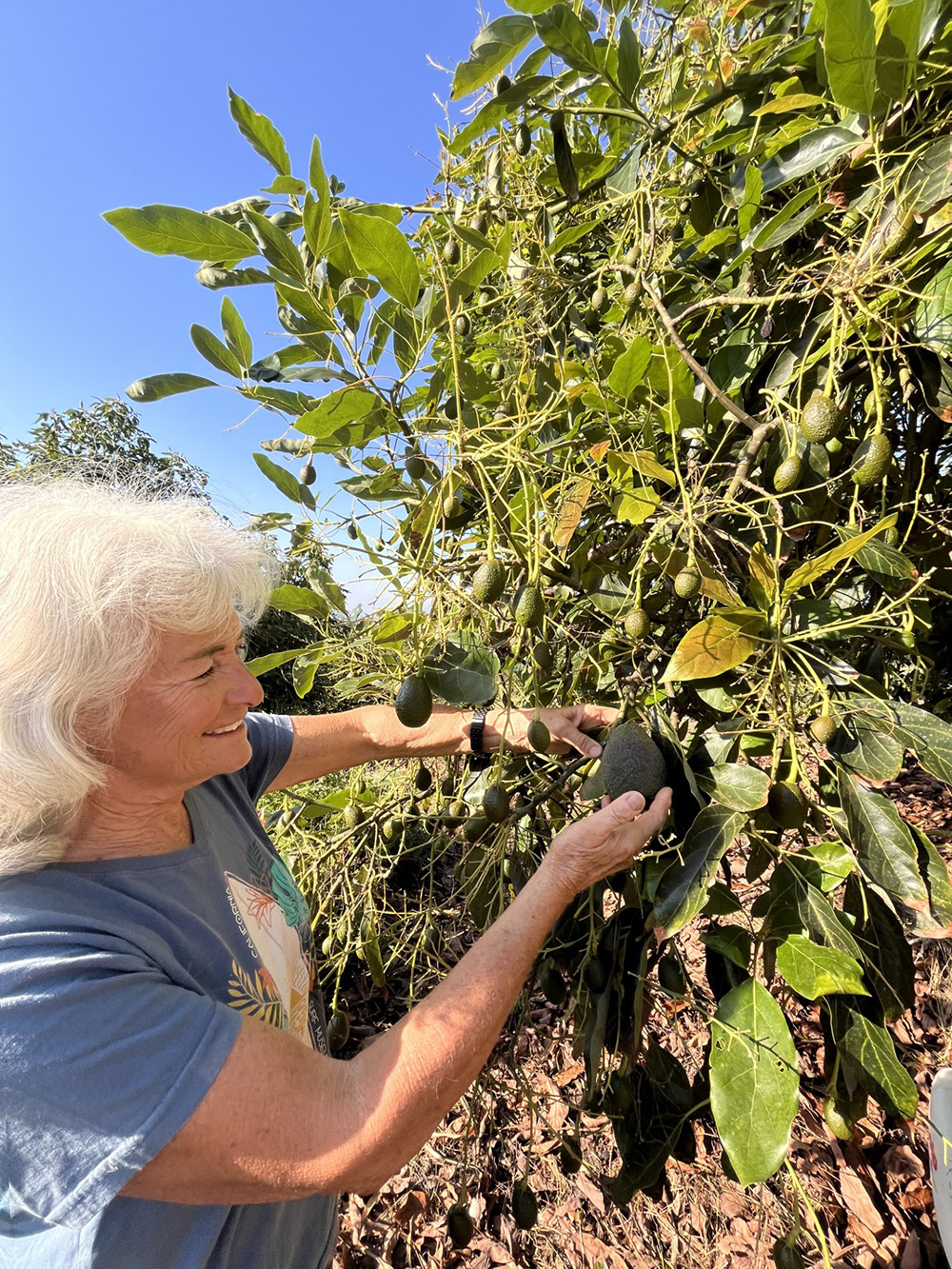
Today, Balma is just as likely to be found discussing crop yields and water costs as skateboard design. Although his name remains closely tied to skateboarding history, he said he and his wife, Louise, are committed to farming. They manage 25 acres of agricultural land, with 16 acres devoted to avocados.
Louise Balma helped lead her husband into farming. She grew up around agriculture and came from a family with deep agricultural roots: Her ancestors were farmers in Northern Italy, and her grandfather later immigrated to the Central Valley, where he bought 20 acres in La Puente and established his own farm. Today, her brother and cousins continue the family’s farming tradition in Paso Robles.
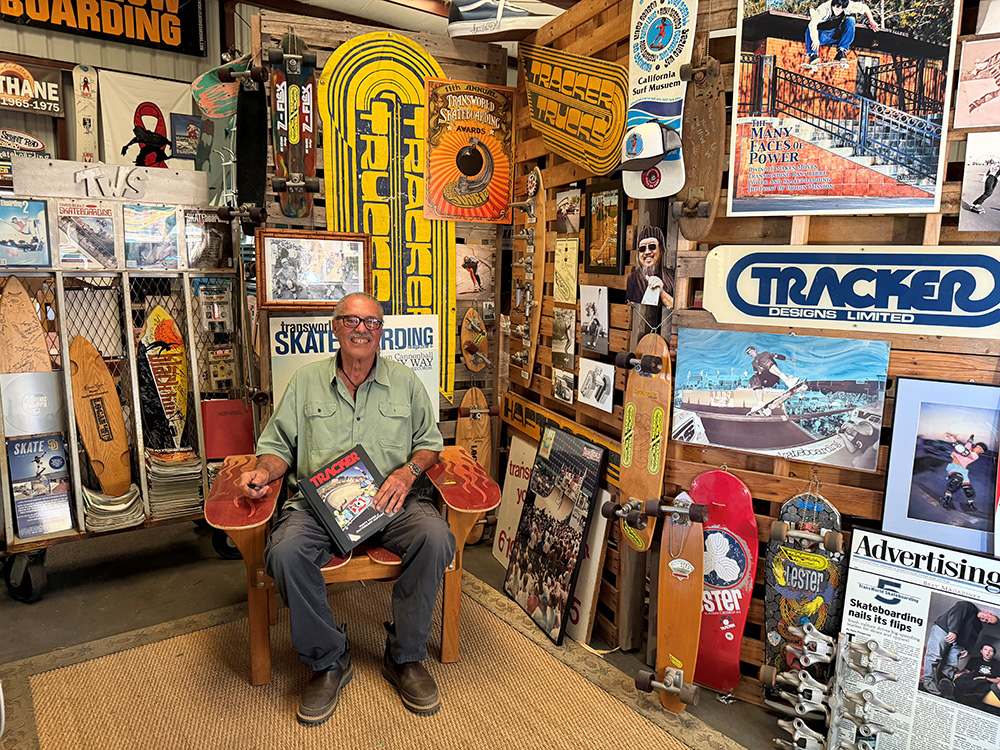
Photo/Saul Rios
She initially knew little about the skateboarding business her future husband had helped build. When they met in 1984, he was already immersed in skateboarding culture—working with Tracker on new parts and co-founding Transworld Skateboarding magazine the year prior.
“I had no idea that skateboarding was that big of an industry,” Louise Balma said.
But she soon became involved in Tracker, using her professional background as an architect to design trade-show booths and improve the company’s sales displays.
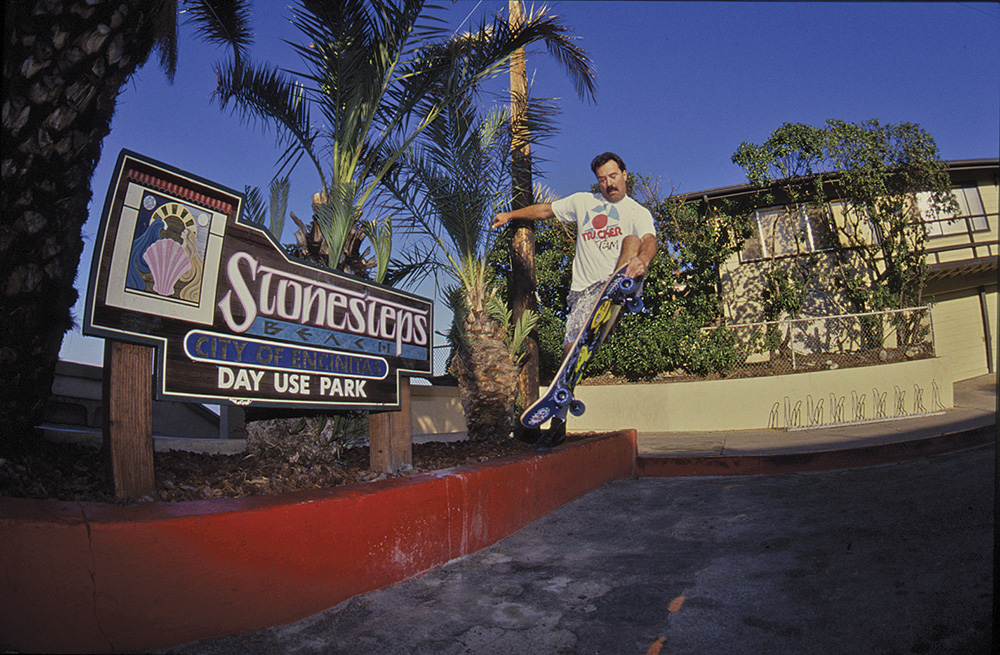
Photo/Courtesy of Larry Balma
“I was really doing a lot more work for him after hours than I was in my real office job,” she said.
As she integrated into his skateboarding world, Larry Balma entered hers. In 1994, the couple moved into their current Oceanside home, taking over their first 4 acres of avocados that came with the property and embarking on a new agricultural endeavor.
“Now I had something to talk about at Louise’s huge family parties,” he said.
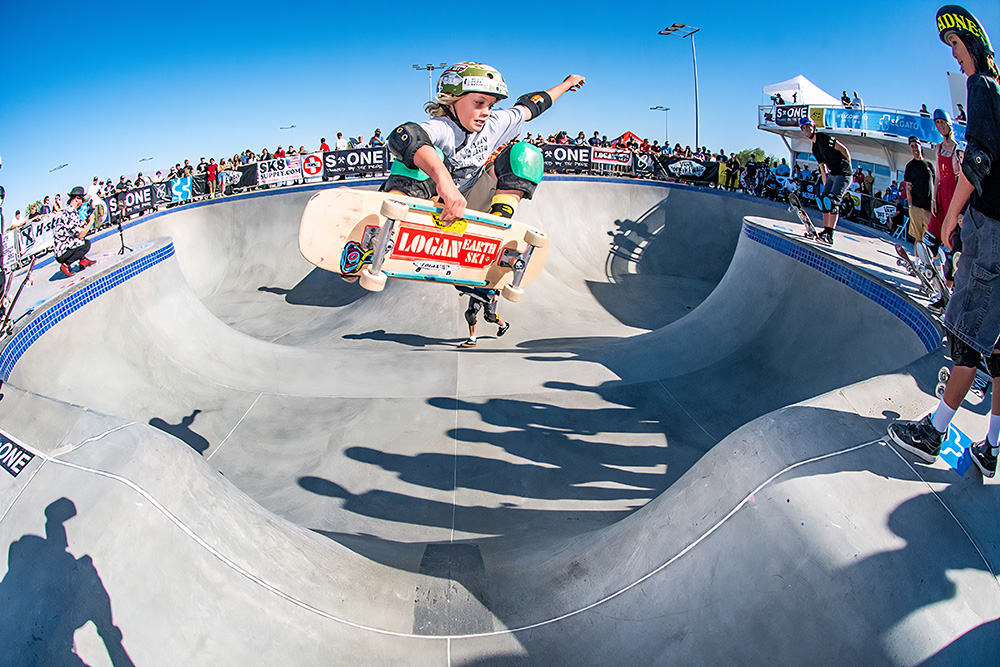
Photo/Lance Smith
Building a better board
Balma’s fascination with skateboarding began in 1958 when, as a 14-year-old in Orange County, he saw someone riding a skateboard for the first time. He was captivated. The moment inspired him and a friend to try it.
By the early 1960s, the sport had exploded in popularity, prompting Southern California surf shops and toy stores to begin selling skateboards. But the equipment was crude. Boards broke easily, offered little traction and were fitted with steel wheels that performed poorly on rough pavement.
“You just hit a pebble or something bad on the street and… you’re on the floor,” Louise Balma said.
Larry Balma remembers returning home regularly with cuts and bruises from falls.
“I’d come in the house, and my mom would see me and she’d go, ‘Oh my god, what happened?’” he said.
The introduction in the 1970s of urethane wheels, which were already used on some roller skates, dramatically improved ride quality and helped pave the way for modern skateboarding.
“That was the lightning bolt that made skateboarding become more than just a kid’s toy and started a whole industry,” he said.
But better wheels didn’t fix everything. Balma said he knew a stronger truck would be another game changer.
Drawing on manufacturing knowledge he gained while working as a telephone company lineman and visiting aerospace-related factories, Balma began exploring stronger materials and improved designs.
He launched Tracker Trucks in 1975 with friends Gary Dodds and Dave Dominy. The company’s sturdier trucks allowed skateboarders to stay secure performing maneuvers that are commonplace today, whether that be making jumps off a high wall or down a flight of stairs.
“On a skateboard, you only have two skates underneath you on the board,” Balma said. “Those two skates have to take all the pounding you’re going to give that thing.”
A lasting legacy
Nearly five decades later, Tracker’s influence remains visible. Kelley Apanowicz, a 14-year-old competitive skateboarder from San Diego County, said he’s been using Tracker trucks exclusively for almost five years.
“A lot of people use them for megaramp, where you’re going very fast,” Kelley said. “They turn a little bit less, but they make up for that by being way more stable, and you can make more accurate turns with them.”
In a recent competition, he won riding a vintage 1970s-era skateboard equipped with Tracker trucks likely manufactured in the late 1970s or early 1980s.
Nowadays, Larry and Louise Balma find their interests often overlap. She’s on the Skateboard Hall of Fame and Museum board of directors, and he has served a combined 16 years as president of the South Morro Hills Association of Farmers and Homeowners.
They continue to farm, expanding their avocado acreage through the years, planting experimental varieties, palms and other fruit trees.
“I’m still learning something new,” Larry Balma said.
Manola Secaira is a staff writer for Ag Alert. She can be reached at msecaira@cfbf.com.
In this edition…
• Researchers study potential of agave crop
• Investigadores estudian el potencial del cultivo de agave
• California grazing sector threatened as goat herder wage soars to $240K
• California's pest prevention system needs an update
• Mechanical harvest research bolsters table olive prospects
• Overnight guests add key revenue stream for farms
• Advocacy in Action: Grazing, wild horses and the Endangered Species Act
• Smart sprayers slash farm labor and herbicide costs
• How will early blooms and light crop affect navel orangeworms?
• Finding her second act: Former dancer builds new life with U-pick raspberry farm
• Bountiful Finds: A curated collection of goods made by Farm Bureau members
• Now in season: You can grill just about anything
• The scenic route: Pit stops at California farms and ranches
• Grape expectations: Sweet flavor with healthy twist
• A life in motion: Avocado farmer helped revolutionize the modern skateboard
• Imagine this: Students tell stories about agriculture
• AI in agriculture: Balancing innovation and new risk
• Workforce training program seeks input from employers





.svg.png)
