


From the Fields: Tiffany Holbrook, Sonoma County egg and poultry producer
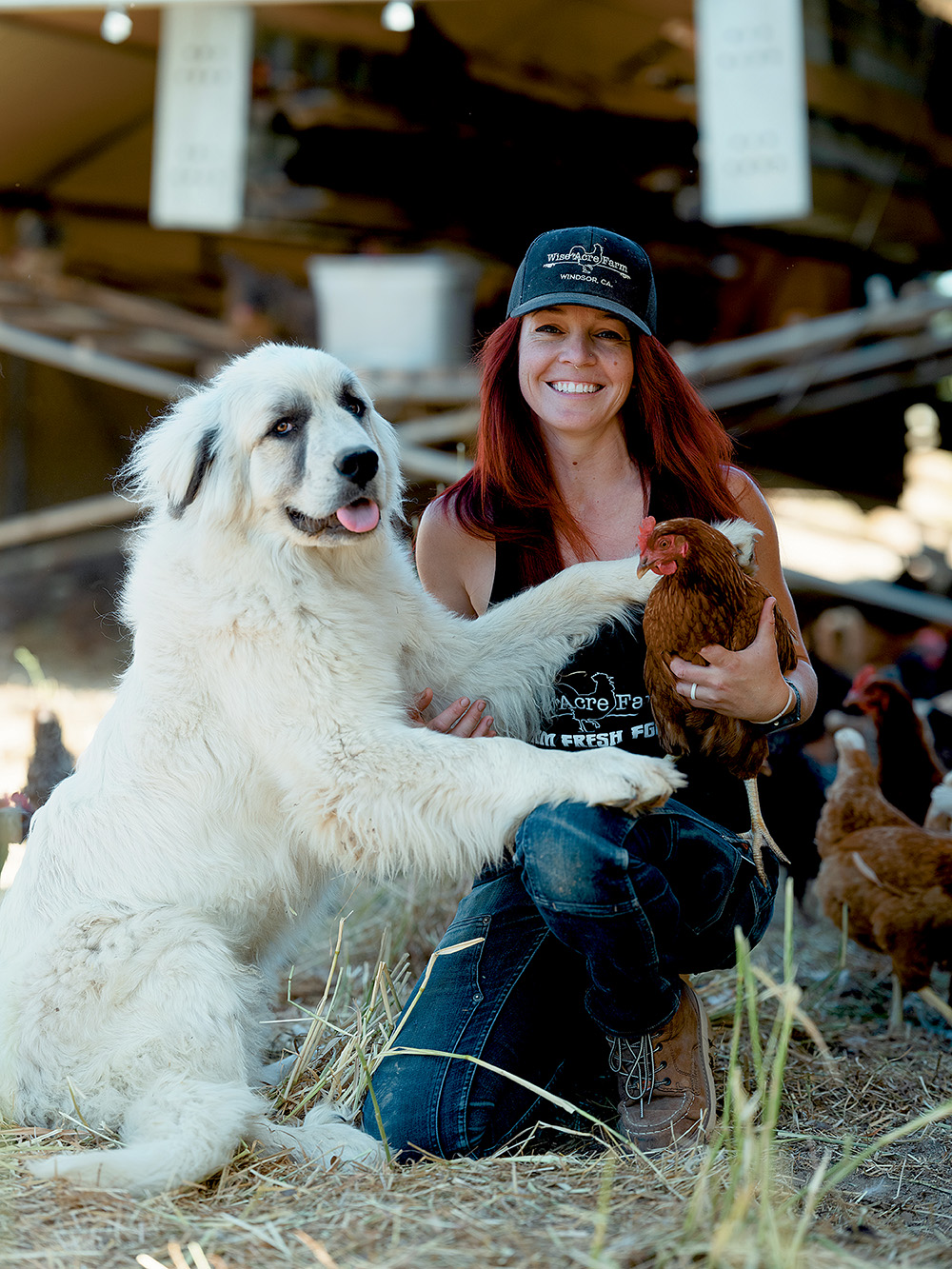
Photo/Paige Green


By Tiffany Holbrook
Sonoma County egg and poultry producer
We just received our second round of meat birds on the farm. They will be kept in a protected brooder for three weeks and then moved out onto pasture. Our broilers grow very large, very quickly and are raised for meat. Our layers stay smaller and produce many eggs each year.
We use a pasture rotation system, moving the birds daily. However, last week we began moving them more slowly so they can graze everything down to create a fire break around the perimeter of the pasture. Our pasture is still green. It’s rare in Northern California to still have green pasture going into mid-May. We expect the pasture will likely remain green through most of June.
A recent heat wave affected our first round of broilers. It slowed their growth because when temperatures rise quickly from around 60 degrees to 80 degrees during the day, the birds reduce their feed intake and stop growing as quickly. Fortunately, aside from that one week of higher temperatures, the weather has been favorable so far.
People are increasingly aware that chickens are vulnerable to disease, and this has brought more attention to flock health. Two years ago, our flock contracted mycoplasma and infectious coryza. We had to depopulate the entire flock and start over, adopting an all-in, all-out management system. Previously, we operated a continuous flock system where we would remove older birds, introduce new chicks and continually rotate age groups. However, due to concerns about avian influenza and our prior losses, we have now transitioned fully to an all-in, all-out system regardless of circumstances.
At present, we are not adding chicks. Instead, we will move out all current birds. We sell them as stewing birds after processing, and we have a strong market for that product. We are also changing our laying hen system. Instead of raising chicks, we will purchase pullets at around 20 weeks of age and integrate them directly into the flock to eliminate the waiting period.
In this edition…
• New school sawmill spurs logging interest
• H-2A rule change puts spotlight on work visa program
• Feedback needed to assess state veterinary shortage
• Nutrition program benefits growers and inmates alike
• From the Fields: Josh Barton, San Joaquin County walnut, almond and olive farmer
• From the Fields: Matt Stayer, Shasta County beekeeper and queen breeder
• From the Fields: Jerry Maltby, Colusa County rancher, feedlot operator and rice farmer
• From the Fields: Tiffany Holbrook, Sonoma County egg and poultry producer
• Growers use pressure bombs to fine-tune irrigation
• State targets sharpshooters from Costco grapevines
• Moth damage rises as growers await new insecticide
• Advocacy in Action: California Farm Bureau tackles labor, immigration and forest management
• Four farm safety priorities this National Safety Month





.svg.png)
