


Feedback needed to assess state veterinary shortage
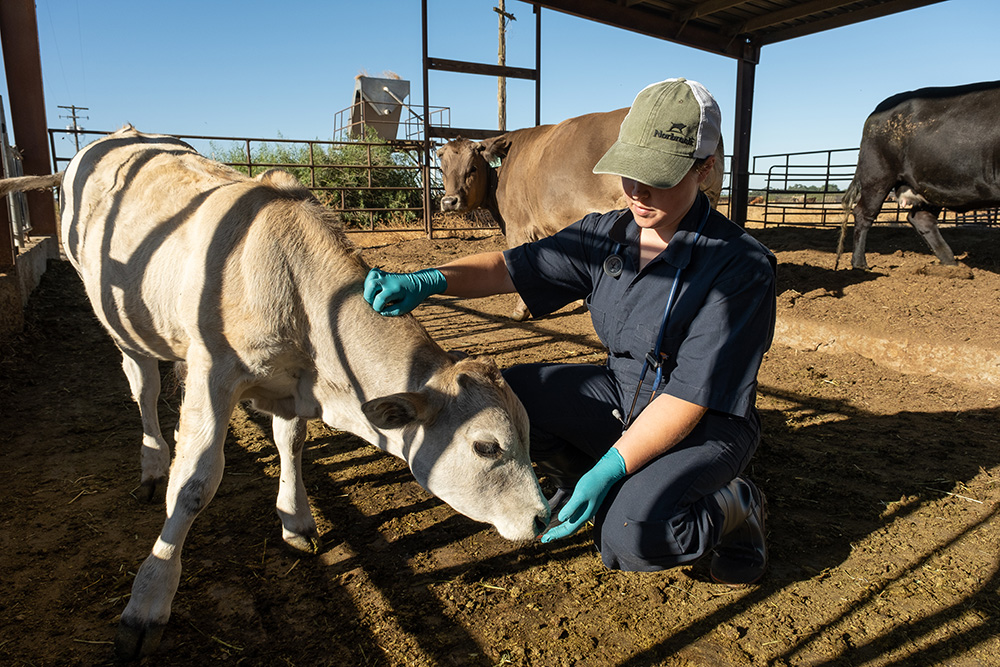
Maia Laabs, a veterinarian from Swinging Udders Veterinary Services in Galt, examines a cow at a Central Valley dairy.
Photo/Steve German


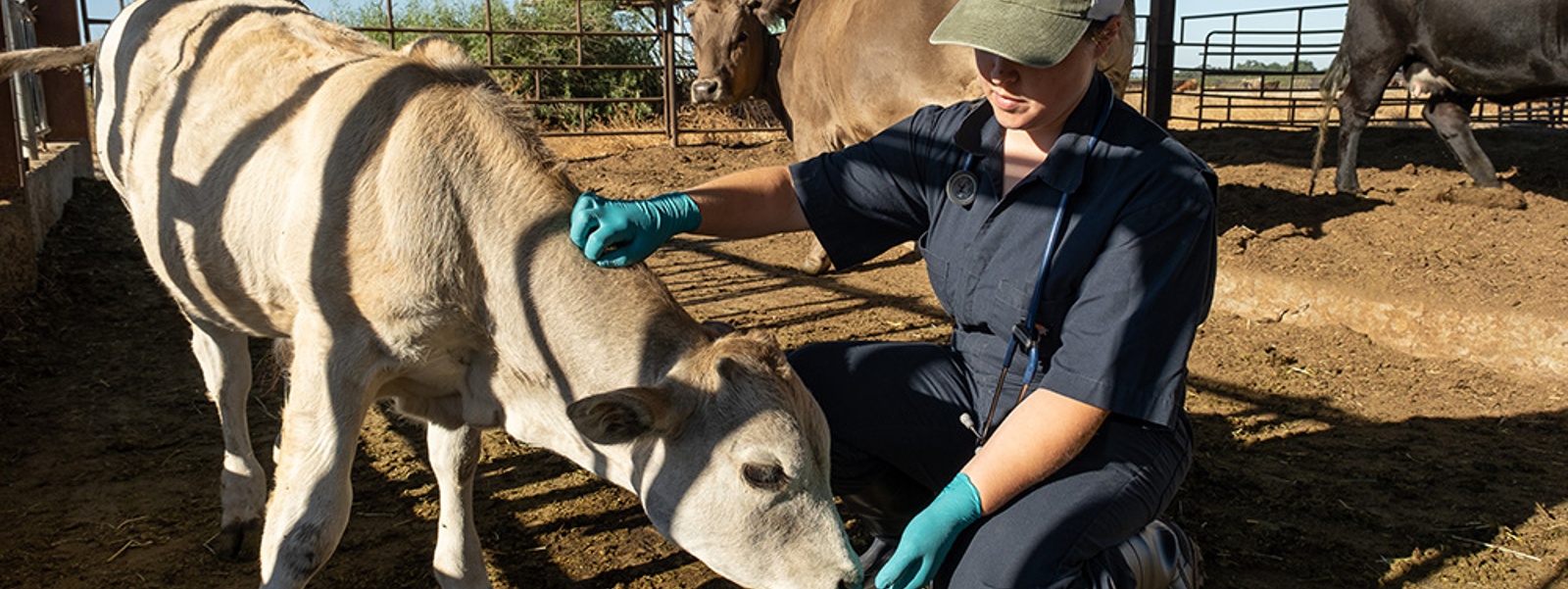
California agriculture depends on a strong network of veterinarians who care for livestock and food animals, yet too many rural communities struggle to access these critical services. We continue to hear the same concern: It has become increasingly hard to find veterinarians willing and available to serve food-animal operations.
This is not simply an inconvenience for ranchers and farmers. Access to quality veterinary care affects animal welfare, food security, emergency response and the long-term future of livestock agriculture.
I experienced this challenge personally on our family ranch.
 One of my son’s cows became seriously ill at a time when our regular veterinarian was unavailable for an extended period. We had no choice but to call another veterinarian who was newer to the profession and lacked the years of field experience our longtime veterinarian had developed.
Unfortunately, due to an initial misdiagnosis, we lost the cow while our trusted veterinarian was out of commission. The loss was a powerful reminder of how critical it is to maintain a steady supply of skilled food-animal veterinarians prepared to serve the future needs of agriculture.
It also reinforced what livestock producers already know well: Food-animal veterinarians are indispensable partners in agriculture. They are there for routine herd health, emergency calls in the middle of the night, difficult calving situations, disease diagnosis, vaccination protocols and animal welfare oversight. Their work protects not only the health of individual animals but also the health of entire herds and the safety of our food supply.
Veterinarians also serve as one of our nation’s first lines of defense against animal disease outbreaks. Whether monitoring for avian influenza, responding to foreign animal disease threats or identifying emerging livestock illnesses before they spread, food-animal veterinarians play a central role in protecting America’s food security and public health.
Despite the importance of this work, recruiting and retaining veterinarians in rural communities remains a major challenge.
Many young graduates face steep student loan debts and often gravitate toward more lucrative, less demanding practices in urbanized areas, choosing to care for household pets. Meanwhile, large-animal and food-animal veterinarians frequently cover vast geographic areas, spend long hours traveling to ranches and farms, and remain on call for emergencies.
As a result, our rural agricultural communities are left with fewer practitioners willing to make late-night ranch calls or handle the physical rigors of large animals.
For some producers, this means waiting days for nonemergency appointments. For others, it means hauling animals long distances for care or struggling to find anyone available to come to the farm. In emergency situations, delays can lead to devastating outcomes for animals and costly losses for producers. Veterinary shortages can impact animal welfare, producer operations and the long-term viability of livestock agriculture in rural communities.
To help document these challenges and identify solutions, California Farm Bureau is partnering with the California Department of Food and Agriculture to gather feedback from producers through a short survey on veterinary access and availability. The information collected may help support future veterinary shortage designations and strengthen participation in the U.S. Department of Agriculture’s Veterinary Medicine Loan Repayment Program.
Through this program, veterinarians who commit to serving designated shortage areas for at least three years may qualify for up to $40,000 annually and up to $120,000 over three years in student loan repayment assistance. Expanding participation in the program could help attract and retain more food-animal veterinarians in underserved areas of California.
Our effort with CDFA reflects the kind of practical problem-solving that Farm Bureau strives to deliver for our members. Farm Bureau is not just focused on advocating for sound policy in Sacramento and Washington, D.C. We are also working creatively with partners such as CDFA to support real-world solutions that can strengthen rural communities and agriculture’s future.
We know that good data matters. By gathering direct feedback from producers, we can better demonstrate the extent of veterinary shortages across California and help ensure rural communities receive the attention and resources they need.
If you raise food animals, including youth livestock projects—regardless of your current access to veterinary care—we encourage you to take a few minutes to complete the survey and share your experiences at Livestock Veterinary Care Access Survey.
Whether you have experienced long wait times, difficulty scheduling emergency care or challenges finding veterinarians willing to make ranch calls, your input is important. Even if you currently have reliable veterinary access, your feedback still helps paint a complete picture of conditions across the state.
Your responses will help ensure the real-world impacts facing livestock producers are reflected in ongoing discussions around veterinary workforce shortages and rural animal care access.
The survey takes only a few minutes to complete, but the information gathered could play an important role in helping California attract the next generation of food-animal veterinarians.
For agriculture, this issue is about much more than convenience. It is about protecting animal health, safeguarding our food supply, and ensuring ranching and livestock production remains viable for generations to come. California’s farmers and ranchers are resilient, but they cannot do this work alone. Strong veterinary partnerships are essential, and together we must invest in building that pipeline for the future.
Shannon Douglass, who raises beef cattle, walnuts, sunflowers, pumpkins, corn and forage crops in Glenn County, is president of the California Farm Bureau. She can be reached at agalert@cfbf.com.
In this edition…
• New school sawmill spurs logging interest
• H-2A rule change puts spotlight on work visa program
• Feedback needed to assess state veterinary shortage
• Nutrition program benefits growers and inmates alike
• From the Fields: Josh Barton, San Joaquin County walnut, almond and olive farmer
• From the Fields: Matt Stayer, Shasta County beekeeper and queen breeder
• From the Fields: Jerry Maltby, Colusa County rancher, feedlot operator and rice farmer
• From the Fields: Tiffany Holbrook, Sonoma County egg and poultry producer
• Growers use pressure bombs to fine-tune irrigation
• State targets sharpshooters from Costco grapevines
• Moth damage rises as growers await new insecticide
• Advocacy in Action: California Farm Bureau tackles labor, immigration and forest management
• Four farm safety priorities this National Safety Month






.svg.png)
