


Processed tomato growers hope for market recovery
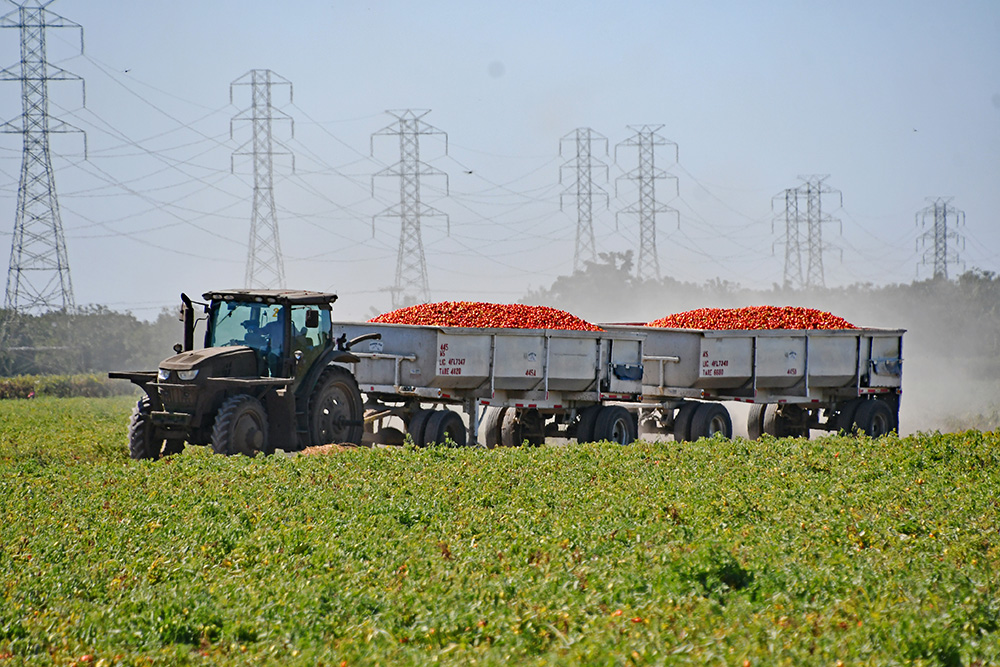
Harvest has started for processing tomatoes in California, with most growers expected to wrap up by the end of October.
Photo/Vicky Boyd


By Manola Secaira
It’s been a tough period for California processing tomato growers as contracted acreage has declined during the past couple years. But with a steady start to the harvest season, growers say they’re on the road to recovery.
California tomato processors this year contracted 185,000 acres, the lowest in more than 30 years, according to a report from the U.S. Department of Agriculture.
The 2026 season also marks the third-consecutive year of declining acreage and the first time in more than 50 years that California farmers planted fewer than 200,000 acres of the crop.
While the 2026 production estimate saw an improvement of 1% from what was predicted in January, the crop still amounts to 11% fewer tons this year than the final contracted production in 2025.
Yolo County farmer Bruce Rominger said his processing tomato acreage is a little less than 900—a decrease of about 50 acres from last year.
“Overall acreage is reduced because there is a lower demand,” Rominger said. “There’s a lot of tomato products in inventory from our big crop last year.”
Mike Montna, president and CEO of the California Tomato Growers Association, said the increased inventory combined with reduced movement, or sales, in recent years led to reduced contracted acres.
He described the decision to contract fewer acres this year as a way to get inventory levels into balance with market demand.
“It’s going to take a couple years,” Montna said. “But at least we have year one under our belt of going through this dynamic to where we can get our acreages back up.”
There has been some improvement. From June 2025 to May of this year, Montna said sales have increased 8.4%, helping reduce the buildup in inventory.
“We’ve turned the corner on the dropping of movement,” he said.
While stronger sales help speed recovery, he added, “it’s not better yet. We still have to do the right thing.”
Northern California farmers have begun harvesting their processing tomato crop, with most growers throughout the state expected to finish by the end of October. High temperatures earlier in the year led to a slightly earlier harvest for some farmers.
“It’s an early year for us,” Montna said. “It’s been a while since we’ve harvested before the first week of July.”
Fresno County farmer Don Cameron started harvesting his processing tomatoes in early July, about a week earlier than usual. He planted 1,666 acres of processing tomatoes this year, about 500 acres fewer than in 2025 due to cuts in contracted acreage.
He described crop quality as good, with yields exceeding their contract.
Cameron said the unusually warm weather in March accelerated plant growth and led to an early tomato crop. Cooler temperatures since then have benefited the plants by reducing heat stress, which can become a problem during periods of extreme heat, he added.
Cameron said he expects to finish his harvest by the end of August. He said the sooner he can finish the harvest, the better, as higher temperatures in the coming weeks could impact the crop.
Assuming growers hit the estimated 2026 crop target, Montna said he expects one more year of the current level of acreage based on market demand and inventory.
“Reducing acres is the responsible, good thing for us to do,” he said.
Even though growers don’t want to plant fewer acres, he added, matching production to processor demand is necessary to maintain a healthy market, especially given the challenges facing agriculture.
Rominger agreed that improving market conditions is important because lower tomato prices in the coming years would make it even more difficult for growers.
At current prices, he said, there’s not much room for prices to fall any further.
“I think people will definitely quit growing or grow fewer acres if the price drops even more,” Rominger said.
Even so, Cameron said he’s hopeful growers will see improvement next year.
“Hopefully, we’ll see some better demand and maybe some exports to relieve some of that oversupply that’s been generated over the last couple of years,” he said.
Although the crop looks good now, Montna said it’s too early to say whether stronger demand and increased exports will materialize in 2027.
He noted there are still months of harvesting left, and weather could potentially impact the crop.
“As with all things ag, Mother Nature is the ultimate partner in determining how the season plays out,” Montna said.
Manola Secaira is a staff writer for Ag Alert. She can be reached at msecaira@cfbf.com.

In this edition…
- 'Rough' peach crop caps a bitter season
- Processed tomato growers hope for market recovery
- Young farmer reflects on her agricultural leadership
- State's farmers seek fairness in trade talks with Canada
- From the Fields: Rod Chamberlain, Riverside County mango and vegetable farmer
- From the Fields: Joe Valente, San Joaquin County winegrape grower
- From the Fields: Trevor Airola, Calaveras County rancher
- From the Fields: Ken Mitchell, Sacramento County squab producer
- Latest campaign positions walnuts as fresh produce
- Feds release Colorado River framework for next 10 years
- Tomato variety key to controlling fusarium stem rot
- Ruling: State can withhold quarantined dairy locations
- Study: Napa wine compliance costs near 18% of production
- Farm Bureau eyes screwworm, food labeling, wildfires, landlines and endangered species
- Planning for retirement: A guide for young farmers
- View full issue





.svg.png)
