


From the Fields: Trevor Airola, Calaveras County rancher
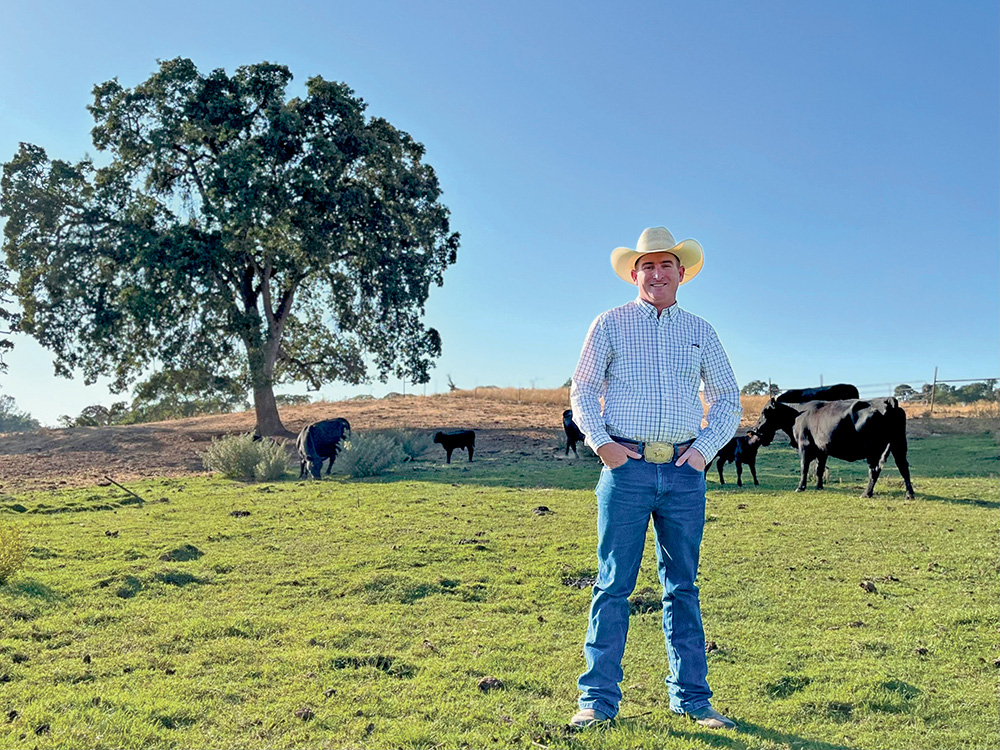
Photo/Josh Swanson


By Trevor Airola
Calaveras County rancher
We’re in what I call a cruising pattern. We receive irrigation water on a 10-day rotation, so every week and a half I have a 24-hour irrigation window that keeps me busy. Outside of that, it’s mostly checking on the cattle, monitoring salt and mineral levels, managing fly control and making sure everything is running smoothly.
We’re about two weeks away from starting our fall calving season, and my spring calves—born in February and early March—are getting ready to be marketed at the end of August. As calving approaches, I’m doing more frequent herd checks to monitor the cows and determine when those first calves will arrive. I’m also checking all my veterinary and medical supplies, making sure everything is stocked, sterile and easy to access. I’m also moving cows that are closest to calving nearer to the handling facilities so they’re easier to reach if I need to intervene.
Right now, I’m selling calves for more than $3 per pound higher than the first calves I sold about 20 years ago. Last year’s fall calf crop is a good example. I kept nearly all my replacement heifers and only sold the steers, yet I still generated the same gross income I was making five years ago with my entire calf crop. The market is strong enough that I can afford to reinvest back into the herd by retaining replacement females, something I couldn’t have done just a few years ago.
Fortunately, predator pressure hasn’t been much of an issue for us. We don’t run cattle in the higher elevations where predators are more common, and we don’t have wolves in our area yet. When selecting bulls, I’m willing to sacrifice some growth potential in exchange for stronger calving ease because my cattle need to be able to take care of themselves while I’m at work. I’ve structured the entire operation around producing independent, low-maintenance cattle.

In this edition…
- 'Rough' peach crop caps a bitter season
- Processed tomato growers hope for market recovery
- Young farmer reflects on her agricultural leadership
- State's farmers seek fairness in trade talks with Canada
- From the Fields: Rod Chamberlain, Riverside County mango and vegetable farmer
- From the Fields: Joe Valente, San Joaquin County winegrape grower
- From the Fields: Trevor Airola, Calaveras County rancher
- From the Fields: Ken Mitchell, Sacramento County squab producer
- Latest campaign positions walnuts as fresh produce
- Feds release Colorado River framework for next 10 years
- Tomato variety key to controlling fusarium stem rot
- Ruling: State can withhold quarantined dairy locations
- Study: Napa wine compliance costs near 18% of production
- Farm Bureau eyes screwworm, food labeling, wildfires, landlines and endangered species
- Planning for retirement: A guide for young farmers
- View full issue





.svg.png)
