


'Rough' peach crop caps a bitter season
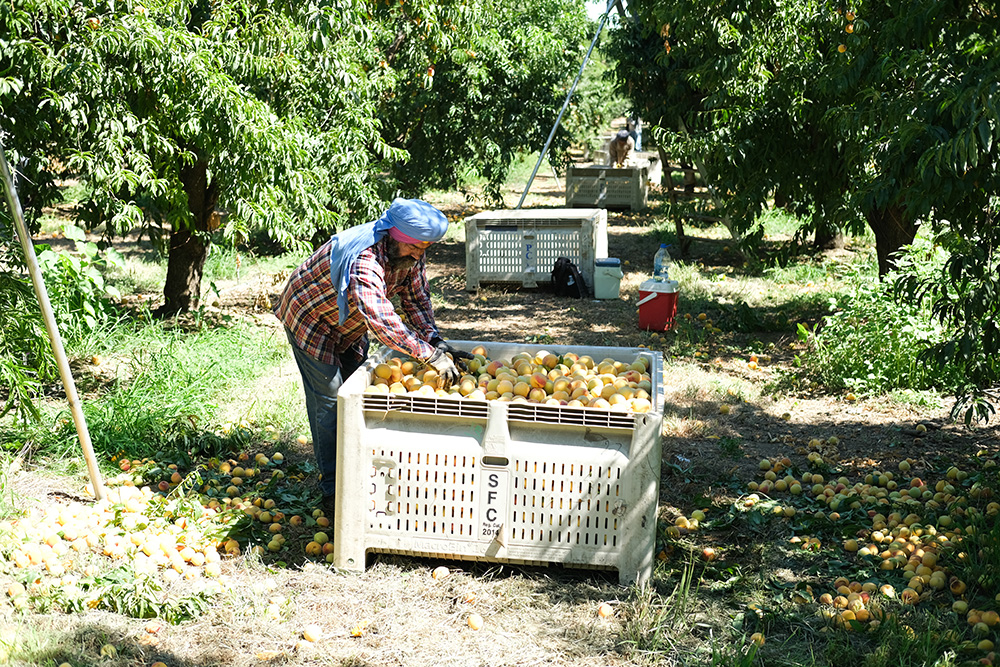
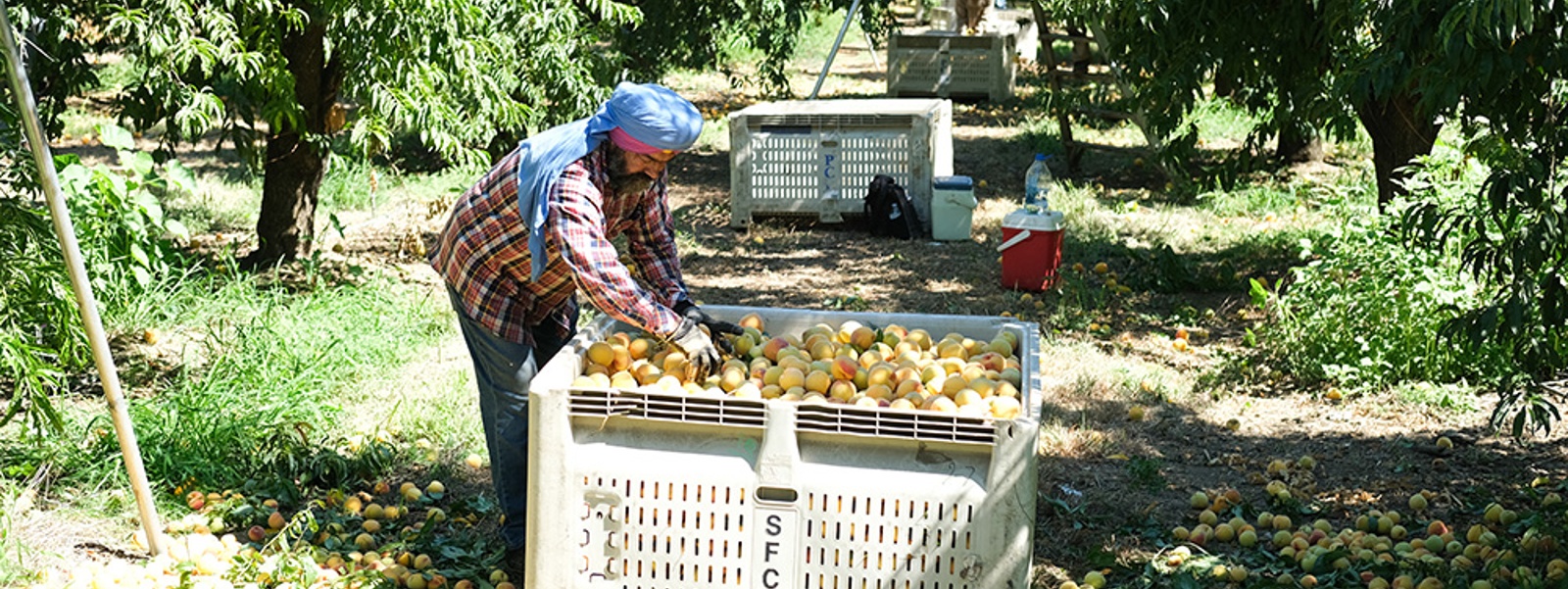
Cling peaches are harvested at Johl Orchards in Marysville. About a quarter of California’s cling peach acreage was ripped out this year following the collapse of Del Monte Foods. In recent years, Del Monte, which filed for bankruptcy last year, was one of two major buyers of the state’s cling peaches.
Photo/Caleb Hampton


By Caleb Hampton
California’s cling peach orchards lurched to life this summer as harvest crews stripped the fruit off trees. For the first time, nearly all of it was bound for canning facilities owned by a single processor.
Earlier this year, the closure of Del Monte Foods’ cannery in Modesto following the company’s bankruptcy left cling peach growers with just one major buyer, Pacific Coast Producers, which processes fruit at canneries in Lodi and Oroville. Unlike freestone peaches, cling peaches are typically not sold fresh.
Del Monte’s collapse left several dozen growers without a buyer for some or all of their fruit, and it put the industry at a precarious crossroads.
Photo/Caleb Hampton
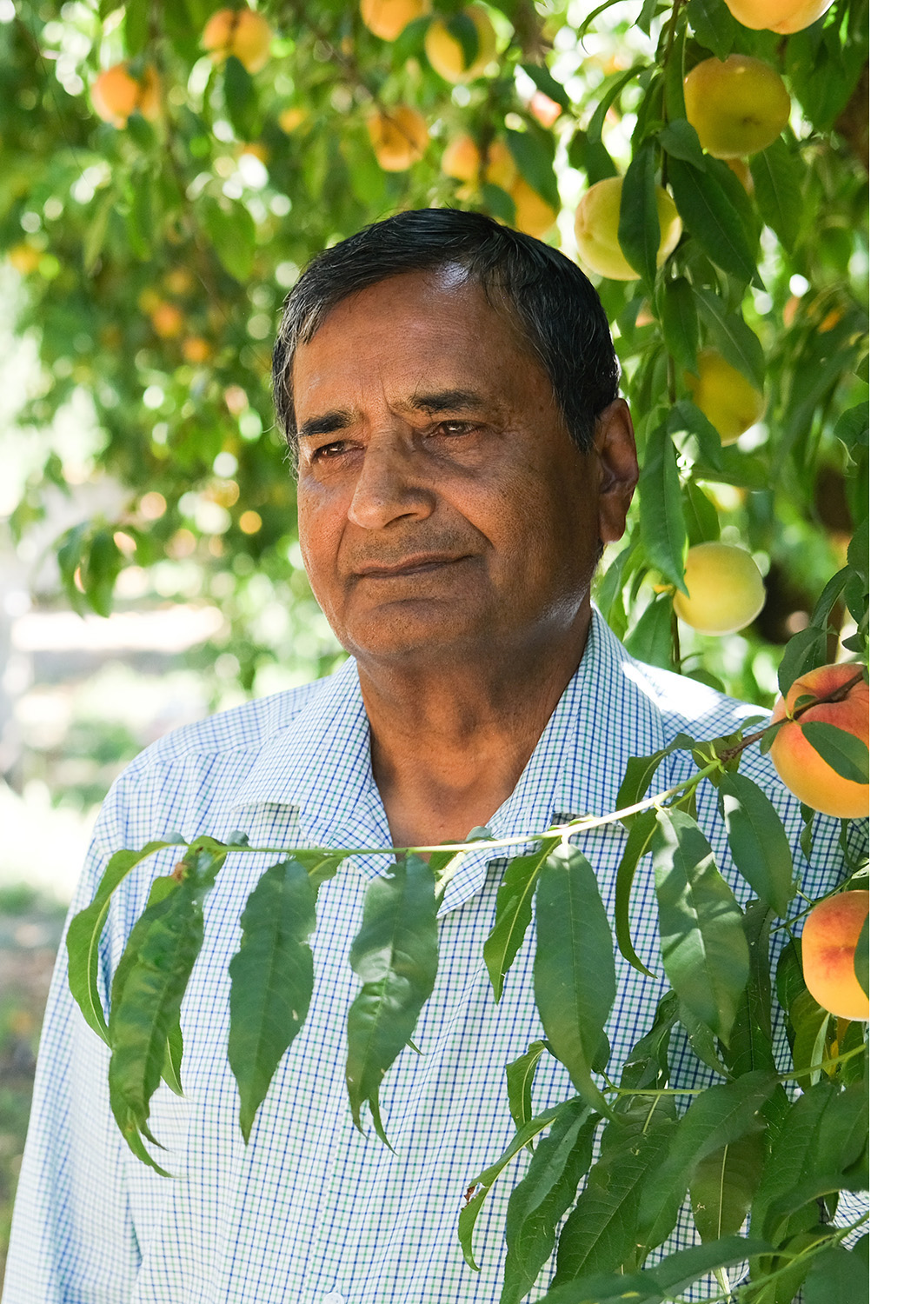
“We grew up with the peach business, and we’ve been phasing out not by choice but because of the situation in the industry,” said Sarb Johl, who at one time grew more than 500 acres of peaches in Yuba and Sutter counties and was left this year with just 40. “We’re getting to the point where we may not be able to maintain it.”
The historic industry, which is centered in the Yuba-Sutter area, was once supported by dozens of processors. But declining demand due to the year-round availability of fresh fruit, combined with rising production costs and cheap imports, caused bearing acreage to fall from a peak of more than 63,000 in 1969 to less than 14,000 in 2024, according to the U.S. Department of Agriculture.
The loss of Del Monte’s business was expected to result in the removal this year of about 3,000 acres of peach trees, according to the California Canning Peach Association.
“I would say the majority of it has been taken out,” said Sutter County farmer Ranjit Davit, who chairs the peach association’s board of directors.
In June, the California League of Food Producers reported bearing acreage had dropped to about 10,000 this year.
Farmers typically plant cling peach orchards—at a cost of thousands of dollars per acre—only after securing contracts with processors that last 20 years, the orchard’s estimated lifespan. It can take several years for a farmer to earn back the initial investment, and Del Monte’s bankruptcy exposed growers to steep losses.
“It’s a huge setback,” said Johl, who removed 80 of his 120 acres of peach trees this year, the youngest of which were just reaching maturity. “They’re all pushed out and burned up.”
In April, USDA allocated $9 million in aid for affected growers. The peach association, which contributed an additional $1.5 million, was set to begin accepting applications for the funding this week.
Rich Hudgins, president and CEO of the peach association, described the aid as a “life preserver” that will partially cover the cost of removing peach trees and transitioning to a different crop.
“It’s allowing the grower to stay afloat for another year,” he said.
According to court documents, the Del Monte contracts growers lost were valued at $555 million in total, with some having begun just last year and been valid through 2044.
“It’s been tough,” Johl said.
This year’s harvest, which started May 30 and was expected to conclude in mid-August, has hardly improved fortunes.
A searing spring heat wave sped fruit development by more than two weeks, causing much of the state’s crop to ripen before it had grown to the size required for canning.
“The fruit is looking pretty rough,” said Johl, who operates two of the three receiving stations that grade randomly selected fruit from each truckload of peaches grown in the Yuba-Sutter area. He said in the past decade he had never seen so much fruit rejected for being too small.
Yields were down about 12% from the initial estimate on the earliest cling peach varieties, with subsequent varieties faring better but still below average, according to the peach association.
Last year, California produced about 211,000 tons of cling peaches. With the removal of acreage formerly under Del Monte contracts, the initial forecast for this year’s crop was 170,000 tons. Last week, the peach association revised its projection to 155,000 tons.
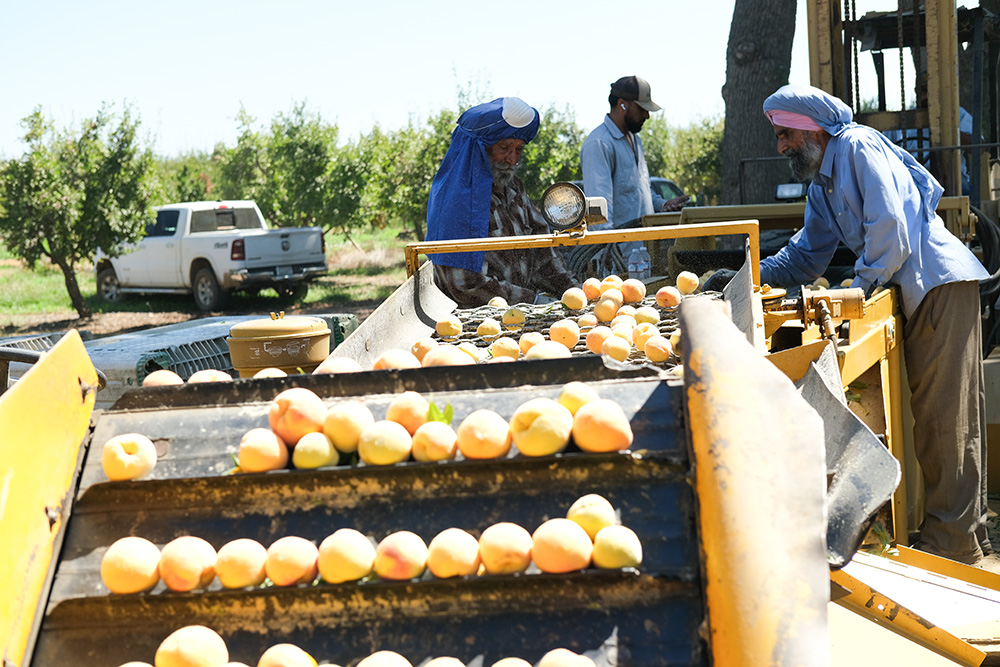
Yuba County grower Kulwant Johl, who is Sarb Johl’s cousin, said the quality challenges this year meant growers will earn less from the crop and were spending more getting it off trees and trucked to canneries. Even after stationing a quality control worker at each bin as fruit was picked by hand, he ran peaches from some orchard blocks this year through a mechanical sorter to get rid of small fruit before loading the peaches onto trucks.
Growers said they were also impacted by higher costs for fuel, fertilizer, labor and other inputs. Meanwhile, their earnings remained flat, at best, as the peach association and PCP agreed to keep the same base price as last year of $610 per ton minus varying penalties for offgrade fruit.
Photo/Caleb Hampton
“It still pencils out, but the profit margin is going down,” Kulwant Johl said.
The fallout from Del Monte’s bankruptcy is not entirely resolved. During an auction of the company’s assets, PCP licensed some of its shelf-stable fruit product brands. To stock those products, the grower-owned cooperative picked up about a third of Del Monte’s cling peach acreage on one-year contracts. But as of last week, the future of that acreage remained uncertain.
Sutter County grower Bhaavan Khera, whose family this year is farming most of its peach acreage on a one-year deal with PCP, said the arrangement left growers guessing how much to invest in their trees.
“It’s still a stressful time for a lot of former Del Monte growers who got picked up, and it’s even worse for the guys that didn’t,” Khera said.
Former Del Monte growers who removed peach orchards in the Yuba-Sutter area said they planned to plant other tree crops—most likely almonds, walnuts or prunes, or possibly pistachios. While those crops may be viable alternatives—many peach farmers already grow them—the loss of peach orchards weighed on families that have grown the fruit for generations.
“If your family has been farming peaches for a long time, there is an attachment to it,” said Kulwant Johl, whose grandfather began farming in the Yuba-Sutter area in 1924 and purchased the family’s first peach orchard in 1946.
He said the labor-intensive crop was attractive to Punjabi farmers who immigrated to the region because it was possible to make a profit on relatively small acreage.
“We all got established growing peaches,” said Khera, whose grandfather began farming in the area in 1978. “There is definitely a sense of pride in growing peaches, especially for the Punjabi community.”
Today, peaches appear on the seals of both Yuba and Sutter counties, and an annual peach festival is held in Marysville. While the fruit’s image is firmly stamped on the region, farmers said they were starting to wonder how much longer they will be able to grow it.
“It’s sad,” Khera said. “It seems a little bit like the beginning of the end.”
Caleb Hampton is an editor at Ag Alert. He can be reached at champton@cfbf.com.

In this edition…
- 'Rough' peach crop caps a bitter season
- Processed tomato growers hope for market recovery
- Young farmer reflects on her agricultural leadership
- State's farmers seek fairness in trade talks with Canada
- From the Fields: Rod Chamberlain, Riverside County mango and vegetable farmer
- From the Fields: Joe Valente, San Joaquin County winegrape grower
- From the Fields: Trevor Airola, Calaveras County rancher
- From the Fields: Ken Mitchell, Sacramento County squab producer
- Latest campaign positions walnuts as fresh produce
- Feds release Colorado River framework for next 10 years
- Tomato variety key to controlling fusarium stem rot
- Ruling: State can withhold quarantined dairy locations
- Study: Napa wine compliance costs near 18% of production
- Farm Bureau eyes screwworm, food labeling, wildfires, landlines and endangered species
- Planning for retirement: A guide for young farmers
- View full issue





.svg.png)
