


Planning for retirement: A guide for young farmers
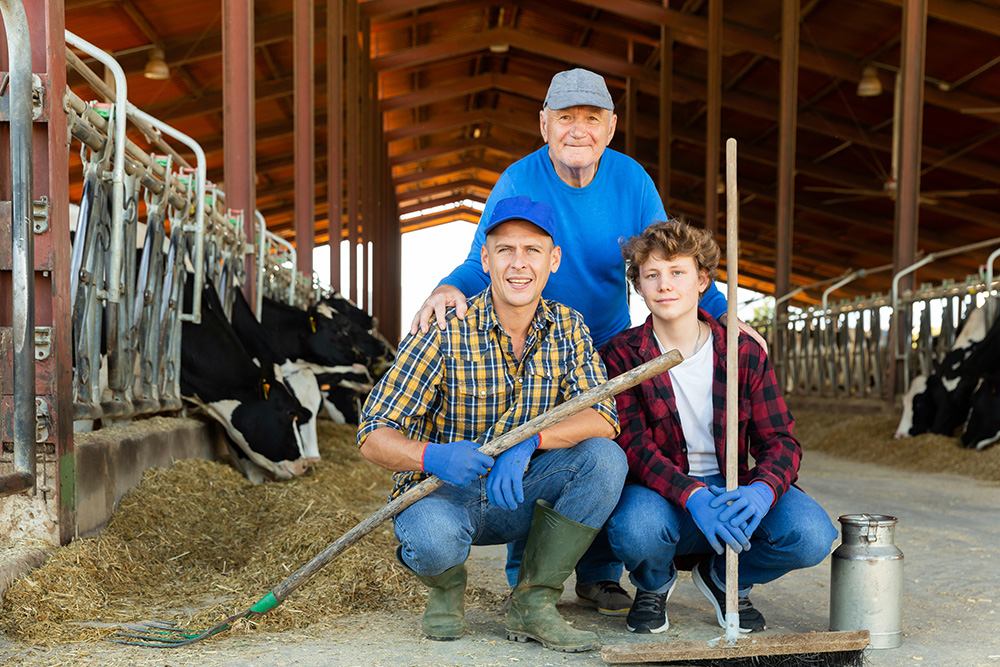
Photo/Licensed image


The following information is provided by Nationwide®, your approved insurance and financial services company.
As a young or beginning farmer, there’s a lot vying for your attention, from building your operation and managing risk to simply making it through the next season. Even though it may be decades away, it’s always a good idea to think about and plan for how you want to one day retire.
“Retirement planning isn’t about giving up farming. It’s about ensuring you have choices and security when the time comes,” said George Schein, technical director of Nationwide Advanced Consulting Group.
The earlier you start planning for retirement, the more options you’ll have down the road. Here are a few actionable steps you can take today to firm up your retirement plans and start taking action to making them happen.
Start with an end in mind
Successful retirement planning takes intentionality and the right mindset. Schein recommends thinking long term even when it comes to the immediate steps you need to take to start planning for when and how you want to retire.
“It’s never too early to start planning for retirement, even if you’re just starting out as a farmer or rancher,” he said.
Account for rising costs
Retirement planning is ultimately about preparing for the financial realities of aging. Health and long-term care costs can be significant, especially in recent years, as those costs have risen sharply.
“Many farmers assume their land or farm will be their retirement,” Schein said. “But it’s critical to account for rising healthcare costs, life expectancy and the unexpected. Diversifying your retirement strategy can help you avoid financial strain later.”
Retirement savings options
Farmers have unique opportunities to save for retirement through plans tailored to the self-employed like individual retirement accounts, or IRAs, and simplified employee pensions, or SEPs.
Any individual worker can establish an IRA, and there are two primary types:
• Traditional IRA. Contributions are tax-deductible, with a $7,500 annual limit in 2026, or $8,600 if you’re over 50.
• Roth IRA. Contributions are not tax-deductible, but “qualified distributions”—those that meet certain IRS requirements—that (hopefully) include earnings are tax-free. The contribution limit for a Roth IRA is the same as the traditional IRA, but once an individual’s modified adjusted gross income, or MAGI, reaches a certain amount, their ability to contribute to a Roth IRA begins to be phased out and will eventually be completely disallowed once a higher MAGI threshold is reached.
A SEP is a specific subtype of IRA that in 2026 will allow an individual to invest up to the lesser of 25% of their eligible compensation or $72,000. Those contributions are based on net self-employment earnings. But unlike a traditional or Roth IRA, you have to be either officially self-employed or an employer to establish an SEP.
“Even small, consistent contributions to a retirement account can grow significantly over time,” Schein advised. “The earlier you start, the more you benefit from compound growth.”
Maximize off-farm benefits
If you or your spouse have off-farm employment, take full advantage of employer-sponsored benefits like 401(k) plans, employer-provided healthcare and life insurance. “These benefits can complement your farm-based retirement strategy and provide additional security for your family,” Schein said.
Nationwide, the Nationwide N and Eagle, and Nationwide is on your side are service marks of Nationwide Mutual Insurance Company. © 2025 Nationwide

In this edition…
- 'Rough' peach crop caps a bitter season
- Processed tomato growers hope for market recovery
- Young farmer reflects on her agricultural leadership
- State's farmers seek fairness in trade talks with Canada
- From the Fields: Rod Chamberlain, Riverside County mango and vegetable farmer
- From the Fields: Joe Valente, San Joaquin County winegrape grower
- From the Fields: Trevor Airola, Calaveras County rancher
- From the Fields: Ken Mitchell, Sacramento County squab producer
- Latest campaign positions walnuts as fresh produce
- Feds release Colorado River framework for next 10 years
- Tomato variety key to controlling fusarium stem rot
- Ruling: State can withhold quarantined dairy locations
- Study: Napa wine compliance costs near 18% of production
- Farm Bureau eyes screwworm, food labeling, wildfires, landlines and endangered species
- Planning for retirement: A guide for young farmers
- View full issue





.svg.png)
