


Fix poor infiltration with gypsum and water tests
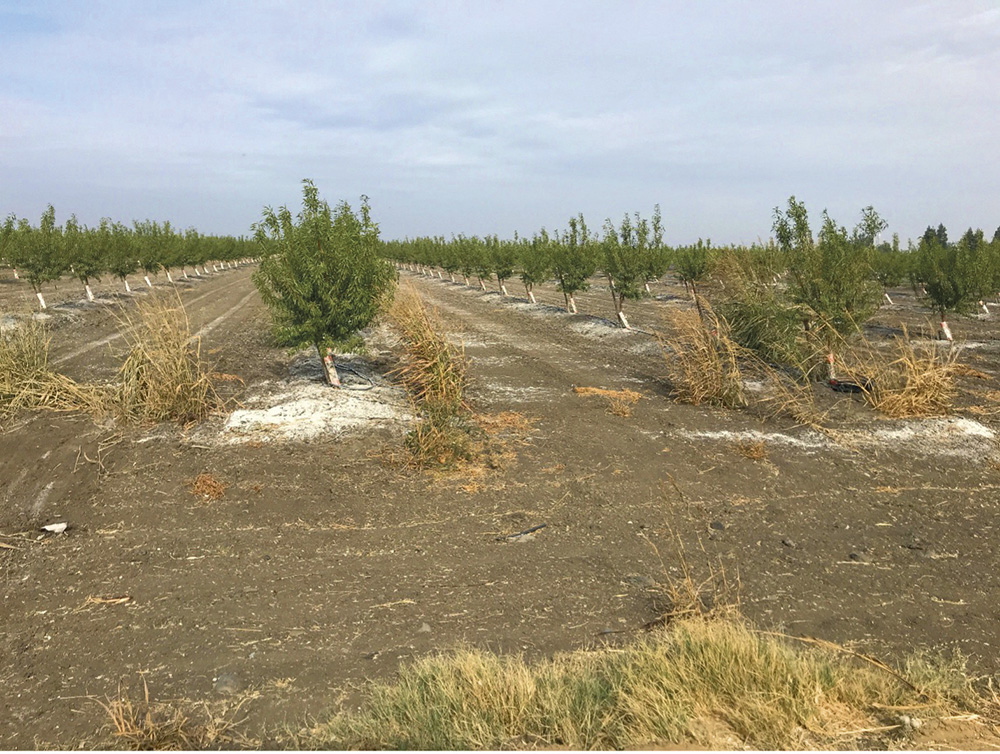
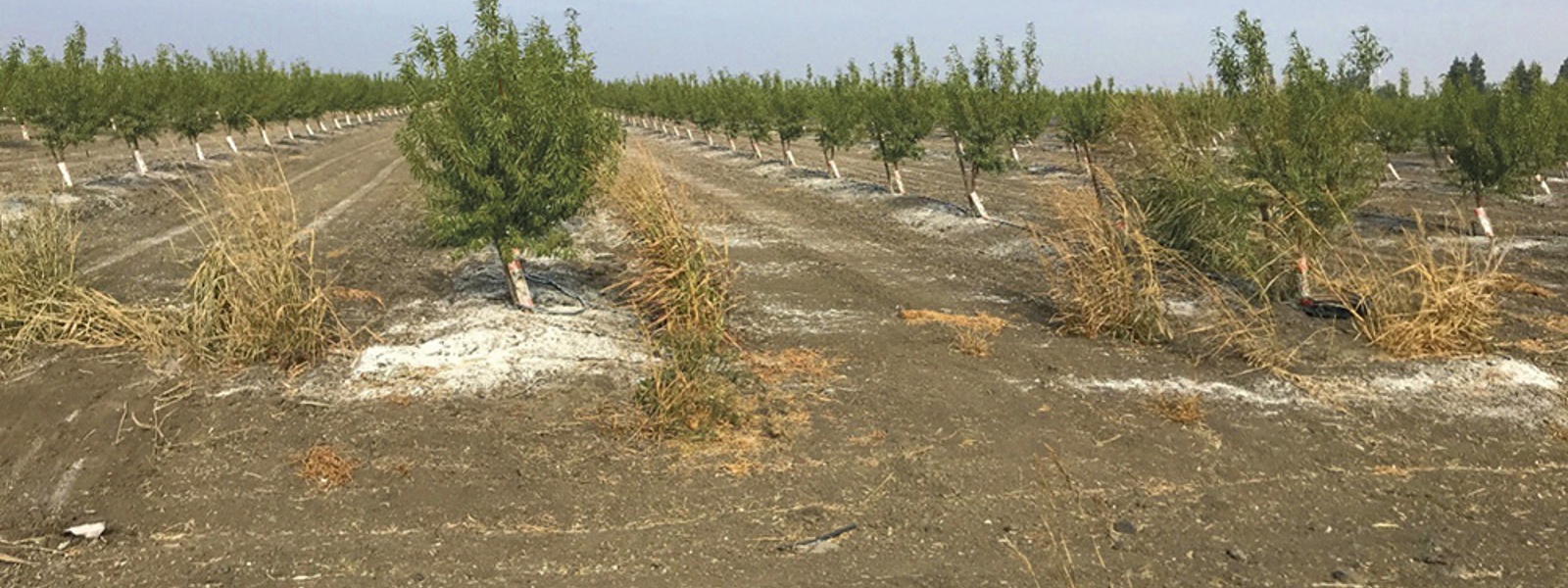
Gypsum injected through sprinkler systems helps restore soil structure and keeps water soaking in. Calcium balance in irrigation water reduces runoff and supports healthier roots.
Photo/Courtesy of Rain Bird


By Charles Burt
What if you’ve done everything right with your irrigation system, but you still see water running off your fields—and maybe even signs of calcium deficiency?
 When the soil surface becomes sealed, water can’t soak in properly, and air can’t move through the soil. This means plants may not get enough water even though you’re irrigating. The extra runoff can also spread diseases across the field and cause weeds to pop up where they shouldn’t.
In California, there are large areas of almond orchards with poor growth, water soaking issues and diseases such as phytophthora. It’s fair to wonder if these problems are connected. When you see fields with struggling or dead trees, it often represents a significant loss of time and money.
On the east side of the San Joaquin Valley, very clean water washes away the small amounts of natural salts in the soil. When that happens, the top layer of soil can fall apart and lose its structure, eventually forming a hard, sealed surface. This issue gets worse when there isn’t enough organic material in the soil, which is common in some orchards.
In other places, the problem happens for a different reason: The water doesn’t have enough calcium compared to magnesium and sodium. This imbalance can also cause the soil to break down and lose its structure.
Farmers commonly use two main ways to fix calcium deficiency and poor infiltration. One is to add the right materials directly into the irrigation system, such as drip or sprinkler lines. The other is to spread gypsum on the soil—especially in field crops—and mix it in.
 Gypsum works by adding calcium, which helps balance the water and soil so water can soak in better. It also provides calcium as a nutrient for plants. This isn’t a quick fix or guesswork. It’s a practical solution based on what a water test shows is needed.
Even though adding gypsum to irrigation water can work well, it has also created challenges through the years with the equipment and the materials used. Based on 40 years of experience, the following recommendations can help improve results and avoid common problems:
• Start with a water test. This will show how much gypsum should be added and whether acid is needed to lower the water pH to about 6.5 before the gypsum is injected. Lowering the pH helps remove carbonates and bicarbonates from the water.
• Always inject gypsum before the irrigation filter, not after it.
• Use only the dihydrate form of gypsum (CaSO₄·2H₂O). Another material called anhydrite (CaSO₄) is sometimes sold as a “gypsum equivalent,” but it dissolves much more slowly and does not work the same way. In Northern California, many growers saw poor results in the past because the “gypsum” available was actually anhydrite.
• The gypsum should be ground very finely. Material fine enough to pass through a 325-mesh screen works much better than the older 200-mesh standard. However, very fine gypsum can clog augers in storage silos, so it works best when supplied in bags.
• Inject gypsum every time you irrigate. Frequent, low-rate applications help treat the water more consistently.
• Gypsum silos can clog near the bottom if the gypsum arrives damp or if the silo is not completely emptied before winter. Better silo design, improved drying systems and stronger vibration systems may help reduce plugging problems.
• The gypsum should contain at least 95% dihydrate gypsum. Ninety-eight percent purity is even better and commercially available. Pay close attention to impurities. The remaining 2% to 5% may contain hard materials such as anhydrite or lime that can wear out or clog microsprinklers and spray nozzles. Insoluble materials can also settle at the ends of hoses.
• Injection equipment needs regular maintenance. This includes replacing gaskets, checking valves yearly, greasing fittings, changing pump oil and properly adjusting valves. Operators should be trained on what to inspect daily and seasonally. Clear labels on machine valves would also help.
• A high injection rate using very pure, finely ground gypsum is about 8 milliequivalents per liter (meq/L) of calcium. Water quality test results determine the actual amount needed. As a general guide:
1 meq/L = about 250 pounds of dihydrate gypsum per acre-foot of water.
1 meq/L = about 45 pounds of dihydrate gypsum per hour for every 1,000 gallons per minute of irrigation flow.
Broadcast gypsum applications work best when the gypsum is mixed into the soil and exposed to water moving through the soil. Medium-ground gypsum can also be spread in the wetted area around trees and vines irrigated with sprinklers or microsprinklers. This is one reason these irrigation systems can be especially useful in orchards and vineyards.
For soil applications, lower-cost gypsum with about 90% purity can be more economical than high-purity “solution grade” gypsum, as long as the impurities are not clay or boron. Lime impurities are usually acceptable for soil applications. In some cases, adding lime intentionally may even help, since many soils have low pH, and lime—not gypsum—is the correct treatment for acidity problems.
Charles Burt is professor emeritus of irrigation and founder of the Irrigation Training and Research Center at California Polytechnic State University, San Luis Obispo. He can be reached at charlesmburt@gmail.com.

In this edition…
• Labor expenses push farmers to automate
• Policymakers, ag leaders gather to discuss key issues
• Regulatory costs put Napa County wine future at risk
• CCA Today: Managing soil health using biostimulants
• Counties struggle with new abandoned orchard law
• On the Record: How farmers can help fight wildfires
• Virtual workshop on disaster relief funding is July 9
• Local farmers grow malting barley for brewing beer
• How can growers monitor and control citrus scale pests?
• Water uniformity tool helps farmers identify savings
• Fix poor infiltration with gypsum and water tests
• Dial 811 first to protect your land, workers and neighbors
• Advocacy in Action: Farm Bureau tackles New World screwworm, USDA support, fungicide strategy, Colorado River and employment technology





.svg.png)
