


On the Record: How farmers can help fight wildfires
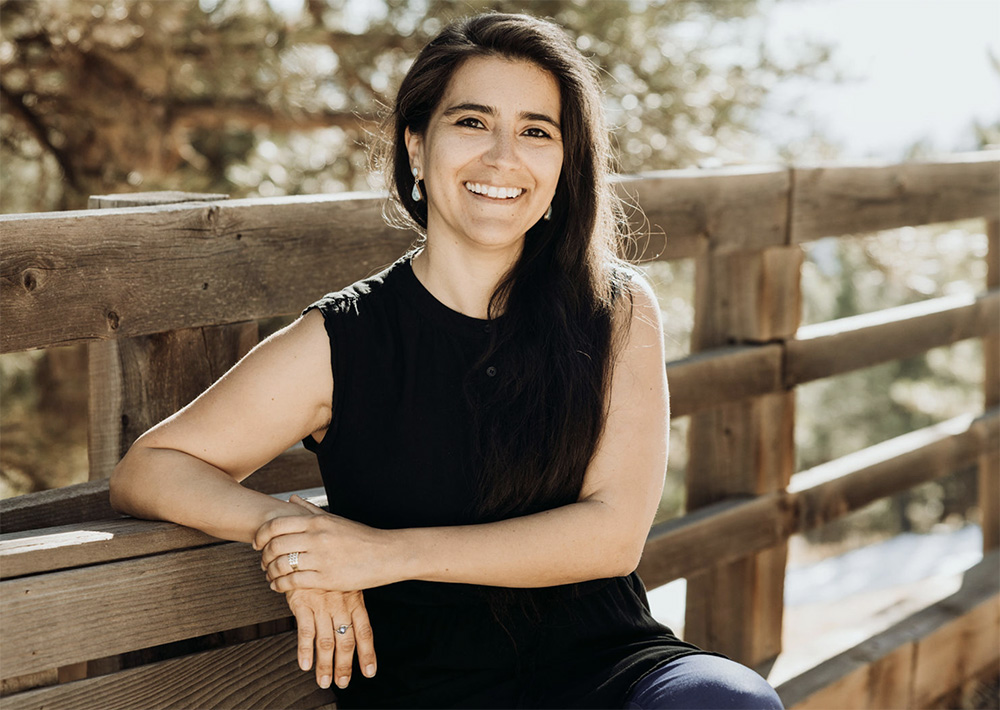
Natalia Pinzón co-founded Farmer Campus, which offers education and tools for farmers and ranchers.
Courtesy of Natalia Pinzón



In 2017, as dozens of wildfires ravaged California’s wine country, University of California, Davis, researcher Natalia Pinzón witnessed the devastation firsthand. The fires underscored a critical gap: Farmers and ranchers needed to be more actively included in the state’s wildfire preparedness and mitigation efforts.
Pinzón spoke with Ag Alert® about her research on wildfire impacts to agriculture and the role farmers and ranchers can play in fighting them. This interview has been edited for length and clarity.
What risks do wildfires pose for people in agriculture?
We’re talking about lost fencing—thousands and thousands of miles of lost fencing, which is so expensive. We’re talking about losses to irrigation systems, whether it’s drip irrigation or sprinkler systems, but also pipes like underground irrigation.
We’re talking about infrastructure that has been sometimes handed over generations. It can be really hard to recover from the loss of that infrastructure. We’re talking about huge emotional stress and trauma.
We’re talking about loss of animals, loss of life, illness in animals. Some farmers are losing in their orchards multiple seasons of crops, not just the one season … from smoke damage that then impacts the actual tree.
Evacuations, power outages can put an entire operation under, especially for the farms that are just starting out. I’ve found that it’s the smaller, beginning farmers, the first-generation farmers, that are especially vulnerable. They don’t have as much access to the social support systems, the institutional infrastructure, as well as the multigenerational infrastructure that can help an operation. They’re even more likely to quit after a wildfire.
You’ve described farmers and ranchers as overlooked allies in wildfire mitigation. What role do you see them playing?
On the ground, I see farmers and ranchers playing really important services. First, they manage fuel loads. They do it through burning, and they do it through grazing, so managing rangelands.
Also, a lot of them have fire experience. One out of 10 of my respondents for my survey were firefighters, either currently or before. So, there’s a comfort with fire that I’ve found in the farmers that are adapting and interested in adapting, and being able to keep working within a fire ecology of California.
They also create the social infrastructure that is so important during disaster response because during a disaster, what we need most for immediate response is integrated social networks and integrated communities that can leverage existing resources quickly and mobilize. That can make a huge difference for a community’s ability to survive an event like this.
The family farms that are integrated within their communities in some way or another have that infrastructure, those relationships that motivate them to respond. They’re providing mutual aid. They’re helping farmers. They’re helping their neighbors evacuate animals. They’re helping evacuate people. They’re helping fight fire.
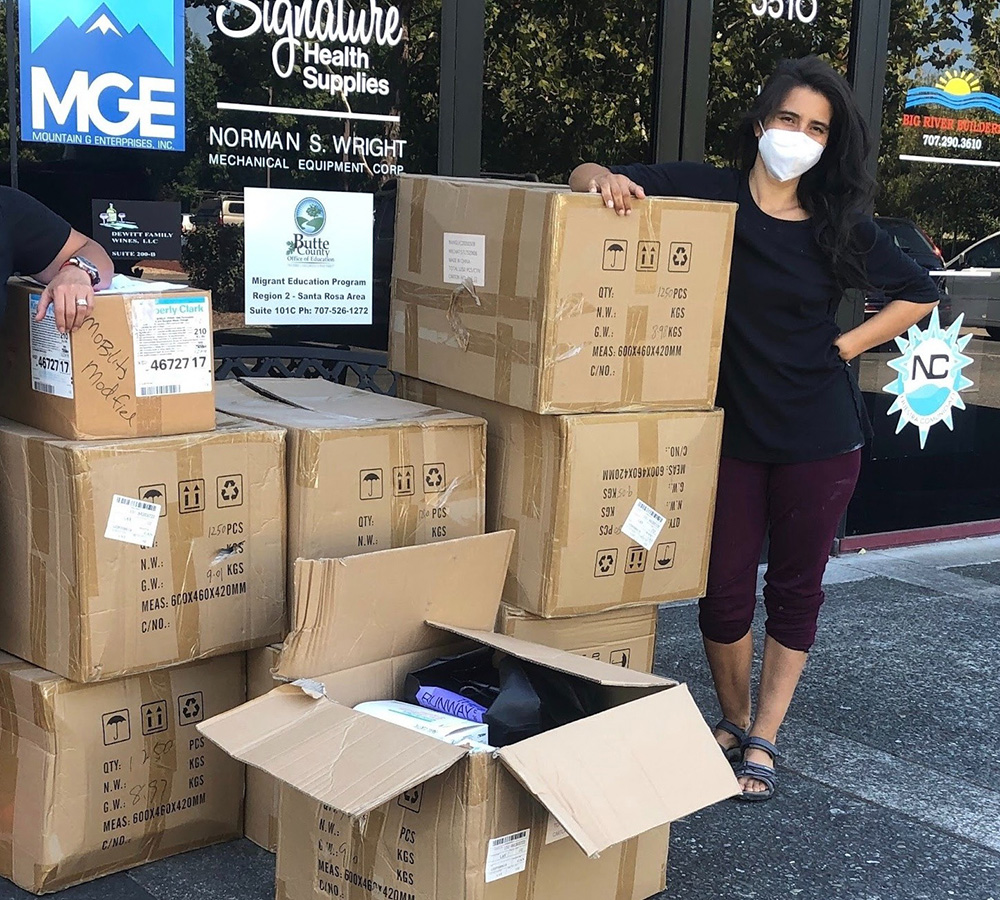
Courtesy of Natalia Pinzón
A lot of our farmers are not leaving their operation, or they’re coming back as soon as they can and defending against the wildfire. I’m not saying that with praise. I do admire them, but it’s very concerning because it’s a human safety concern.
It shows the commitment and courage that they have to do this, but also their love and integration within their community because they’re not just defending their own properties. I think 70% of my respondents were defending directly against the wildfire for their neighbors. They were providing local knowledge to the fire respondents.
I’ve been able to draw a lot of conclusions about how important farmers are, not just in their management, and I think they’re overlooked because on a state planning level, we’re not thinking, “OK, how can we integrate these people who are managing so much of our land within our fire management and planning?” And that’s something that I want to change.
What tools are you offering farmers and ranchers looking to be better prepared?
We used to do what we called fire town halls where we’d go to different communities that are high fire risk but also have a strong agricultural base. We’d come together and talk about some of their concerns and risks as a community and what we can do to reduce those risks.
We did that for a number of years, and then from that work, we created an online course (focused on) what to do before a fire comes from an ecological perspective, how to understand how fire might move through your landscape, how to understand what areas are at risk, ways to learn how to manage a fire and when you know you can’t manage it anymore, fire suppression tactics.
We also have a section on before the fire, and then we have one during the fire. The majority of our focus is evacuation planning, shelter-in-place planning, relocation of animals, how to evacuate humans and animals safely. We have this in both online course as well as in a workbook, which we’re turning into a book, and in workshops.
And then after fire, we look at financial recovery, we look at remediation, community understanding like community assets and community risk planning and how to think long term to be more resilient within a fire ecology.
What advice would you give to a farmer or rancher ahead of peak wildfire season?
First, we have to take care of the humans: How can they support their employees and their families and their safety? Having a plan for who’s going to communicate what to whom during an emergency is really important. Preparing the crew maybe once or twice a year: X person takes care of releasing the cattle. X person takes care of opening up all of the fencing so that the emergency responders can come in. And X person works to hook up the water sources.
Farmers within fire-risk areas where the fire can plausibly come onto their property will want to be thinking about their exact risks. For example, if they might have power shut-offs, do they have backup systems in place to irrigate their crops or to get water to their livestock safely if they have to evacuate? Emergency response is No. 1.
No. 2 is fuel load management and fire reduction. Embers can travel 3 miles, so even if you don’t have a lot of fuel around your property, your structures could still get set on fire if there is a fire within 3 miles.So, reducing your buildings’ risk of being set on fire, managing grasses, managing the forest, managing shrubs so that they’re not touching the grasses below. And then there’s building hardiness and fire hardiness practices.
In this edition…
• Labor expenses push farmers to automate
• Policymakers, ag leaders gather to discuss key issues
• Regulatory costs put Napa County wine future at risk
• CCA Today: Managing soil health using biostimulants
• Counties struggle with new abandoned orchard law
• On the Record: How farmers can help fight wildfires
• Virtual workshop on disaster relief funding is July 9
• Local farmers grow malting barley for brewing beer
• How can growers monitor and control citrus scale pests?
• Water uniformity tool helps farmers identify savings
• Fix poor infiltration with gypsum and water tests
• Dial 811 first to protect your land, workers and neighbors
• Advocacy in Action: Farm Bureau tackles New World screwworm, USDA support, fungicide strategy, Colorado River and employment technology






.svg.png)
