


What is the best strategy to manage Botryosphaeria?
Photo/Licensed image


By Justin Nay
Integral Ag Services, Durham
Botryosphaeria, or Bot, is a fungal disease in walnuts that causes fruit blanks, darkened and shriveled nuts, dead spurs and twig dieback, all of which can significantly reduce yields if left unmanaged. When an infected peduncle—the stem that bears the fruit—is beside next year’s flowers, it can kill two or three flowers, which could produce doubles or triples in good years.
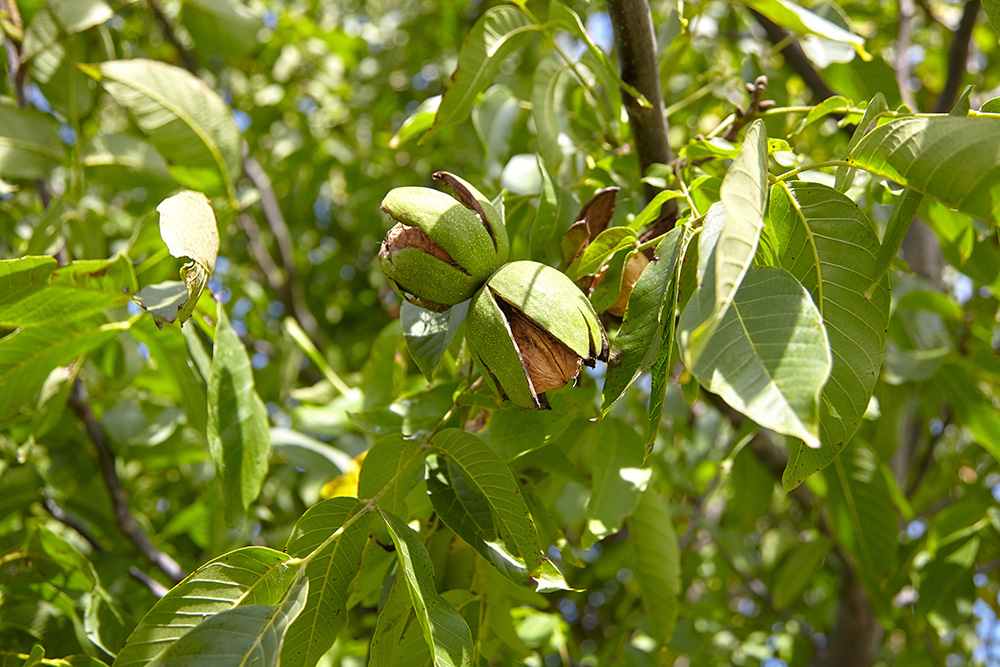
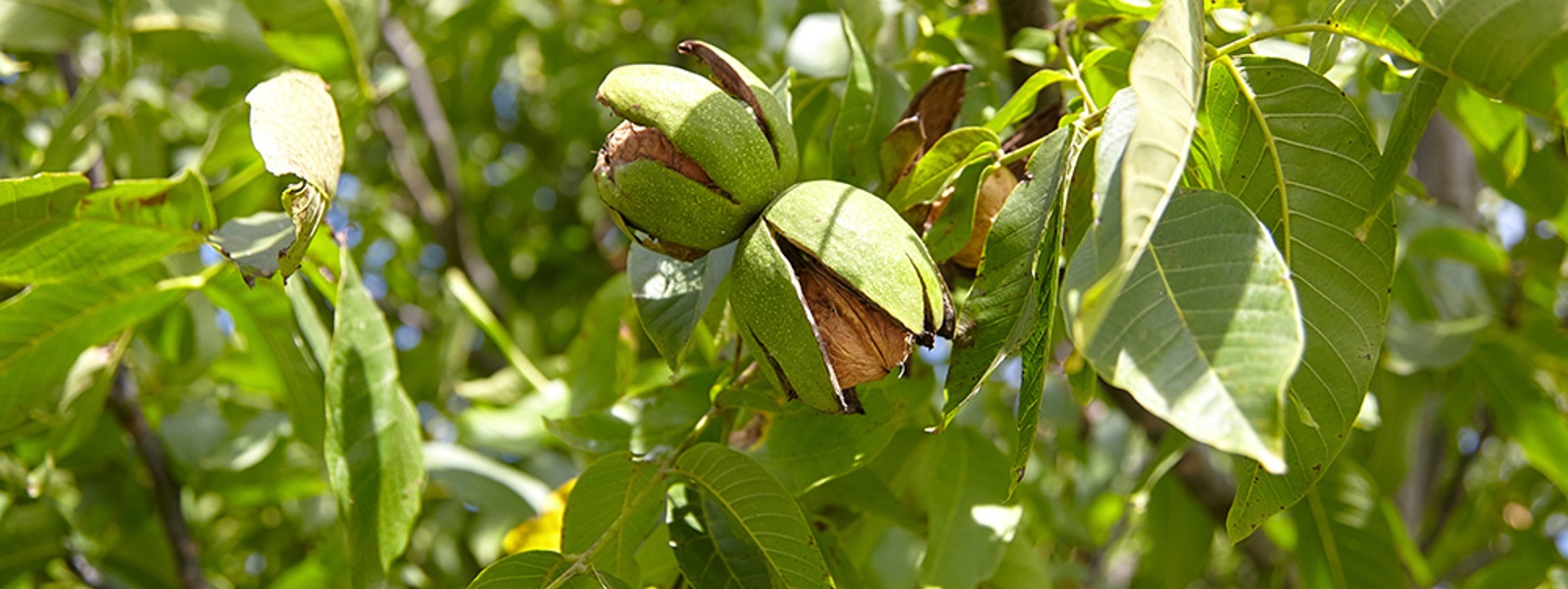
One of the main infection points for Bot is through the husks. When they become infected and remain on the tree during or after harvest, Bot travels into the branch and kills the adjacent flower buds.
Whether the Bot infection enters through pruning wounds or the husk, rachis and then the branch, depending on which Bot species it is, it can continue to grow indefinitely and progressively kill larger sections of wood.
Summer humidity allows some Bot to enter before husk split, particularly in the nuts within the inner canopy that picked up spores over the growing season. Rain during harvest can also create problems with Bot.
Originally, Bot was monitored in the winter by looking at infected spurs with BUDMON, a preseason bud-monitoring test that detects bud infection. Infected wood—a primary source of inoculum—was pruned, removed from the orchard and burned.
Many growers have switched to spray applications at different times of the year. If an early husk-split spray is applied for Bot, it can also help prevent mold if there is a wet harvest. With El Niño conditions expected this year, there is potential for a wetter harvest.
Any of the available fungicides are effective at husk split to help kill latent Bot infections that occurred during the season or at husk split.
Several chemistries are effective against Bot, and resistance hasn’t so far been seen, but growers are advised to rotate to prevent resistance.
Spraying at husk split could be a better choice, especially if it’s a wet harvest.
Reprint with credit to California Farm Bureau. For image use, email agalert@cfbf.com.
In this edition…
• View full issue
• Vineyard workers feel wine industry pain
• El Niño increases chances of winter storms and floods
• Everyone wins when farms invest in their employees
• New DWR director discusses water resiliency plans
• Irrigation can't shield tomatoes from extreme heat
• Owl study assesses rat management in nut orchards
• What is the best strategy to manage Botryosphaeria?
• Wage-and-hour questions from the field
• Vineyard adaptation to heat an economic balancing act
• Advocacy in Action: Dairy, water, wolves and trade
• Are irrigation jets right for your orchard or vineyard?
• Training aims at preventing heat illness in farmworkers





.svg.png)
