


Vineyard adaptation to heat an economic balancing act
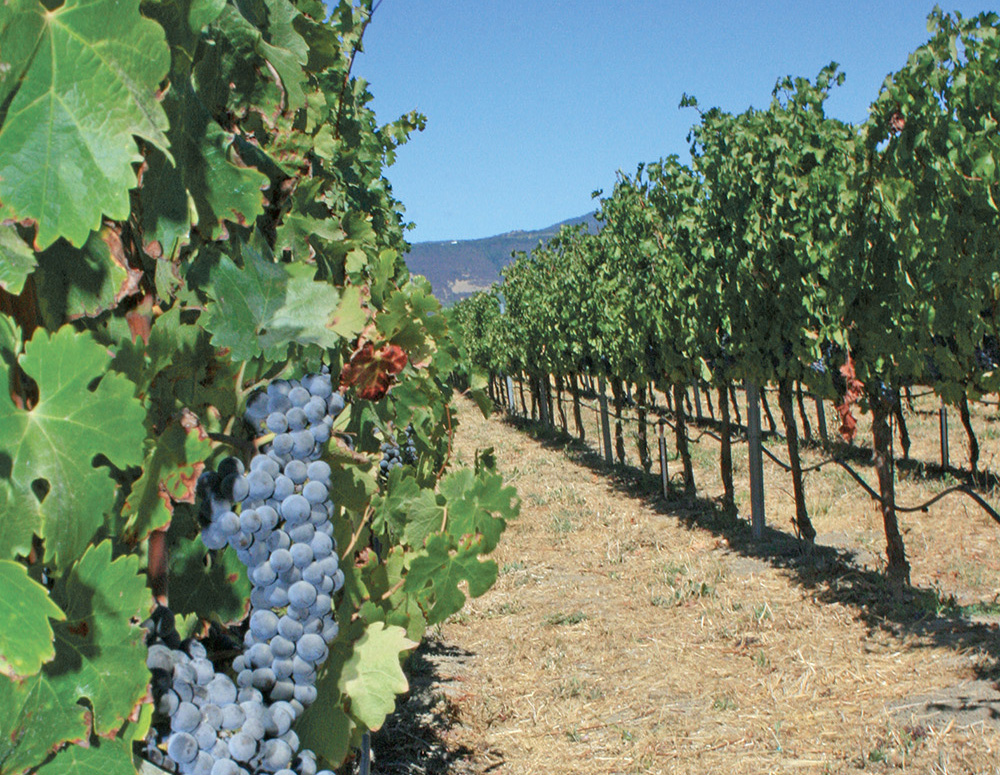
Using cabernet sauvignon production in Napa County as a case study, new research findings concluded no single right answer for how winegrape growers should contend with severe heat.
Ag Alert file photo


Winegrape growers facing a hotter and more volatile climate may have several ways to protect the value of their vineyards, but a new study suggests there is no single best adaptation strategy.
The most profitable choice depends on how severe heat becomes, according to research published this year in the American Journal of Enology and Viticulture.
Under relatively mild warming, growers may be better off maintaining established vineyards and varieties. As heat stress increases, shade technology can become economically attractive. Under the most severe conditions modeled, switching to a more heat-tolerant grape variety produced the strongest returns.
The study, “Economics of Winegrape Adaptation: Technology Adoption, Cultivar Selection, or Migration,” was conducted by researchers from Cornell University and Pennsylvania State University. They used cabernet sauvignon production in Napa County as a case study and evaluated three approaches: adopting shade technology, changing grape varieties or moving production to a cooler region.
The findings underscore a basic economic reality of perennial crops: Decisions made today can affect vineyard profitability for decades.
“Extreme heat is no longer a once-in-a-decade problem for winegrape growers,” said Kristen Barnhisel, winemaker for San Jose-based J. Lohr Vineyards & Wines and president of the American Society for Enology and Viticulture, which publishes the journal.
The researchers built a financial model around the costs and returns associated with each strategy. They considered the expense of establishing and operating a vineyard as well as the effects of heat on production and grape value.
The first strategy was to stay with cabernet sauvignon in Napa and use technology to reduce heat damage. The study focused on shade cloth that can be installed over vines to protect clusters from direct sunlight and extreme temperatures.
Heat can be particularly damaging during extreme events. When temperatures exceed 100 degrees Fahrenheit, grape clusters exposed to direct sun can reach substantially higher temperatures. Heat stress can damage berries, affect compounds important to wine quality and reduce yields.
Shade technology can help mitigate those effects, but it is not free. Installation represents a significant investment, and materials eventually need to be replaced. The economic question for growers is whether the protection afforded by shade is worth the additional capital and operating costs.
The second strategy was cultivar selection—replacing cabernet sauvignon with a variety better suited to hotter conditions. In the model, the researchers used carignan as an example of a more heat-tolerant cultivar.
That approach involves a trade-off. A grower could gain resilience and potentially maintain production under hotter conditions, but changing varieties could affect the price received for grapes or wine. It also means moving away from an established market identity tied to a particular grape and place.
The third strategy was migration—moving vineyard production to a cooler location. The study modeled a move from Napa County to Lake County.
Relocation, however, involves major costs and risks. Establishing a vineyard in a new location requires land, vines, trellising, irrigation and other infrastructure, while a grower gives up some of the economic value associated with an established vineyard and its regional identity.
The economic model showed that adaptation is not necessarily an all-or-nothing decision. With relatively modest changes in climate, continuing to grow cabernet sauvignon in Napa without making major changes remained the most profitable option. This makes economic sense for a grower who already has productive vines, established markets and a premium reputation.
As heat stress increased, however, the economics shifted. At moderate levels of additional heat, installing shade cloth became the more attractive strategy. The technology allows growers to retain established vines and their associated market identity while reducing the effects of extreme heat.
Under the most severe heat scenario examined, changing to a more heat-tolerant variety produced the strongest economic return, the study said.
Moving the vineyard to a cooler region was less attractive than the other strategies across the scenarios examined. The study’s results indicate that migration trailed the other options under every modeled scenario.
The findings don’t mean growers should immediately begin changing varieties or installing shade cloth. Rather, the research provides a framework for considering when the expected benefits of an adaptation measure are likely to outweigh its costs. Such a distinction could be important for California growers, whose vineyards represent long-term investments and grape prices can vary substantially by variety and appellation.
The researchers also considered a factor that can be overlooked in discussions about vineyard adaptation: what consumers are willing to pay. The team surveyed more than 300 U.S. wine consumers in early 2024 using hypothetical wine labels representing the different adaptation strategies. Consumers were asked how much they would be willing to pay after learning that a wine had been produced using a particular climate adaptation approach.
The results suggested consumers could reward growers and wineries for adapting to climate change—at least initially.
Consumers indicated a willingness to pay about 17% more, on average, for wine when they were told shade technology had been used to protect grapes from extreme heat, the research found. Wines made from a different, more heat-tolerant variety received a roughly 12% premium when the variety change was explained as a climate adaptation. Moving production to a different region generated a premium of about 11%.
The findings could give producers another economic incentive to communicate adaptation decisions to consumers.
But the researchers did not assume the premiums would last indefinitely. The study modeled the consumer premiums as temporary, reflecting the possibility that buyers could become accustomed to climate-adaptation practices as they become more common.
The study’s broader message is that climate adaptation needs to be considered in economic and agronomic terms.
Growers already make decisions about irrigation, canopy management, rootstocks, varieties and vineyard sites based on expected production and quality. Increasing heat adds another variable to those calculations.
For a premium cabernet sauvignon vineyard in a relatively favorable climate, maintaining the existing system may remain the best financial decision for years, the study indicated. A grower facing more frequent heat events, however, may eventually find that protecting fruit with shade technology makes sense. At still greater levels of heat stress, changing plant material could become the better long-term investment, the researchers said.
Such progression also illustrates why timing matters. Replanting a vineyard or relocating production is expensive and cannot be done quickly. Growers must make decisions before the full effects of a changing climate are apparent, while also avoiding unnecessary investments in technologies or varieties that may not provide sufficient economic returns.
For California’s winegrape sector, in which variety, location and reputation are closely intertwined, climate adaptation is not simply a question of whether vineyards can continue producing grapes. It is a question of which production system can remain economically viable as growing conditions change.
The study suggests that, for now, growers have multiple paths. The best one may depend less on whether the climate changes than on how much it changes—and how quickly.
“Growers have always adapted to their site, but the pace of change now means those decisions carry real financial weight,” said Markus Keller, science editor of the journal and viticulture professor at Washington State University. “This study gives growers something they haven’t had before: a way to weigh technology, plant material and location against each other in dollar terms, not just growing conditions.”


In this edition…
• View full issue
• Vineyard workers feel wine industry pain
• El Niño increases chances of winter storms and floods
• Everyone wins when farms invest in their employees
• New DWR director discusses water resiliency plans
• Irrigation can't shield tomatoes from extreme heat
• Owl study assesses rat management in nut orchards
• What is the best strategy to manage Botryosphaeria?
• Wage-and-hour questions from the field
• Vineyard adaptation to heat an economic balancing act
• Advocacy in Action: Dairy, water, wolves and trade
• Are irrigation jets right for your orchard or vineyard?
• Training aims at preventing heat illness in farmworkers





.svg.png)
