


New CDFW director addresses priorities, predators
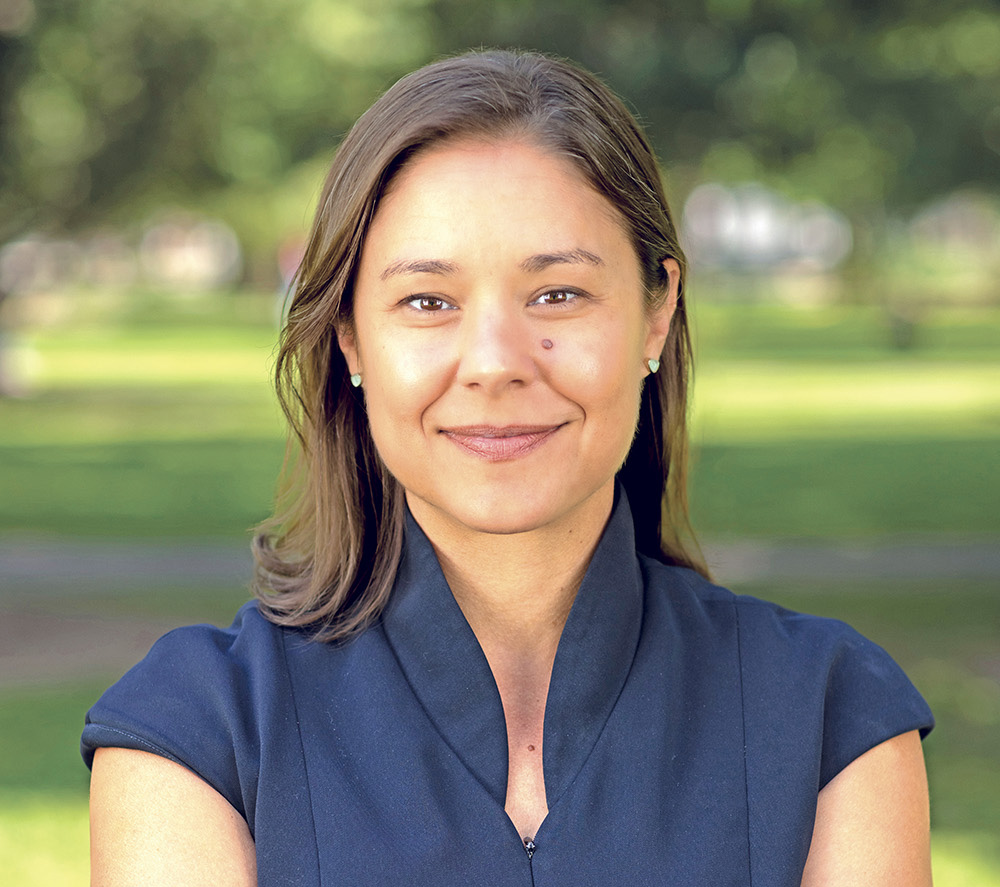
Meghan Hertel



The California Department of Fish and Wildlife swore in its new director, Meghan Hertel, in February. Before that, she worked as the deputy secretary of biodiversity and habitat at the state Natural Resources Agency. Hertel spoke with Ag Alert® about burgeoning priorities in her new role and the part that California’s agricultural community plays in conservation. This interview has been edited for length and clarity.
What issues have you been focusing on in these first few weeks?
Some of the things that I’m thinking about as top priorities are really making sure that we lean into what the department’s mission is, which is protecting and restoring California’s natural resources. We’re here to take care of California’s nature and to do so in a way that that nature is available for the enjoyment of people now and into the future. But we need to be able to do that in a way where we’re still getting work done.
It’s a big push right now to make sure that we have a California where people can still afford to live, where there are livelihoods both in cities and in rural areas. The task in front of the department now and in the coming years is to help do that in a way that still protects all of the biodiversity and special places that have made California unique.
Also, figuring out how we can make sure that people in California can live with wildlife. Wildlife populations are recovering, landscapes are changing, climate change, fire, development—they’re pushing animals into different places. That means we’re seeing a lot more people coming into contact with wild animals, and people that work in agriculture often have a lot more of that than people who live in cities do.
You’ve been working in conservation for many years now. How did that previous experience intersect with agriculture?
Prior to working at California Natural Resources Agency, one of my former positions was with Audubon California. I spent over a decade there, and a lot of my time at Audubon California was spent in our working lands program.
So, working with ranchers and rice growers and farmers to think about how they are and can continue to manage or shift management of their property to really benefit birds and other biodiversity. I’ve got a long-standing respect for those people who dedicate their lives to both growing food and also managing our landscapes.
That was something I saw at California Natural Resources Agency, where one of my primary roles was leading the state’s 30x30 effort, the effort to conserve 30% of our lands and coastal water by 2030. Agriculture isn’t apart from conservation. It is an integral piece of the way we get to overall conservation of biodiversity.
Some agricultural concerns can be challenging to navigate alongside conservation goals, as we’ve seen when discussing solutions to gray wolves and other predator animals killing livestock. What’s important to you as you tackle this issue?
One of the foundational things that I think is important is just acknowledging that both things are true. Recovering a species like gray wolves is an important conservation success, and the impact on ranchers and the rural communities is real and needs to be taken seriously. I think it’s important to have both of those realities at the same time because it’s the only way that we’re going to get to durable solutions, where we have healthy wildlife on the landscape and healthy rural communities and livelihoods.
There are many people in California that are thrilled to see the recovery of wolves. There are also many people who don’t live with them in their backyard.
So, we need to help those communities that are carrying this, that are experiencing it firsthand, with real practical tools that work on the ground. Not every tool works in every place, which makes it really challenging, but the state and other partners like NGOs, academics—we need to work together to bring support to these communities by investing in nonlethal deterrence, investing in technical assistance, helping producers come up with strategies that work for their operations.
Are there any more immediate changes we should expect in the coming months?
We have definitely heard from folks that there is a need for more tools. So, a couple things on that: One, I think we need to provide more clarity on what tools are already existing that ranchers can use. There are quite a few tools now that are available that ranchers can use that I think aren’t fully known by folks.
We’re not saying that’s the only tool, but there are many cases where deterrence works. In those cases where deterrence doesn’t work, there are other options for moving forward. There is a real effort to try to support landowners to help put things in place that reduce the risk of wildlife conflict in the first place, knowing that sometimes it’s impossible to get to zero risk. Then we have to look at other options. And, just recognizing that that’s not always easy on producers. It costs money. They need technical support.
The second one is, because the gray wolf is listed as endangered in the state and federally, any step up in the level of deterrence tools that we use has to be approved both by U.S. Fish and Wildlife Service and by California Department of Fish and Wildlife.
We’re working very closely with U.S. Fish and Wildlife Service to determine what additional legal authorizations do we need to put in place to get more tools out. That’s where we’re at in the conversation right now. We are trying very hard, recognizing that we’re rapidly moving into calving season, to get those tools out on the ground.
And then the final piece is last year, we published the (Wolf Location Automated Mapping System) online. It basically allows you to go and see where the collared wolf data is showing up on the landscape. Collar data is not perfect. There’s satellite interruptions. They move pretty quickly. But we are working with counties to try to get better data sharing in place so that some people can have finer level data, so they can provide support to ranchers in more real time.
How do you see the role of California’s agricultural community in state goals for conservation and wildlife stewardship?
There are many opportunities where conservation and agriculture go hand in hand, where there is a lot of overlap. There, of course, will be places where we are prioritizing food production, and there will be places where we’re prioritizing ecological conservation, right?
But it’s that sweet spot of that Venn diagram and overlap where I think there is an incredible amount of opportunity—opportunity to do more work on the ground that benefits both farmers and wildlife and conservation, opportunity to invest funding to help people do this work, and an opportunity to better tell the story so that a broader swath of California, who often won’t have a chance to get out and see some of these places or talk to people that are out on the landscape, can understand the importance and the value of the work that’s being done there.


In this issue...
• Big cats complicate ranchers' livelihoods
• California weighs 'truth in labeling' wine industry law
• Water guides discussion at global agriculture forum
• Dry conditions push farms to new irrigation strategies
• Study measures regulatory costs for Napa vineyards
• Researchers study ways to control flatheaded borer
• New CDFW director addresses priorities, predators
• National survey shows most farmers can't afford fertilizer
• What options are available to manage citrus thrips?
• Efficient irrigation through smart and informed irrigation purchases
• Going farm fresh: School districts look to growers as they ditch ultraprocessed foods
• Bountiful Finds: A curated collection of goods made by Farm Bureau members
• Super Snacks: Big California Flavor
• Peaches signal arrival of prime fruit season
• The Scenic Route: Pit stops at California farms and ranches
• From auction ring to dinner table: Coalition ensures no junior livestock exhibitor goes without a sale
• Why calling 811 before you dig is essential for California farmers
• Study: Maximize winter cereal yields with less water





.svg.png)
