


From auction ring to dinner table: Coalition ensures no junior livestock exhibitor goes without a sale
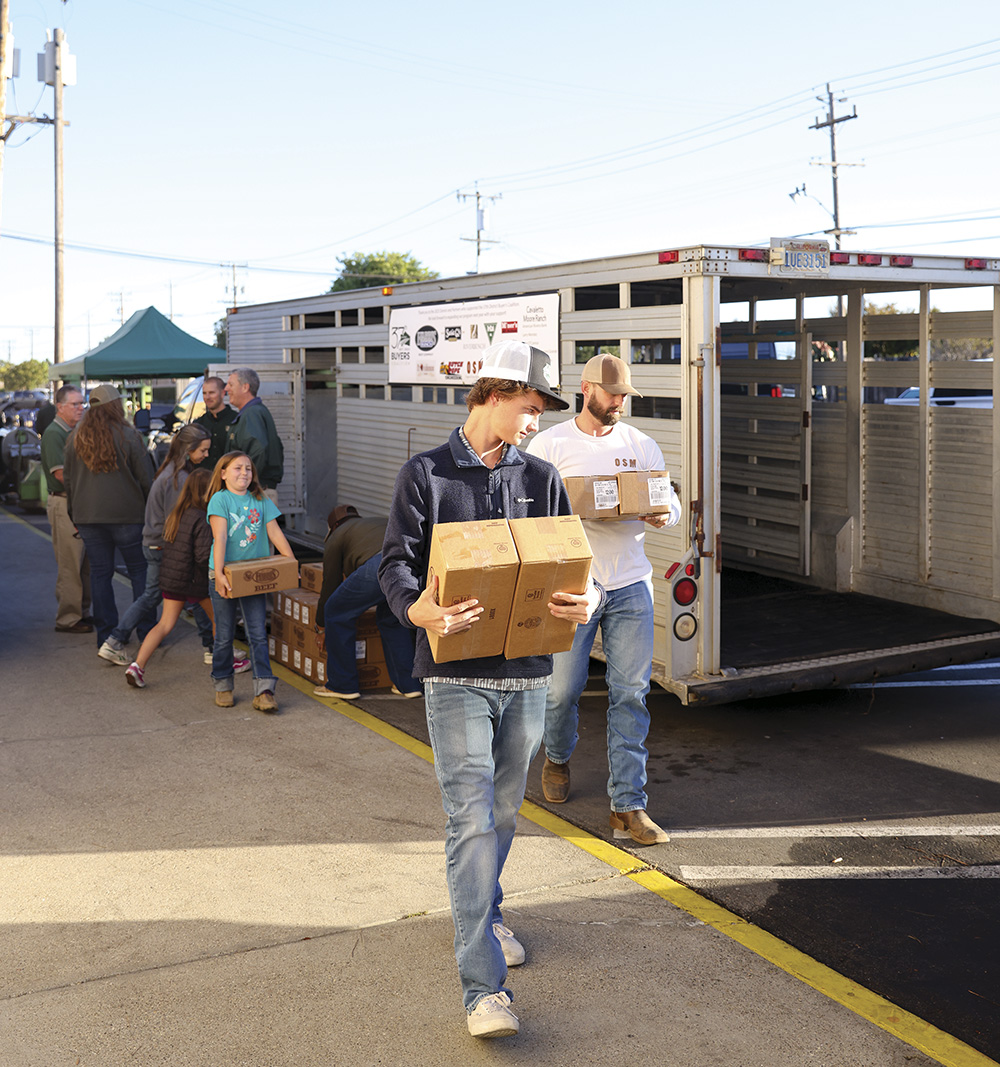
Connor Hill, front, of El Camino 4-H in Arroyo Grande, and Gregg Organ, in white shirt, of Organ and Son Mechanical in Santa Maria, a sponsor and donor to the 37th District Buyer’s Coalition, carry 12-pound cases of beef to be loaded into vehicles destined for Micah Mission in Lompoc.
Photo/Lyndsey Goldwyn


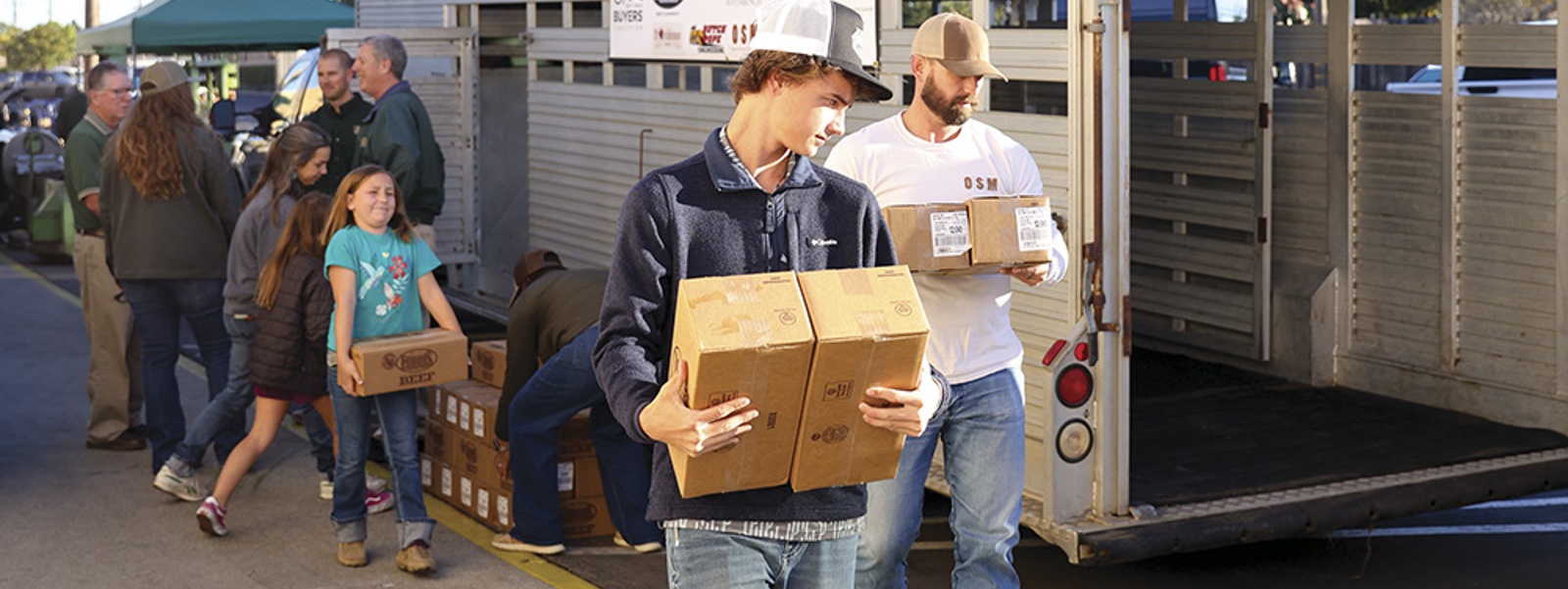
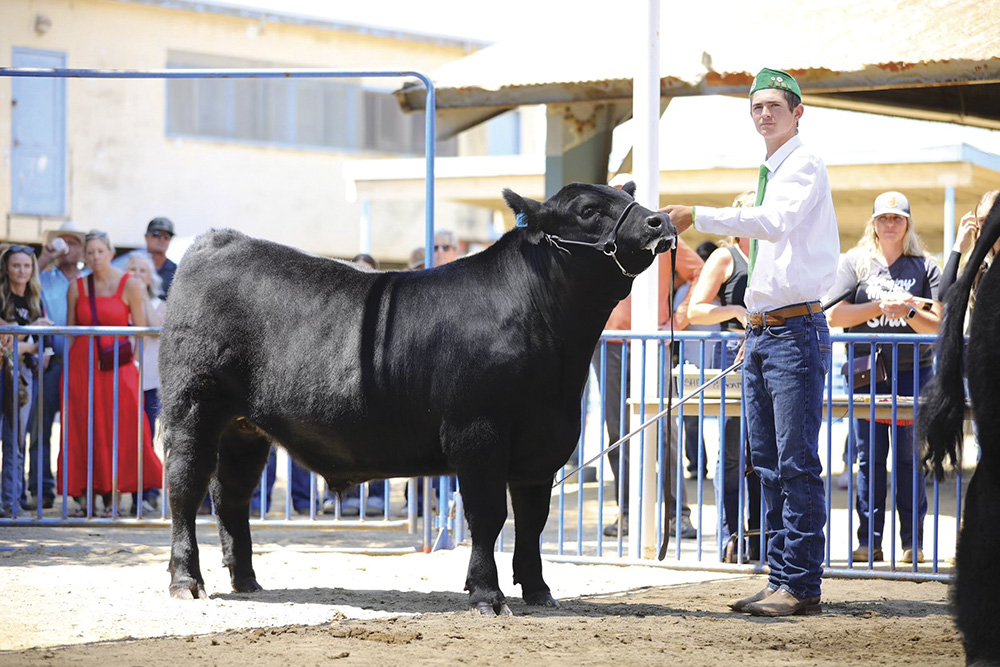
 For young 4-H and FFA livestock exhibitors, the county fair auction ring is the reward for months of hard work, investment and responsibility—unless their animals don’t attract buyers.
But thanks to community coalitions that step in to purchase no-bid animals, kids can be spared this disappointment and financial loss.
Among them is the 37th District Buyer’s Coalition—parents, businesses and community groups who banded together in 2022 to support youths exhibiting at the Santa Barbara County Fair in Santa Maria. It stems from a group formed in San Luis Obispo County under the James W. Brabeck Youth Legacy Fund during the COVID-19 pandemic to ensure kids could make sales when fairs shut down.
Photo/Courtesy of the 37th District Buyer’s Coalition
Led by board members Renli Pope, Megan Silcott, Jon Fleming and Jessica Ruffoni—all former livestock exhibitors who now have children showing in the ring—the group raises funds to buy auction animals and then donates the meat to nonprofits serving people experiencing food insecurity.
To date, the coalition has purchased animals from 260 local kids and has donated more than 80,000 pounds of meat to local charities, said Pope, the coalition’s president.
Backing every exhibitor
To apply for the coalition’s support, each youth must fill out an online form, write a letter and send five appeals to community members, two of whom must not have been buyers the prior year.
The primary goal is that one of the appeal letters will attract a buyer, but if not, the coalition is there as a backup.
During auction days, board members sit together for several hours, armed with notes.
“We don’t overbid,” Silcott, the treasurer, said. “If a kid’s animal is already getting $10 a pound, we don’t bid any longer.”
Grateful youths often send thank-you notes to the coalition.
“Some of these letters bring tears to your eyes,” Silcott said. “Kids have told us raising an animal saved them from depression—or worse.”
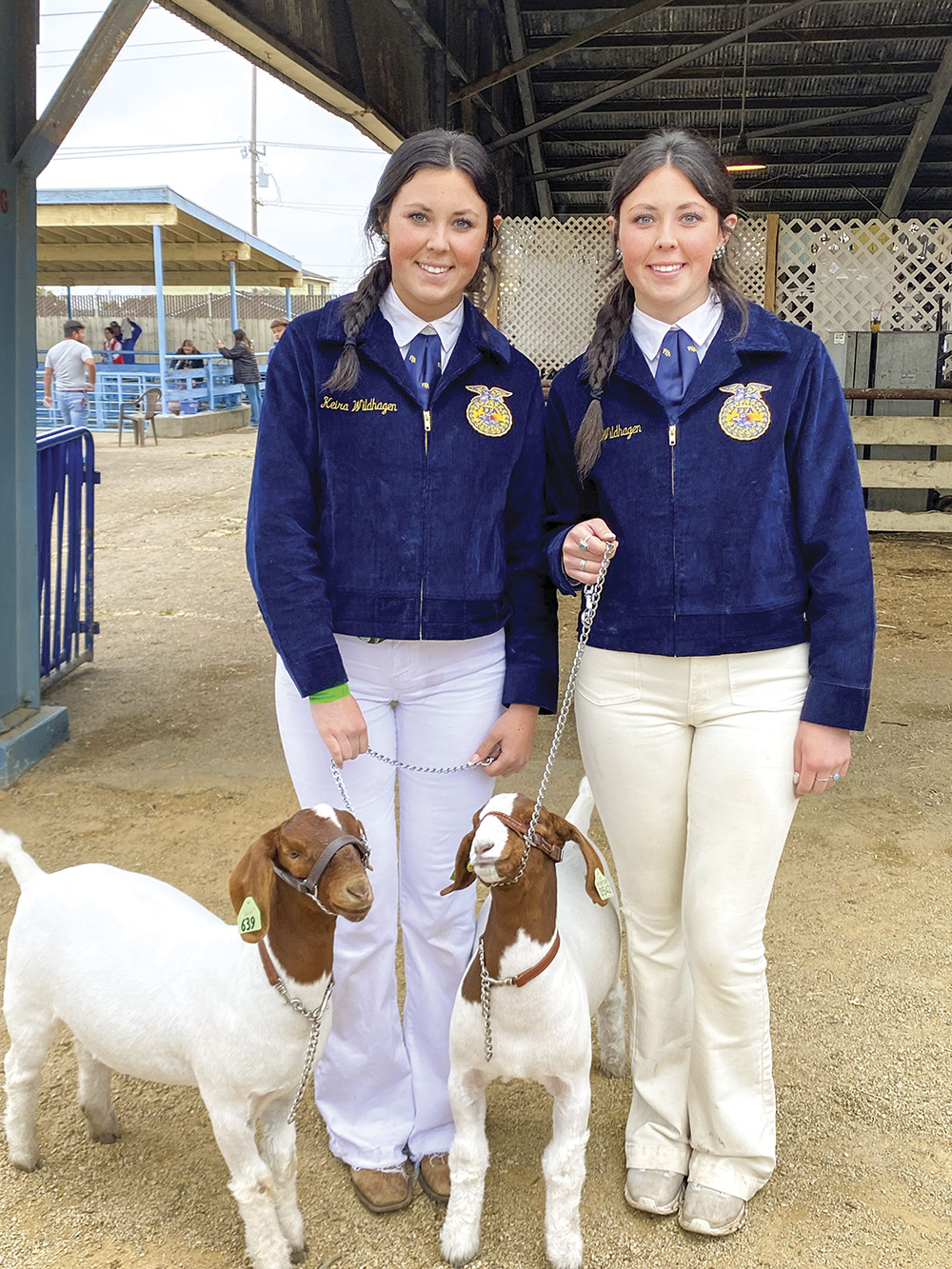
Photo/Courtesy of the 37th District Buyer’s Coalition
Other kids write about paying for tuition, tires or a fishing reel with their profits.
Among them are some of the 452 members of the Nipomo High School FFA. During last year’s fair, the coalition helped about 10 of the approximate 120 members who showed animals.
“Many of our students are (socioeconomically) disadvantaged,” said the FFA’s lead adviser Rosemary Cummings. “They want to show livestock, but it’s a challenge for them to find buyers because their parents don’t necessarily have connections to people with the means. So, this provides them with an opportunity to be able to at least make a profit.”
The youths also find it rewarding to know that the meat will go to people in need.
“They feel fortunate to be on the receiving end as the seller, and they’re thrilled to know that their product is able to help the community as well,” Cummings said.
Lessons beyond the ring
Stephanie Jorge, the community leader of Old Town 4-H in Orcutt and a mom of two daughters who raise fair animals, points out the life skills learned through the application process.
“They have to write letters and fill out an application, just like they will when applying for a job someday,” she said. “They’re not just handed this money.”
Her own daughter benefited recently when her expected buyers fell through.
“She was very grateful,” Jorge said.
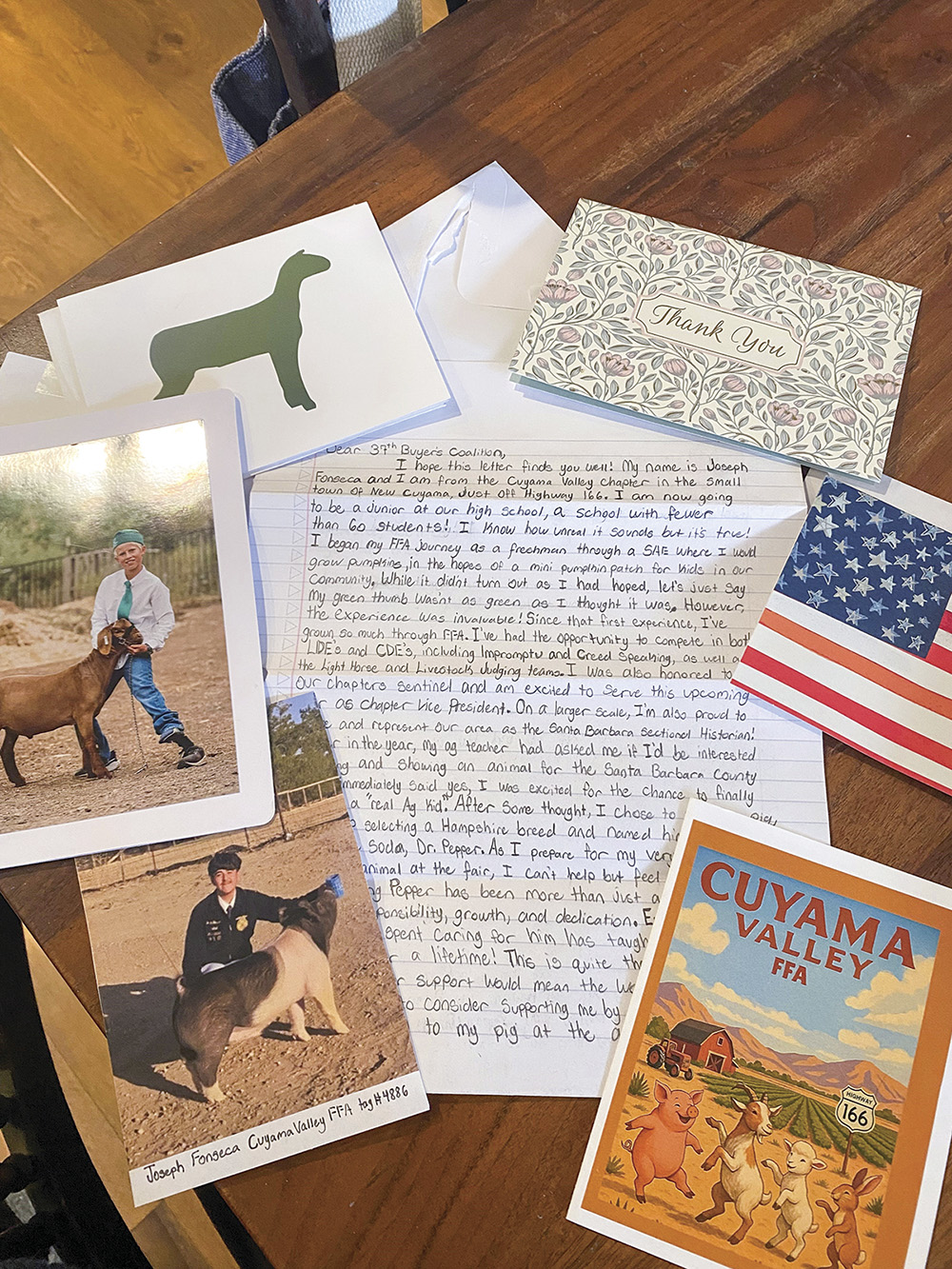
Photo/Courtesy of the 37th District Buyer’s Coalition
After the sale, meat is processed by local butchers or by Harris Ranch in Coalinga, which recently began donating federally inspected processing for beef.
Once frozen, the meat is delivered to local nonprofits by coalition members, other volunteers and often the young livestock exhibitors.
When Jorge and her daughters helped deliver, she said the charities’ representatives talked to them about how the meat would help the people they serve and asked them about their agriculture projects.
“It was very impactful,” she said.
Meanwhile, the meat donations significantly stretch the nonprofits’ budgets—especially since meat is among the most expensive food items on their shopping lists—and enhances the quality of meals.
Full-circle giving
Such is the case for Micah Mission Lompoc, which supports people lacking enough food and often housing, said the Rev. Brian E Halterman, founder of the nonprofit, which serves meals twice a week—and soon daily.
“This past week, we did spaghetti with the sausage. I made sure everybody was aware that this was from our fair...from some of the future leaders of our country and a group of people who care,” Halterman said.
“They get excited that there are people who care about them,” he added. “Many of our individuals are often scorned. This makes them feel more valuable.”
Halterman said the donations come at a crucial time, as costs have risen sharply post-COVID.
“We once spent $350 to $400 a week on meals. Now it’s $700 to $900,” he said.
The same is true for South County People’s Kitchen in Grover Beach, which has been serving community meals since 1992 and now feeds 80 to 90 people per day. The donations have made “a major, major difference,” founder and secretary Nancy Imwold said.
She said she especially values the high-quality, low-fat hamburger. “It’s so versatile for casseroles, meatloaf, lasagna or whatever,” she said.
Imwold said she also values her organization’s part in supporting the youths—and appreciates their help in loading heavy meat cases into her freezer on delivery day.
“These kids have given their heart and soul to raising these animals, and they’re learning so much stuff, like how to budget and choose the right feed,” she said. “(At a recent delivery), I said to them, ‘How do you do this? You raise these animals, and they’re like your pets and your friends. I’d be a blubbering idiot for a month.’”
The kids responded that they know their animals are helping those in need, she said. “They said, ‘It’s for the greater good.’ … They’re just delightful.”
To Imwold, the partnership with the coalition means one thing: “We’re all trying to help those in need.”
Pope agreed. “This is a win-win-win,” she said. “The kids benefit, the community benefits, and we all feel better being a part of it.”
Linda DuBois is a reporter in West Sacramento. She can be reached at agalert@cfbf.com.

In this edition...
• Big cats complicate ranchers' livelihoods
• California weighs 'truth in labeling' wine industry law
• Water guides discussion at global agriculture forum
• Dry conditions push farms to new irrigation strategies
• Study measures regulatory costs for Napa vineyards
• Researchers study ways to control flatheaded borer
• New CDFW director addresses priorities, predators
• National survey shows most farmers can't afford fertilizer
• What options are available to manage citrus thrips?
• Efficient irrigation through smart and informed irrigation purchases
• Going farm fresh: School districts look to growers as they ditch ultraprocessed foods
• Bountiful Finds: A curated collection of goods made by Farm Bureau members
• Super Snacks: Big California Flavor
• Peaches signal arrival of prime fruit season
• The Scenic Route: Pit stops at California farms and ranches
• From auction ring to dinner table: Coalition ensures no junior livestock exhibitor goes without a sale
• Why calling 811 before you dig is essential for California farmers
• Study: Maximize winter cereal yields with less water





.svg.png)
