


Efficient irrigation through smart and informed irrigation purchases
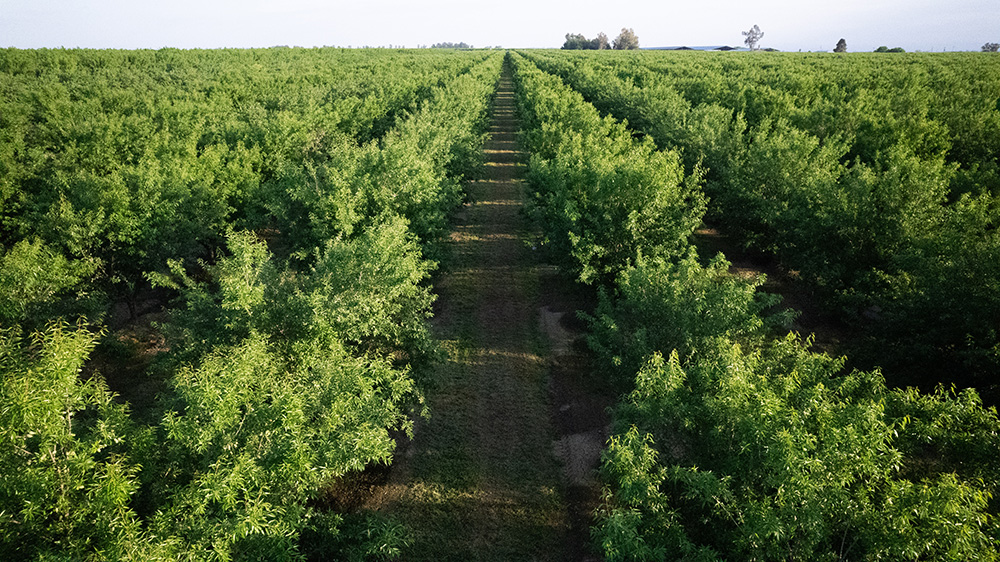
Clear communication with equipment dealers is key to making informed and efficient irrigation purchases for your orchard.
Photo/Courtesy of Rain Bird



By Charles Burt
I have observed that many irrigation system purchase decisions are made based on price, the personality of the salesperson or a combination of the two. Of course, these aspects are important. But did you ever sit down and go over the details of what you were going to receive and how it fits into subsequent management?
 My experiences with dozens of irrigation-related lawsuits tell me that there is often a disconnect between the vendor and the farmer related to assumptions. Spending an additional hour going over some details before an irrigation purchase can minimize later grief and conflict.
Fortunately, there is a tool that can help you with the questions to ask a dealer. A series of questions related to irrigation systems titled the “Irrigation Consumer Bill of Rights” (www.itrc.org/reports/icbrgeneral.htm) was originally developed in 1994 (yes, that long ago) by the Cal Poly Irrigation Training and Research Center in San Luis Obispo. The effort included various irrigation industry leaders, the old Irrigation Dealers Association of California, California Energy Commission and Pacific Gas & Electric Co.
The bills have subsequently been updated and have three components: general; drip/micro; and soil and plant moisture monitoring systems. The “bills” are lists of questions that walk the purchaser (farmer) through the thought process of what should be considered. All irrigation dealers should be able to answer these questions.
 Sometimes the answer will be: “I don’t know.” It can be important to define uncertainties. By spelling them out, expectations can be tempered. An example is the amount of sand and iron or manganese that a new well might produce. Probably neither the farmer nor the irrigation dealer knows what might happen. Therefore, deciding how much should be spent in advance on special filtration and chemical injection systems is a challenge.
The farmer may not even be aware that a certain option is important, and why. Because so few irrigation dealers provide farmers with the lists of questions and their answers, it is usually up to the farmer to print out the various bills and then ask for answers. Keep in mind that most irrigation dealers are hesitant to recommend some important features simply because that may raise the price and they will lose the bid. You may agree to not add those features, but that should be an informed decision.
The 39 questions in the general bill deal with items such as irrigation dealer credentials, filtration, chemical injection, water requirements, how the system has been blocked out (e.g., by soil types, aspects to the sun, different crop varieties), special valves (pressure relief, flushing and air vents), warranties (what is covered, is the dealer financially capable of standing behind a warranty, etc.), flow rate design and energy consumption.
The drip/micro-irrigation bill drills down into more specific issues related to drip/micro-irrigation systems. There are 16 questions on filtration, six on flow rates, five on plugging, three on chemical injection and two on general agronomic questions. All address problems that commonly arise in drip/micro systems and which have caused grief and lawsuits because they were not properly discussed before the system was purchased.
The bill for soil and plant moisture monitoring system is a bit different. Although monitoring systems have become very popular, the options, limitations and proper usage of data are often not well understood by either the vendor or farmer. Therefore, many of the questions are rather leading, bringing up aspects that may not have been thought out.
As an example, there are questions about where sensors will be installed: where in the field, the location relative to emitters, and plant row centers and individual trees in a row. Such questions pertain to facts that irrigation water may not be distributed evenly across a field, and there are field-wide differences in plant vigor. Plus, a change in soil moisture with a drip system will be different one foot to the side and one foot higher or lower. So, exactly where should sensors be placed and how will the information be used?
The various bills do not provide answers but rather provide questions that should be addressed. As an example, the energy cost per acre-foot does not have a single answer. It depends upon power rates, topography, lift, the type of irrigation system and so on.
In short, the Irrigation Consumer Bills of Rights are intended to help farmers make informed decisions on irrigation system purchases.
Charles Burt is professor emeritus of irrigation and founder of the Irrigation Training and Research Center at California Polytechnic State University, San Luis Obispo. He can be reached at charlesmburt@gmail.com.

In this edition...
• Big cats complicate ranchers' livelihoods
• California weighs 'truth in labeling' wine industry law
• Water guides discussion at global agriculture forum
• Dry conditions push farms to new irrigation strategies
• Study measures regulatory costs for Napa vineyards
• Researchers study ways to control flatheaded borer
• New CDFW director addresses priorities, predators
• National survey shows most farmers can't afford fertilizer
• What options are available to manage citrus thrips?
• Efficient irrigation through smart and informed irrigation purchases
• Going farm fresh: School districts look to growers as they ditch ultraprocessed foods
• Bountiful Finds: A curated collection of goods made by Farm Bureau members
• Super Snacks: Big California Flavor
• Peaches signal arrival of prime fruit season
• The Scenic Route: Pit stops at California farms and ranches
• From auction ring to dinner table: Coalition ensures no junior livestock exhibitor goes without a sale
• Why calling 811 before you dig is essential for California farmers
• Study: Maximize winter cereal yields with less water





.svg.png)
