


Rice commission CEO centers conservation efforts
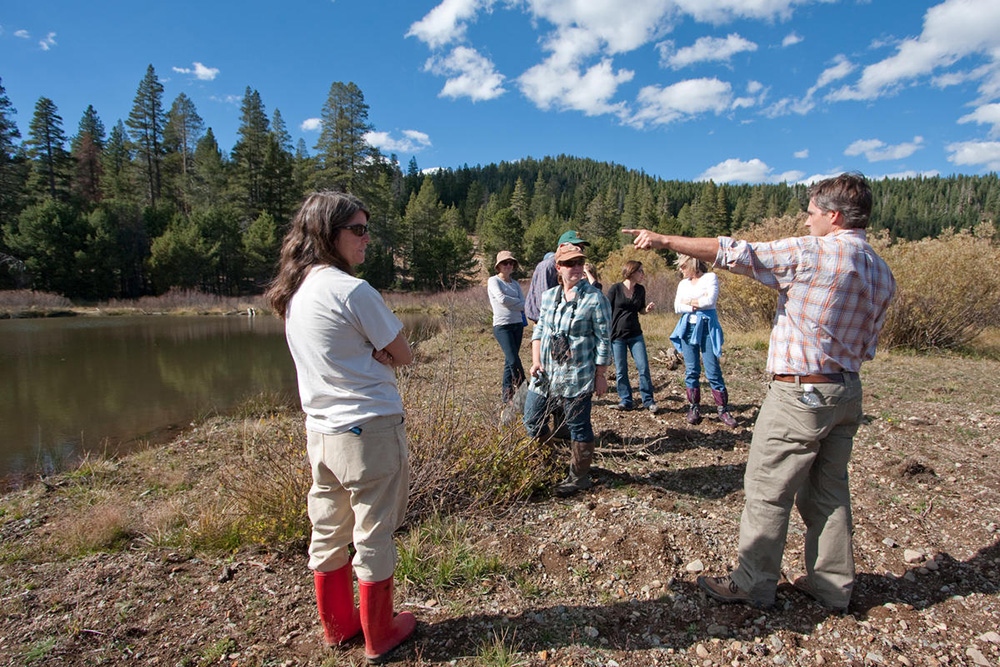
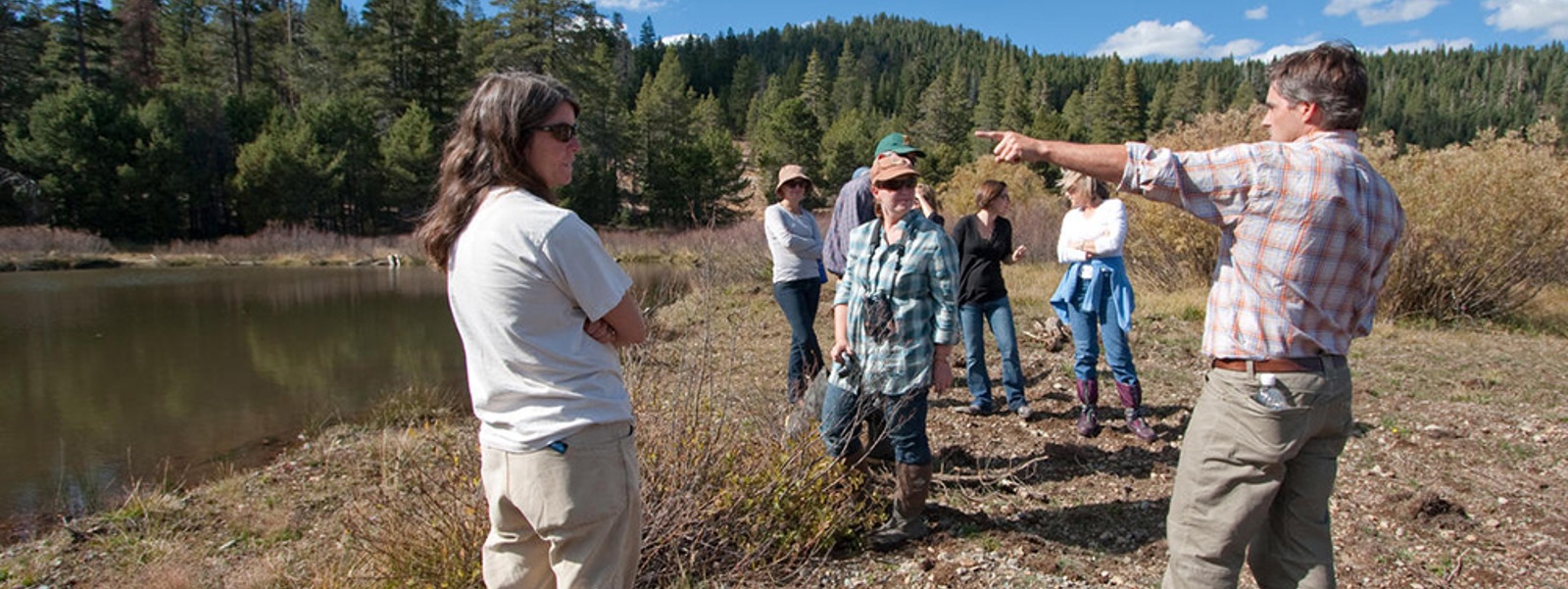
Prior to leading the California Rice Commission, Eric Holst worked for the Environmental Defense Fund, where he collaborated with farmers and ranchers on conservation efforts. In this 2021 photo, he and Environmental Defense Fund staff are seen at a stream restoration project in the Feather River watershed.
Photo/Courtesy of Environmental Defense Fund


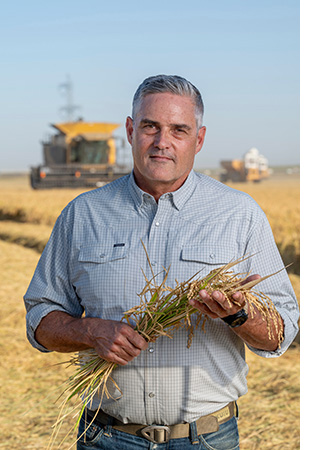
• The California Rice Commission welcomed a new president and CEO, Eric Holst, earlier this year. Holst has spent much of his career working in conservation, most recently as the associate vice president of forestry and wildfire resilience for the nonprofit Environmental Defense Fund. Ag Alert® spoke with Holst about his vision for the rice commission. The interview has been edited for length and clarity.
How does your conservation experience inform your approach to the rice commission’s goals?
Photo/Brian Baer
Tim Johnson, who’s the founding CEO of the California Rice Commission, comes more from a food products background.He worked at Frito-Lay before he worked with rice. But Tim is also somebody who pushed and helped bring the rice industry into an acknowledgment of the value that rice could provide for habitat.
The signature strategy that I’ve been hired to help implement is called the Rice Footprint. The strategy acknowledges that we need to maintain a certain level of production—about half a million acres of rice a year—to provide the high-quality rice and world-class wildlife habitat that rice provides.
I’ve had a career that’s grounded in building partnerships with agriculture, forestry and ranching, and trying to find a balance that provides mutual benefit for those industries that are providing food, fiber and energy, and human needs for a clean environment—clean water, clean air and abundant wildlife habitat.
How would you describe the role California’s rice acreage plays in conservation?
I see rice production in California as a version of a highly productive wetland ecosystem.
We’ve published a report called the Rice Footprint that documents the value of those rice wetland ecosystems—to the Pacific Flyway, for example, which is this amazing natural process where ducks and geese and shorebirds are moving up and down the West Coast. Scientists have told us that without that habitat, the flyway is in deep trouble.
With California, I think a big moment of change was from about 30 or so years ago. There were some air quality problems that were driven in part by rice straw burning and some water quality problems that were driven by certain crop protection materials that were getting in the river. There was a moment there where the industry had a choice to either fight those regulations or solve the problem, and this is an industry that rolled up its sleeves and said, “We’re going to solve the problem.”
The great diminishment of rice straw burning drove a lot of the benefits that you’re seeing today. The backup plan, if we weren’t going to burn the rice straw, was to chop the straw, push it into the soil and then reflood the fields. Then you use anaerobic decomposition as the way to get rid of that rice straw and prepare the fields for the next season.
The birds found that practice, and they started showing up. That was a realization that California rice could solve one problem and create a solution for wildlife at the same time.
What will those conservation efforts look like in coming months?
I drove home (earlier this month) from Yuba City to Sacramento, and I took a winding path through rice country. What I was seeing were fields that have been mostly harvested. Most of the grain from that straw has been trucked off to drying facilities and then to mills. But that residual straw needs to be diminished greatly and put back in the soil. So, the farmers will make a pass or two with tractors, chopping up that straw and pushing it down into the soil. Then they’ll reflood the fields for the most part … and then leave it out there for several months to break down that straw.
Many (farmers) will be part of conservation programs where they’re implementing very specific programs that benefit different classes of wildlife. For example, there are waterfowl programs that dictate the water level that’s beneficial to different kinds of ducks and geese, so you’re getting the mutual benefit of straw decomposition and habitat for waterfowl.
A relatively new practice that we’ll see a little bit later in the winter is fields that get flooded, and then we’ll be trucking in baby salmon from hatcheries. That’s basically mimicking a natural process that would have happened presettlement, which is that the Sacramento River and the Feather River would overtop their banks and flood the adjacent wetland ecosystems and provide a really rich food source for these salmon fry.
What’s your vision for the rice commission under your leadership?
Our Rice Footprint strategy calls for about half a million acres of rice annually for a long time. That’s a minimum threshold that we need to maintain in order to provide these benefits. The wildlife benefit doesn’t occur unless we have the rice cultivation. There’s no alternative to provide this wildlife benefit right now that’s economically feasible other than maintaining this private sector industry.
My priority is aggressive implementation of the Rice Footprint strategy. That’s about sustaining a high level of public policy engagement, about public education and implementing environmental programs that Tim Johnson, our outgoing CEO, and other industry leaders have built over these last 30 years.
If we’re successful over the next 10 years, that would be manifest in an average of 500,000 acres of rice, more or less. It would be manifest in durable, consistent water delivery on both sides of the Sacramento River. It would be manifest in durable and consistent commitment to habitat conservation efforts by a high proportion of our industry.
We also have to recognize that none of this happens unless we have a profitable rice industry, and it’s a tough business. The prices are set on the global markets, and they fluctuate. We need to do as much as possible to help our members. We need to push to communicate to decision-makers that we can’t take this industry for granted.
Reprint with credit to California Farm Bureau. For image use, email agalert@cfbf.com.


In this edition…
• View full issue
• Adaptability fuels pomegranate potential
• Farmers seek new tools to ward off copper wire theft
• Building strong relationships strengthens agriculture
• Lima bean breeders explore regional differences in trial
• Automated irrigation systems can help reduce costs
• Rice commission CEO centers conservation efforts
• The FELS Hotline: Do not wait until you are in a jam
• Are there orchard sanitation steps to skip to save money?
• The mechanics of postharvest nutrition for orchards
• Why Nationwide understands farm business, coverage