


Automated irrigation systems can help reduce costs
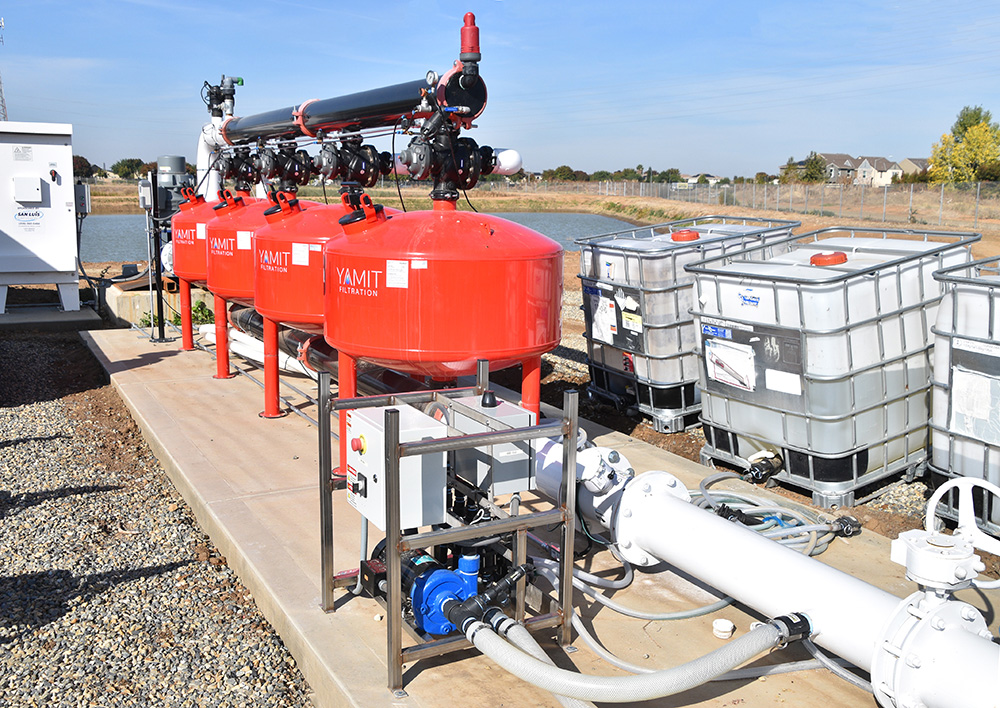
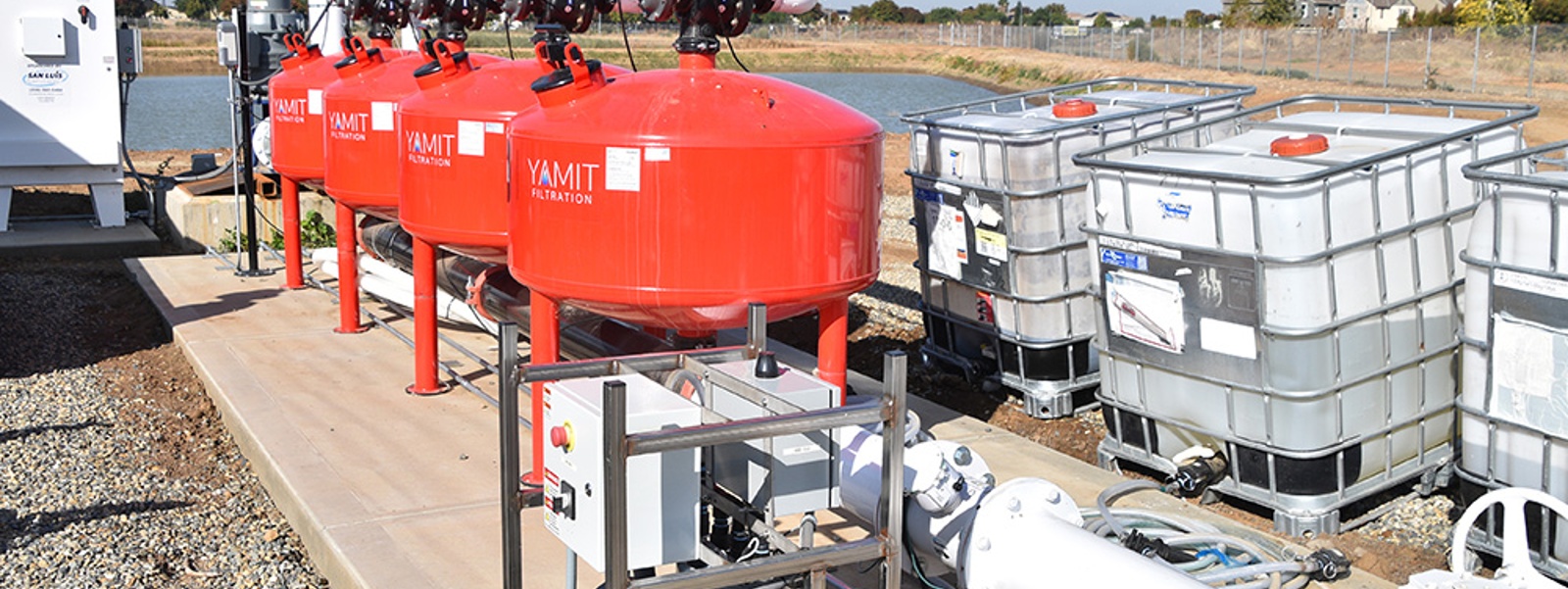
HotShot Ag’s automated irrigation system has been incorporated into the Merced College farm and its AgTEC initiative, which provides students with hands-on experience with commercial technology.
Photo/Vicky Boyd


By Vicky Boyd
As input costs continue to weigh heavily on producers, an increasing number have turned to automated irrigation systems and remote monitoring to help reduce expenses and boost efficiency.
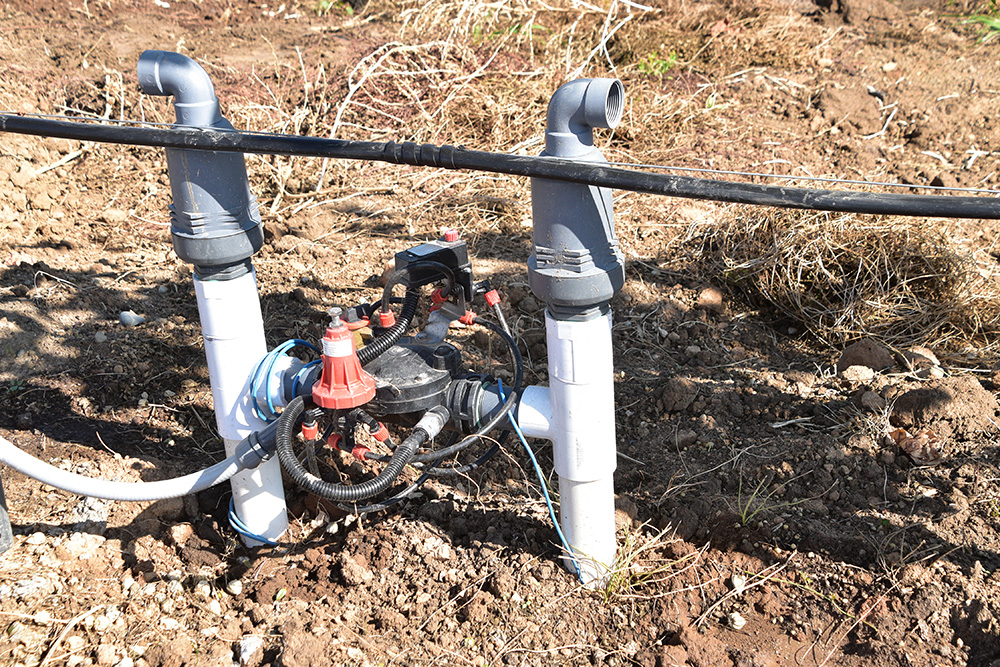
 The systems allow producers to operate most pumps and valves, precisely apply fertigation, monitor water flow and schedule irrigation sets all from their smartphones, tablets or computers.
“I’ve been observing a lot of interest, especially from specialty crop growers,” said Daniele Zaccaria, a University of California, Davis, professor and agricultural water management specialist in Cooperative Extension. “The higher the crop value, the higher the risk of costly mistakes, and the area in need of good overseeing is irrigation and nutrient management.”
Part of the interest is being driven by federal Environmental Quality Incentive Program and State Water Efficiency and Enhancement Program financial incentives for agricultural soil and water-use improvement projects and practices, he said. The current round of funding prioritizes small- and medium-sized producers, especially those in underrepresented or disadvantaged production areas.
Photo/Vicky Boyd
Growers also are seeking to reduce electricity and pumping costs by irrigating during less-expensive off-peak periods under time-of-use rate or demand-response plans, Zaccaria said.
“This is a good way to minimize the energy cost of irrigation if you have the ability to remotely control and automate valve opening and closing,” he said. “Water is probably the least expensive resource among all inputs, given the rising costs of labor, power and agro-chemicals.”
Rather than having several workers drive around to turn on and off irrigation systems, Zaccaria said, farmers with automated systems can reassign many of them to other duties and make more efficient use of their workforce. An added benefit is many systems tabulate and record water and fertilizer use during the season and create year-end reports required by the Irrigated Lands Regulatory Program and some groundwater sustainability agencies.
James “Jimmy” Nichols learned first-hand about irrigation management challenges when he returned from college in 2013 and was tasked with developing water budgets for his family’s pistachio and almond orchards in Tulare and Kings counties. After looking at commercially available irrigation telemetry and flow sensors, Nichols developed a remote system that proved itself on what the family nicknamed “the headache ranch” in Tulare County.
Since he received the family’s permission to commercialize the system and launch a separate company in 2018, Hanford-based HotSpot Ag has installed more than 1,000 units worldwide.
With a few clicks of the mouse in their dashboard, users can schedule a week’s worth of irrigation. If time-of-use peak rates are from 4 to 9 p.m., for example, users can schedule the irrigation system to stop at 3:55 p.m. and restart at 9:05 p.m., said Steven Soares, HotSpot’s senior customer success manager.
If an irrigation set ends in the middle of the night, the automated system can shut off the water without requiring someone to drive out in the dark. Without automation, growers and irrigators must either make the trip to turn off the water or let the system run until morning. Both options can add costs through overtime wages or unnecessary pumping.
The system can be installed on just about any irrigation valve except a butterfly valve, Soares said. It also can be hooked up to several types of wind machine motors to automatically start them for frost protection when the air temperature drops to a designated threshold.
In addition, soil moisture sensors, flow meters and on-farm weather stations can be tied in so users can monitor current water situations remotely from a smartphone, tablet or computer, he said.
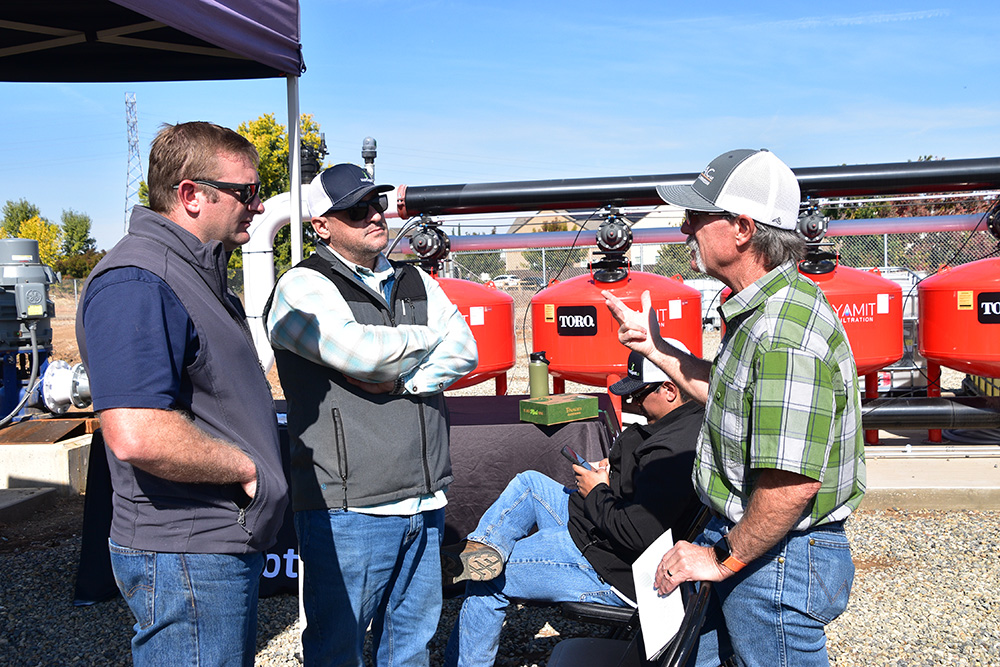
The Merced College farm has incorporated the company’s automated irrigation system into its AgTEC initiative, which provides students with hands-on experience with commercial technology.
Photo/Vicky Boyd
The college farm manager uses the automated system to schedule irrigations for the small blocks of table and raisin grapes, almonds, citrus, cherries, apricots and olives. Each crop is on a different type of irrigation, whether microjets, drip or double-line drip. Each also has slightly different irrigation and fertilizer requirements, which can be set up and managed from a computer.
Should anything go wrong, such as an unexpected pump shutdown or drop in flow pressure, the system will alert the user by text or email.
“We can manage irrigation and fertigation with pinpoint accuracy,” said Collin Abraham, Merced College director of farm operations. “This is what makes our farm a smart farm. We can manage it without being out in the field during weekends. Based on crop water requirements and ET (evapotranspiration), we’re providing water when the plants need it and the right amount.”
Devin Clarke, who with business partner Peter De Boer founded the independent agronomic consulting firm Unbound Ag, said they couldn’t perform continuous almond fertigation without an automated irrigation system such as HotSpot Ag’s.
Rather than apply nutrients three to five times per season in “big slugs,” continuous fertigation spoon-feeds trees smaller nutrient quantities with each irrigation application. The actual amounts vary and are based on the tree’s seasonal nutrient demand curve as well as tissue sample results. Depending on the tree size, crop load and other factors, Clarke may recommend 20 or more fertigations during a season.
Fertigation also requires a period of fresh-water irrigation before the nutrients are injected, followed by another fresh-water flush afterward to ensure proper distribution.
“Automation allows you to take back some of your time from irrigation and fertigation and rely on a system to do that,” Clarke said.
Zaccharia said over the years, UC Cooperative Extension specialists, certified crop advisers and Irrigation Association-certified irrigation professionals vetted many of the commercial automated control systems. For growers interested in purchasing one, he suggested first consulting with one of these resources about the system’s applicability, strengths and weaknesses.
Soares said the automated systems aren’t a silver bullet and aren’t designed to replace “boots on the ground.” Instead, they are another tool growers can use to improve their irrigation and fertigation efficiency.
Zaccharia agreed. “All the technology needs a lot more understanding and training,” he said. “Whatever irrigation method growers use, they need increasingly skilled people on the ground. The critical limitation is having well-trained irrigators, and they’re becoming very valuable resources.”
Vicky Boyd is a reporter in Modesto. She can be reached at agalert@cfbf.com. Reprint with credit to California Farm Bureau. For image use, email agalert@cfbf.com.


In this edition…
• View full issue
• Adaptability fuels pomegranate potential
• Farmers seek new tools to ward off copper wire theft
• Building strong relationships strengthens agriculture
• Lima bean breeders explore regional differences in trial
• Automated irrigation systems can help reduce costs
• Rice commission CEO centers conservation efforts
• The FELS Hotline: Do not wait until you are in a jam
• Are there orchard sanitation steps to skip to save money?
• The mechanics of postharvest nutrition for orchards
• Why Nationwide understands farm business, coverage