


Building strong relationships strengthens agriculture
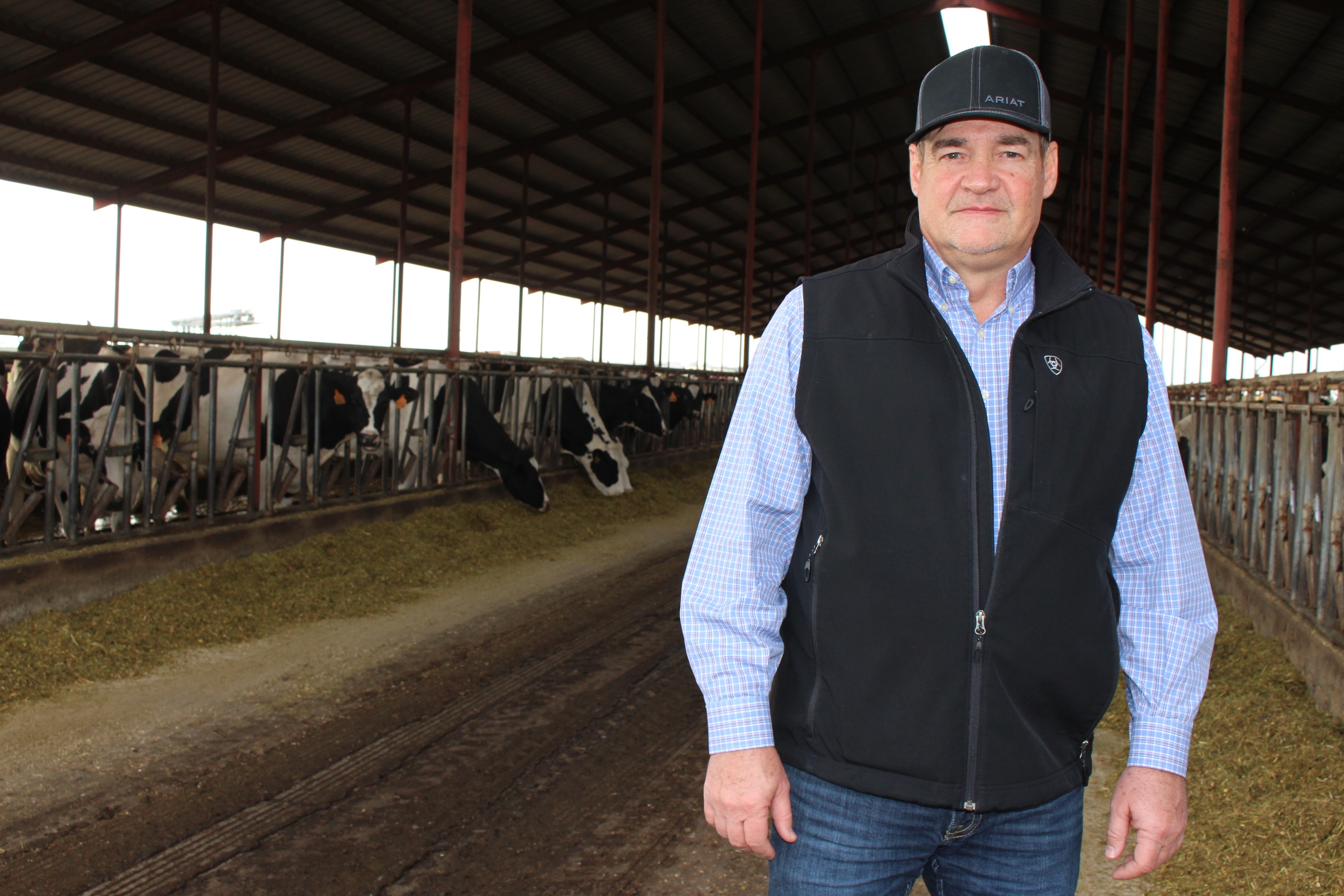
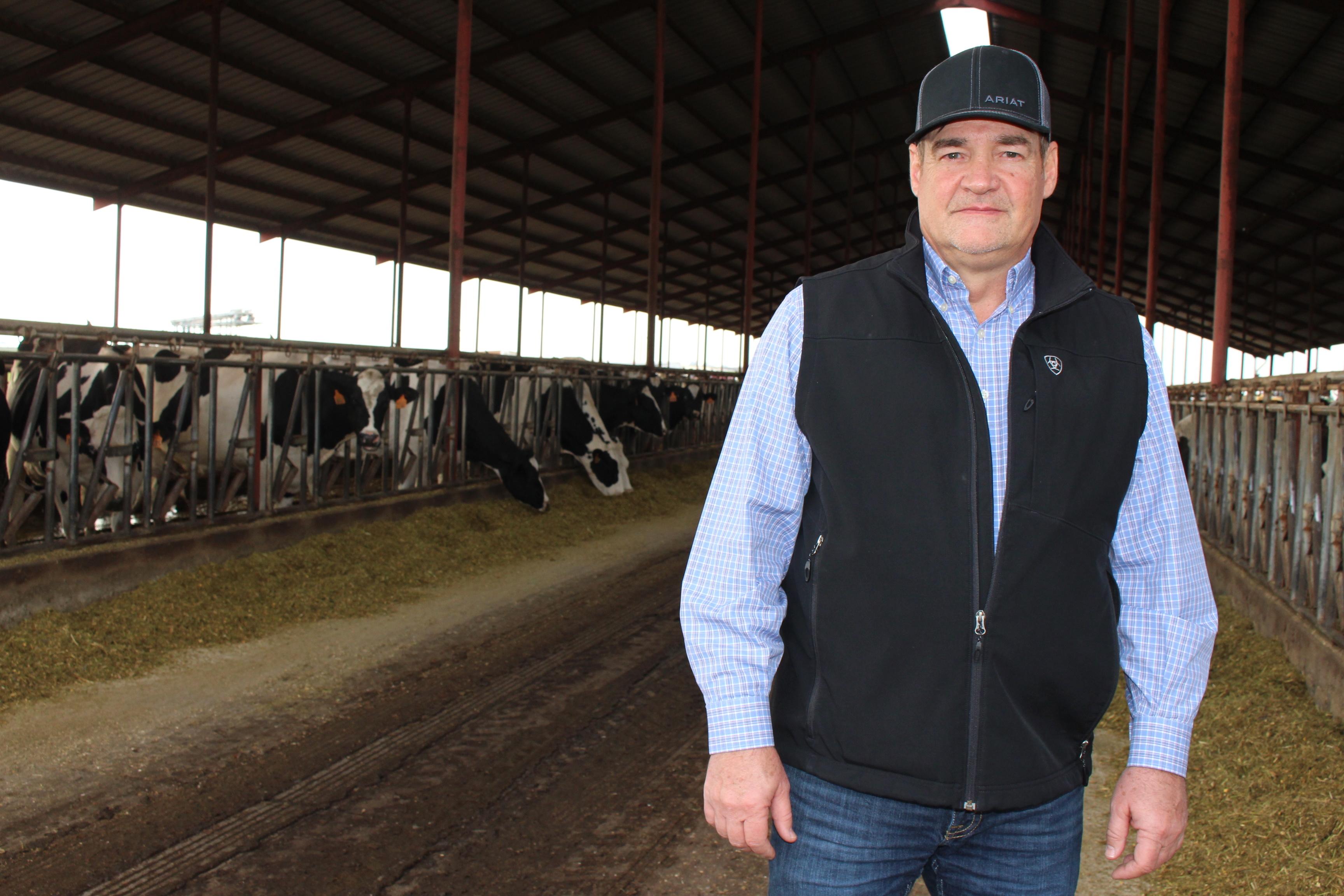
Ron Peterson, a dairy farmer who also grows silage crops and almonds and raises beef cattle in Stanislaus County, is second vice president of the California Farm Bureau.
Photo/Christine Souza


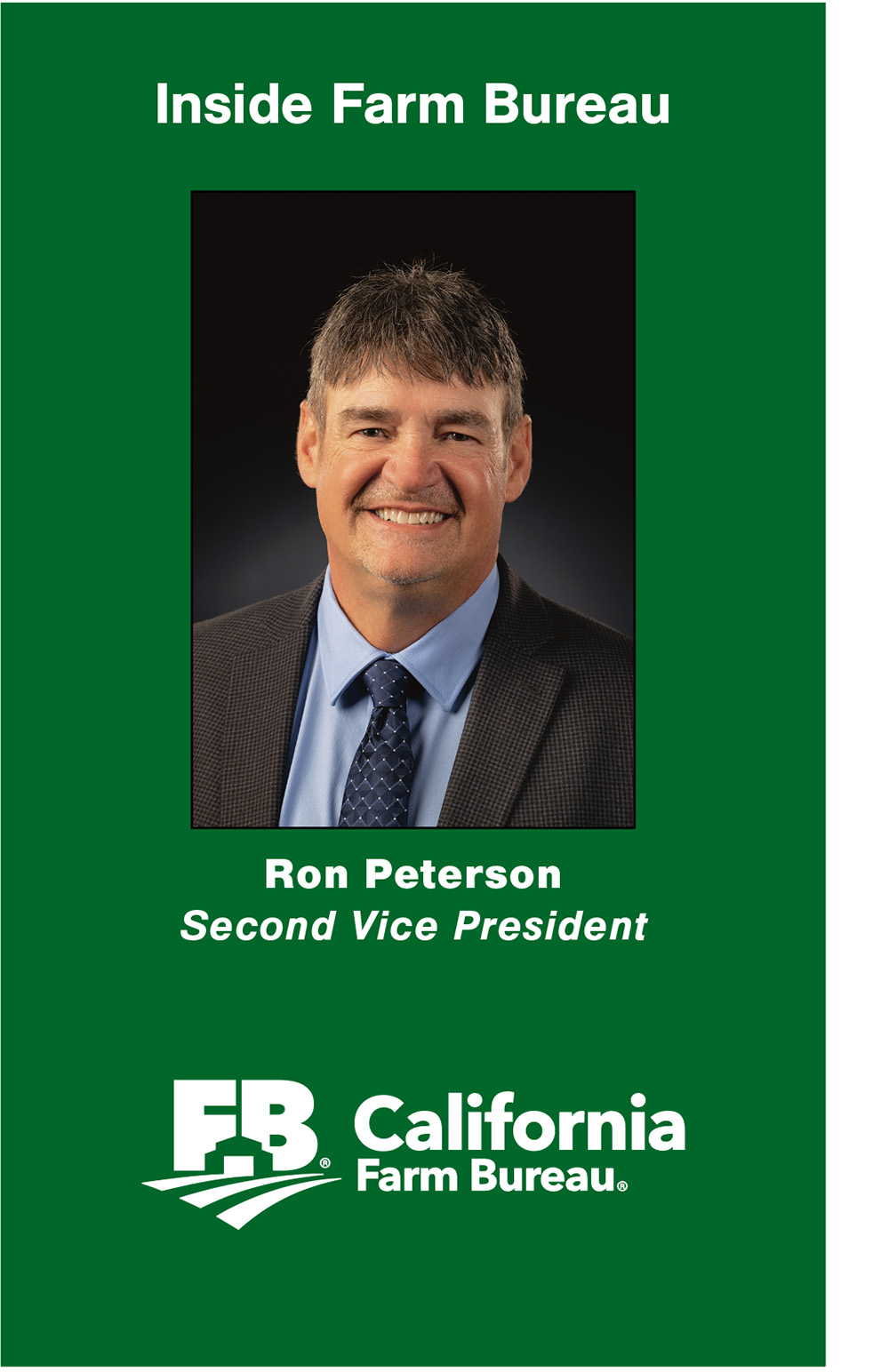
By Ron Peterson
As I approach my third anniversary as second vice president of the California Farm Bureau this December, I’ve been reflecting on the experiences, relationships and opportunities that have made these past three years so rewarding.
 Without question, my favorite part of this role has been spending time with county Farm Bureaus and connecting with members throughout California.
Before stepping into statewide leadership, my opportunities to interact with members outside my home county were largely limited to California Farm Bureau’s Annual Meeting, committee meetings and legislative visits to Sacramento. Today, I get to visit counties across the state, hear directly from members and better understand the challenges facing their farming and ranching operations.
As a longtime Stanislaus County farmer and former Stanislaus County Farm Bureau president, I know firsthand how important local involvement is. I’ve been involved with Farm Bureau for decades, and one thing I’ve learned is that relationships are at the heart of what makes this organization successful.
During the past three years, I’ve seen tremendous progress in strengthening the relationships between our state and county Farm Bureaus. Whenever I visit a county, I make a point of leaving my personal cellphone number and encouraging members to call me. I want them to know I’m accessible and that their voices matter.
To accomplish anything meaningful for agriculture, we must work together. That includes building relationships with other agricultural organizations, even when we don’t always agree on every issue. Finding common ground and working together to move agriculture’s message forward is essential.
I’m also grateful for the tremendous staff we have at California Farm Bureau. When you have the right people in the right positions, with the right skills, it’s amazing what can be accomplished.
As we look toward 2027, water remains at the top of my priority list.
Water is an incredibly complex issue in California, and the challenges vary significantly depending on where you farm. What works for one region may not work for another. With a new gubernatorial administration on the horizon, I’m hopeful we’ll have opportunities to work with people who are willing to listen to agriculture and help develop practical solutions.
One of the most frustrating aspects of agricultural advocacy is how difficult it can be to make progress on issues affecting good farmers who are simply trying to grow food. We need to make sure their voices are heard and that policymakers understand the realities of operating a farm in California.
A good example is the 2025 Cal Poly, San Luis Obispo, study funded by Monterey County Farm Bureau examining the increasing cost of regulations on California agriculture.
I share information from this study nearly every time I speak at a county Farm Bureau because the numbers tell an important story.
During the California Farm Bureau gubernatorial candidate forum in Fresno earlier this year, five of the six participating candidates referenced the study. To me, that demonstrates the value of having credible data that helps communicate the challenges facing our industry.
When we can put real numbers behind the impact of regulations, our message resonates. We need to continue sharing that information and making sure agriculture has a seat at the table.
I understand the challenges of navigating California’s regulatory environment not only through my Farm Bureau leadership role but also as a farmer and agricultural employer.
My family operates a dairy and almond farming operation in Turlock, where we employ 16 people. Like many smaller agricultural businesses, we don’t have the luxury of a dedicated human resources or safety person.
That’s where Farm Employers Labor Service, or FELS, has become such an important partner for our operation.
I’m not just a FELS member; I’m a FELS user.
I simply don’t have the time or expertise to keep track of every employment regulation affecting our business. The requirements are constantly changing, and trying to stay on top of everything can be overwhelming.
FELS helps take that burden off my shoulders. They provide our employee safety training and help us navigate the many regulations we face as employers. Their services are invaluable to our operation.
One of the things I appreciate most is how relatable their trainers are to our employees. I’ve used other training providers in the past, and I haven’t experienced the same level of success. Being able to communicate effectively with employees and deliver training in a way that connects with them makes a real difference.
I believe FELS is especially valuable to small agricultural businesses. Many growers don’t have someone on staff dedicated to human resources, employment compliance or workplace safety. Having a knowledgeable partner to help navigate those responsibilities is incredibly important.
As a Blue Diamond Growers cooperative member, I was also excited to hear about the new partnership between Blue Diamond and FELS, which will give Blue Diamond growers access to FELS membership at a reduced rate.
Partnerships like these help make valuable resources more accessible to the growers who need them most.
When I talk with farmers and ranchers who are on the fence about joining Farm Bureau, my message is simple: Get involved.
If we want the next generation of farmers and ranchers to be successful, we have to be involved today.
Whether that’s advocating at the local level through your county Farm Bureau, participating in state policy discussions or making your voice heard nationally, every farmer and rancher has a role to play.
You don’t have to serve on a board or hold a leadership position to make a difference. But you do need to be involved.
Just join.
As I prepare to enter my fourth year as California Farm Bureau’s second vice president, I’m excited about the relationships we’ve built, the progress we’ve made and the opportunities ahead.
The challenges facing California agriculture aren’t getting any easier, but I believe strongly in the people who make up this industry and the power of working together.
At the end of the day, strong relationships, effective advocacy and a willingness to work toward common goals are what will move agriculture forward.
I look forward to continuing to visit our county Farm Bureaus, listening to members and working together to ensure California agriculture has a strong voice for generations to come.
Ron Peterson, a dairy farmer who also grows silage crops and almonds and raises beef cattle in Stanislaus County, is second vice president of the California Farm Bureau. He can be reached at rpeterson@cfbf.com. Reprint with credit to California Farm Bureau. For image use, email agalert@cfbf.com.

In this edition…
• View full issue
• Adaptability fuels pomegranate potential
• Farmers seek new tools to ward off copper wire theft
• Building strong relationships strengthens agriculture
• Lima bean breeders explore regional differences in trial
• Automated irrigation systems can help reduce costs
• Rice commission CEO centers conservation efforts
• The FELS Hotline: Do not wait until you are in a jam
• Are there orchard sanitation steps to skip to save money?
• The mechanics of postharvest nutrition for orchards
• Why Nationwide understands farm business, coverage