


Lima bean breeders explore regional differences in trial
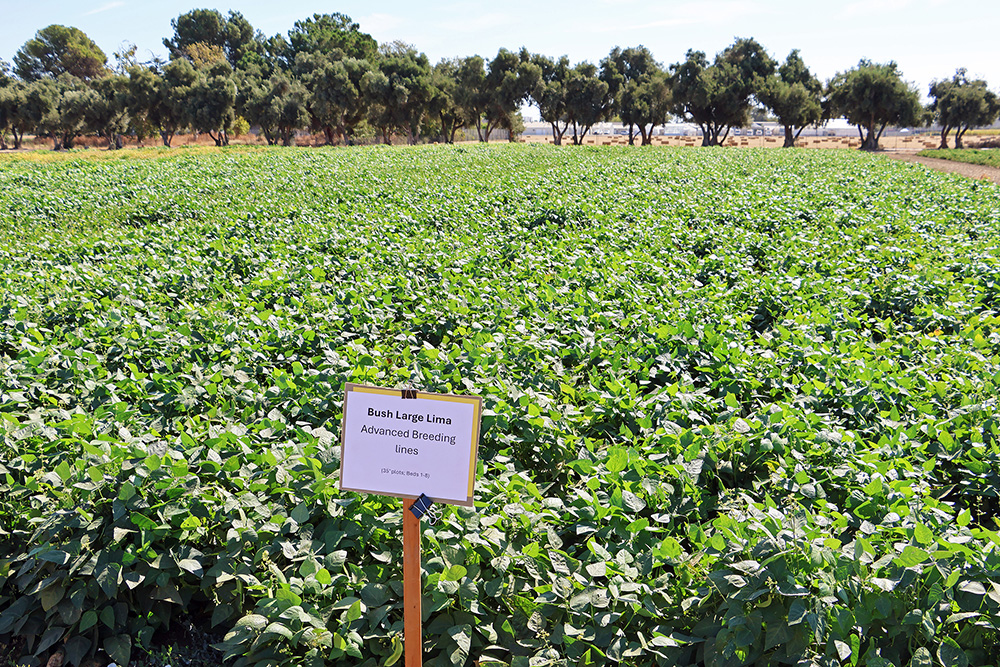
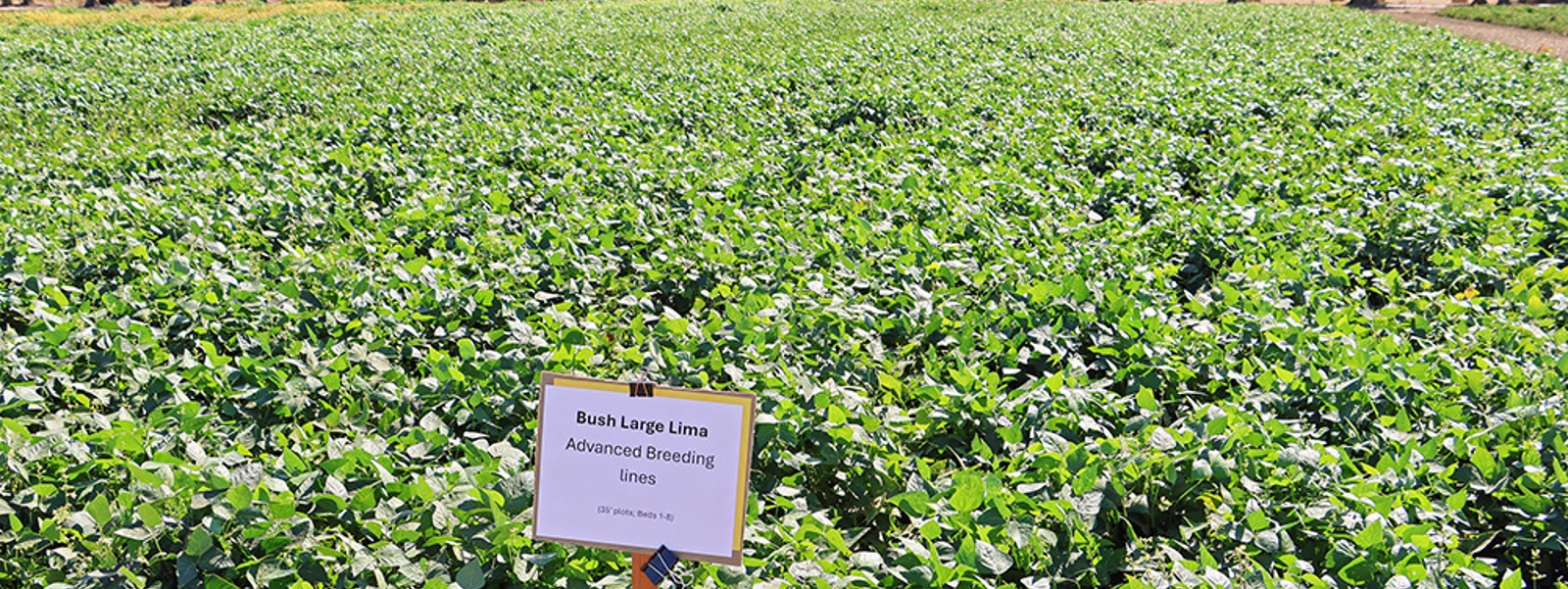
Researchers at the University of California continue to work on breeding new varieties of lima beans that are higher yielding, more resistant to pests such as lygus bugs and better tasting. The research includes bush lima beans, left, and vine-type limas, to give growers more variety.
Photo/Andy Rader


By Lila Magbilang
New research being conducted at the University of California, Davis, aims to help lima beans climb the culinary ladder by breeding beans that are tastier, higher yielding and more resilient.
The breeding project, led by UC Davis Department of Plant Sciences associate professor Christine Diepenbrock, just wrapped up its first regional field trial season.
 Lima bean breeding is a gradual process, Diepenbrock said, adding that the culmination of the first year of field trials means her team is one step closer to getting higher-quality beans to farmers. Previous breeding efforts succeeded in producing limas that have quick cooking times, high protein yields, and desirable taste and texture, including lima beans with flavor notes of butter and corn.
While lima beans may not seem especially glamorous, Diepenbrock said they are more than worthy of new breeding efforts. For farmers, the beans are very productive due to California’s long growing season and suitable climate. The state produces more than half the world’s lima beans, with the crop especially sought after by Japanese food companies that use baby lima beans to make a sweet bean paste called anko.
The ongoing trials have prioritized research on regional differences in plant productivity. During the past year, researchers conducted trials in California’s intermountain region and different parts of the Central Valley.
The trials take multiple years due to the need to account for weather variability from one year to the next and to gather sufficient data on how genetic differences in lima beans respond to specific climates and growing regions.
“Certain genotypes perform better in certain locations. We consider those generally more repeatable than a genotype-by-year interaction, where certain genotypes do better in certain years,” Diepenbrock said.
“The weather can change so much year to year, whereas locations might tend to have a semisimilar climatic scenario going on,” she added. “Generally, if we can figure out which varieties are tending to perform well in certain locations, then we can start to figure out how that relates back to breeding just for one environment type—or do we need to segment out the market segment a little bit in terms of regions?”
Lima beans can grow in bushes or on vines. While the breeding program originally focused on bush lima beans, Diepenbrock said she was excited by advances in vine-type lima bean breeding, which could provide more variety for farmers. She said there aren’t big differences between the two, but some growers prefer one over the other.
This year, one of her team’s priorities for vine-type breeding was seed multiplication, she said, “getting the seed bulked up so that we can do this regional trialing, determine which varieties are best and get them out to growers.”
“We do have some materials reaching the later stages of breeding that look really good,” she added.
While Diepenbrock’s team is still analyzing data from this year’s field trials, the researchers shared some observations from the recent growing season.
“Interestingly, we just did not get much pod set at all in the large-seeded vine types,” said Antonia Palkovic, a specialist in the Diepenbrock Lab who is working on the breeding project.
Despite observing many blossoms on the vines during the course of the field season, she said the lack of pods suggested flowers dropped off due to temperature, lygus bug infestation or other factors.
Lygus bugs are the most damaging pest in lima beans, and resistance to them has been a priority in the breeding trials. When the bugs feed on lima bean plants, it can result in the loss of seed pods and productivity.
Palkovic said that if researchers can identify the cause of this year’s poor large-seeded vine-type harvest, it might help them determine how to breed beans that are more resistant to the pest or other production challenges.
With limas already being more heat-resistant than most beans, researchers said adding lygus resistance would be a considerable step forward in making lima beans a hardier crop.
“If you have a really good, strong seed, it’s going to germinate and produce a strong plant that yields well and is resistant to different pests and diseases,” said Rachael Long, an emeritus farm adviser for UC Cooperative Extension. “That’s farm resilience because it’s almost like an insurance policy.”
Diepenbrock said that in addition to research on production-related traits, there is interest in investigating particular properties in lima beans that might make the protein-rich bean a good candidate for innovative products such as plant-based meat alternatives.
“We’re excited that people are thinking about it and trying it, and they are seeing some promising results so far, from what we hear,” she said, referring to research conducted at other universities. “That would be great to see come around as the markets keep evolving.”
Lila Magbilang is a Sacramento-based freelance science journalist. She can be reached at agalert@cfbf.com. Reprint with credit to California Farm Bureau. For image use, email agalert@cfbf.com.


In this edition…
• View full issue
• Adaptability fuels pomegranate potential
• Farmers seek new tools to ward off copper wire theft
• Building strong relationships strengthens agriculture
• Lima bean breeders explore regional differences in trial
• Automated irrigation systems can help reduce costs
• Rice commission CEO centers conservation efforts
• The FELS Hotline: Do not wait until you are in a jam
• Are there orchard sanitation steps to skip to save money?
• The mechanics of postharvest nutrition for orchards
• Why Nationwide understands farm business, coverage