


Hot temps, new varieties boost strawberry volumes
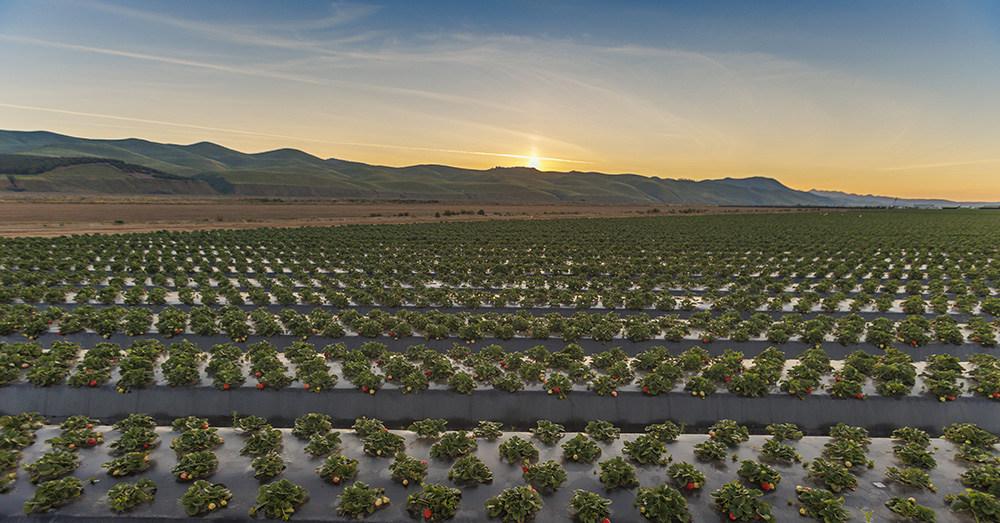
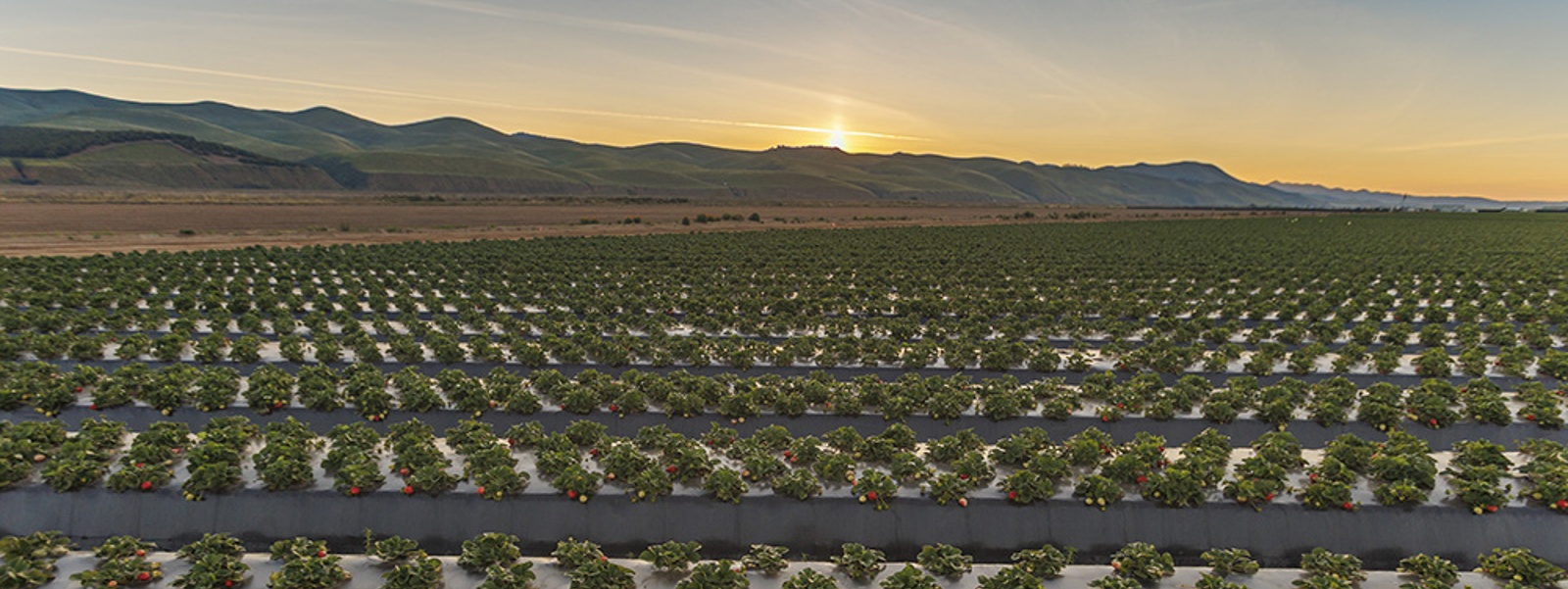
Strawberries grow in a Santa Barbara County field. Unseasonably warm temperatures in February and March ripened Central Coast berries weeks earlier, with the region harvesting at the same time as the Oxnard growing district in Southern California. By the first week of April, Watsonville-Salinas growers picked 10 times more berries than the same period two years ago.
Photo/Courtesy of California Strawberry Commission


By Rob McCarthy
The introduction of new commercial strawberry varieties has raised expectations for an industry turnaround after years of declining production linked to soil health and a spike in plant disease.
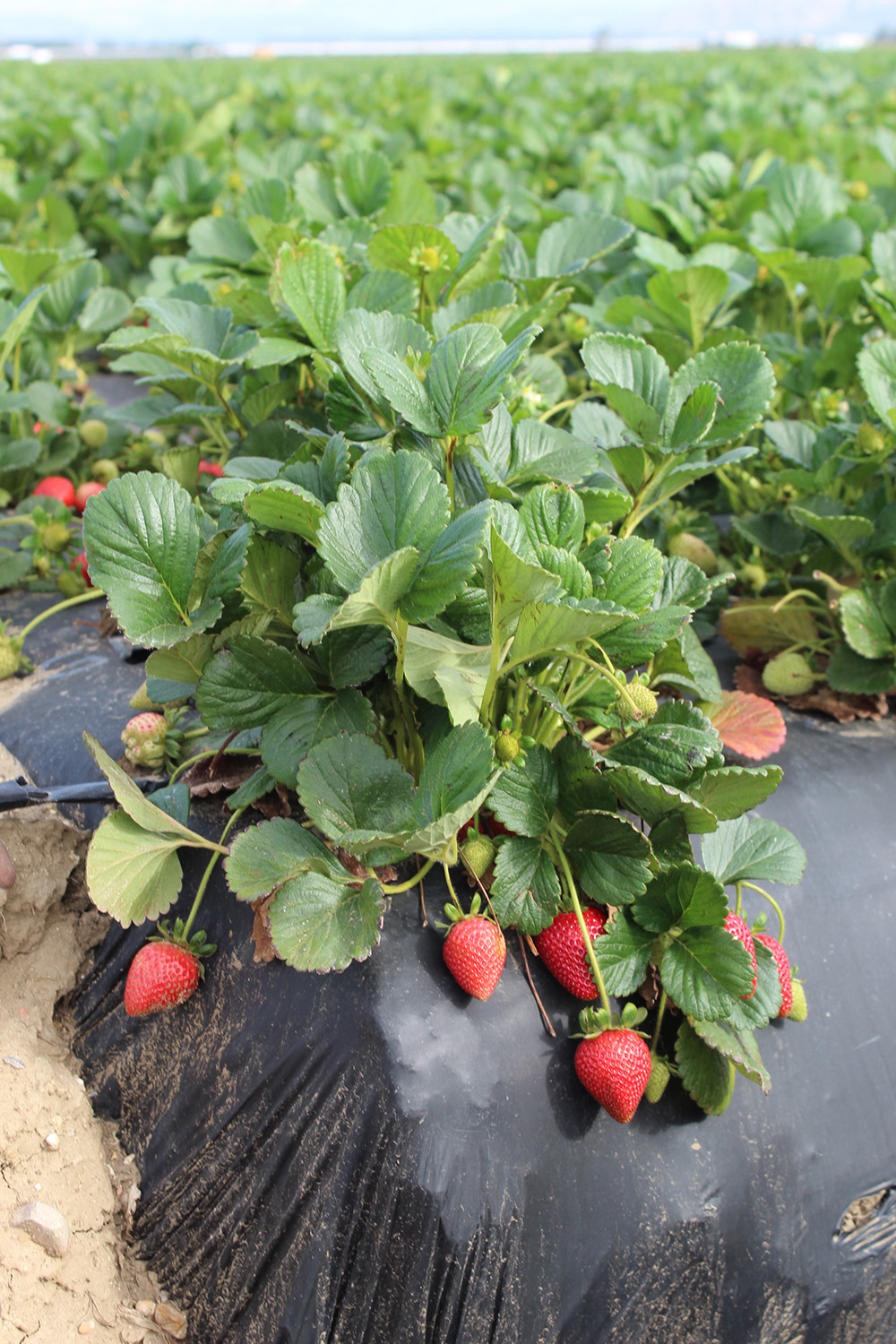
Heading into 2026, the California Strawberry Commission projected earlier spring production and marketable fruit volume in April, citing the availability of new commercially available varieties of strawberries from the University of California and private companies. There has been significant increase in acreage in recent years of day-neutral strawberry varieties that can produce fruit from spring into the fall and can be harvested sooner than the short-day varieties that are summer bearing.
Strawberries ripened weeks earlier this year not because they were day-neutral but due to record-setting heat in February. In Monterey County, usually the last of the state’s four main strawberry-growing regions to start harvest, temperatures reached into the 80s, Mark Bolda, University of California Cooperative Extension strawberry adviser, noted. That means the Watsonville/Salinas district was picking berries at the same time as Oxnard in Southern California.
Photo/Rob McCarthy
“It’s been all about unseasonably warm temperatures early on. It bumped the season up by two or three weeks,” Bolda said.
Watsonville-Salinas growers harvested 10 times more strawberries by April 4 than the same period two years ago, according to industry figures. Monterey County’s berry volume hit 2.9 million crates, compared to 230,000 in 2024. The northern district is the state’s largest strawberry producer, with a two-year average of 106.4 million trays per season.
Meanwhile, Oxnard district growers were 3.5 million crates ahead of last year’s output, and Santa Maria farms were running 7.1 million trays ahead of their 2025 production for this early in the season, according to the U.S. Department of Agriculture.
The heat also contributed to record levels of insect and mite pressure in Monterey County strawberries, Bolda said. The coastal region experienced consecutive days of 80-degree heat April 4-5, followed by two days of rain starting April 21.
“That’ll wipe out the Watsonville-Salinas crop for about a week,” he said.
The strawberry commission’s Chris Christian credited the back-to-back warm, dry months in February and March and the planting of newer strawberry cultivars bred to deliver early fruit for the bullish year so far.
“We’re seeing some shifts,” she said. “There’s more publicly available varieties now from the university programs and from breeding companies that are making their varieties more available to the industry at large.”
California grows 90% of the nation’s strawberries, with 43,726 total acres this year, the commission projected. Fall-planted acreage for winter, spring and summer production was 32,412 . Another 11,314 acres of fall-production berries are expected to be planted in the summer.
Nearly half the state’s strawberry acreage is planted with proprietary varieties, the commission reported. Driscoll’s is the largest proprietary breeder, and its trademarked “Berry Big” line are specifically cultivated to be larger for premium use in dipping and slicing, according to the company. It licenses its cultivars to independent farms that grow, sell and market the fruit under the Driscoll’s brand.
Driscoll's, California Berry Cultivars and Plant Sciences Genetics also breed strawberry varieties used in the Oxnard district, said Oleg Daugovish, UCCE adviser in Ventura County. The UC Davis cultivar Fronteras is planted on a few hundred acres in the fall, and in summer Portal and Eclipse are used on a small scale, he said. Driscoll's is the dominant summer variety in the district.
Strawberry growers in 2016 lost their critical-use exemption to continue treating fields with methyl bromide. Ever since, the industry has funded research to identify effective controls for four soil-borne root diseases found up and down the coast. Funded research and trials continue for verticillium wilt, phytophthora crown rot, charcoal rot and strains of fusarium known as race 1 and 2, speakers told growers at an April 24 research production meeting in Santa Maria hosted by the strawberry commission.
Gerald Holmes, director of the Strawberry Center at Cal Poly, San Luis Obispo, showed the results of a three-year survey to detect which soil-borne pathogens were present in the state’s growing districts. His team collected samples of dead and dying plants at 100 sites starting in Watsonville in 2021 and found all four pathogens present in 20% to 30% of all strawberry fields.
The team in 2022 collected samples in Oxnard, where charcoal rot from the fungal pathogen macrophomina phaseolina was detected in two-thirds of the sample sites. Santa Maria in 2023 tested positive for all four soil-borne diseases, with macrophomina present in half the sites, the data showed.
“This gives us benchmark. In any given year, this might look a little different,” Holmes said, adding the survey data showed how the soil-borne pathogens in strawberries differ in the northern growing region compared to the southern region.
Mitchell Feldmann, director of the Strawberry Breeding and Research Group at UC Davis, is leading the university’s effort to provide strawberry growers with disease-resistant plants. The work involves breeding and screening 2,000 new selections each year for resistance to the four soil-borne diseases. UC varieties released before 2018 are susceptible to fusarium race 1, he noted.
The university’s 2023 releases show 100% resistance to fusarium race 1, and new varieties are getting closer to being resistant to macrophomina, too. Of the 2,000 new selections his team screens each year, 90% are resistant to the charcoal rot pathogen, Feldmann said.
“Plants with only mild symptoms of infection can look healthy,” he said. “They may not have the same yield potential as a plant that is asymptomatic, but it’s a quite a lot better than it was.”
Surfline, Monarch, Golden Gate, Keystone and Eclipse—all UC varieties—have moderate resistance to verticillium and phytophthora, but they aren't more resistant to the diseases compared to some of the earlier UC releases, including Monterey and Portola.
More than 50% of new varieties in the UC Davis program show few or no symptoms of macrophomina, Feldmann said. The new selections show 10% to 15% die-out, while Portola is closer to 40%. Even a 25% mortality rate seen in a block of Portola summer strawberries in Guadalupe represents progress, he added.
“It isn’t perfect, but it’s a strong improvement over where we were a couple of short years ago,” Feldmann added.
Rob McCarthy is a reporter in Ventura County. He can be reached at agalert@cfbf.com.

In this edition…
• View full issue
• Groundwater law begins reshaping valley
• Warm, dry start of spring sparks fire season concerns
• Cultivate the future through agricultural education
• Recognize signs of distress and when help is needed
• From the Fields: Jeff Colombini, San Joaquin County cherry and apple grower
• From the Fields: Stuart Mast, Calaveras County vintner
• From the Fields: Loren Poncia, Marin County rancher
• From the Fields: Ron Macedo, Stanislaus County agritourism operator
• Hot temps, new varieties boost strawberry volumes
• Young farmers talk policies during Capitol advocacy visit
• Drought, water restrictions drive innovation in tech
• USDA announces $9 million for cling peach tree removal
• Advocacy in Action: Farm Bureau tracks labor bills, applauds Farm Bill House passage





.svg.png)
