


Drought, water restrictions drive innovation in tech
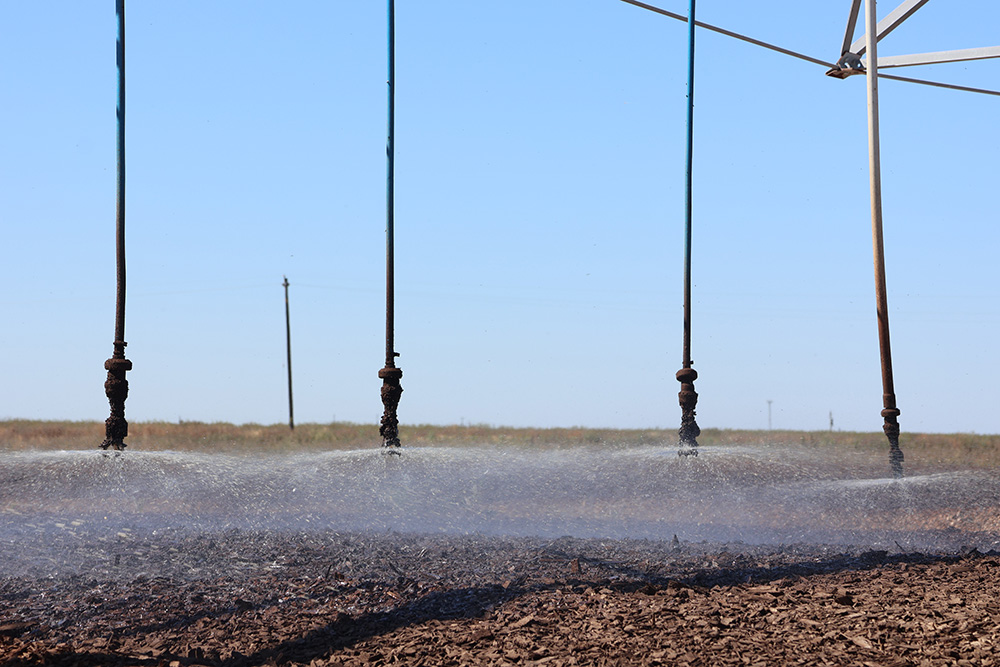
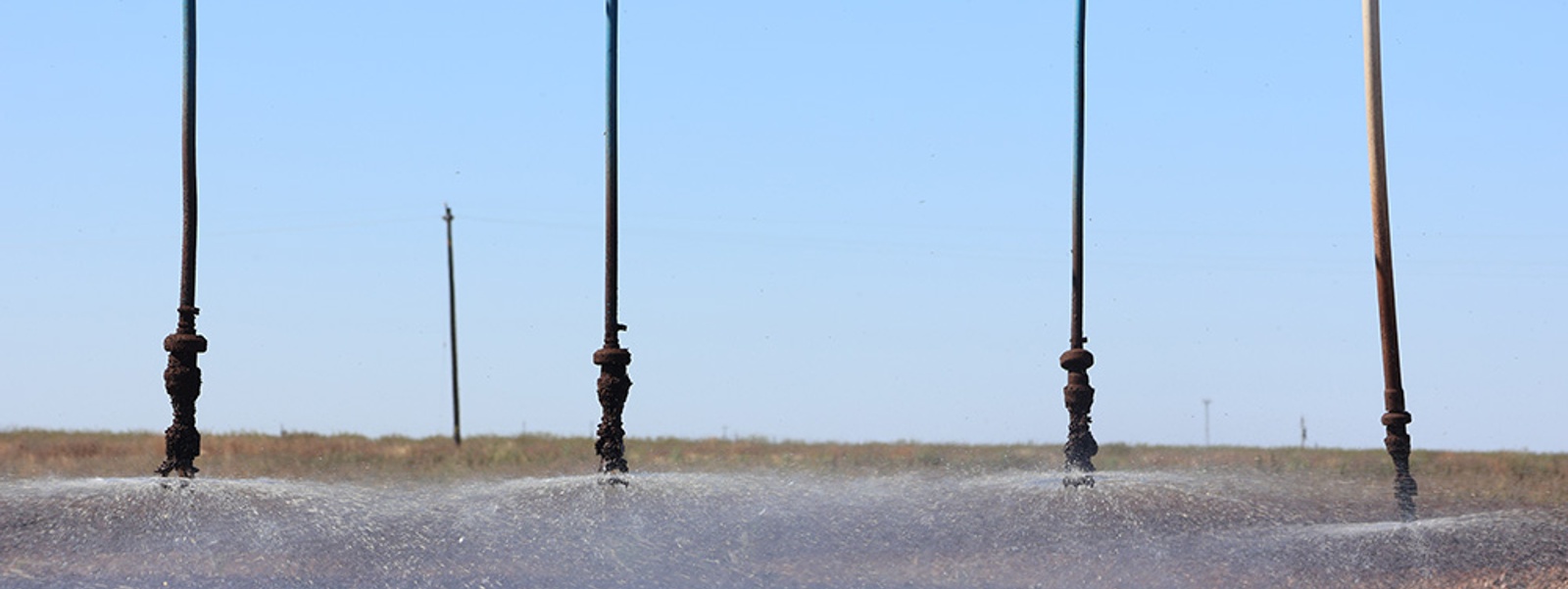
At Dennis Verhoeven’s Tulare County farm, sprinklers apply wastewater to a mixture of wood chips and worms, a key step in the process of treating the water.
Photo/Manola Secaira


By Manola Secaira
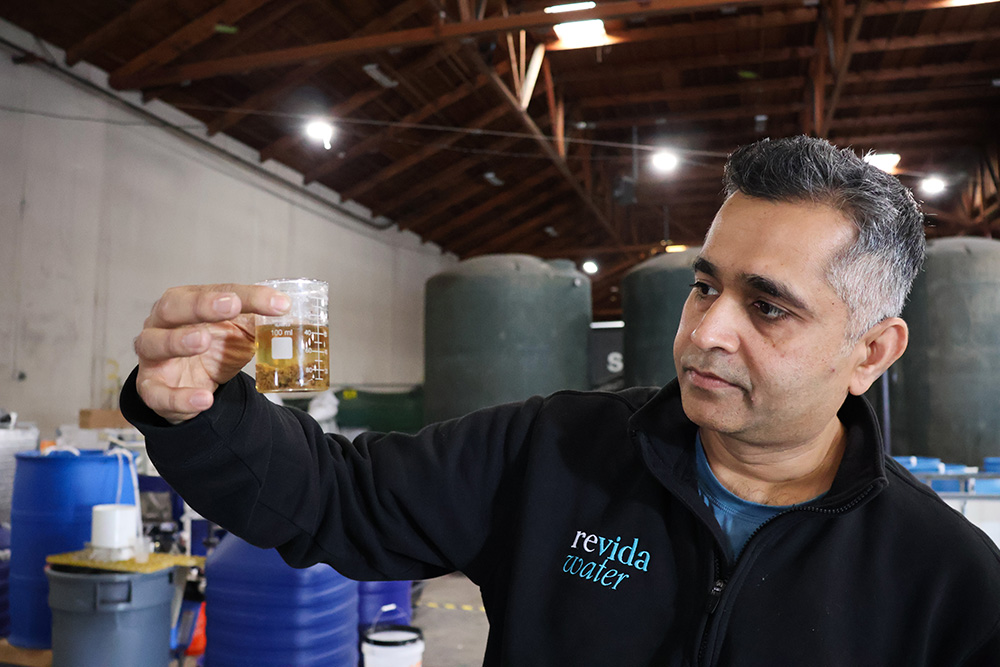
Ashish Shah is drinking water to prove a point. When he explains his project to people, he finds it’s often the most efficient way to show proof of concept.
“If you have 30 seconds, you can explain it real quick,” Shah said. “If you have five minutes, then they might even drink it with you.”
Shah’s company, Napa-based Revida Water, processes wastewater from places including wineries and dairies for reuse. Similar projects have existed for years, often focusing on getting the water clean enough that it can be used for irrigation. But Shah’s process makes such wastewater drinkable. It’s why his kids sometimes jokingly refer to his product as “cow poop water.”
Photo/Manola Secaira
“They get a kick out of it,” Shah said.
Shah said his company is the first to do so. Although the concept can be hard to imagine, Shah said it’s proven to be safe.
Revida’s technology ushers the wastewater through a series of steps—including filtration and introducing specific microbes—that have been used in treatment processes before.
“We didn’t reinvent the wheel or the science on this. We just put together what was already there,” he said.
Not all clients will need their water to be drinkable, he noted. Revida’s process allows them to decide at what level they want to treat their wastewater.
The larger need they’re looking to fulfill, he said, is being a one-stop shop for farmers figuring out how to adapt their processes to their water needs: “Our goal is to be out of your hair. We’ll take care of your water while you focus on your core business.”
Projects to find new uses for wastewater have become more common, especially as California farmers grapple with drought and tightening water use restrictions tied to the state’s Sustainable Groundwater Management Act. It’s a constant balancing act of planning crops around water they think they’ll have and using it efficiently while complying with state law and trying to keep costs down.
Photo/Manola Secaira
Despite the challenges, farmers’ increasingly urgent need to reduce water use has attracted new business ventures and more creative solutions for recycling wastewater.
“You always see companies and entrepreneurs and innovators kind of show up where there’s opportunity,” said Ben Montpetit, who chairs the viticulture and enology department at the University of California, Davis.
Montpetit said the university used Revida’s technology to process wastewater from the UC’s research winery during last year’s harvest. He said the winery always tries to be more sustainable, so leaning into new technologies comes naturally.
But testing new technology at a research winery might come more easily than doing so at a winery operating under commercial pressures. He said cost will likely be a big factor in making such technology accessible.
“If you can be more cost-effective and efficient, that’s going to be better for you,” Montpetit added.
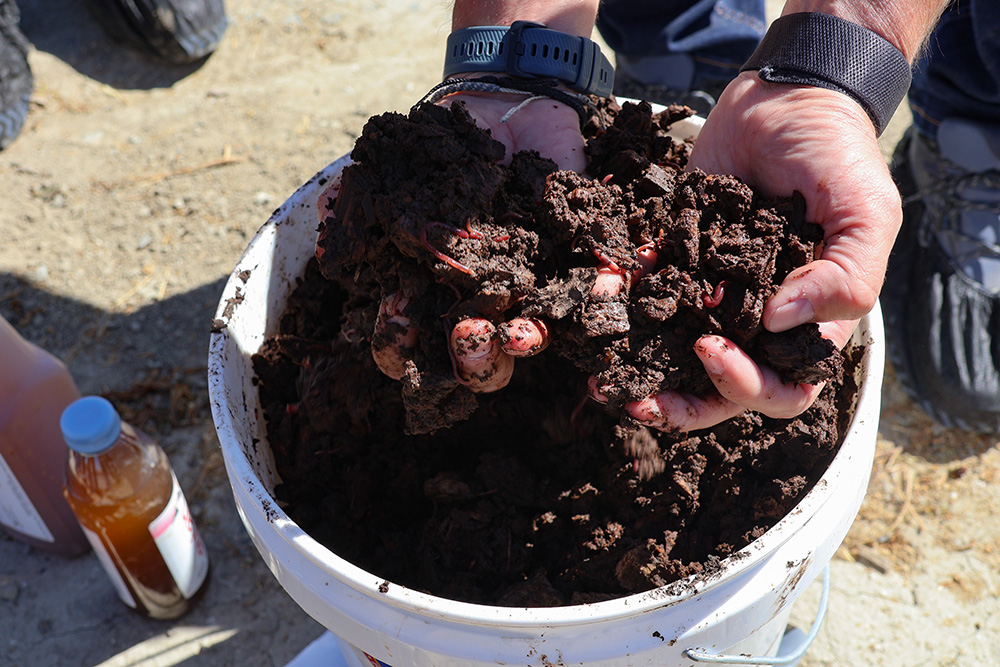
Beyond cost, different water users have different needs, so it’s important to have options. For some, it’s not just a water problem, according to BioFiltro co-founder Matias Sjögren. The Davis-based company uses a worm-powered treatment process that can turn wastewater into water for irrigation and other uses.
“There is a water shortage issue, so you need to start using less water for the things you do—try to grow the same thing with less water,” he said. “Secondly, there is a problem of water quality. In the Central Valley, a lot of the underground water has an excess of nitrates.”
BioFiltro first worked with municipal water supplies and businesses in the industrial sector, which still make up most of its clients. But during the past few years, it has expanded and started to focus more on treating liquid manure from dairies.
Tulare County dairy farmer Dennis Verhoeven started using a BioFiltro system about a year ago. He said he’d been looking for a way to capture methane emissions while also managing water nitrate levels. He had considered installing a digester, which involves putting a tarp-like structure over manure lagoons to capture methane. But it wasn’t right for his needs.
“With a digester, you’re pulling off more methane … but it actually increases the nitrate levels and the nutrients that’s actually in your water,” which would worsen the nitrate problem, he said.
BioFiltro has allowed him to address his methane and nitrate problems. Verhoeven said nitrate levels in the water coming out of his BioFiltro system are low enough that he can use it directly on his crops without having to mix it with fresh water.
“I have cut out a huge amount of fresh water that I’ve had to use otherwise,” Verhoeven said.
Sjögren said he hopes to have 70 to 80 dairies using BioFiltro’s technology by the end of 2030. He said outside support makes it possible for technologies like his to keep expanding.
“In California, we see the state supporting this a lot through grants that you don’t see in other states,” Sjögren said. “We have been able to accelerate this project because of that.”
Shah said Revida works best on dairies where digesters have been installed. He expects most clients he works with will want to use the treated water for purposes such as irrigation and animal misting but added that perhaps over time “once more comfortable, some of the clients may want us to bring it back to drinking water.”
He said he hopes to have around 100 dairies using the process by the end of 2027. With California’s water issues becoming more urgent, he stressed the importance of this growth.
“We’re not going to wait around,” Shah said.
Montpetit said he hopes introducing students to new technologies at the UC Davis winery can also help transform the industry’s future. By knowing what’s out there, he said students will be better equipped to make changes when they enter the workforce.
“They can say to their then boss, ‘I saw this technology during my education. I know it exists, and maybe it’s something we can think about,’” Montpetit said. “If they’re in a leadership position, they can say, ‘We want to think about these things. We know it exists. It’s possible.’”
Manola Secaira is a staff writer for Ag Alert. She can be reached at msecaira@cfbf.com.

In this edition…
• View full issue
• Groundwater law begins reshaping valley
• Warm, dry start of spring sparks fire season concerns
• Cultivate the future through agricultural education
• Recognize signs of distress and when help is needed
• From the Fields: Jeff Colombini, San Joaquin County cherry and apple grower
• From the Fields: Stuart Mast, Calaveras County vintner
• From the Fields: Loren Poncia, Marin County rancher
• From the Fields: Ron Macedo, Stanislaus County agritourism operator
• Hot temps, new varieties boost strawberry volumes
• Young farmers talk policies during Capitol advocacy visit
• Drought, water restrictions drive innovation in tech
• USDA announces $9 million for cling peach tree removal
• Advocacy in Action: Farm Bureau tracks labor bills, applauds Farm Bill House passage





.svg.png)
