


From the Fields: Jeff Colombini, San Joaquin County cherry and apple grower
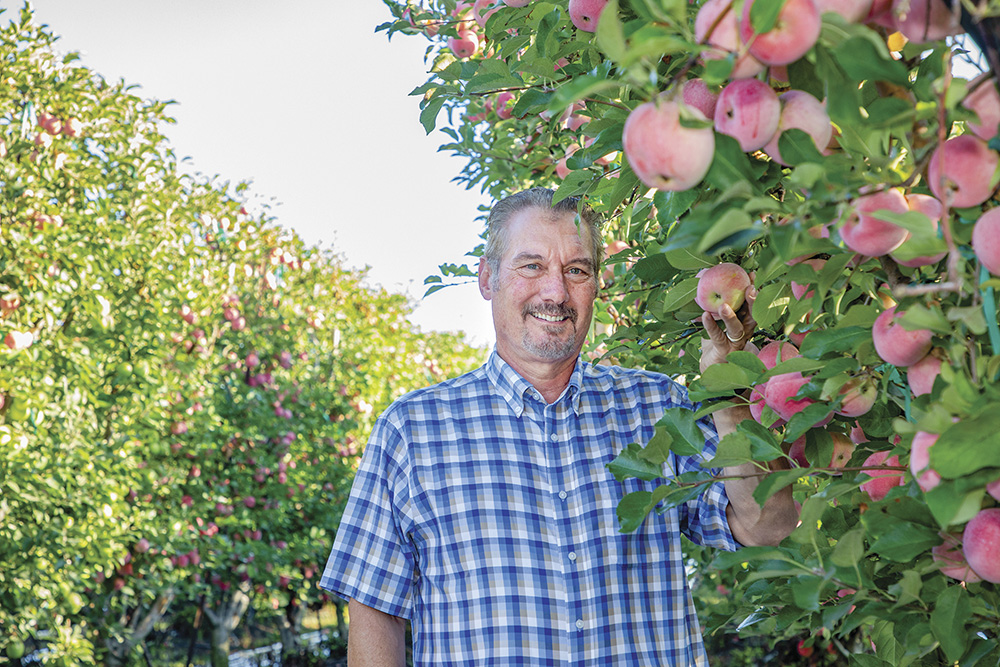
Photo/Lori Eanes


By Jeff Colombini
San Joaquin County cherry and apple grower
It’s just been a goofy year because it was so warm in February and March, and everything bloomed early. Now we’re getting all this rain.
One of the crops I grow is cherries, and the rain we got last month did some damage to them. They’re still harvestable, but we’re going to have a higher percentage of off-grade than normal. When it rains, the cherries are accumulating sugars. The skin is permeable, so the cherries absorb the rainwater. Because the rainwater is pure and the cherries already contain sugars and water, they absorb more moisture through osmosis. As that happens, the cherries start to swell, and the skin can only stretch so much. After absorbing too much moisture, the skin will split open. Once they split, they become off-grade because they’ll rot within a few days.
I also grow walnuts, so that means we have to spray again for walnut blight. I also grow apples, and I would say it’s a possibility that the crop is going to be a little smaller than normal. The crop load on the trees looks lighter. At this stage, the apple skin is very tender, so any amount of hail can ruin the apples. We didn’t get any hail here that I know of, but I’ll be able to tell if there was any.
We grow several varieties of apples. We grow Galas, and we start harvesting those around the last week of July, around the 25th, and that takes a few weeks to harvest. From there, we move into Fuji and Granny Smith, and then we finish up with Pink Ladies, which we don’t start harvesting until mid-October.
It’s a fairly drawn-out season that goes from the end of July to the first part of November. Between the early bloom, the rain and the added pressure from disease and crop-quality issues, this year has been unusual. It’s created more work, more cost and more uncertainty across multiple crops at once.

In this edition…
• View full issue
• Groundwater law begins reshaping valley
• Warm, dry start of spring sparks fire season concerns
• Cultivate the future through agricultural education
• Recognize signs of distress and when help is needed
• From the Fields: Jeff Colombini, San Joaquin County cherry and apple grower
• From the Fields: Stuart Mast, Calaveras County vintner
• From the Fields: Loren Poncia, Marin County rancher
• From the Fields: Ron Macedo, Stanislaus County agritourism operator
• Hot temps, new varieties boost strawberry volumes
• Young farmers talk policies during Capitol advocacy visit
• Drought, water restrictions drive innovation in tech
• USDA announces $9 million for cling peach tree removal
• Advocacy in Action: Farm Bureau tracks labor bills, applauds Farm Bill House passage





.svg.png)
