


Inside Farm Bureau: Cultivate the future through agricultural education
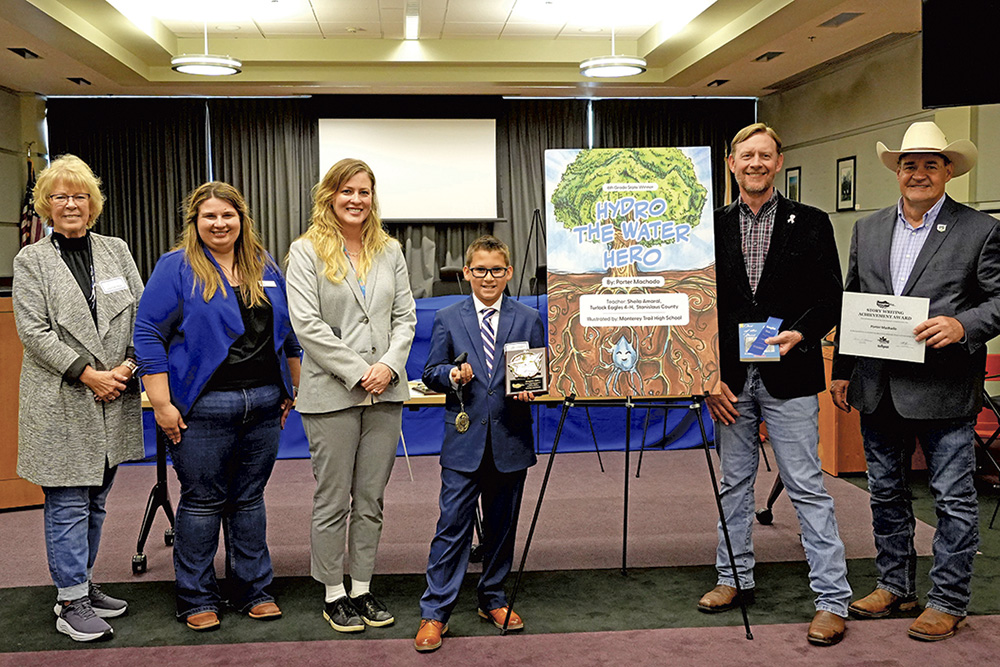
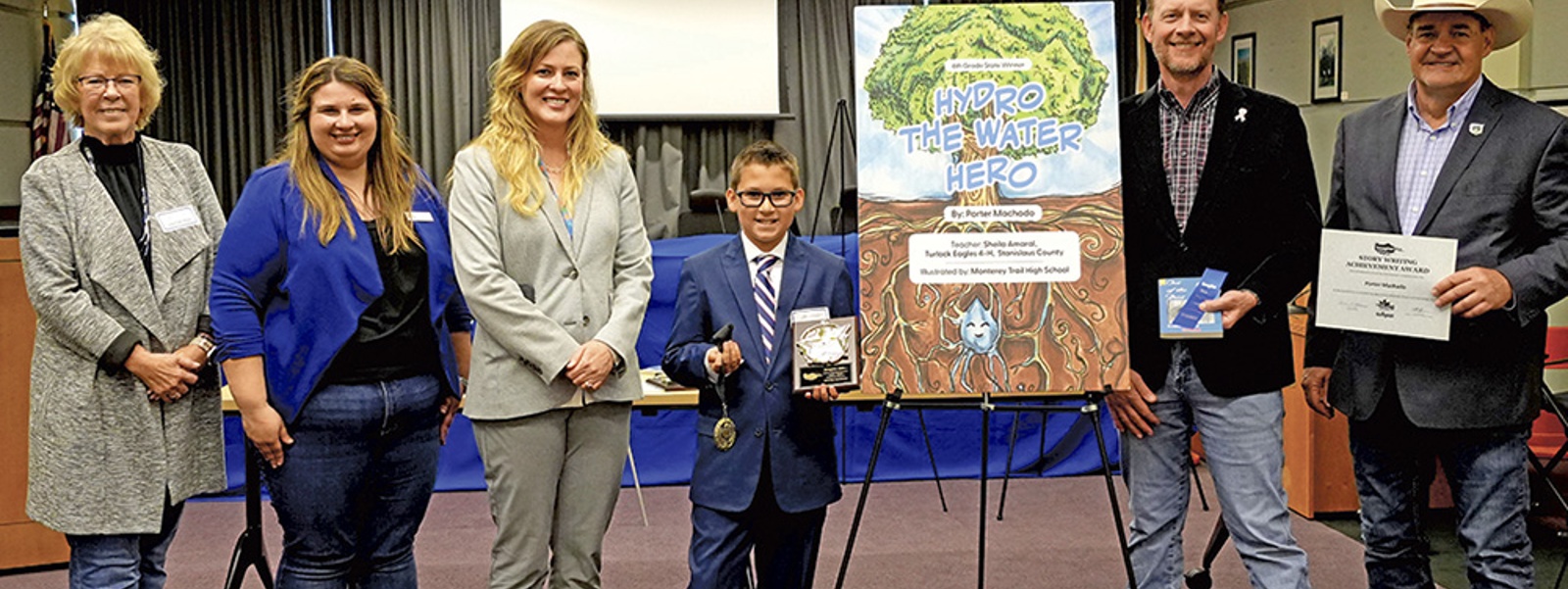
Shaun Crook, second from right, and California Farm Bureau Second Vice President Ron Peterson present award to “Imagine This...” writing contest winner Porter Machado, a sixth grader from Turlock.
Photo/Sam Adams


By Shaun Crook
First Vice President
For four decades, the California Foundation for Agriculture in the Classroom stood at the intersection of two of the state’s most vital pillars: agriculture and education. I am honored to serve as board chair as the foundation celebrates its 40th anniversary. It is humbling and inspiring to reflect on how far we have come connecting California classrooms with the people and practices that sustain our food system.

When this journey began in the early 1980s, the need was clear. Recognizing a growing disconnect between urban students and the sources of their food, farm groups organized what became known as Farm Day in San Francisco. Farmers and ranchers loaded trucks with animals, crops and equipment and brought them directly onto school grounds. That moment—when agriculture was brought into the classroom in the most tangible way—planted a seed that has continued to grow for 40 years.
My own involvement in Agriculture in the Classroom is driven by a deep respect for agriculture and education—and the natural connection between the two. Agriculture is science, history, economics, environmental stewardship and culture rolled into one. Education, at its best, prepares students to understand the world around them. When we bring agriculture into the classroom, we bridge that gap. We give students context for the food they eat, the resources they depend on and the communities that sustain them.
 During the past 40 years, the foundation has served as a trusted resource for educators and a strong advocate for farmers and ranchers. Today, we reach more than 1.3 million California students and support some 39,000 educators each year.
But our role extends far beyond simply reaching students and teachers. We also equip volunteers, community organizations and agricultural professionals with the tools they need to tell agriculture’s story effectively. Through lesson plans, hands-on activities and a wide array of educational resources, we ensure that anyone who steps into a classroom or interacts with young people can present agriculture in a way that is accurate, engaging and meaningful. This multiplier effect is one of our greatest strengths.
Programs such as the “Imagine This…” writing contest exemplify how we can make agricultural education creative and accessible. Now in its 32nd year, the contest invites students in grades three through eight to explore agriculture through storytelling and imagination. By encouraging students to think creatively about agriculture, we help them form personal connections that can last a lifetime.
Of course, Agriculture in the Classroom has not stood still. We have evolved significantly to meet the changing needs of educators and students. One of the most important shifts has been toward a more robust outreach model. With regional representatives positioned across the state, we are now able to deliver more resources directly to classrooms and tailor our efforts to the unique needs of different communities. This localized approach ensures that our programs remain relevant and effective.
Advancements in technology have also opened new doors. Digital tools, virtual field trips and interactive resources allow us to reach more students in ways that were unimaginable in the 1980s. These innovations give us an opportunity to engage students when their career interests and worldviews begin to take shape. By introducing agricultural concepts during their formative years, we can inspire curiosity, build understanding and potentially spark interest in agricultural careers.
The need for this work has never been greater. Each year, fewer people are directly involved in production agriculture. As that gap widens, the risk of misunderstanding and disconnect grows. Agricultural literacy is not a luxury but a necessity. An informed public is essential for sound decision-making, whether at the kitchen table or in the halls of government.
When we educate young people about agriculture, we invest in the future of our communities and state. Today’s students will become tomorrow’s voters, policymakers and leaders. Some will sit on city councils or boards of supervisors. When they do, we want them to remember their experiences with Agriculture in the Classroom and carry with them an appreciation for what it takes to put food on their plates.
That is why continued support of agricultural education is so critical. Every segment of agriculture has a role to play in sharing California’s story. By supporting Agriculture in the Classroom, you help ensure that the next generation understands not only the importance of agriculture but also the values and dedication of the people behind it.
As we celebrate this 40-year milestone, we are not simply looking back; we are looking ahead. The challenges and opportunities before us call for renewed commitment and collaboration. I urge all those who are part of California agriculture to remain engaged, support this work and help us expand our reach even further.
Together, we can ensure that Agriculture in the Classroom continues to thrive for another 40 years and beyond—cultivating knowledge, fostering understanding, and strengthening the connection between our farms and our future.
To support the California Foundation for Agriculture in the Classroom, visit learnaboutag.org/get-involved.
To learn more about the “Imagine This…” contest, visit learnaboutag.org/programs/contest.
Shaun Crook, who operates a family timber business in Tuolumne County, is first vice president of the California Farm Bureau. He can be reached at scrook@cfbf.com.

In this edition…
• View full issue
• Groundwater law begins reshaping valley
• Warm, dry start of spring sparks fire season concerns
• Cultivate the future through agricultural education
• Recognize signs of distress and when help is needed
• From the Fields: Jeff Colombini, San Joaquin County cherry and apple grower
• From the Fields: Stuart Mast, Calaveras County vintner
• From the Fields: Loren Poncia, Marin County rancher
• From the Fields: Ron Macedo, Stanislaus County agritourism operator
• Hot temps, new varieties boost strawberry volumes
• Young farmers talk policies during Capitol advocacy visit
• Drought, water restrictions drive innovation in tech
• USDA announces $9 million for cling peach tree removal
• Advocacy in Action: Farm Bureau tracks labor bills, applauds Farm Bill House passage





.svg.png)
