


Ingredient market increases demand for pistachios
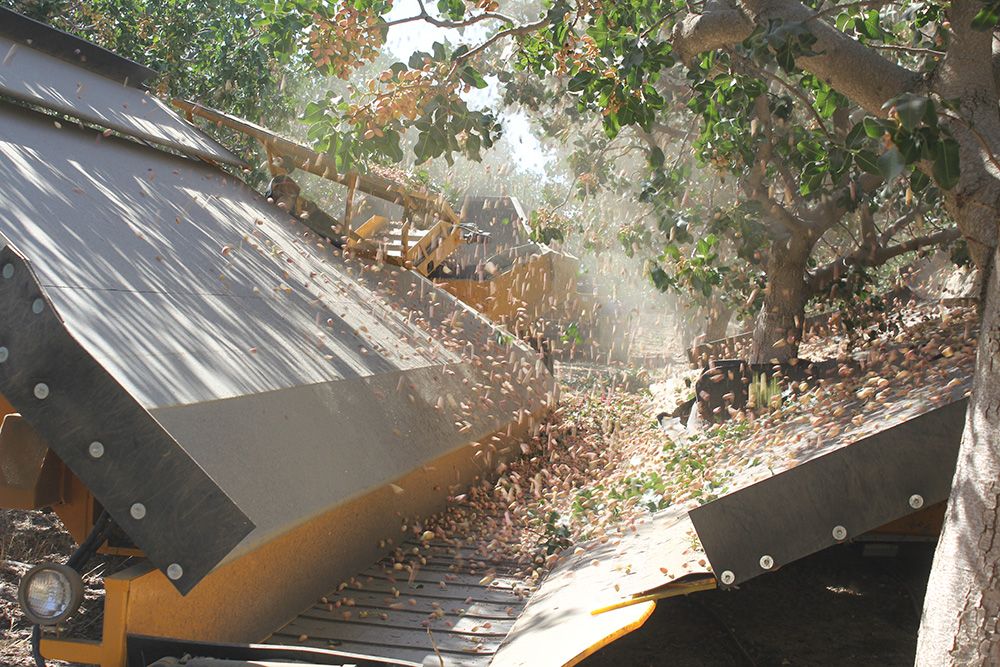
As more pistachio trees come into production in California, marketers look to increase demand for the nut, which has been sold largely as an in-shell nut for snacking in the past. But in recent years, pistachios have found new uses, especially as a paste, inset, boosting demand for pistachio kernels, thanks to the success of Dubai chocolate, which is filled with pistachio paste and tahini.
Ag Alert file photo


By Denice Rackley
Soaring demand for pistachios from chocolatiers, bakeries and other food manufacturers is providing a timely boost to California’s world-leading pistachio sector.
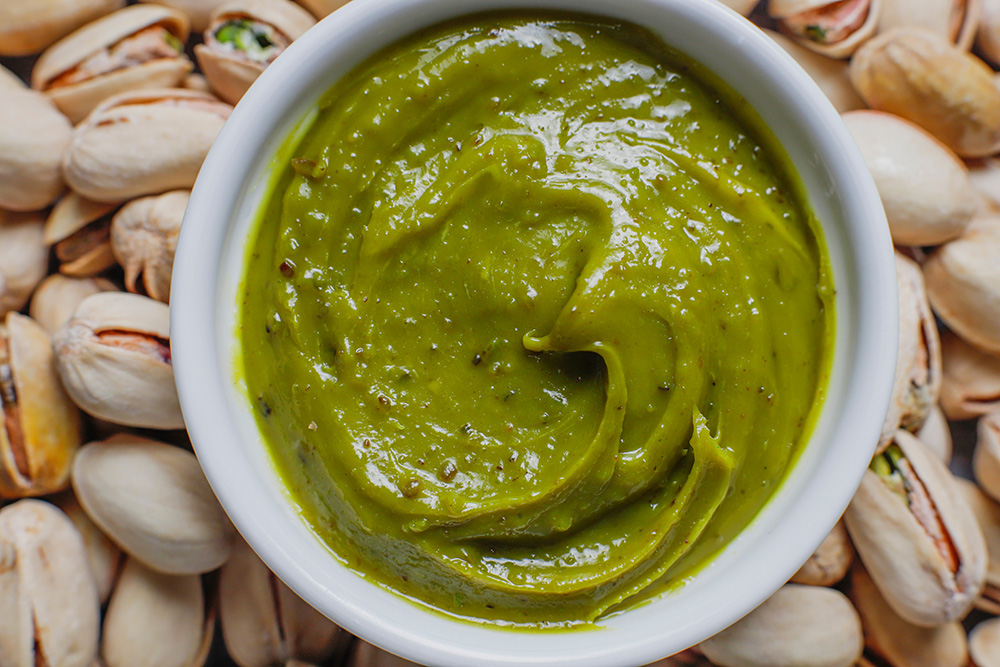
Industry experts said the success of Dubai chocolate—a viral sensation invented by a United Arab Emirates dessert company—has proven more than a fad, inspiring major brands such as Lindt to develop their own versions of the chocolate bar filled with pistachio paste and tahini, a sesame seed paste.
“Every chocolatier is using pistachio paste and has a green chocolate bar,” said Ali Amin, owner of Los Angeles-based Primex International Trading, which markets pistachios to countries around the world.
Photo/Licensed image
Amin said the culinary trend has gone beyond chocolate, with pistachio paste seeing new or increased use as an ingredient in pastries such as croissants and eclairs, as well as in espresso drinks and milkshakes. Pistachio-infused products have even found their way onto the Starbucks menu.
DJ Ellsworth, sales representative of Madera-based Meridian Growers, said he recently gave a tour of the company’s processing facilities to a group of South Korean food manufacturers looking to procure pistachios for a branded pastry.
“They were interested in purchasing pistachios for their ‘chewy cookie,’ a cookie with a pistachio paste center covered with marshmallow and cocoa,” Ellsworth said.
He said he also received a recent inquiry from a condiment maker experimenting with pistachio paste in barbecue sauce.
“The Dubai chocolate craze accelerated the desire for pistachios as a global ingredient,” Ellsworth said.
Pistachio growers and handlers said they were optimistic these newfound uses of the nut will create lasting new market segments.
For California growers, the surge in global demand arrived at an opportune time.
From 2018 to 2022, the state saw a boom in new pistachio orchards, with growers planting more than 30,000 acres per year. Last year, the state’s bearing acreage jumped to 488,000, more than double California’s pistachio acreage a decade prior.
In 2025, the U.S. produced about 65% of the world’s pistachios, followed by Iran at 18% and Turkey at 11%, according to the U.S. Department of Agriculture.

Photo/Licensed image
The crop, which originated in the Middle East, has advantages for farmers in California’s Central Valley. It is more tolerant of drought and salty soils than other tree nuts such as almonds and walnuts.
But the Golden State’s dramatic increase in plantings meant there was a need for more buyers to absorb the rising production and keep prices steady.
Zachary Fraser, president and CEO of the American Pistachio Growers, said the marketing group has sought to cultivate interest in pistachios as an ingredient in confections and other types of foods. He said those market segments have been responsible for boosting demand.
Most pistachios grown in California are exported, and Fraser said demand for California pistachios has grown in several regions, including the Middle East, India, Brazil and Mexico.
Turkey, itself a major producer of pistachios, last year eased restrictions on pistachio imports due to skyrocketing demand from dessert makers.
“Turkey has extensive processing facilities, but their supply couldn’t meet the demand,” Amin said.
Bikram Hundal, vice president of operations for Earlimart-based Sequoia Nut Company/Custom Almonds LLC in Tulare County, said farmers have felt the impact of the world’s love affair with pistachios in their bottom line.
Because pistachio trees are alternate-bearing, growers expected to see a drop in prices last year as supply swelled in the “on” year, Hundal said. Instead, prices went up due to surging demand for pistachio kernels for paste.
“Growers are making more on their pistachios, which is great for the industry,” Hundal said. “There has always been a demand for pistachios as a snack, but we are seeing a surge in demand for pistachio paste and creams as an ingredient.”
The phenomenon has changed California’s industry, he added, causing more processing plants to open and a greater portion of the state’s crop to be processed and shipped as kernels rather than kept in their shells for consumption as whole nuts.
Amin, the Primex owner, said at least 25% of California pistachios are now shipped as kernels, “something we have not previously seen.”
While new pistachio plantings in California had tapered off recently, he said, there are signs farmers are optimistic about long-term market growth.
“It takes eight to nine years from planting for farmers to break even on their investment,” Amin said. “With the renewed interest in pistachios and rising price of pistachios, growers and bankers are more comfortable making an investment, and we are seeing plantings increase.”
Fraser, the American Pistachio Growers executive, said he expects demand for pistachios will remain strong and bring increased returns to growers even as more acres come into production.
“We are riding the Dubai chocolate craze, fueling it and building a movement,” Fraser said.
Denice Rackley is a reporter in Indiana. She can be reached at agalert@cfbf.com.

In this issue:
- Governor hopefuls vow to cut regulations
- Farmers gather to talk sustainability projects at dairies
- Engaged members unleash Farm Bureau's true force
- Melissa Hurtado on ag overtime: 'Everyone can win'
- From the Fields: Abi Dirske, Stanislaus County flower farmer
- From the Fields: John Pierson, Solano County rancher
- From the Fields: Celeste Alonzo, Riverside County vegetable grower
- From the Fields: Mitchell Yerxa, Colusa County Farmer
- Ingredient market increases demand for pistachios
- Despite acreage decline, asparagus growers hang on
- Democrats vying for governor criticize overtime law
- Harvest strategies for managing grain quality, safety risks and storage challenges
- Certified Crop Advisers guide growers in smart nutrient management
- Farm Bureau advocacy update: Labor, water, forests and tax relief
- Mentorship program grows next-generation farmers





.svg.png)
