


USDA seeks to ease organic certification process, costs
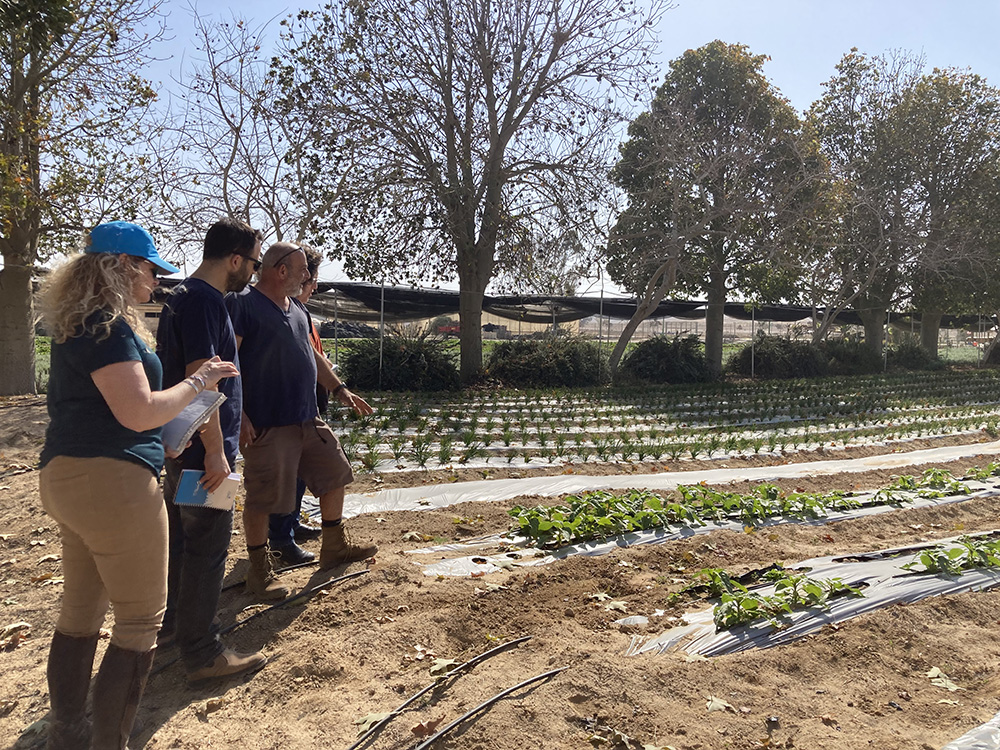
Renee Gebault King, far left, international specialist at the U.S. Department of Agriculture National Organic Program, observes a certifier audit on a farm that grows crops for seed production.
Photo/Courtesy of the U.S. Department of Agriculture


By Tim Hearden
As a bulwark against fraud in the organic market, the U.S. Department of Agriculture enacted a new rule two years ago that required certification at every step of the supply-chain process—from farmers to brokers to storage facilities.
The rule, called Strengthening Organic Enforcement, or SOE, increased oversight of the production, handling and sale of organic agricultural products in an effort to build consumer and industry trust in the organic label.
While the regulation improved farm-to-market traceability, it drew complaints from growers and handlers that record-keeping became excessive and cumbersome, with some arguing that meeting the new requirements is difficult for small-scale, diversified growers without the staff to handle compliance, the Iowa-based Organic Farmers Association noted in a report published in June.
 Enter USDA’s next step: approval of a common organic system plan, which is designed to streamline certification with a goal of improving consistency, making oversight more efficient, and helping the organic sector meet the needs of a growing and complex marketplace, said Jennifer Tucker, USDA deputy administrator of the National Organic Program.
Tucker said while USDA had a template of the organic system plan on its website, the plan did not reflect the updated organic rules. She also acknowledged that “some certifiers were overreading some of the regulations.”
The new plan will help producers clearly identify different areas for potential fraud and what’s being done about it, she said. The plan will also “help operations understand what organic compliance really means without having to read all those regulations,” she added.
Discussions of a common document have been in the works for months, buoyed by a suggestion in a federal Make America Healthy Again Commission report last year to streamline the certification process and reduce transitioning costs for small farms.
The common form was developed by organic stakeholders, with input from the Organic Farmers Association, National Organic Coalition, Western Organic Dairy Producers Alliance and Northeast Organic Dairy Producers Alliance. While adoption of the common plan is optional, USDA strongly encourages certifiers to use it.
Early drafts of the document have been in use by certifiers for months, Tucker said.
“We believe that certifiers covering over 50% of domestic operations have already been using the common OSP (organic system plan),” Tucker said. “I think we are at a critical mass where certifiers see the benefit of this … We’re trying to push both the certifier side and the demand side for producers.”
The final rule of SOE took effect March 19, 2024, requiring farms, businesses and other entities working in organic supply chains to comply or face penalties under the Organic Foods Production Act. Under the new rule, an operation certificate must be maintained for a farm or business to sell, label or market its products as organic.
USDA issues a separate certificate for organic products imported into the United States. Organic system plans must be updated annually.
Except for exempt businesses such as restaurants and retail stores, any operation that produces or handles organic agricultural products must be certified. This applies to most entities doing business in organic trade, USDA said. In general, sellers of organic products are not responsible for the certification status of their buyers, but they must confirm the legitimacy of their suppliers.
For growers, the introduction of SOE was difficult, with some suggesting it was implemented before organic certifiers and USDA were ready, according to a survey commissioned by the Organic Farmers Association.
Carolyn Dimitri, an applied economist and professor of nutrition and food studies at New York University, reported the findings, which were based on completed surveys from 188 certified organic farmers whose operations ranged in size from 25 acres to more than 12,000.
Surveyed farmers reported that surprise inspections were among the unpleasantries associated with SOE. Certifiers are required to conduct surprise inspections at 5% of the operations they certify, and fee increases have disproportionately impacted smaller-scale producers, Dimitri reported.
A lack of flexibility was noted by about half the farmers in the survey. They also suggested that templates geared for small-scale producers would be helpful.
Among respondents, 37% said the process of maintaining certification was more difficult under SOE, Dimitri said in a webinar that was hosted by the Organic Farmers Association in June.
“I think that drives home the point that farmers are having difficult experiences with inspections and the certification process,” she said.
Farmers complained that certifiers sometimes asked for redundant documents and unusual changes and failed to offer explanations, she added.
“A lot of people do think about giving up their certifications,” Dimitri said, adding that growers who maintain their certification “are super committed to organic or really need to do it because of market or pricing reasons.”
A common organic system plan will simplify organic certification for growers by replacing fragmented, agency-specific paperwork with a standardized, unified baseline framework supported by the USDA Agricultural Marketing Service, according to Florida-based Quick Organics, a cloud-based platform built around the new plan.
Organic certification is complex, and certifiers and operations developing and reviewing organic system plans face challenges with inconsistent templates, varying formats and outdated forms, USDA acknowledged.
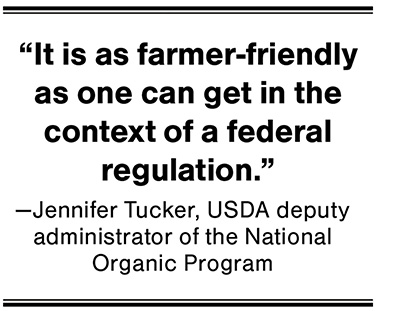
“We had producers big and small review it,” Tucker said. “We got some good suggestions … So many people have been involved in it that it took a long time to get to the final product. It is as farmer-friendly as one can get in the context of a federal regulation.”
The new common format isn’t mandated, but that “might be coming in the future,” Tucker said. First, USDA needs to determine “how we’re going to keep this up to date” and then must develop a common inspection form to go with it, she said.
“The common OSP (organic system plan) is the way the farmer communicates, but inspection is what verifies that,” she said. “This is where I also think there is tremendous potential for innovation, such as the use of artificial intelligence that can systematically look across documents … Having common platforms will help with that.”
Tim Hearden is a reporter in Redding. He can be reached at agalert@cfbf.com.
Reprint with credit to California Farm Bureau. For image use, email agalert@cfbf.com.


In this edition…
• Regenerative label payoff remains murky
• Paintballs among new tools allowed for hazing wolves
• Influence starts with engaged Farm Bureau members
• USDA seeks to ease organic certification process, costs
• From the Fields: Chris Jergenson, Merced and Stanislaus counties organic farmer
• From the Fields: Ben Lyons, Solano County farmer
• From the Fields: Domenic Carinalli, Sonoma County organic dairy farmer and conventional winegrape grower
• From the Fields: Katie Herzog, Monterey County agave grower
• New 'smart' farm tech targets vegetable production
• Growth in organic milk presents market challenges
• Advocacy in Action: Packaging requirements, labor, beef cattle, trade, compost, Roadless Rule and disaster relief
• How you can make the switch to regenerative farming
• Summit seeks to strengthen agritourism
• Leopold award finalists for 2026 selected





.svg.png)
