


Growth in organic milk presents market challenges
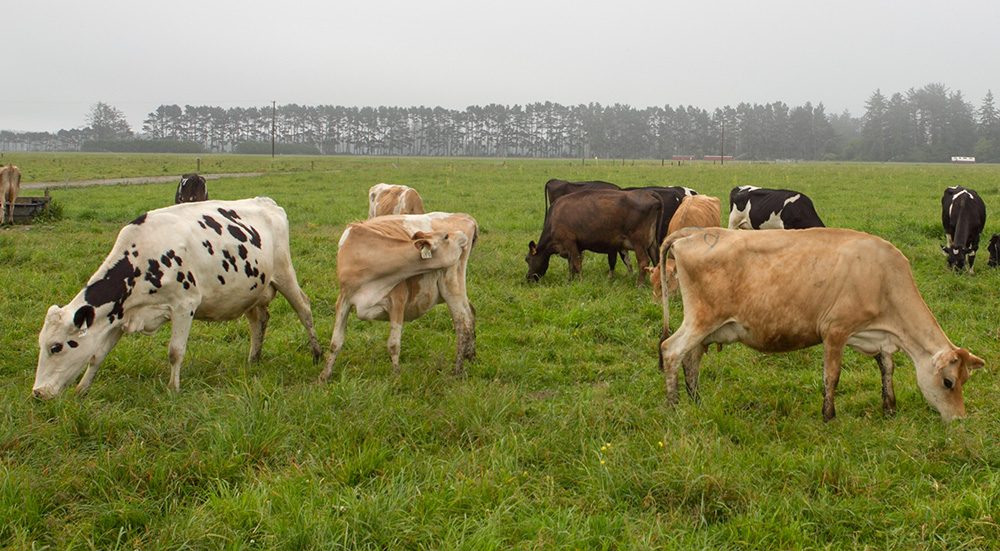
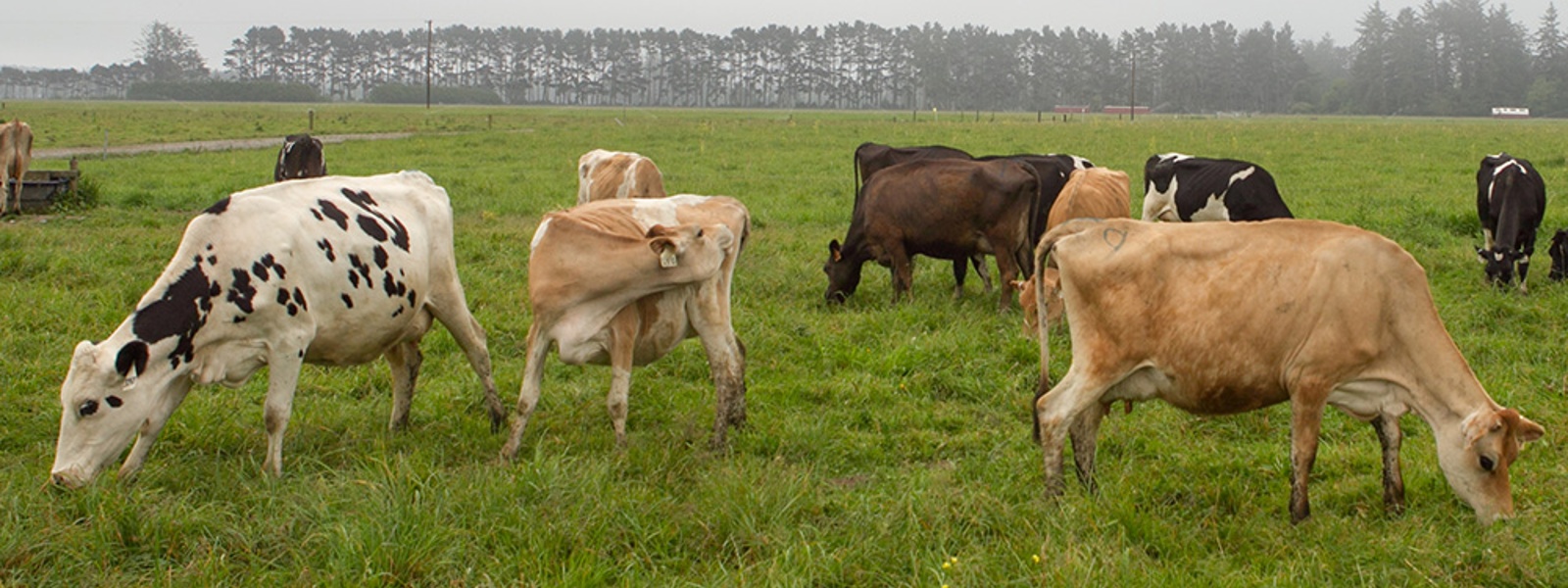
Dairy cows graze on pasture at Alexandre Family Farm in Crescent City. The farm produces organic milk, production and consumption of which have grown during the past two decades even though overall fluid milk consumption has declined. The growth comes with challenges because organic milk remains more expensive, which can discourage price-conscious shoppers.
Ag Alert file photo


By Tim Hearden
Del Norte County farmer Blake Alexandre says he understands why retailers claim a bigger share of the premiums that consumers pay for organic milk.
The co-owner of Alexandre Family Farm in Crescent City acknowledged that organic dairy farmers remain underpaid. However, he said he also recognizes that farmers won’t earn more unless there are in-store products that generate demand.
“One of our principles is that consumers have a right to pay more to get more, and producers are willing to pay the extras to have more attributes,” Alexandre said. “Hopefully, we can find a market to pay for that.”
Alexandre’s business specializes in producing organic A2 milk, a type of cow’s milk that contains only the A2 beta-casein protein rather than the mix of A1 and A2 proteins found in regular milk. Proponents say A2 milk is easier for people to digest.
His milk is enjoying a boom of sorts as organic milk production and consumption have grown steadily during the past two decades while overall fluid milk consumption has dropped amid increased competition from plant-based alternatives and other beverages. The growth has occurred despite higher prices for organic milk.
Organic dairy products continue to command price premiums because of higher production and regulatory costs. Meanwhile, diversification of milk offerings and other dairy categories such as yogurt and cheese continue to drive growth, according to a report released earlier this year by University of California, Davis, agricultural economists Daniel Sumner and Sangwon Lee.
The retail-to-farm price ratio for organic milk products substantially exceeds that of conventional dairy offerings, but the major share of those premium prices is captured downstream by processors and retailers, the researchers reported.
“Organic milk struggles in California because of high costs at the farm,” said Sumner, a professor at the university’s Department of Agricultural and Resource Economics.
The challenge for producers, he added, is to encourage retailers to buy and sell more organic milk.
“A higher price paid to farmers and a lower price from consumers is not the natural way to get the marketer to be enthusiastic about a product,” Sumner said.
Among the products competing for consumers’ attention—and store shelf space—is plant-based “milk” alternatives, as shoppers perceive them as close substitutes for organic milk and as proponents claim their product is better for the environment and animal welfare, Sumner and Lee observed.
Efforts by traditional dairy advocates to prevent plant-based alternatives from using dairy terms such as “milk” and “cheese” have succeeded in some places, including the European Union. In the United States, some members of Congress have backed the Dairy Pride Act, a pair of companion bills introduced by Sen. Tammy Baldwin, D-Wis., and Rep. John Joyce, R-Pa., that would require stricter enforcement of U.S. Food and Drug Administration labeling standards.
For its part, the FDA issued a draft guidance in 2023 recommending that plant-based alternatives labeled as “milk” but with nutrient profiles that differ from dairy milk clearly explain those nutritional differences on the product label.
But Sumner questioned whether tighter labeling restrictions would have much of an impact on consumers.
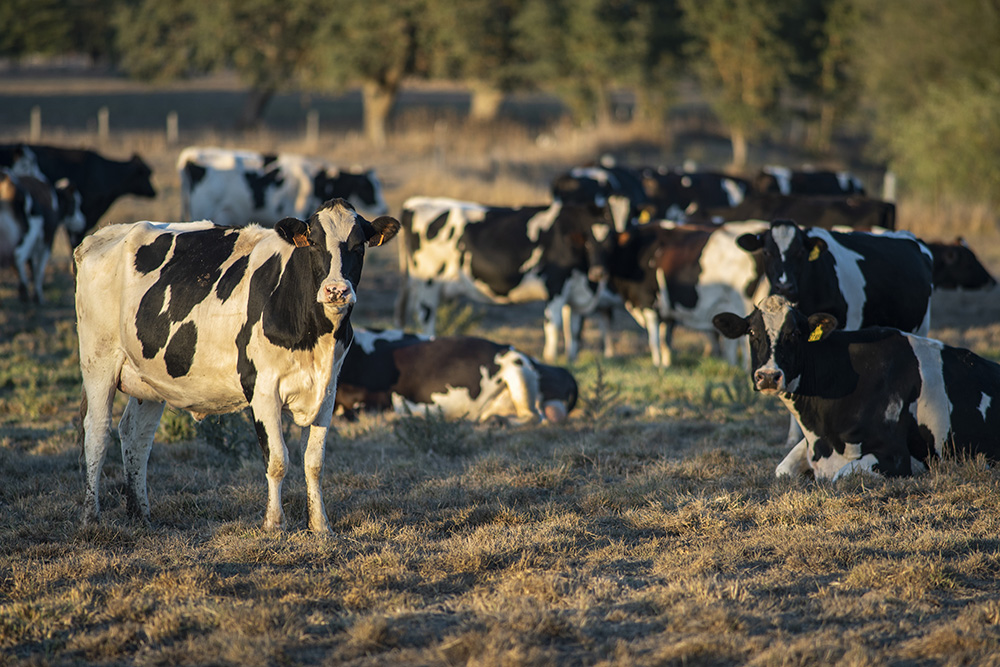
Photo/Paolo Vescia
“I am not sure how much the label with the word ‘milk’ matters,” Sumner said in an email. “The issue that almond beverage has little nutrition—and few calories—compared to cow’s milk is not much of an issue for buyers.”
Price differences have more of an impact on consumer choices, as organic cow’s milk can cost up to $5 more per gallon than conventional milk in supermarkets, Sumner and Lee reported.
Farm prices for organic milk were about $1.20 per gallon higher than prices for conventional milk eligible for fluid use in 2019 and 2021, equivalent to a premium of about 60% when adjusted to 2025 dollars. The higher prices are consistent with the much higher feed costs, lower milk production per cow and higher regulatory compliance costs faced by organic dairies, according to the report.
More research is needed to learn the extent of price sensitivity among organic buyers and identify the main drivers of organic price premiums beyond clear production and marketing costs, the economists said.
“The retail business is tough,” Sumner said. “As a researcher, I am trying to figure out what seems like a market regularity, not a mistake to be fixed … We do not have results to report, but the hypothesis is that higher margins for ‘specialty’ items come in part because buyers of these products are less price sensitive broadly compared to buyers of conventional versions of those products.”
Milk is a leading U.S. organic farm commodity by sales, valued at $1.6 billion in 2021, according to the most recent available survey data from the U.S. Department of Agriculture. California produced about 16% of the nation’s organic milk that year, second to Texas at 20%.
Sumner explained that fluid milk is generally transported short distances, and California’s fluid milk supply is consumed primarily within the state, with little coming in from other states. As a result, organic milk produced on farms is used in smaller quantities for products such as dry milk powder, bulk cheese, butter and ice cream.
Organic yogurt, which has a longer shelf-life than fluid milk and is marketed by national brands, is shipped into California.
Sales of U.S. organic fluid milk by volume increased from 124 million gallons in 2006 to 346 million in 2025 amid a decline in total fluid milk sales from about 6.5 billion gallons to 4.9 billion during that period, according to USDA data cited by the researchers. During the past two decades, the organic share of fluid milk sales rose from 1.9% in 2006 to 7% in 2025.
Prices paid to farmers have improved substantially during the past couple years, Alexandre acknowledged, though they could still stand to improve if dairy farms are to remain profitable, he added.
Overall, he said he’s optimistic about the future.
“Once we get over the economic hiccup that is plaguing everyone’s mind right now, I believe we’ll see a lot of prosperity with economics in the United States,” he said. “Organic needs to trend with that.
“At the same time, we’ve got a lot more people who are more health conscious, and they need to pay a little bit more to get more,” he added. “We struggle to meet demand all the time.”
Tim Hearden is a reporter in Redding. He can be reached at agalert@cfbf.com.
Reprint with credit to California Farm Bureau. For image use, email agalert@cfbf.com.

In this edition…
• Regenerative label payoff remains murky
• Paintballs among new tools allowed for hazing wolves
• Influence starts with engaged Farm Bureau members
• USDA seeks to ease organic certification process, costs
• From the Fields: Chris Jergenson, Merced and Stanislaus counties organic farmer
• From the Fields: Ben Lyons, Solano County farmer
• From the Fields: Domenic Carinalli, Sonoma County organic dairy farmer and conventional winegrape grower
• From the Fields: Katie Herzog, Monterey County agave grower
• New 'smart' farm tech targets vegetable production
• Growth in organic milk presents market challenges
• Advocacy in Action: Packaging requirements, labor, beef cattle, trade, compost, Roadless Rule and disaster relief
• How you can make the switch to regenerative farming
• Summit seeks to strengthen agritourism
• Leopold award finalists for 2026 selected





.svg.png)
