


Influence starts with engaged Farm Bureau members
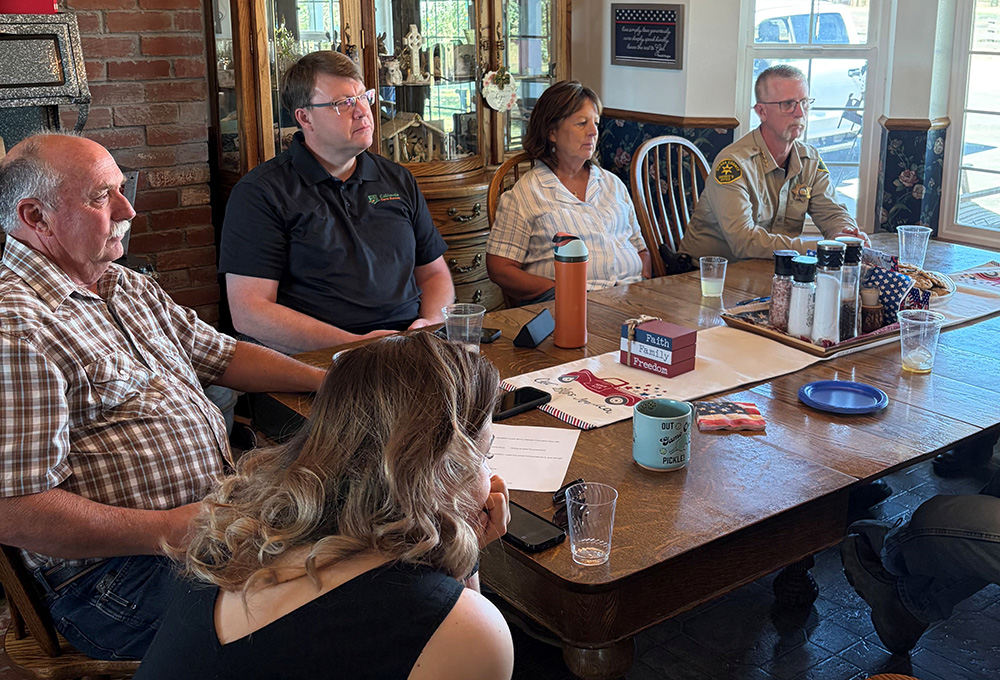
Dan Durheim meets with Farm Bureau members and officials from Plumas and Sierra counties during his visit to the region.
Photo/Jane Roberti


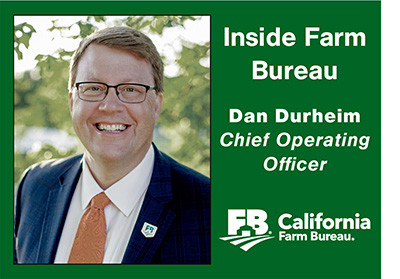
By Dan Durheim
Farm Bureau’s influence is often measured by the policies we help shape in Sacramento and Washington, D.C. But during a recent tour through Northern California, I was reminded that our influence begins much closer to home. It begins with volunteers, relationships and members willing to engage on behalf of something larger than themselves.
 The experiences and conversations I encountered reinforced an important lesson: Engagement transforms membership into influence.
Throughout my visit, I saw that Farm Bureau’s greatest strength comes from relationships—among neighbors, businesses, educators and community leaders. Most importantly, it comes from volunteers who invest their time because they care about the future of agriculture.
Those relationships create understanding. Farm Bureau’s competitive advantage begins with listening to farmers and ranchers and understanding their needs. Whether the issue is forest management, workforce development, regulatory challenges or the cost of doing business, meaningful solutions start with firsthand knowledge. Strong relationships help Farm Bureau deliver value, advocate effectively and create opportunities for agriculture.
In Shasta County, I attended a county Farm Bureau board meeting and spent time in the forest with county Farm Bureau President Joe Puentes, gaining a firsthand look at the connection between agriculture, forestry and responsible land stewardship. At dinner with Farm Bureau leaders, the county agricultural commissioner, University of California Cooperative Extension professionals and members of Young Farmers & Ranchers from Shasta College, conversations quickly turned to the opportunities and challenges facing local farmers and ranchers.
The evening demonstrated one of Farm Bureau’s greatest strengths: bringing members, educators and public officials together to turn individual concerns into collective understanding and action.
I saw that same strength in Plumas-Sierra County, where a county board dinner brought Farm Bureau leaders together with elected county supervisors, the agricultural commissioner and county planning officials. These conversations help build the relationships and understanding necessary to address local challenges.
The value of those relationships was also evident in the work of Dave and Jane Roberti. By partnering with their local NAPA store, they helped secure best-in-class pricing on equipment filters for Farm Bureau members. On the surface, it may seem like a simple member benefit. In reality, it demonstrates the power of collective action. An individual farmer or rancher has limited purchasing leverage. A community of producers working together through Farm Bureau can create a different conversation and deliver tangible value.
In Modoc County, Sean Curtis shared another example of influence in practice. Recognizing the need for skilled workers to support forestry projects and stewardship activities on the region’s extensive federal lands, the county Farm Bureau has helped bring partners together to address a challenge affecting the local economy and the long-term health of the landscape.
This effort reflects Farm Bureau’s role as a convener—connecting industry needs, educational resources and community partners around a common purpose. Rather than waiting for others to solve the problem, local leaders identified a need and worked collaboratively to create a path forward. That strengthens the region’s ability to carry out important forestry and land management projects while reinforcing Farm Bureau’s role as a trusted community partner.
I saw a similar connection between agriculture and community in Lassen County while visiting Sierra Cascade Nursery. What stood out was not only the sophistication of the operation but also the reminder that agriculture remains foundational to rural communities. The nursery demonstrated the growing role technology, innovation and specialized labor play in modern agriculture while highlighting the planning and investment required to remain competitive.
The visit also reinforced how interconnected agriculture has become. Labor availability, technology and regulatory requirements increasingly call on producers to share knowledge, work together and advocate for practical solutions. These challenges are exactly why Farm Bureau’s collective voice matters.
Local farms and ranches create economic activity far beyond the farm gate. Equipment dealers, trucking companies, suppliers, financial institutions, schools and service providers all benefit from a healthy agricultural economy. The success of agriculture contributes directly to the vitality of the communities that surround it.
Each of these experiences reinforced the same lesson: Farm Bureau’s ability to create value and influence outcomes begins with understanding member needs, and that understanding comes from engagement. It comes from board meetings, county dinners, field tours and everyday conversations.
Influence is not always measured by legislation passed or regulations changed. Sometimes it means bringing people around the same table to better understand agriculture’s needs. Sometimes it means creating value through a local business partnership. Sometimes it means addressing regional challenges through collaboration or strengthening rural communities.
Farm Bureau’s influence is rooted in volunteers who are willing to show up, invest their time and build relationships. Those efforts may begin locally, but their impact extends far beyond county lines. They strengthen our communities, organization and ability to advocate for California agriculture.
Whether it is improving forest stewardship, supporting the workforce needed for land management projects, building partnerships with local businesses or strengthening rural economies, Farm Bureau members accomplish more together than any of us could alone.
Engagement is what turns membership into influence. Attend a county meeting. Participate in a policy discussion. Respond to a Farm Team Alert. Share the challenges and opportunities facing your operation. The future of Farm Bureau is shaped by members who are willing to engage—and the stronger our engagement, the stronger our influence.
Dan Durheim is chief operating officer of California Farm Bureau. He can be reached at ddurheim@cfbf.com.
Reprint with credit to California Farm Bureau. For image use, email agalert@cfbf.com.

In this edition…
• Regenerative label payoff remains murky
• Paintballs among new tools allowed for hazing wolves
• Influence starts with engaged Farm Bureau members
• USDA seeks to ease organic certification process, costs
• From the Fields: Chris Jergenson, Merced and Stanislaus counties organic farmer
• From the Fields: Ben Lyons, Solano County farmer
• From the Fields: Domenic Carinalli, Sonoma County organic dairy farmer and conventional winegrape grower
• From the Fields: Katie Herzog, Monterey County agave grower
• New 'smart' farm tech targets vegetable production
• Growth in organic milk presents market challenges
• Advocacy in Action: Packaging requirements, labor, beef cattle, trade, compost, Roadless Rule and disaster relief
• How you can make the switch to regenerative farming
• Summit seeks to strengthen agritourism
• Leopold award finalists for 2026 selected





.svg.png)
