


From the Fields: Chris Jergenson, Merced and Stanislaus counties organic farmer
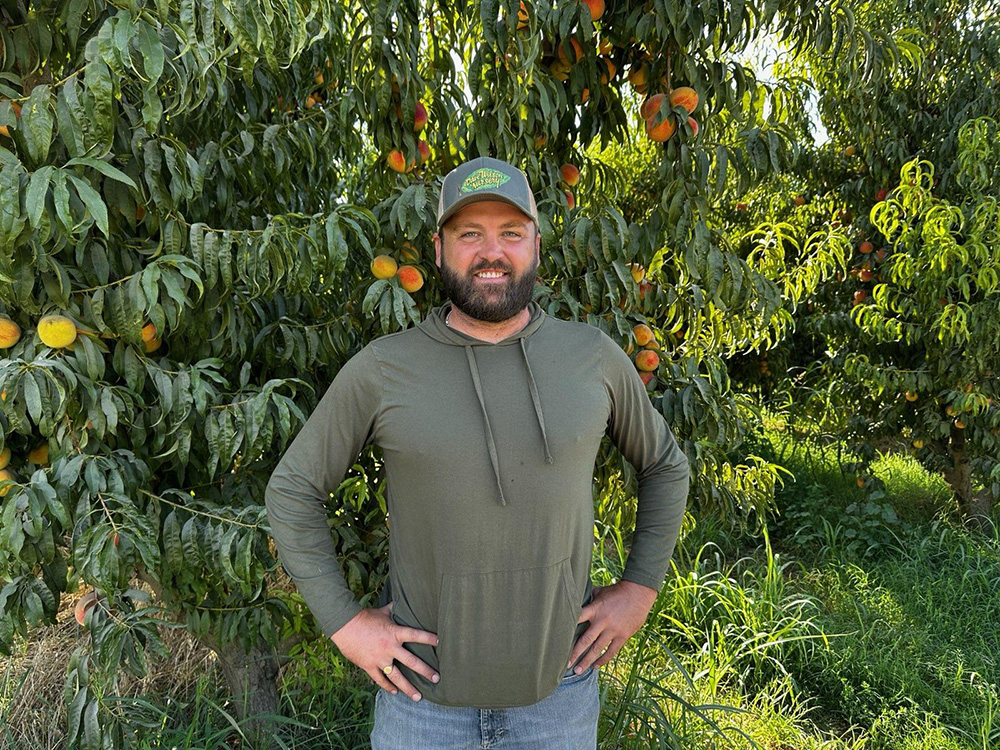
Photo/Courtesy of Chris Jergenson


By Chris Jergenson
Merced and Stanislaus counties organic farmer
My peach orchard is about 10 years old. They’re organic freestones, and they go to a processor that peels, slices and puts them in freezer bags. Last year we picked on Sept. 5, and we started picking Aug. 17 this year.
The crop looks good. Sizing on our fruit has been good because we flood irrigate. By flood irrigating, you’re getting water all the way into the middle of the tree row. A lot of peach farmers, whether they be cling or freestone, have had issues this year with small peaches. We have not had an issue with size whatsoever.
Our yield is up by about 10% from last year, but the price is down by 10%. It’s been hard with the increase in labor and diesel costs. We’ve had to put pencil to paper and figure out where we can try to save because a 10% reduction in price is huge. We’re very grateful and happy that we have a contract and that our yield wasn’t down. We’re not in the red, but I wouldn’t say we’re in the green. We’re in the yellow.
Since I farm organic, I took a year off of farming sweet potatoes to let my ground rest, to reduce the amount of nematodes. I let it dry out for one year, planted oats in the wintertime, harvested those and then planted teff grass in late April after the first frost. It helps to rebuild the soil when you’re farming organically.
Teff is an African grass. It doesn’t have a big head like oats. It mainly goes to the horse market, and that market has been great. I planted a little late. I did a first cutting the middle of July. I’ll do a second cutting tonight and probably do a third the first of October. After the last cutting, I’ll plow and incorporate the roots, stems and everything. That will eventually break down into nitrogen, and it’ll be good for when I plant sweet potatoes next May.

In this edition…
• Regenerative label payoff remains murky
• Paintballs among new tools allowed for hazing wolves
• Influence starts with engaged Farm Bureau members
• USDA seeks to ease organic certification process, costs
• From the Fields: Chris Jergenson, Merced and Stanislaus counties organic farmer
• From the Fields: Ben Lyons, Solano County farmer
• From the Fields: Domenic Carinalli, Sonoma County organic dairy farmer and conventional winegrape grower
• From the Fields: Katie Herzog, Monterey County agave grower
• New 'smart' farm tech targets vegetable production
• Growth in organic milk presents market challenges
• Advocacy in Action: Packaging requirements, labor, beef cattle, trade, compost, Roadless Rule and disaster relief
• How you can make the switch to regenerative farming
• Summit seeks to strengthen agritourism
• Leopold award finalists for 2026 selected





.svg.png)
