


Protein boom marks 'paradigm shift' in dairy sector
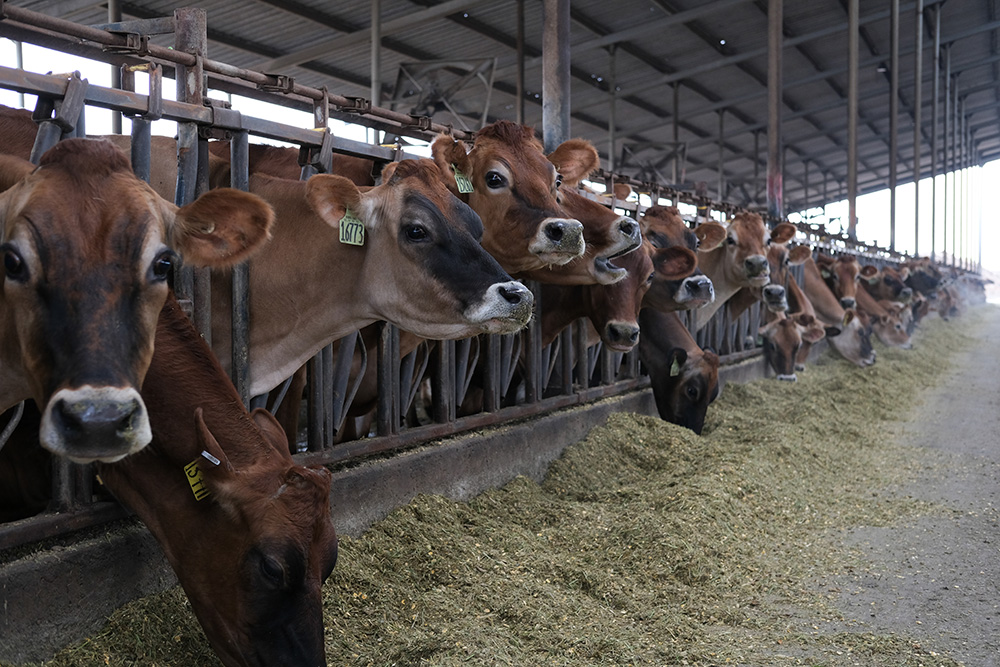
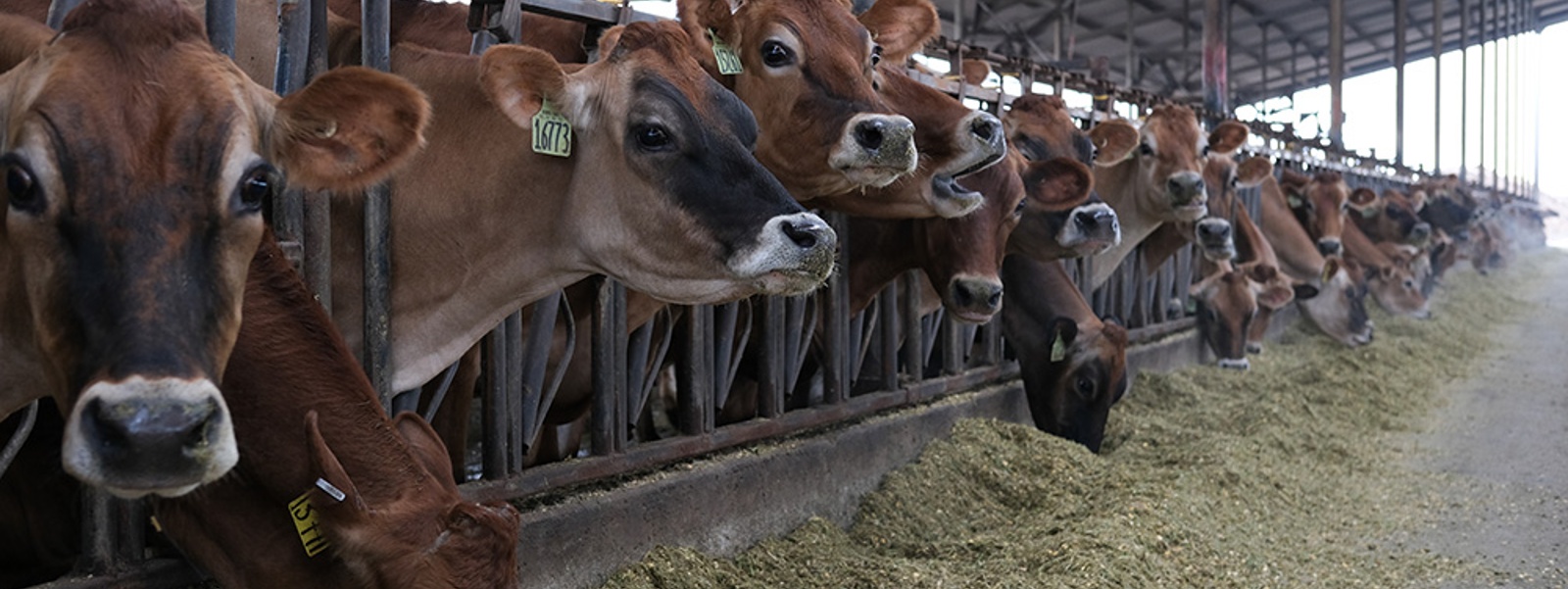
Jersey cows that produce milk for Land O’ Lakes are pictured in Tulare County in 2024. In July, the farmer-owned dairy cooperative announced it was upgrading its Tulare processing facility so that it can begin manufacturing protein-rich dairy products such as ultra-filtered milk. The upgrade is part of a multi-billion-dollar investment by dairy processors nationwide to capitalize on rising demand for protein.
Photo/Caleb Hampton


By Caleb Hampton
Rising demand for protein is creating new market opportunities for dairy producers and driving decisions made by farmers and processors.
Last year, 70% of U.S. consumers said they wanted more protein content in their diets, up from 59% in 2022, according to the International Food Information Council’s Food & Health Survey. Market research also showed consumers were willing to pay a premium for products labeled high in protein.
Corey Geiger, lead economist for dairy production and processing at CoBank, said multiple factors have made protein a dietary priority for consumers.
These factors include an emphasis placed on protein by the Make America Healthy Again movement, new dietary guidelines released this year by the Trump administration that increased the recommended amount of daily protein intake, and the growing prevalence of GLP-1 medications, with those on the weight loss drugs advised to pack protein into their limited calorie consumption.
This year, sales of protein-rich dairy products such as whey protein powder, ultra-filtered milk, Greek yogurt and cottage cheese have all increased, according to the market research firm Circana.
Industry experts believe protein demand will remain heightened, and dairy producers are developing new processing capacity to cater to the market.
“This is a paradigm shift,” Geiger said.
According to a CoBank analysis, dairy processors have invested a record $14 billion in new or remodeled processing facilities that are currently under development and set to begin operating by 2028, with protein demand driving some of those investments.
In July, Land O’ Lakes announced it was investing $34 million to upgrade its Tulare facility so that the Minnesota-headquartered dairy cooperative can manufacture “high-value dairy protein” products, starting with ultra-filtered milk.
The process involves filtering fresh milk through membranes that separate the milk’s components, enabling manufacturers to remove water and lactose, and concentrate the protein content in the final product.
“The investment is designed to help us meet growing demand for high-quality dairy protein while unlocking greater value from member milk,” said Heather Anfang, executive vice president at Land O’Lakes and president of dairy foods at the cooperative. “Protein has moved beyond a niche health category to become a defining force in how consumers evaluate food.”
The facility upgrade is under construction, Anfang said, with production of ultra-filtered milk set to begin early next year.
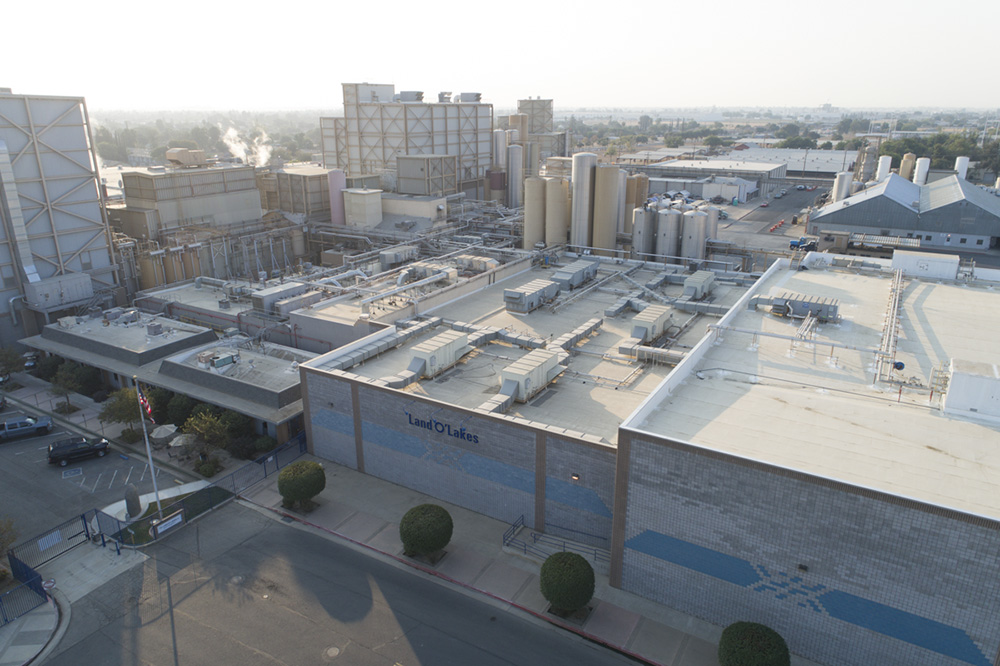
Photo/Courtesy of Land O’ Lakes
Geiger said dairy farmers stand to benefit from the sector tapping into the protein boom, but the pivot also brings some challenges.
Nearly all dairy farmers are paid not by milk volume but for milk components, or solids, primarily protein and butterfat.
For much of the past decade, butterfat was in high demand, and milk pricing formulas incentivized farmers to maximize the butterfat content in the milk their cows produced. That timeframe coincided with advances in genomic sequencing and breeding, much of which was geared toward creating a U.S. dairy herd genetically engineered to produce milk that is rich in butterfat.
“Dairymen across the country have concentrated on getting more fat in their milk,” Tulare County dairy farmer Joey Fernandes said.
As a result, through a combination of genetics and nutrition, the amount of butterfat in the U.S. milk supply increased substantially more than protein content during the past decade.
Last year, for the first time in decades, butterfat went into oversupply, and with demand for protein rising, the hierarchy in milk pricing has since reversed.
During the first nine months of last year, protein prices in milk averaged $2.44 a pound while butterfat averaged $2.45 a pound, according to CoBank. In the first nine months of this year, protein averaged $2.45 a pound while butterfat prices fell to $1.69 a pound.
“There’s been a big shift,” Geiger said.
The constraint for dairy farmers is they cannot easily change their operations to ramp up the protein content in their milk, limiting the extent to which they might capitalize on the protein trend in the near term.
According to data from the Council on Dairy Cattle Breeding, genetics accounts for 72% of the protein gains in the U.S. milk supply and 62% of the butterfat gains, with nutrition playing a comparatively larger role in boosting butterfat than protein.
Fernandes, the Tulare County farmer, said he planned to “look a little more at the protein” in genetic selection going forward, as he believed the market for protein will remain strong.
“I think it’s here to stay,” he said.
In March, Holstein Association USA, the world’s largest dairy breed association, changed its Total Performance Index—a genetic ranking system—to give more weight to protein and less to butterfat in scoring the expected production value of dairy bulls and cows. Farmers use the system to make breeding decisions that benefit herd health and profitability.
However, even with protein playing a larger role in breeding decisions, experts said it will take time for those traits to show up in the milk supply.
“Any changes made right now, we won’t see for three years,” Geiger said, referring to the nine-month gestation period of cows and the two years it takes calves to become cows and begin producing milk. “If consumer demand remains as strong, we are going to be chasing protein production for a while.”
In the meantime, Fernandes said because of the decline in butterfat pricing, he “pulled back” on feeding his cows costly supplements such as palmitic acids and whole cottonseed, which increase butterfat but no longer paid off as much.
“We’re not putting as much emphasis on those two ingredients,” he said. “The key is to just try to increase the overall flow of milk. That’s what gives you more total pounds of protein.”
The Tulare-based farmer, who is a Land O’ Lakes owner-member, said he was optimistic about the cooperative’s upcoming expansion into ultra-filtered milk and other dairy protein products.
“We’re very pleased,” he said. “We’re making something that currently has demand for it.”
Caleb Hampton is an editor at Ag Alert. He can be reached at champton@cfbf.com. Reprint with credit to California Farm Bureau. For image use, email agalert@cfbf.com.
In this edition…
• View full issue
• California farmers explore seaweed crop
• Soaring costs and low yield dampen walnut prospects
• Lessons learned from being a dot on bankruptcy map
• Ventura County's record crop values describe 'only half the story'
• From the Fields: Bryan Van Groningen, San Joaquin County farmer
• From the Fields: Steven Springer, Yuba County farmer
• From the Fields: Jim Spinetta, Amador County winegrape grower
• From the Fields: Billie Roney, Tehama County rancher
• Market, prices strengthen for sweet potato growers
• Advocacy in Action: A legal victory, air monitoring, kangaroo rat, screwworm and wolves
• Protein boom marks 'paradigm shift' in dairy sector
• California FFA students win in Agricultural Proficiency
• Protecting your herd: Modern solutions for livestock theft