


Roadless Rule has kept forests from being managed
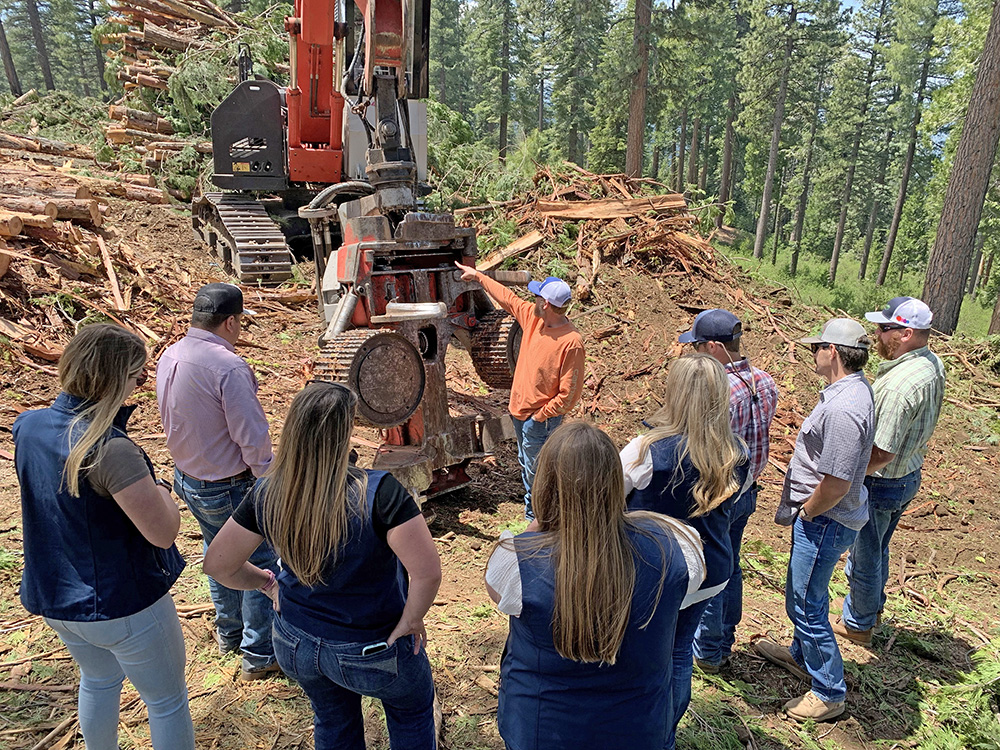
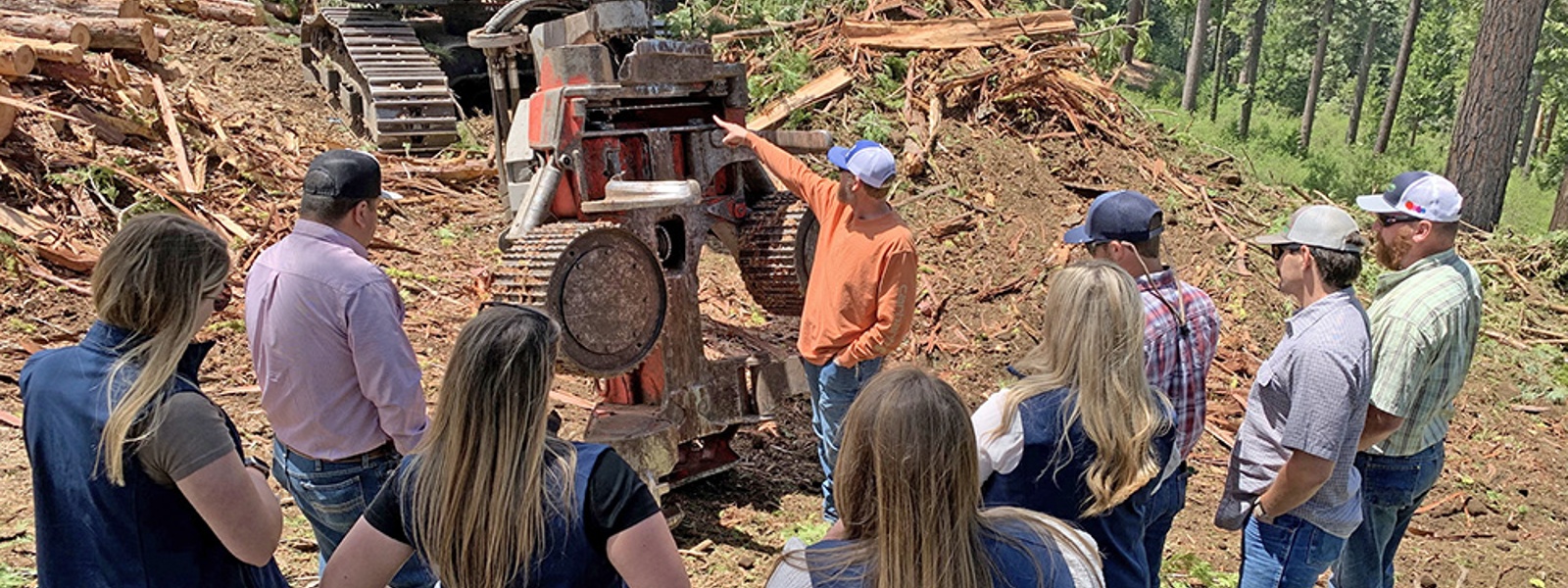
California Farm Bureau first vice president Shaun Crook, center, a forester from Tuolumne County, talks about the forestry sector in California.
Photo/Ryan Amaral


By Shaun Crook
The U.S. Forest Service has formally proposed rescinding the federal Roadless Area Conservation Rule, or Roadless Rule. As a California logger, I applaud this decision, as I believe it is an important step toward ending a rigid, one-size-fits-all approach and returning management decisions back to local forests.
 Social media has been abuzz with the announcement of this proposal. Some conservation groups are acting as if the sky is falling and that the last untouched areas are about to be paved over. This is simply not the case.
If rescinded, active management, mechanical thinning, fuel reduction and all modern efforts to create fire resiliency would once again be allowed on the 4 million acres of California land that have been off limits for a quarter of a century.
Early in the Trump administration, Forest Service Chief Tom Schultz issued a directive to increase the pace and scale of logging and fuel reduction projects on all available lands. This order is meant to, as much as legally possible, streamline environmental review and other barriers to projects on national forests.
Harvest levels and total treated acres on national forestlands have declined or stagnated for nearly 30 years. However, the forest has kept growing, and there is more timber lost to death and disease—not including fire—than is harvested every year.
To understand how we reached our current crisis—an unprecedented era of catastrophic, unmanaged wildfires that have scorched nearly 8 million acres of California’s national forests during the past 25 years—it is worth exploring the origin of this bureaucratic barrier.
Enacted during the Clinton administration, the Roadless Rule is an executive regulation that was never a law passed by Congress. It generally restricted road construction, commercial logging and active management activities across nearly 60 million acres of national forest nationwide.
In California, more than 4 million acres, or about 20% of our national forestland, fall under what are known as inventoried roadless areas. These are lands situated outside of officially designated wilderness areas that would otherwise be open to multiple-use land management and fuel reduction activities. National forests in California with the most inventoried roadless areas are the Inyo, Los Padres, Sequoia, Shasta-Trinity and Klamath.
Forestry and forest management are extremely important to the success of California agriculture. Approximately 33% of the land in the state is forested, and about 60% of those acres sit on federal land. This is not just a matter of scenery; it is a matter of survival. Nearly 75% of our state’s water flows directly from our forests, and 60% of that critical supply originates in the forests of the Sierra Nevada.
Timber is, fundamentally, a crop. For this reason, California Farm Bureau has maintained a longstanding policy advocating for active forest management and limiting wilderness areas where management is forbidden.
Because timber is a crop, the Forest Service is appropriately housed as an agency within the U.S. Department of Agriculture. In California, we have 18 national forests covering more than 20 million acres, with nearly 13 million of those acres considered “forested.”
Our landscape is a checkerboard of different land management designations across federal and private lands. This maze often creates management decisions that conflict with one another and makes modern forest resiliency incredibly difficult to achieve.
Federal land can be found as national parks, national monuments, national wildlife refuges, Bureau of Reclamation lands, Bureau of Land Management lands, military lands, tribal trust lands, designated wilderness areas and federal timberlands. These public woods are supposed to be multiple-use lands serving a variety of interests, including timber, grazing, mining, watershed protection and recreation.
Within this system, managers must navigate a rigid spectrum of land-use rules that dictate exactly what activities are allowed on a given acre. This ranges from general forest zones where logging and grazing are permitted to strictly designated wilderness areas where motorized equipment is banned. Even most bicycles are prohibited.
In the late 1990s, the Forest Service decided that the road system in our national forests was a major environmental and fiscal liability—a determination many of us in the forestry profession strongly dispute. By using that rationale to pass the Roadless Rule, the federal government effectively created backdoor wilderness areas. It prohibited the active care and use of our public lands without undergoing the rigorous congressional process required to designate true wilderness.
Access to our public lands remains one of the fundamental tenets of being an American. Our forests have been supplying timber for the construction of this great nation for more than 250 years. From horses and trails to trains and log trucks, transportation systems have always been vital to the “use” of multiple-use lands. Today, this infrastructure is also key to our ability to battle fire, protect watersheds and create natural resource resiliency that is so important to our lives in California.
While the environmental community has praised the Roadless Rule as being critical to the well-being of our national forests, the numbers on the ground prove the exact contrary. The correlation between the implementation of the Roadless Rule and the catastrophic increase in acreage lost to wildfire in California and across the West is striking.
From 2000 to 2011, nearly 10% of the forestland managed by the Forest Service was consumed by wildland fire. That number jumped to an astonishing 38% from 2012 to 2021. What this equates to is that fire has burned nearly 8 million acres of national forest in California during the past 25 years. Nearly half of our managed federal forest has burned since the application of this hands-off policy.
With half our forest already lost to fire, we simply cannot afford to keep half of the remaining, unburned acres off-limits to proactive management. Roads and infrastructure have always been crucial for multiple use in our forests, and they will continue to be the primary tools for saving them.
For too long, emotion has dictated the allowed activities on our national forests. It is past time for common sense, local expertise and active forestry to lead the way.
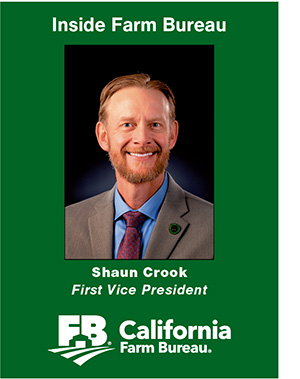
Shaun Crook, who operates a family timber business in Tuolumne County, is first vice president of the California Farm Bureau. He can be reached at scrook@cfbf.com.
Reprint with credit to California Farm Bureau. For image use, email agalert@cfbf.com.

In this edition…
• View full issue
• 2026 Voter Guide
• Advocacy in Action: Legislation, diesel and wolves
• Roadless Rule has kept forests from being managed
• Farm Bureau team seeks solutions in D.C.
• Diesel price spike increases financial stress for farmers
• New date crop hits market as fruit goes 'mainstream'
• From the Fields: Ray Yeung, Yolo County farmer
• From the Fields: Joe Zanger, San Benito County farmer
• From the Fields: Blake Wilbur, Tulare County farmer
• From the Fields: Paul Vermeulen, Stanislaus County almond grower and huller
• Vineyards turn to UV-C light to fight powdery mildew
• Pumpkin growers target trends, Halloween demand
• Calls open for Agricultural Educator of the Year award
• How to effectively manage stored grain fire risks





.svg.png)
