


From the Fields: Joe Zanger, San Benito County farmer
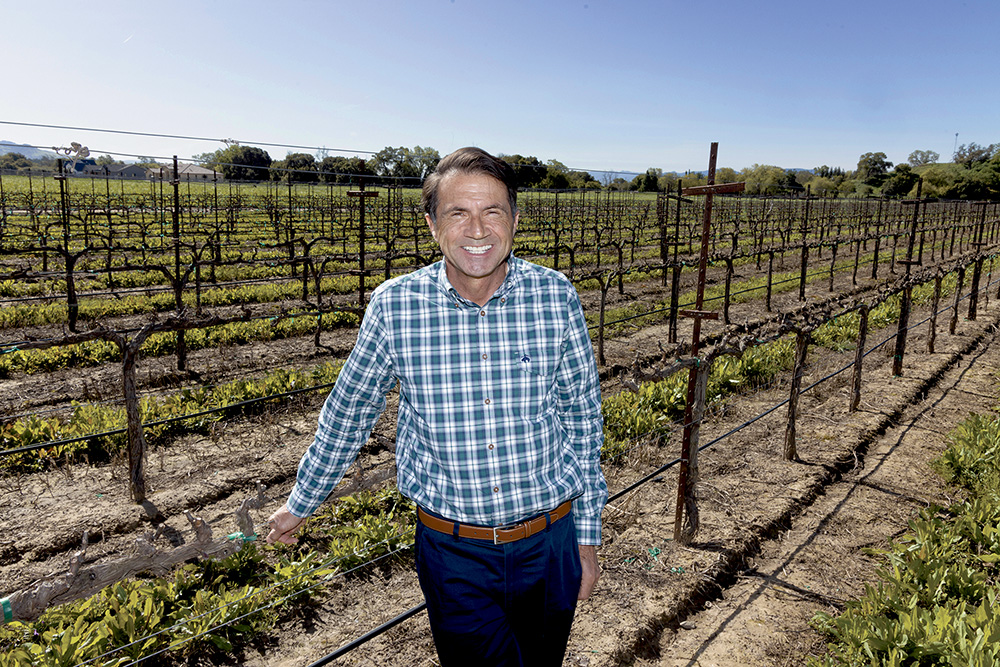
Photo/Richard Green


By Joe Zanger
San Benito County farmer
It’s been an interesting year. I do not know if everyone recognized last spring an across-the-board, two-week-plus early harvest, but I certainly didn’t. Wondering if it’s global warming, climate change or simply cycles over time. My guess is the latter.
In San Benito County, cherries, apricots, winegrapes and walnuts are the earliest I have experienced in over 50 years. Yields and quality have not necessarily been affected negatively. Of our three red grape varietals, only the cabernet is very light.
Usually, even with the proper winter pruning, we need to drop some clusters in early summer and then sometimes again at veraison, when the grapes start to turn purple. But we had to do zero fruit drop work this year for the cabernet. For the other two, we had to drop fruit.
The growing season for the transplant vegetables hasn’t been affected like the deciduous fruits and nuts. For example, fresh market tomatoes on our ranch have had about 90 days of growing season from June planting until September harvesting.
Regarding markets, winegrape demand is dismal here, just like the rest of the state. Significant acreage is going unharvested. In the past, this phenomenon was cyclical, resulting from overplanting, creating oversupply. This time, though, it’s different.
As grape growers have been experiencing for almost 24 months, consumption of wine has fallen 10% to 25%, which sends market equilibrium spiraling. This doesn’t appear to be cyclical in nature. Reasons why have been widely reported, and it’s not because we are not making great wines that people are drinking less wine.
It hits home for us growers and winemakers when grapes go unharvested because tanks and barrels are full with prior year productions, and warehouses are full with bottled product. There is already an attrition of grape acreage and wineries in the state. Time will tell how far that will go.
Reprint with credit to California Farm Bureau. For image use, email agalert@cfbf.com.
In this edition…
• View full issue
• 2026 Voter Guide
• Advocacy in Action: Legislation, diesel and wolves
• Roadless Rule has kept forests from being managed
• Farm Bureau team seeks solutions in D.C.
• Diesel price spike increases financial stress for farmers
• New date crop hits market as fruit goes 'mainstream'
• From the Fields: Ray Yeung, Yolo County farmer
• From the Fields: Joe Zanger, San Benito County farmer
• From the Fields: Blake Wilbur, Tulare County farmer
• From the Fields: Paul Vermeulen, Stanislaus County almond grower and huller
• Vineyards turn to UV-C light to fight powdery mildew
• Pumpkin growers target trends, Halloween demand
• Calls open for Agricultural Educator of the Year award
• How to effectively manage stored grain fire risks





.svg.png)
