


Pumpkin growers target trends, Halloween demand
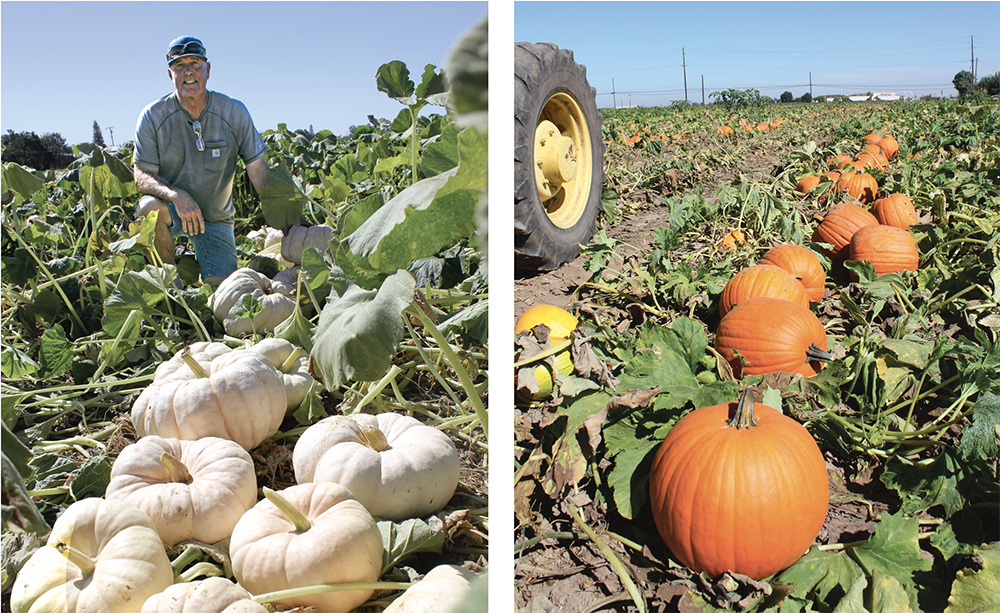
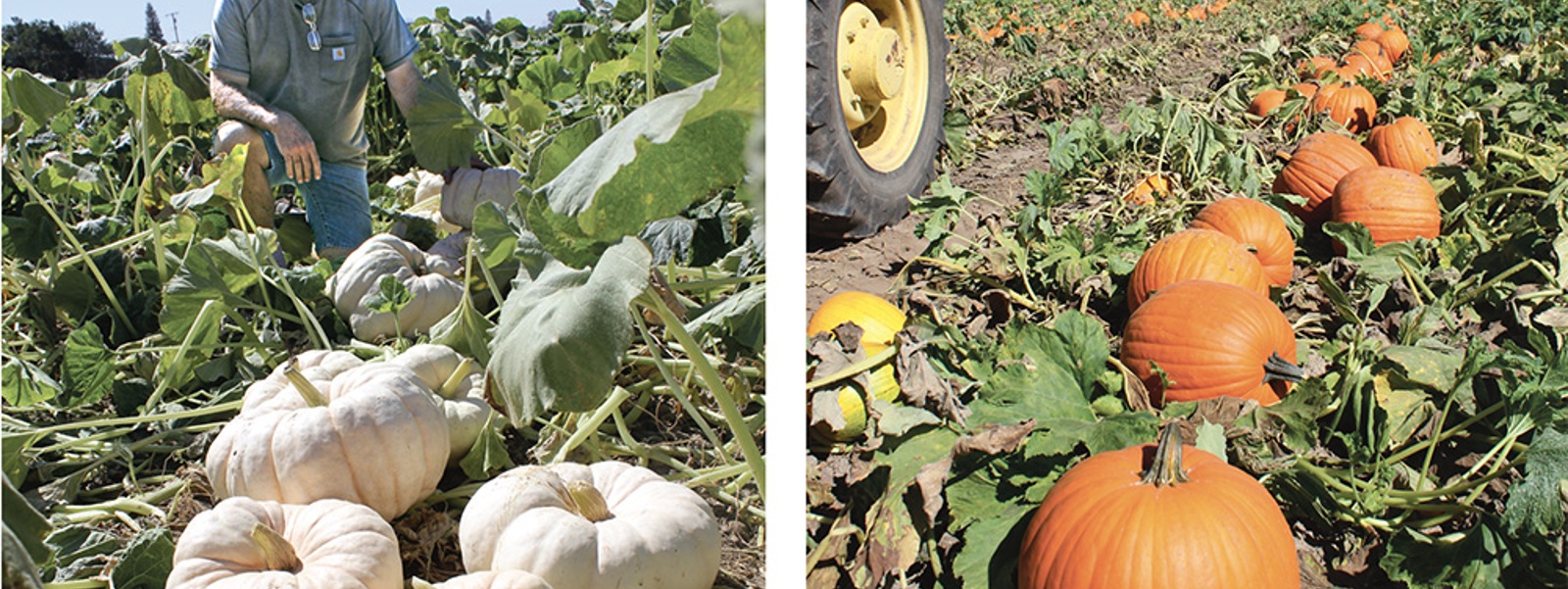
Alan Changala, left, who grows pumpkins in Tulare County, kneels next to a white specialty pumpkin called Porcelain Doll Improved, which he says he expects will be popular with customers of his pumpkin patch in Porterville. His farm grew 20 pumpkin varieties this year, including standard jack-o’-lantern types, right, with most of the crop going to wholesale markets.
Photos/Cecilia Parsons


By Cecilia Parsons
Colorful roadside pumpkin patches are a sure sign of fall’s arrival. Less visible from the road but significant in scale are the thousands of acres of commercial pumpkin fields that help make California one of the nation’s leading suppliers of fresh pumpkins.
More than 5,000 acres of pumpkins are grown annually in California, with San Joaquin County remaining the center of the state’s commercial pumpkin production. The region sends an estimated 70% to 80% of the state’s pumpkin crop to market, where the pumpkins are sold for Halloween jack-o’-lanterns, fall décor and consumption.
Favorable planting conditions and mild temperatures during bloom helped California pumpkin growers produce a quality crop with normal yields this year. As the pumpkins move to market, growers report few significant pest or disease issues.
Art Perry of Manteca-based Perry and Sons, which began harvest Aug. 15, described his crop as “really nice,” with “gorgeous colors and strong, intact stems.” Intact stems are important, he said, not only because they serve as handles but also because they preserve the integrity of the pumpkin.
“We only want them about four fingers tall,” he said. “Much more than that and they break off.”
A woody, dried stem on a pumpkin is one sign of maturity.
The multigenerational farm—one of the state’s largest growers and shippers of pumpkins—planted about 500 acres of the winter squash this year. Planting began in June and is staggered so that the crop can ripen at different times.
From emergence to maturity, pumpkins typically require 90 to 120 days before they’re ready for harvest. As a result, farmers must carefully time their planting to ensure the crop is ready to meet demand during the fall holiday season. Growers targeting the autumn decorating and Halloween markets generally schedule plantings to maintain a steady supply through November.
Perry said harvest continues through the end of October, with pumpkins going to retailers and wholesalers throughout the West. The farm also operates a farm stand near its headquarters.
Danielle Ratto of Van Groningen and Sons in San Joaquin County said demand for California pumpkins may be up due to heat affecting other major pumpkin-producing states such as Illinois and Indiana.
Anticipating strong demand, Van Groningen and Sons and its contract growers planted 1,650 acres of pumpkins this year, with yields expected to be about the same as last year, Ratto said. Harvest started just before Labor Day, a target date for when retailers like to have a good selection of pumpkins in their stores.
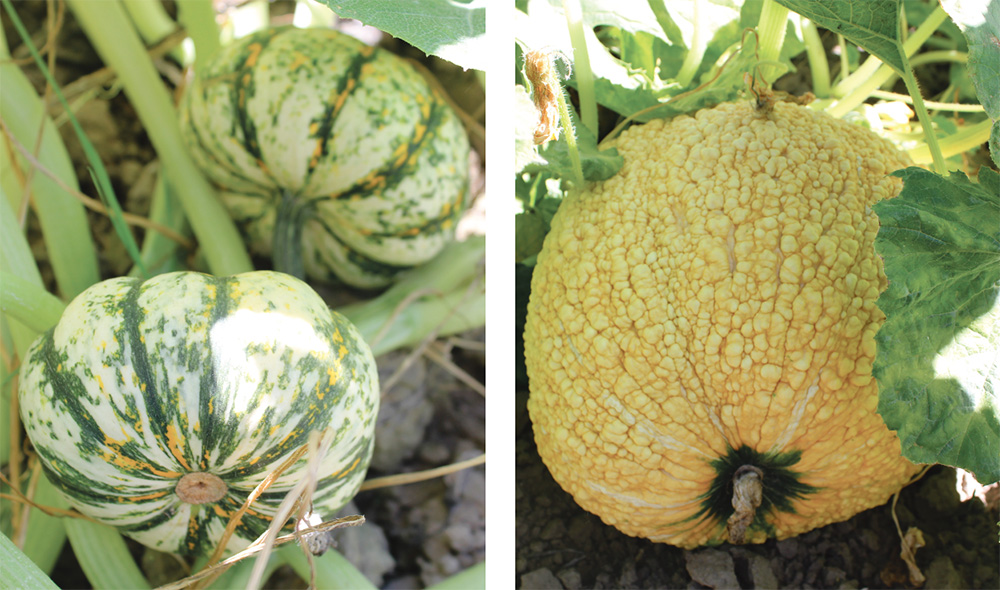
Ratto said there has been increased demand during the past 10 years for “aesthetically pleasing” pumpkin varieties for decorating front porches. The farm plants new pumpkin varieties every year, she noted, and for the 2026 season, it has zebra stripe pumpkins, yellow mini pumpkins and a pumpkin variety that is almost black.
Perry said ornamental pumpkin varieties, particularly those with autumn colors, are in demand by retailers. Most of his pumpkins are the jack-o’-lantern carving type, with Magic Wand and Sunrise being popular choices. He said the farm also aims for different sizes with its Cannonball or Soccer Ball pumpkins.
Virtually all California pumpkins are destined for the fresh and ornamental market, which includes pumpkins sold for decorative purposes and for direct consumption, according to the U.S. Department of Agriculture. In contrast, Illinois—the nation’s top pumpkin producer—devotes most of its pumpkin acreage to processing with pumpkin varieties that are intended for canning and pureeing.
At Bishop’s Pumpkin Farm in Wheatland, which has been in operation for 54 years, acres of U-pick pumpkins remain a cornerstone of its business, with almonds and forage crops rounding out its production. During Halloween season, the working farm transforms into an amusement park-like destination with myriad attractions, including field trips and an educational component that teaches visitors how pumpkins are grown.
Photos/Cecilia Parsons
“That was one of the reasons we started this agritourism offering,” Wayne Bishop said. “My mom wanted to see kids come to the farm and learn about agriculture, and we believed the pumpkins would be a good draw.”
One economic trend Bishop said he has noticed in his pumpkin patch business in recent years is that people are taking fewer pumpkins home with them.
“We continue to see higher numbers of visitors but with fewer sales,” he said. “That’s one of the reasons we switched to a flat price for three sizes of pumpkins and have a lot of $5 pumpkins.”
Nearly all his pumpkins are sold directly to visitors who come to his fields to pick their own. That business runs through the second weekend of November.
Since the start of harvest in August, Alan and Liz Changala, who operate Changala’s Pumpkin Patch in Porterville with their daughter, Jamie, have been keeping work crews busy on their 60 acres of pumpkins.
About 75% of the farm’s pumpkins are for wholesale markets, with the rest going to retail. In addition to wholesalers and retail stores, the farm sells to church groups and other pumpkin patches.
The Changalas have been growing pumpkins since 1988 to complement their hay and grain farming. They planted 20 pumpkin varieties this year. Alan Changala said he consults with seed salespeople to gauge demand for specialty and standard jack-o’-lantern types.
He said he expects Porcelain Doll Improved, a pearl-white specialty pumpkin that’s new to his farm, to be popular with customers and that he will sell most of the colorful varieties. When the patch closes for the year and demand slows, all the leftover pumpkins are sold as feed for cattle, sheep, goats and chickens.
Although favorable weather helped with crop quality and size, he said cucumber beetles that feed on pumpkin plant leaves and spread a virus that affects plant vigor remain a challenge. Gophers also invaded some of his pumpkin blocks, requiring additional pest control measures.
Cecilia Parsons is a reporter in Tulare County. She can be reached at agalert@cfbf.com.
Reprint with credit to California Farm Bureau. For image use, email agalert@cfbf.com.

In this edition…
• View full issue
• 2026 Voter Guide
• Advocacy in Action: Legislation, diesel and wolves
• Roadless Rule has kept forests from being managed
• Farm Bureau team seeks solutions in D.C.
• Diesel price spike increases financial stress for farmers
• New date crop hits market as fruit goes 'mainstream'
• From the Fields: Ray Yeung, Yolo County farmer
• From the Fields: Joe Zanger, San Benito County farmer
• From the Fields: Blake Wilbur, Tulare County farmer
• From the Fields: Paul Vermeulen, Stanislaus County almond grower and huller
• Vineyards turn to UV-C light to fight powdery mildew
• Pumpkin growers target trends, Halloween demand
• Calls open for Agricultural Educator of the Year award
• How to effectively manage stored grain fire risks





.svg.png)
