


New date crop hits market as fruit goes 'mainstream'
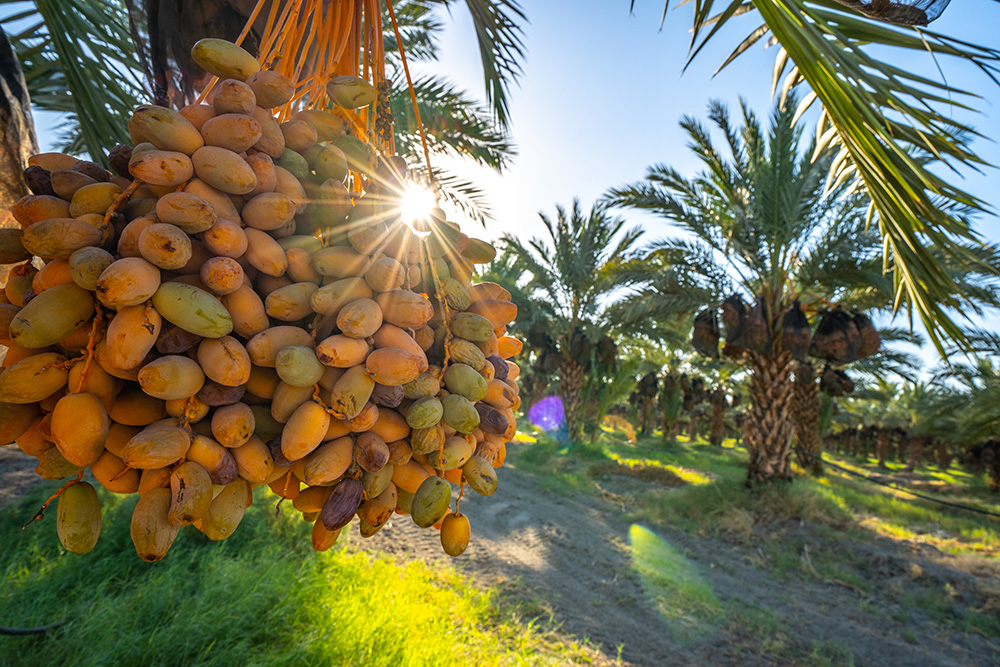
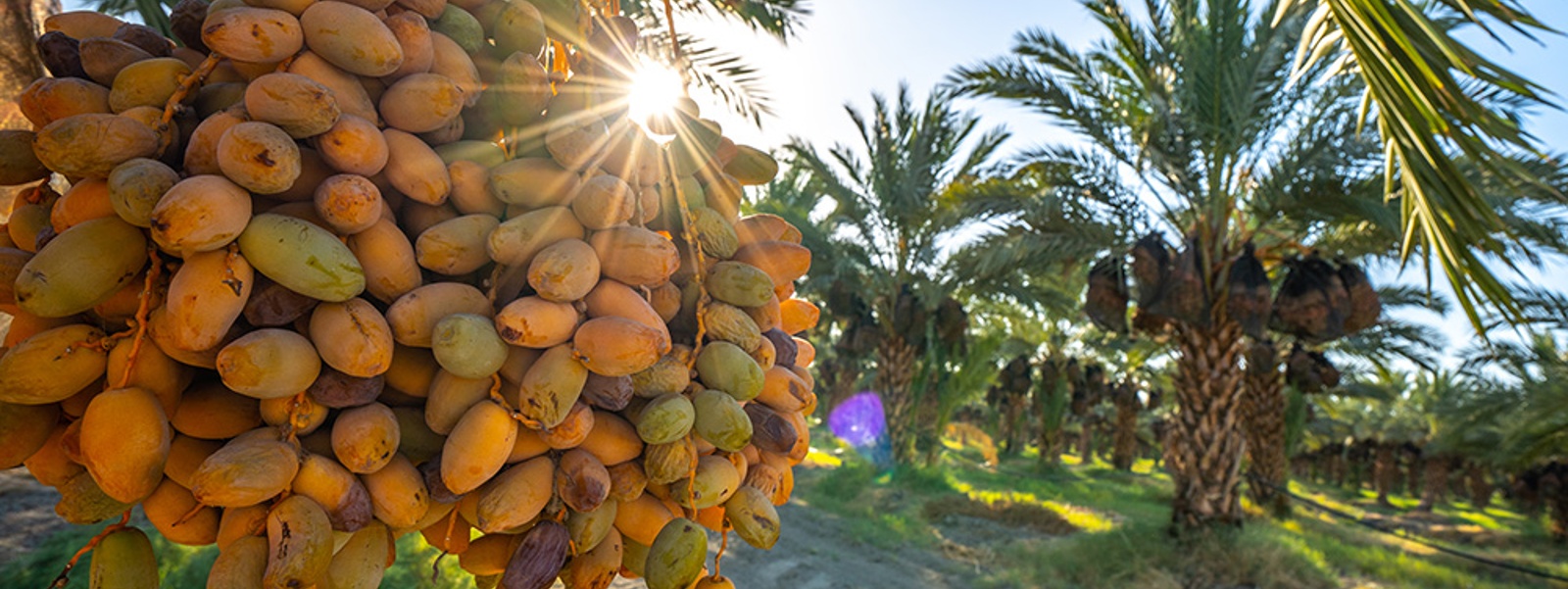
Medjool dates grow in bunches in farmer David Kohl’s Coachella Valley orchard.
Photo/Faith Granger


By Caleb Hampton
Much of California’s medjool date crop was picked during the past several weeks after a spring heat wave sped fruit development, bringing harvest forward by as many as four weeks.
“This was the earliest harvest we’ve ever had,” said Albert Keck, a Coachella Valley date grower and president of Thermal-based Hadley Date Gardens.
Growers in Riverside County said they started harvesting medjool dates—the state’s top variety—in mid-August and wrapped up before the end of September.
Yields were below average, Keck said, but markedly better than last year, when ill-timed rains in the Coachella Valley caused significant crop losses and left handlers with little to no carryover heading into this year’s harvest.
 With demand high for the fruit, date handlers said last week they were working to get the new crop shipped to retailers across the country.
“There’s a lot of pent-up demand,” said Keck, who supplies fresh dates to major retail chains. “We’re scrambling to fill orders.”
Mark Tadros, owner of Thermal-based Aziz Farms, which supplies primarily specialty wholesalers that cater to Middle Eastern consumers in the U.S., said his buyers wanted “to get their hands on product as quickly as humanly possible.”
With dates playing an important role in the Islamic month of Ramadan, Tadros said he generally tries to ship most of his crop before the start of the lunar month, which moves forward about 10 days each year, beginning next year in early February.
“When you’re dealing with the ethnic marketplace, that’s a really big component of it,” he said. “It’s always a rush before Ramadan.”
While date palms are native to the Middle East and North Africa, the fruit’s appeal among U.S. consumers has broadened in recent years, driven in part by increased awareness of its nutritional benefits.
During the past couple years, U.S. date sales increased more than a third, according to the market research firm SPINS.

Image/Courtesy of Joolies.
“Everybody is really excited about the trajectory of dates,” said Kristy Kneiding, executive director of the California Date Commission. “A lot of people are looking for natural sugar substitutes, and dates fit perfectly into that category.”
Dates contain fiber, vitamins and antioxidants. Despite being naturally sweet, they rank low on the glycemic index, meaning they provide an energy boost without spiking blood sugar levels. These traits have led dietitians to dub the fruit a “superfood” and made it a favored snack among athletes.
In 2025, the value of the U.S. date crop totaled $268 million, according to the U.S. Department of Agriculture.
As of 2023, California produced about 79% of U.S. dates from 12,300 acres, while Arizona grew the rest, according to the most recent data from USDA. The Golden State’s production is concentrated in Riverside County, which in 2023 harvested 9,600 acres of dates.
Most California dates are sold fresh as whole fruit, though during the past decade the adoption of date paste as a base for energy bars increased demand from processors.
More recently, value-added date products have helped drive market growth, Kneiding said.
“You’re definitely seeing a lot more date snacks in the marketplace,” she said, with California date companies selling products ranging from date brownies to peanut butter-stuffed dates.
Amanda Sains, vice president of marketing at Coachella-based Joolies, said date-based candy had become “one of the category’s hottest snacking trends.”
The company, which was co-founded by longtime date grower David Kohl, experienced dramatic growth during the past few years as it leaned into playful branding and value-added products such as Date Pops and Date Sours, which are carried by Costco, Target and other major retailers.
“Dates are officially going mainstream,” Sains said, adding that Joolies contracted more fruit from its partner growers this year to support the company’s expansion.
Despite the increased demand, growers said high production costs and price pressure from cheap imports mean the sector’s good fortunes have yet to improve their bottom line.
“The costs have been so much more than we’ve been able to recapture,” Keck said.
He added, “We’re optimistic because we see the rising popularity of the product, and we hope to capitalize on that.”
Caleb Hampton is an editor at Ag Alert. He can be reached at champton@cfbf.com.
Reprint with credit to California Farm Bureau. For image use, email agalert@cfbf.com.
In this edition…
• View full issue
• 2026 Voter Guide
• Advocacy in Action: Legislation, diesel and wolves
• Roadless Rule has kept forests from being managed
• Farm Bureau team seeks solutions in D.C.
• Diesel price spike increases financial stress for farmers
• New date crop hits market as fruit goes 'mainstream'
• From the Fields: Ray Yeung, Yolo County farmer
• From the Fields: Joe Zanger, San Benito County farmer
• From the Fields: Blake Wilbur, Tulare County farmer
• From the Fields: Paul Vermeulen, Stanislaus County almond grower and huller
• Vineyards turn to UV-C light to fight powdery mildew
• Pumpkin growers target trends, Halloween demand
• Calls open for Agricultural Educator of the Year award
• How to effectively manage stored grain fire risks





.svg.png)
