


How should walnut husk fly be managed this season?
Photo/Licensed image


By Justin Nay
Integral Ag Services, Durham
Low walnut prices in recent years have led many growers to reduce or skip treatments, allowing walnut husk fly populations to build. As a result, husk fly has become an increasing problem. If market conditions improve this season, more growers may return to treatment programs.

Five to six years ago, husk fly pressure was minimal. Trap counts remained low throughout most of the season, and growers typically managed the pest with either a low-volume spray program or a single air-blast application.
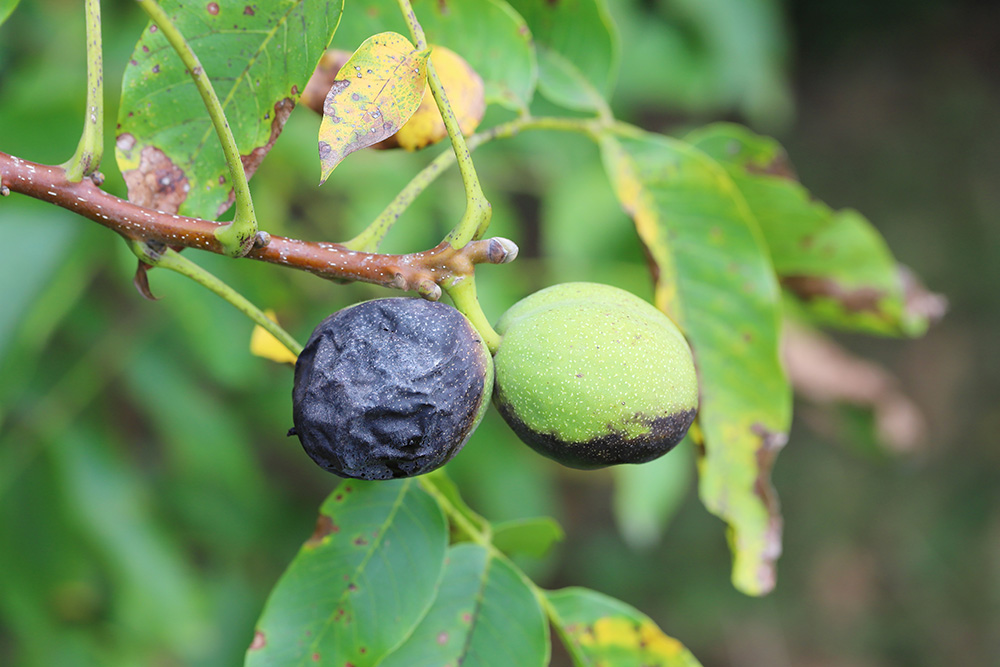
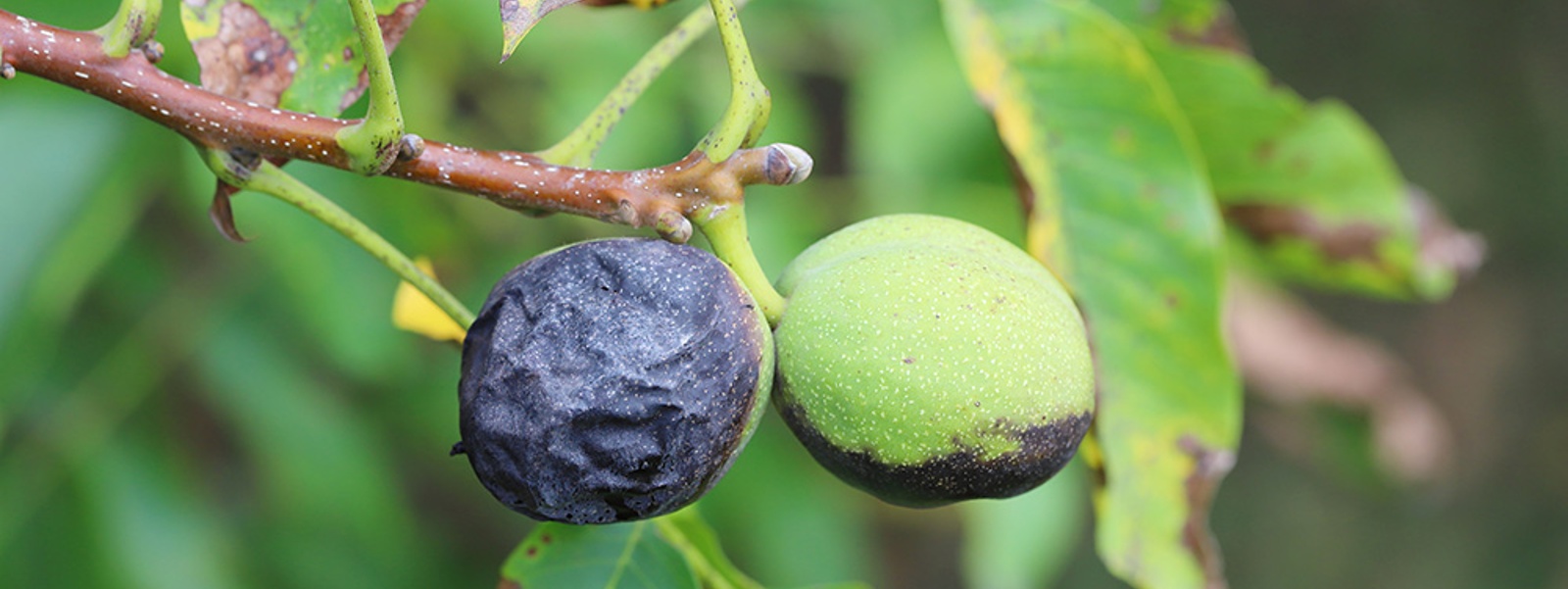
That trend has shifted during the past two to three years, with husk fly numbers steadily increasing. This season, many orchards are reaching treatable levels. Without intervention, growers can expect to see blackened nuts at harvest.
While shell staining caused by husk fly does not always impact the kernel, it often does. In some cases, damaged nuts can still be cracked for meat recovery, but more frequently they’re removed during sorting before processing. With already tight margins, growers cannot afford quality losses from stained kernels.
Husk fly damage may also interact with other pests. Codling moth remains the primary contributor to navel orangeworm infestations, as it creates entry points for larvae.
However, early-season husk fly damage can also crack or weaken the husk, potentially allowing navel orangeworm access. While navel orangeworm infestation through husk fly damage is typically limited, increasing husk fly populations could shift that dynamic.
Monitoring begins with trap placement, usually in early June. Peak husk fly emergence generally occurs in July and in some cases extends into August.
Once flies are detected, management typically begins with weekly low-volume insecticide applications combined with an attractant. Treatments continue as long as trap counts remain active. If populations increase beyond manageable levels, growers may switch to air-blast applications to more aggressively reduce numbers.
Available insecticides remain effective, and orchards with consistent husk fly programs maintain low populations.

In this issue...
- Experts seek methane-cutting solutions
- California cherry crops decimated by spring storms
- Agricultural 'roadmap' to guide research priorities
- Why rocket scientists began counting nuts in California
- Advocacy in Action: Wolf rule repeal, safety rules and bird flu tests
- Farms increasingly use drones for aerial applications
- How should walnut husk fly be managed this season?
- Production forecast shows drop in several state crops
- Former dairy vet looks to improve welfare on farms
- How AI is transforming weather forecasting





.svg.png)
