


Trees & Vines
- May 20, 2026
- California cherry crops decimated by spring storms
-
-
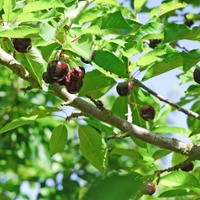
Rain-damaged cherries are pictured May 17 in an orchard in San Joaquin County. The county reported 63% of its cherries were impacted by rainstorms in April and May, resulting in losses of $174 million. Cherry growers in other parts of California also lost much of their crops.
Photo/Caleb Hampton
- May 20, 2026
- Why rocket scientists began counting nuts in California
-
-
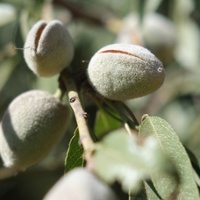
The expansion of California’s almond acreage has made it more difficult to forecast statewide crop yields, leading the industry to consider new methods.
Photo/Caleb Hampton
- May 20, 2026
- Farms increasingly use drones for aerial applications
-
-
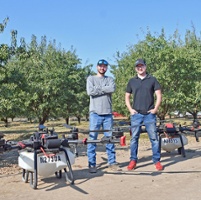
Brothers Brandon, left, and Nicholas Steed show off their agricultural drones. They operate UAV Ag Solutions in Oakdale, an agricultural drone application business. Drones have joined manned aircraft and ground rigs as vehicles that apply agricultural inputs, including pesticides, fertilizers, beneficial insects and cover-crop seeds.
Photo/Vicky Boyd
- May 6, 2026
- USDA announces $9 million for cling peach tree removal
-
-
Photo/Licensed image
- April 22, 2026
- California weighs 'truth in labeling' wine industry law
-
-
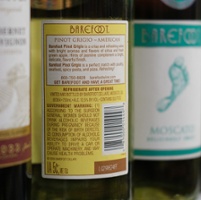
Assembly Bill 1585 would require that wines labeled “American” be made entirely from U.S.-grown grapes. Under federal law, that threshold is set at 75%, allowing wineries to blend in foreign wine.
Photo/Caleb Hampton
- April 22, 2026
- Researchers study ways to control flatheaded borer
-
-
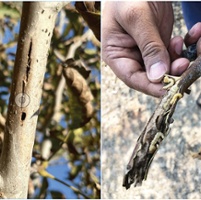
Pacific flatheaded borer larvae pupate in the spring, with the adults emerging in late spring and early summer. They leave behind telltale D-shaped exit holes, left. The larvae are rarely seen because they spend most of their life under tree bark. At right, using a knife to peel the bark in suspected branches reveals feeding channels packed with sawdust-like frass, or excrement, and cream-colored larvae.
Left photo/Samaneh Sakaki, University of California
Right photo/Jhalendra Rijal, University of California
- April 8, 2026
- Ingredient market increases demand for pistachios
-
-
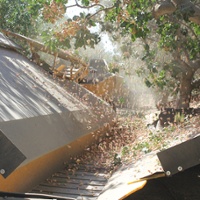
As more pistachio trees come into production in California, marketers look to increase demand for the nut, which has been sold largely as an in-shell nut for snacking in the past. But in recent years, pistachios have found new uses, especially as a paste, inset, boosting demand for pistachio kernels, thanks to the success of Dubai chocolate, which is filled with pistachio paste and tahini.
Ag Alert file photo
- March 25, 2026
- Research looks to optimize pollination in avocados
-
-
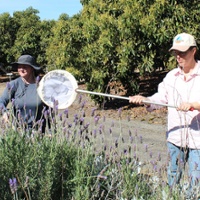
Hamutahl Cohen, right, entomology adviser at the University of California Cooperative Extension in Ventura County, and lab assistant Abigail Brondos collect visitors to a lavender bush in a block of Hass avocado trees in Somis. Cohen is working on a three-year study of the types of pollinators of the Hass variety, which doesn’t attract honeybees and bumblebees the way other tree crops do.
Photo/Rob McCarthy
- February 25, 2026
- Beekeepers assess this year's colony health
-
-
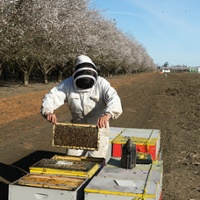
Rodrigo Díaz, a beekeeper at Dixon Bee Co. in Solano County, checks on beehives Feb. 13 in an almond orchard in Dixon. February traditionally marks the start of pollination season as beekeepers throughout the country journey to California’s Central Valley for the six-week-long almond bloom.
Photo/Caleb Hampton
- February 25, 2026
- Peach growers seek relief following cannery closure
-

-
Sutter County Supervisor Karm Bains, a fourth-generation cling peach grower, stands in a peach orchard behind his district office in Yuba City. Bains, whose family has grown peaches in the area since the 1960s, worked with County Supervisor Jeff Stephens, who also grows cling peaches, to organize an informational meeting for growers and state and federal lawmakers Feb. 13 in Yuba City.
Photo/Caleb Hampton
- February 11, 2026
- 'Unrelenting' fog aids Central Valley fruits and nuts
-
-
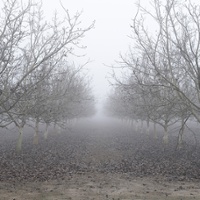
Tule fog blankets a walnut orchard last month in Yolo County. The low-lying fog layer, named after a sedge native to Central Valley marshes, is created by moist soils capped by a high-pressure weather system. Farmers and researchers say persistent fog throughout the valley in recent months could help the region’s fruit and nut trees achieve the winter dormancy they need to bloom successfully.
Photo/Caleb Hampton
- January 28, 2026
- Citrus growers assess risk of new vein clearing virus
-
-
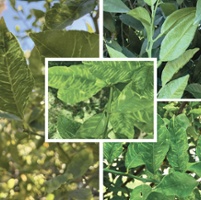
A lemon tree in a Tulare County residence, left, shows classic symptoms of citrus yellow vein clearing virus, which include vein clearing when viewed from the top of the leaves and water soaking when viewed from the bottom, center and lower right. At top right, a sour orange rootstock (lighter green plant) exhibits vein clearing while the adjacent Meyer lemon scion is asymptomatic.
Left Photo/Courtesy of the California Department of Food and Agriculture
Center Photo/Courtesy of University of California
Upper Right Photo/Courtesy of the California Department of Food and Agriculture
Lower Right Photo/Courtesy of University of California
- January 28, 2026
- How can growers identify and prevent bacterial blast?
-
-
Photo/Licensed image
- January 28, 2026
- Del Monte cannery closure devastates California fruit growers
-
-
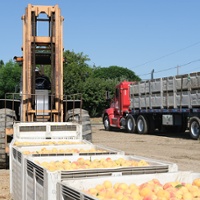
Cling peaches are loaded onto a truck last year during harvest in Sutter County. Because there is no fresh market for cling peaches, growers produce the fruit under long-term deals with canneries.
Photo/Caleb Hampton
- January 23, 2026
- Del Monte cannery closure devastates California fruit growers
-
-
Cling peaches are loaded onto a truck last year in Sutter County.
Photo/Caleb Hampton
- December 17, 2025
- Almond conference puts focus on 'healthier future'
-
-
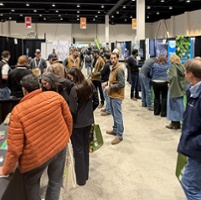
Attendees of the 2025 Almond Conference in Sacramento last week mingled with exhibitors at the event’s trade show. More than 400 vendors showed their wares during the annual three-day conference, which also featured panel discussions, workshops and other sessions with industry experts on key almond topics.
Photo/Mark Billingsley
- December 3, 2025
- Autumn rains hasten persimmon harvest
-
-
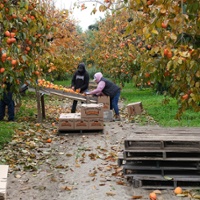
Rosa Ruiz, right, and Rosario Luna clip persimmon stems before placing the fruit in boxes Nov. 12 in Marysville. Growers across California ramped up picking ahead of mid-November rains that drenched most growing regions. The state’s persimmon harvest was expected to wrap up early this month.
Photo/Caleb Hampton
- December 3, 2025
- Specialty crop growers face added risk, fewer tools
-
-
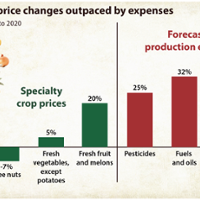
Graphic/Ag Alert Source/AFBF Calculations, USDA, Bureau of Labor Statistics
- December 3, 2025
- From the Fields: Daniel Bays, Stanislaus County tree crop farmer
-
-
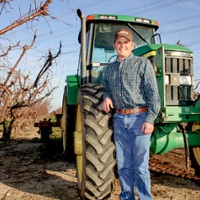
Daniel Bays
Photo/Christine Bays
- December 3, 2025
- From the Fields: Robert Criswell, Santa Clara County Christmas tree farmer
-
-
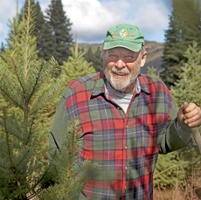
Robert Criswell
Photo/Lori Eanes
- December 3, 2025
- State's olive oil production still has room for growth
-
-
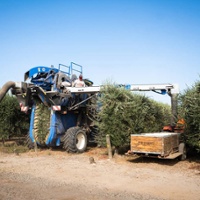
Olives grown for oil production are harvested in Fresno County. Depending on the region, variety and desired oil quality, olives are mature and ready for harvest from September through January. California’s olive oil sector remains young, and plantings of olives for oil continue to expand.
Photo/James Collier for California Grown
- November 19, 2025
- Report maps impact of wine downturn on grape acreage
-
-
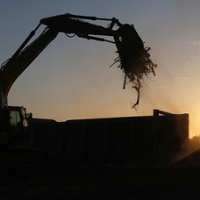
An excavator disposes of a vineyard in Lodi using an air curtain burner.
Photo/Caleb Hampton
- November 19, 2025
- Peach growers await pivotal cannery sale
-
-
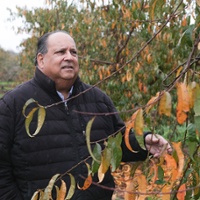
Sutter County farmer Ranjit Davit’s family has grown cling peaches in Live Oak since the 1940s. In 2023, Davit planted new peach trees under a 20-year contract with Del Monte Foods. This year, Del Monte filed for bankruptcy and voided the contract, leaving Davit without a buyer for his fruit.
Photo/Caleb Hampton
- November 19, 2025
- Early, late navel oranges spread out market window
-
-
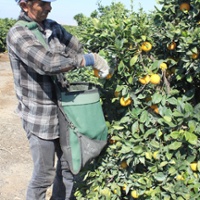
The M7, an early-season navel orange variety, produces smaller trees, which allow harvest without the use of ladders.
Photo/Cecilia Parsons
- November 5, 2025
- Walnut growers optimistic about markets
-
-
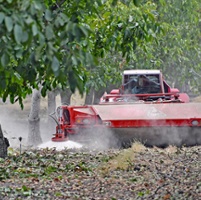
During harvest at a San Joaquin County orchard, a mechanical sweeper moves scattered walnuts that have been shaken from the trees into windrows, after which the nuts will be picked up by a harvester. The 2025 crop is estimated at 710,000 tons, up 18% from 2024’s production of 603,000 tons.
Photo/Vicky Boyd





.svg.png)
