


Farms find success in vertical integration
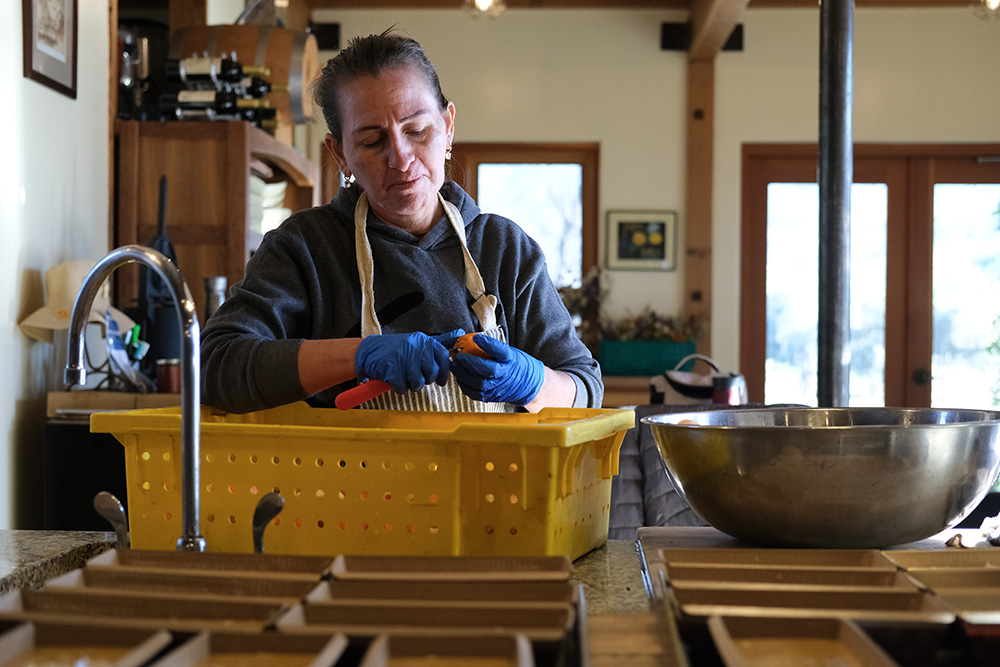
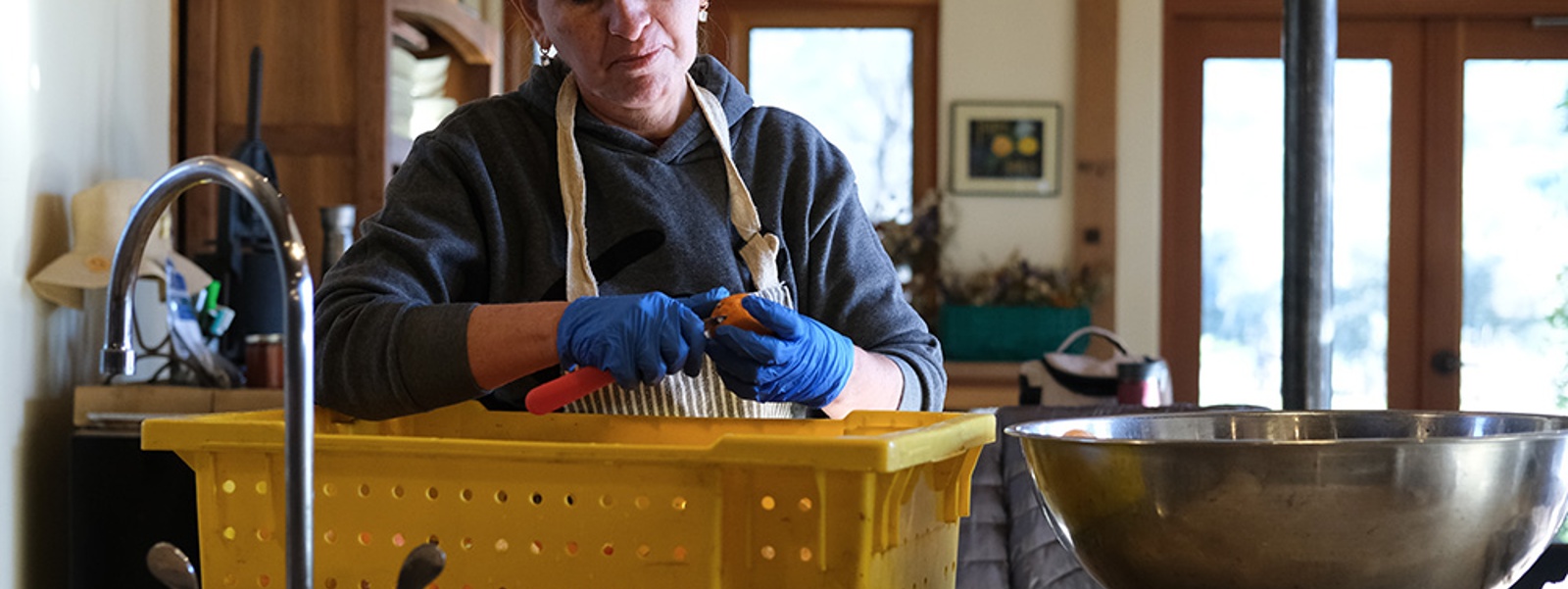
Citrus fruit is peeled and baked into cakes Jan. 15 at Full Belly Farm in Yolo County. Since 2016, Full Belly has made value-added products using its fruits, nuts, grains, eggs and vegetables. According to experts, recent market trends could incentivize more farms to adopt a similar model.
Photo/Caleb Hampton


By Caleb Hampton
Full Belly Farm co-owner Amon Muller grew up traveling between his family’s diversified farm in rural Yolo County and farmers markets across the Bay Area. Some of the region’s top chefs purchased ingredients from the farm, and a few hired Muller to work as a prep chef in their restaurants.
“I really enjoyed my time there, but I quickly realized that I like being outside,” Muller said. “I was drawn back to the farm.”
In 2016, the third-generation farmer put his culinary skills to work at Full Belly, opening a commercial kitchen to manufacture value-added products at the 450-acre farm in Capay Valley. Today, the kitchen operates year-round, producing tomato sauce, jam, cakes, pasta, olive oil and other items from the farm’s organic fruits, nuts, grains, eggs and vegetables.
“It’s a really interesting model,” said Kristin Kiesel, an agricultural and resource economics professor at the University of California, Davis, who has partnered with Full Belly in her research. “They’re a good example of a farm that vertically integrated and built a brand.”
According to experts, trends in the food supply chain and changes in consumer behavior could incentivize more farms to do the same.
For decades, farmers have seen a declining share of the money consumers spend on food. Since 1950, that figure declined from around 40 cents of every food dollar to around 9 cents, according to the U.S. Department of Agriculture, with the value of farm products increasingly captured by processors, retailers and food service.
“Everyone essentially puts their hand in the cookie jar and takes something out,” Kiesel said.
In recent years, she added, “dramatically increased” consolidation in the processing and retail sectors has further diminished farmers’ bargaining power as their market access is dictated by a handful of companies.
“The increased concentration further downstream is an incentive for farms to vertically integrate—to capture some of that added value,” Kiesel said.
However, farmers often encounter barriers when it comes to vertically integrating.
For many, it can be a challenge to access the capital needed to invest in new equipment or infrastructure, hire skilled personnel, develop new marketing relationships and build name recognition for their brand.
“Running a farm in itself is a challenge,” Muller said. He added that making and marketing value-added products is essentially “a whole other business enterprise.”
Farms can also struggle to achieve the scale they need in their value-added business to make the investment worth it. Until their brand gains a following, they may need to pay a broker to get into major retail chains, stock some of their products for free or pay “slotting” fees for shelf space in stores.
“It’s a very difficult process in the beginning,” said Noel Rosa, co-owner of Rosa Brothers Milk Company, a Kings County dairy that in 2012 built its own creamery nearby in Tulare. “It gets easier as your brand gets established.”
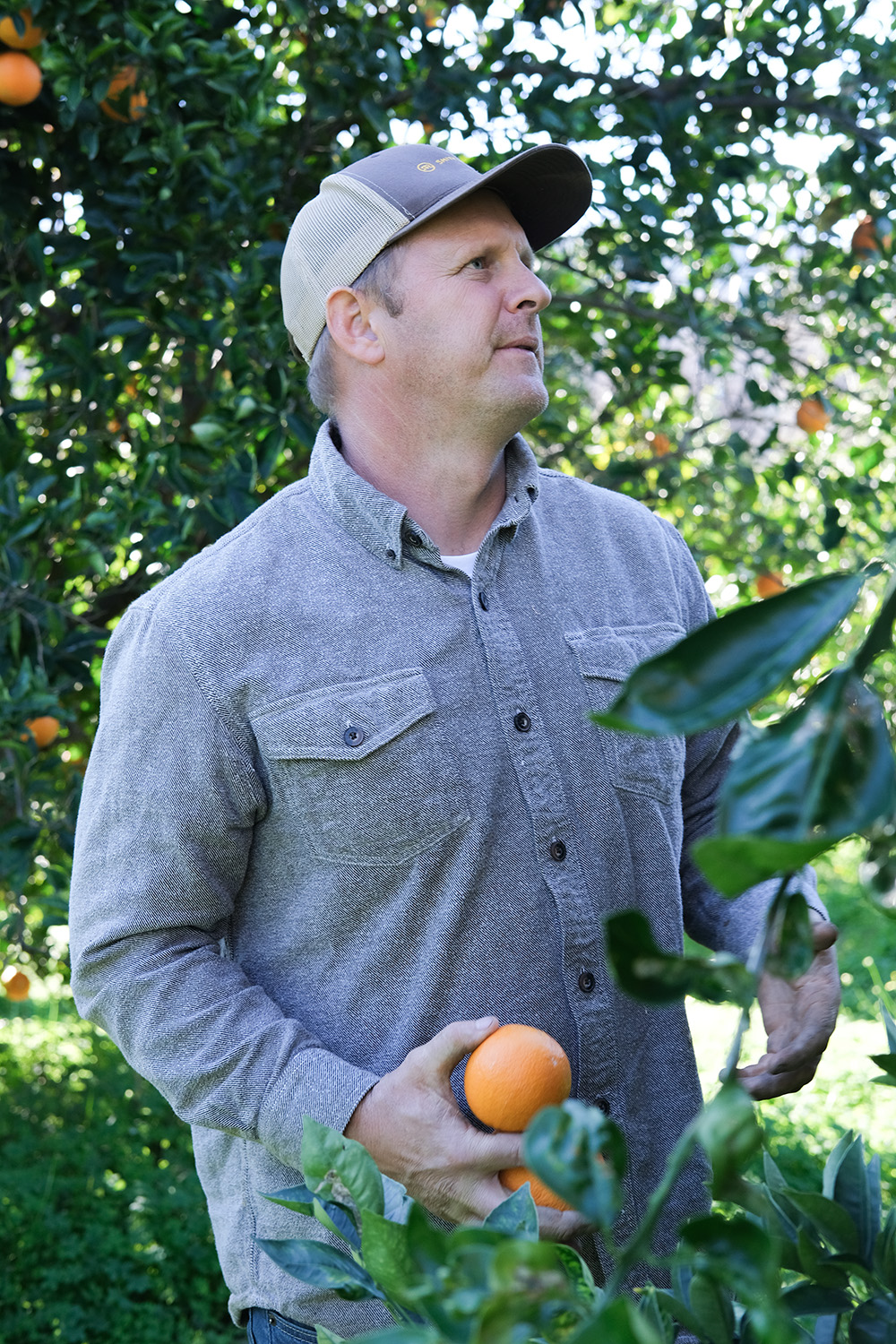
navel oranges this month in Yolo County.
Photo/Caleb Hampton
Farms that succeed in vertically integrating can benefit in various ways.
At Full Belly, the farm’s branded products provide an outlet for off-grade fruit, and the shelf-stable goods generate year-round cash flow.
“It can be quite valuable for a farm” to find uses for unsold products, Muller said. “It’s another revenue stream.”
Vertical integration can also help insulate farms from risks that affect raw commodity markets.
Steve Chinchiolo, who grows organic apples in San Joaquin County, in recent years sold his off-grade fruit—around a quarter of the crop—to Manzana Products Co., which made it into juice and applesauce at its cannery in Sebastopol. But Manzana announced it will close the North Bay processing plant next year and relocate to Washington state.
“We’re going to lose a big buyer,” Chinchiolo said.
Fortunately, the farm has another outlet for its fruit at Far West Cider Co., a Richmond-based cidery Chinchiolo’s children opened in 2018 to make ciders with fruit from the farm. While the cidery is still scaling up, Chinchiolo said, “ultimately, we’re hoping to be able to utilize all of that fruit.”
Farmers aren’t the only ones who benefit from vertical integration in agriculture. Kiesel, the UC Davis researcher, said that when farms own more of the supply chain, it can have communitywide impacts.
“By vertically integrating, you can ensure some of those dollars stay within the community,” she said.
Rosa Brothers, which is the only creamery in the nation’s largest dairy-producing county, employs 10 people at its dairy and 50 people at the creamery.
“We’re providing some really good jobs,” Rosa said, with positions ranging from marketing and logistics to truck driving. In addition, he said, “We’re able to sell products statewide and bring those dollars back into a low-income community.”
The third-generation dairy farmer said the creamery, which makes ice cream and bottled milk, “allowed us to keep our farm going and viable.”
The dairy has remained about the same size—it has around 1,000 Holsteins—while profits from the creamery enabled the family to purchase adjacent land to grow feed crops. “A lot of good has come from it,” Rosa said.
Crystal Whitelaw, associate director for sustainable food economies at the UC Sustainable Agriculture Research and Education Program, or SAREP, said the program was developing a stronger focus on vertical integration as a way for small- and mid-sized farms to remain economically viable.
“This is something we are tasked with looking more into,” Whitelaw said. “There are many logistical benefits and strategic advantages.”
Farmers interested in vertical integration can receive support and resources from UC SAREP, she said. They can also apply for USDA’s Value-Added Producer Grant program, which helps farmers establish value-added enterprises.
At the moment, farms branching out into manufacturing may also benefit from shifting consumer priorities. With shoppers increasingly skeptical of ultra-
processed foods, Whitelaw said, desire for less processed, locally sourced foods could boost demand for farm-made products.
“More consumers are vested in the food supply chain,” she said. “Now more than ever, folks want to have a relationship with their food and know where it comes from.”
Caleb Hampton is editor of Ag Alert. He can be reached at champton@cfbf.com.
See related news stories...
- Del Monte troubles shake up pear season
- Diesel phaseout worries compost dealers
- Storms deal double blow to small farmers







.svg.png)
