


Transplant nurseries celebrate seed improvements
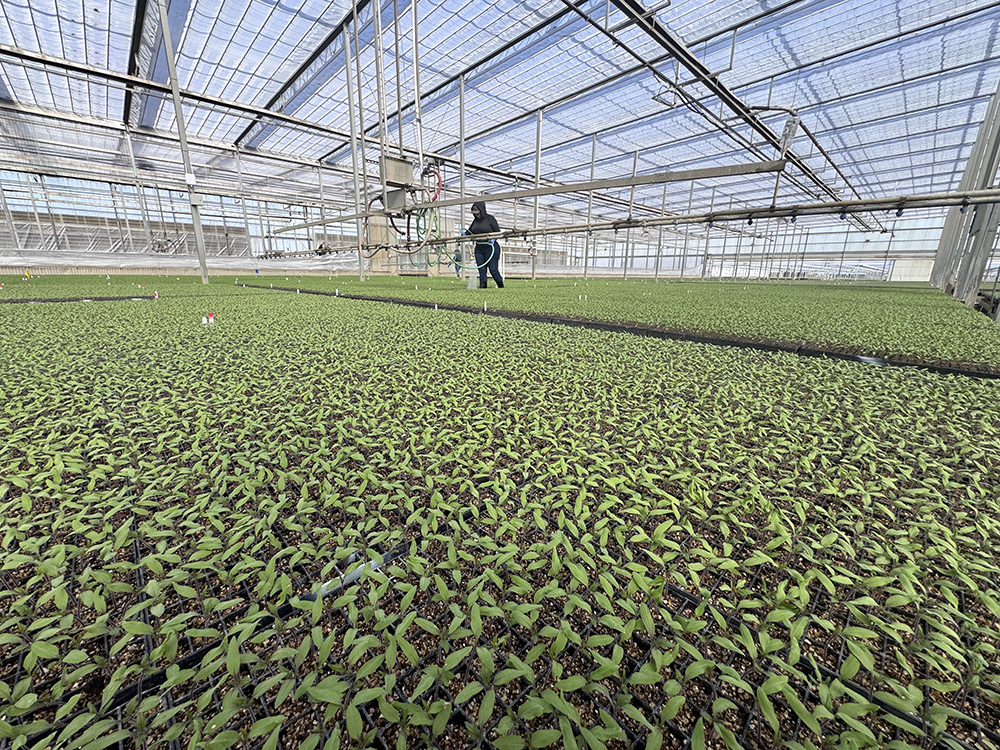
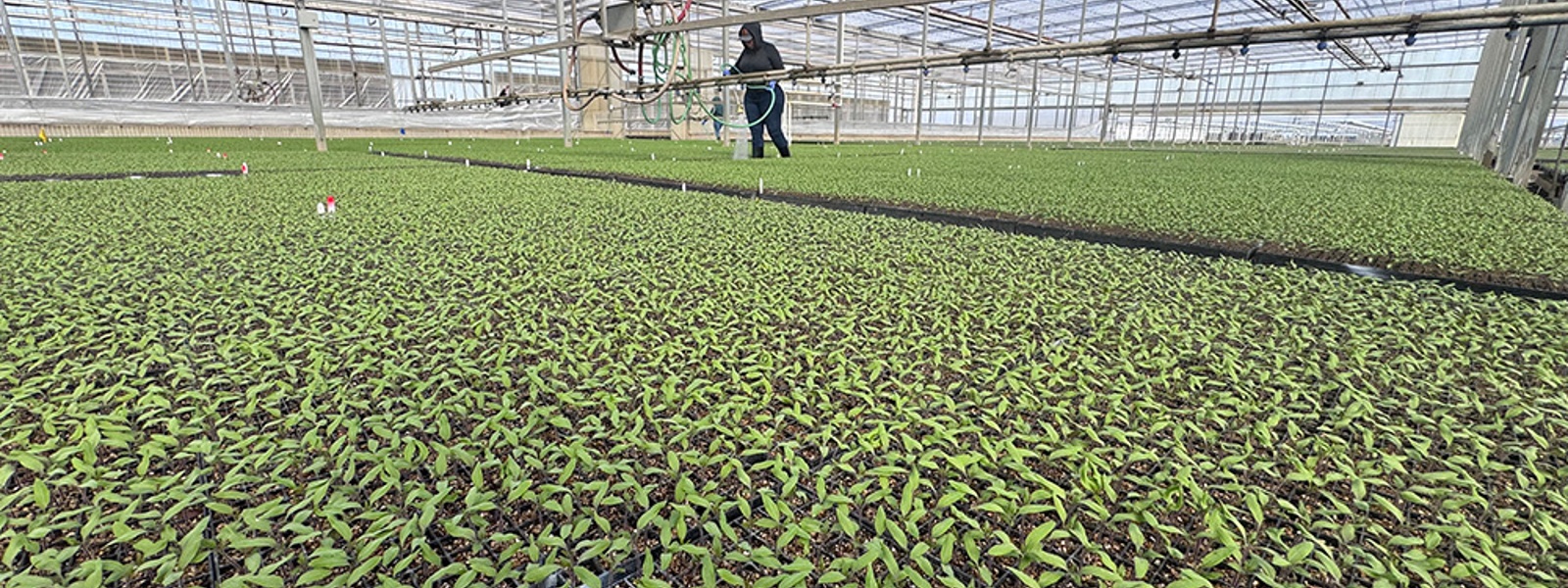
A greenhouse worker at Westside Transplant’s Huron facility in Fresno County takes an inventory count of vegetable seedlings in production. Transplant nurseries are developing best practices for the industry, which is still considered new to agriculture. The Vegetable Transplant Nursery Association funds research aimed at offering guidance to its member-growers and state regulators.
Photo/Westside Transplant


By Rob McCarthy
The supply chain for California-grown vegetables runs year-round thanks to a beneficial partnership between seed companies and transplant nurseries, whose products allow growers to gain a head start on the season, ensuring earlier harvests and higher, more uniform yields.
Another value for vegetable growers who use transplants is lower seed and labor costs.
Since the 1990s, transplant nurseries have provided vegetable growers a shortcut from seed germination to harvest. Using seedlings germinated and raised in greenhouses following phytosanitary protocols shaves up to 60 days off the time that leafy greens, cauliflower, melons, processing tomatoes and other vegetables are in the field.
The quality of the seed is the single most important input for vegetable transplant production, according to the Vegetable Transplant Nursery Association, which represents the nursery operators in California, Arizona and Oregon that grow 8.7 billion plants a year. The association makes seed quality a focus of its work.
Nicole Nicks, general manager of Westside Transplant based in Los Banos, said the vegetable seed product is far superior in 2026 compared to the ones that dominated the market a decade ago.
“Seed quality is a top priority, and the science behind today’s seed makes it far more reliable and productive than it once was,” she said.
Seed producers focused on breeding for greater disease resistance and stress tolerance, along with improved vigor, germination and plant uniformity, Nicks added.
The 18 members of the VTNA represent a combined 30 million square-feet of nursery space and are a steady source of vegetable seedlings around the state. To be a trusted partner of growers, the nurseries say they need seed with high germination rates.
The VTNA has given set minimum germination rates by vegetable variety, thus establishing one of the first industry standards. For example, lettuce seed of all types must have a 95% germination rate, per the label, or it will be rejected. Artichoke germination at 75% is acceptable. So is an 85% seedling rate on celery, according to the association.
A 90% germination rate is required for transplant nurseries to accept seed to start fresh and processing tomatoes; bell and chili peppers; and broccoli, Brussels sprouts, cauliflower and cabbage. That standard also applies to cucumbers, squash, melons and watermelons.
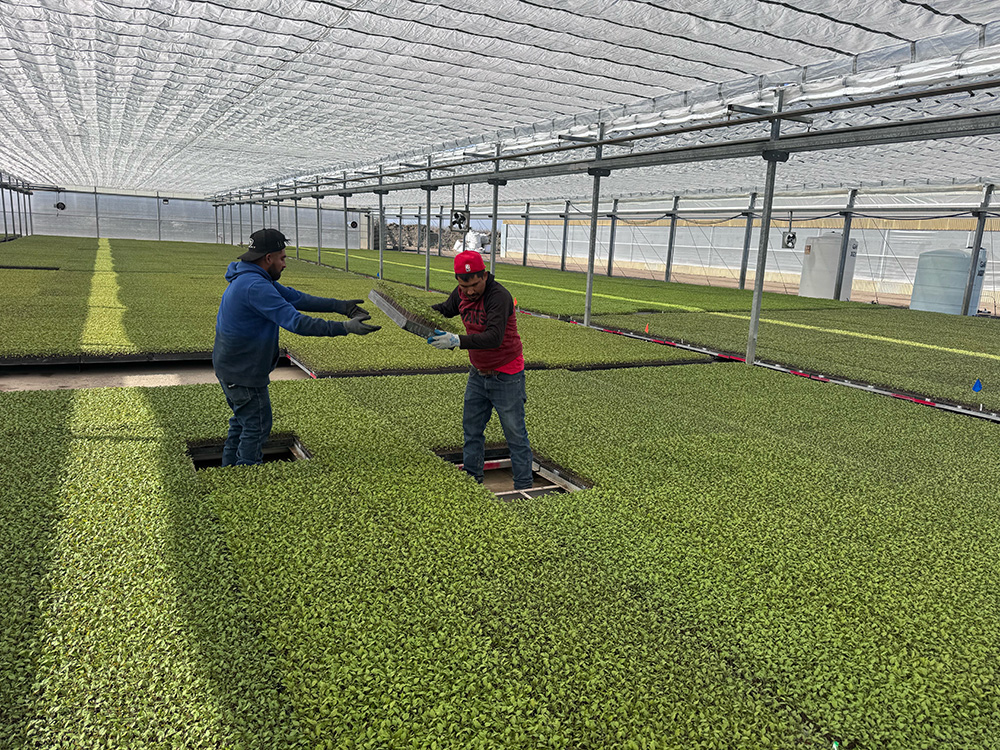
Photo/Westside Transplant
Keeping costs to the growers as low as possible depends on seed quality and performance. As germination decreases, nursery production cost increases exponentially, the association said on its website.
Higher yield in greenhouses do have a ripple effect that can bring cost savings to vegetable growers, said Kyle Brasier, research manager of Vilmorin-Mikado USA, a vegetable seed company based in Salinas. Seed performance has an inverse effect on a grower’s input costs.
“Germination, seedling vigor and uniformity” all matter, he said. “Sometimes, you’ll get seed varieties or seed lots that have great germination but poor vigor.”
The VTNA guidelines also cover pathogens carried in seed and outline remedies if tomato seed sent to a transplant nursery contains bacterial speck, bacterial canker or bacterial rot, or septoria in celery.
Under the association’s rules, the nursery may reject below-standard seed, make a substitution with higher-quality seed or charge the customer more for the lost productivity.
It’s standard practice among growers to use more than one transplant nursery because greenhouse space is limited, said Pete Melero, vice president of Plantel Nurseries in Santa Maria. Started in 1985, Plantel was there when farmers who direct-seeded their fields began looking for ways to turn a field one more time per year.
Nursery-grown seedlings are ready to ship in 30 to 40 days, Melero said, though some crops take longer.
“Seed advancements have come a long way from where we started 40 years ago until now,” he added.
With ultra-hybrid vegetable seeds, it’s possible to reach 100% germination, which is a gold standard for today’s agricultural industry, said Melero, who oversees sales and transplanting for Plantel.
Before they’re ready for transplanting, vegetable seeds undergo priming and pelleting, a process that improves germination.
Vegetable growers remain price sensitive due to rising production costs, and they continue to look to transplanting because it offers them cost savings.
“This is one way you can still control your costs by knowing you’re getting the plant that you want,” he said. “Now, you can automate it by adding transplant machines as well.”
The technology for planting seedlings requires three people to operate compared to 18 to 25 on a hand crew, he said.
Despite being around for decades, the industry is still considered new and misunderstood, VTNA Executive Director Sandra Fischbein said, because it doesn’t match the horticultural or agricultural descriptions.
For example, some organic production regulations lump greenhouse transplant producers with field-grown crops. The result: burdensome and “nonsensical” restrictions because of the unfamiliarity with the vegetable transplant business, she said.
VTNA has enlisted University of California, Davis, plant pathologist Johanna Del Castillo Munera to develop best practices. She is five years into the project.
“We are such a small market (for crop-protection materials), they may write us off the label entirely,” Fischbein said. “Dr. Johanna del Castillo’s work is helping us on this front.”
Rob McCarthy is a reporter in Ventura County. He can be reached at agalert@cfbf.com.
The latest news from AgAlert.com
- Grape glut lessens as growers scrap vines
- Bill brings back ag overtime tax credit proposal
- Solving veterinary shortage is crucial for agriculture
- From the Fields: Laura Gutile, Madera County pistachio grower
- From the Fields: Jennifer Beretta, Sonoma County dairy farmer
- From the Fields: Frank Hilliker, San Diego County egg producer
- From the Fields: Bruce Fry, San Joaquin County winegrape grower
- 'Unrelenting' fog aids Central Valley fruits and nuts
- Strong beef prices keep milk replacement heifer count low
- Transplant nurseries celebrate seed improvements
- Advocacy in Action: Tricolored blackbird, government shutdown, farm bill, fumigation alternatives, air board workshop
- How California farms can reduce pumping power costs
- Award applicants sought for Leopold Conservation
- Section 179 deductions for farm machinery in 2026






.svg.png)
