


Solving veterinary shortage is crucial for agriculture
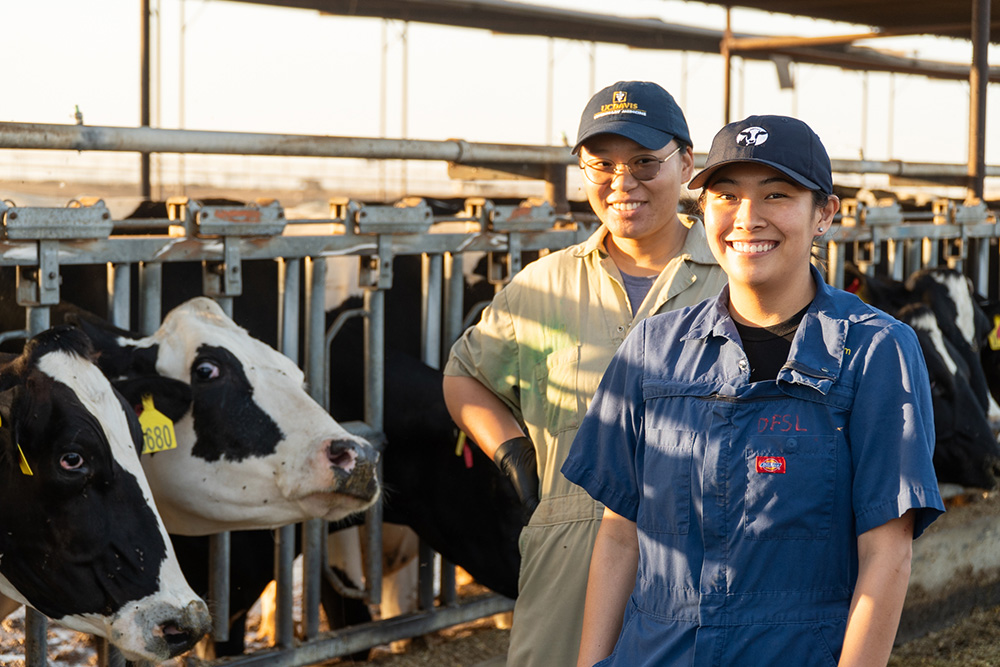
UC Davis undergraduate student Kameko Sasaki, right, and Muyuan Li, a third-year Dairy Production Medicine resident, work with dairy cows at the school’s teaching and research center in Tulare.
Photo/Sharif Aly/UC Davis


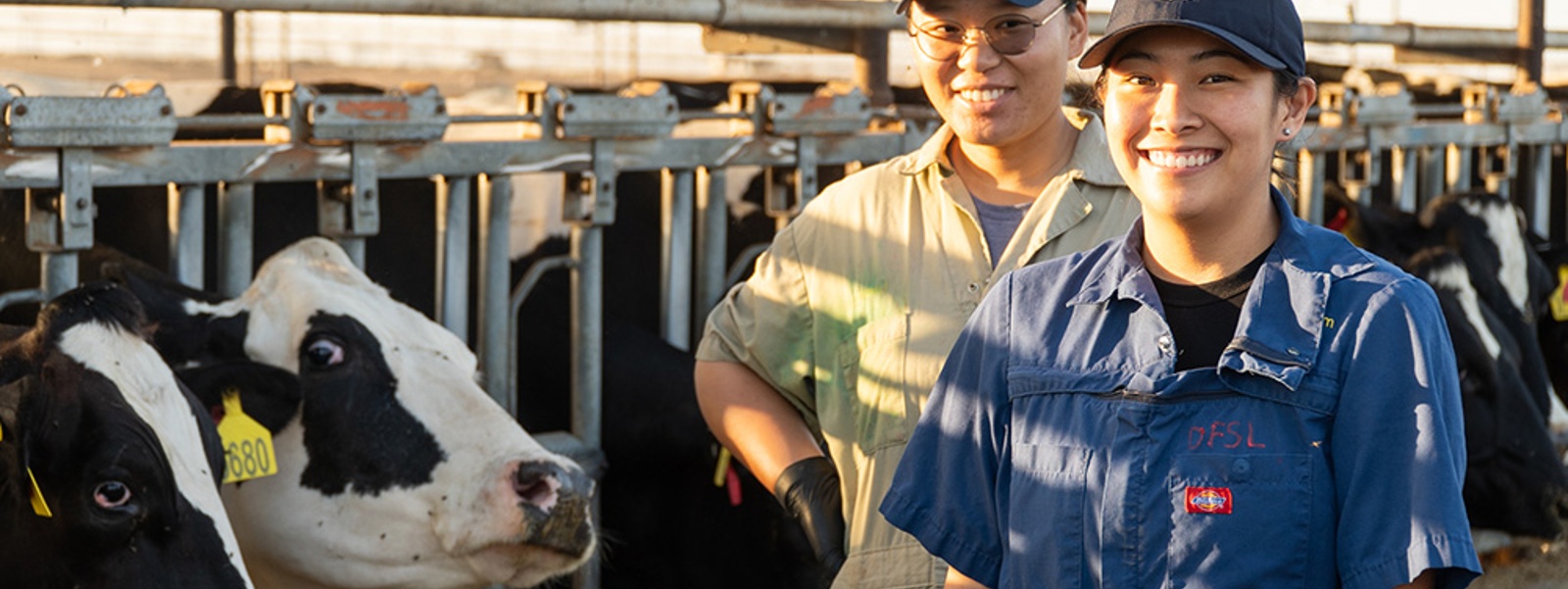
By Gary S. May
The future of agriculture depends on investing in bold advances in veterinary medicine and training the next generation of doctors to serve our communities. The University of California, Davis—the nation’s top-ranked veterinary school—is leading the way.
With a landmark $120 million gift from philanthropists Joan and Sanford I. Weill, the newly named UC Davis Weill School of Veterinary Medicine is set to expand its impact by training these future doctors, advancing large-animal care and strengthening California’s health and agricultural future at an unprecedented scale.
The timing of this investment couldn’t be better. The past few years have tested California’s livestock producers, with new obstacles at every step of the process, from emerging biological threats to regulations requiring adaptation amid market uncertainty.
In the face of these challenges, the resilience of California’s livestock industry has never been in doubt. Our farms—99% of which are family-owned—lead the nation in dairy production, contributing $57 billion in total economic impact and creating 180,000 jobs across the state. Across California, 11,000 ranchers manage 670,000 beef cattle, contributing another $4.98 billion to the economy.
At UC Davis, we are proud partners with the farmers and agricultural producers who feed our state. Our combination of partnerships, research and student training makes the Weill School of Veterinary Medicine an indispensable collaborator, helping keep our food healthy, safe and nutritious.
That partnership is evident in our response to H5N1 avian influenza. When the state confirmed its existence in California dairy cattle, UC Davis, the state and dairy farmers swung into action to protect the herds. The California Animal Health and Food Safety laboratory system rapidly expanded testing capacity at its Davis, Turlock and Tulare labs, while also providing real-time maps that help producers strengthen biosecurity to reduce the threat of outbreaks.
We continue to monitor these risks. With tools such as our new Disease BioPortal, UC Davis proactively tracks emerging health concerns and identifies disease trends early, aiming to prevent outbreaks such as the avian flu detected in Central Valley flocks last year.
UC Davis veterinarians and researchers are embedded in the heart of California’s dairy industry. They provide boots-on-the-ground care while training the next generation at the Veterinary Medicine Teaching & Research Center in Tulare County. The clinicians and residents in the Dairy Production Medicine program provide veterinary care to approximately 60,000 dairy cows, heifers and calves each year, while studying herd health, genetics, environmental sustainability and other topics.
As threats evolve, our teams are always looking ahead to the next challenge. We are leading efforts to prevent the spread of the New World screwworm, a flesh-burrowing blowfly larva that is slowly moving north to the United States. Recently spotted a mere 70 miles from the U.S.-Mexico border, this parasite could inflict devastating losses on California’s cattle and threaten human health.
That commitment to the future extends to ensuring that there are enough veterinarians to serve animal producers in the state. We currently face a critical shortage of food-animal veterinarians nationwide. Last year, the U.S. Department of Agriculture identified 243 rural veterinary shortage areas in 46 states, the highest numbers ever recorded, including in counties across California.
That’s why UC Davis is expanding its capacity to train future generations of veterinarians who will return to their communities and serve the state. Nearly nine in 10 of our students come from California. With support from our donor endowment and student support, graduates from our school have some of the lowest debt of any school in the United States, allowing them to return home to practice.
These efforts are paying off in a more diverse class of veterinarians who come from every background. We’re increasing access to veterinary school, giving rural and first-generation students increased opportunity to make a difference in their communities. Recognizing this work, we received the Health Professions Higher Education Excellence in Diversity award, and 58% of the Class of 2028 will be first-generation college students.
UC Davis is proud of its history and our ongoing efforts to support agriculture. This commitment to the state’s producers has been woven into the identity of our school since we began as the University Farm School in 1909 and when we established our School of Veterinary Medicine in 1948.
We may have a new name, but our commitment to serving the people and animals who make California’s cattle and dairy industry the envy of the world remains the same.
But we can do more.
Our ongoing Veterinary Medical Complex Capital Project is a critical part of our vision for the future. This project will help us fill the rural workforce gap, enhancing our ability to treat animals and strengthen health surveillance, protecting animals and the public. The expansion of the Large Animal Hospital will enable us to treat more animals, conduct more research and protect the health of California’s vital agricultural industry.
With strong donor support, we are well on our way to achieving these goals, but private investment must now be matched with public commitment. A thriving California demands a flourishing agricultural industry. We invite state leaders and the public to champion the funding needed to complete this effort and ensure a resilient future for California’s veterinary and agricultural sectors.
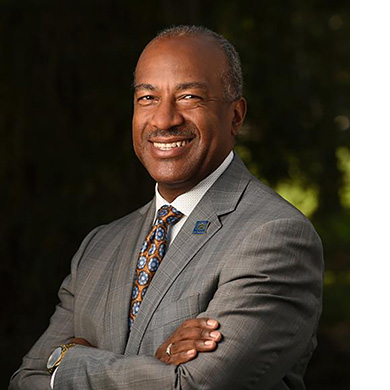
Gary S. May is the seventh chancellor of the University of California, Davis, and oversees all aspects of the university’s teaching, research and public service mission. He can be reached at chancellor@ucdavis.edu.
The latest news from AgAlert.com
- Grape glut lessens as growers scrap vines
- Bill brings back ag overtime tax credit proposal
- Solving veterinary shortage is crucial for agriculture
- From the Fields: Laura Gutile, Madera County pistachio grower
- From the Fields: Jennifer Beretta, Sonoma County dairy farmer
- From the Fields: Frank Hilliker, San Diego County egg producer
- From the Fields: Bruce Fry, San Joaquin County winegrape grower
- 'Unrelenting' fog aids Central Valley fruits and nuts
- Strong beef prices keep milk replacement heifer count low
- Transplant nurseries celebrate seed improvements
- Advocacy in Action: Tricolored blackbird, government shutdown, farm bill, fumigation alternatives, air board workshop
- How California farms can reduce pumping power costs
- Award applicants sought for Leopold Conservation
- Section 179 deductions for farm machinery in 2026






.svg.png)
