

From the Fields - Ryan Indart


Photo/Richard Green
By Ryan Indart, Fresno County sheep rancher
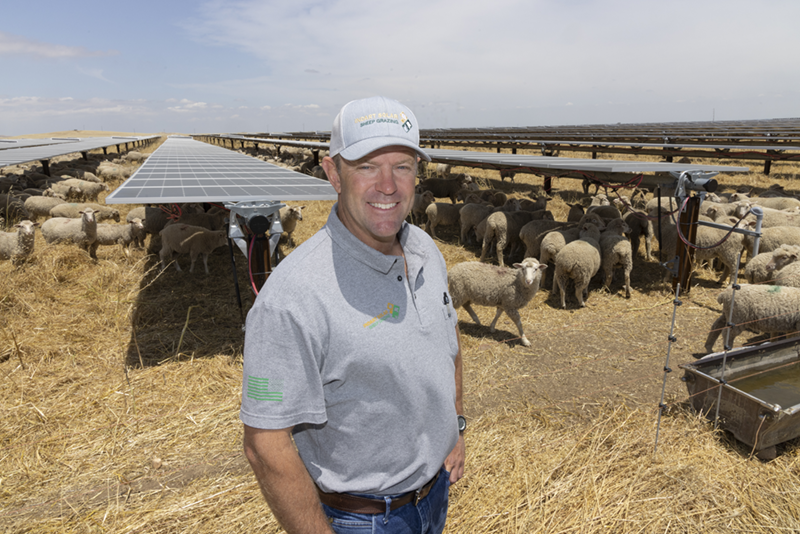
Our clients hire us for fire fuel-loads mitigation and reduction. A lot of them are institutions and private equity funds. They have insurance contracts that they must adhere to, and the covenants in those contracts require them to manage the vegetation under the panels because these solar sites are hundreds of millions of dollars in value. The insurance contracts are very strict because of the liability involved. If a fire were to break out in a live power plant, it would be catastrophic and disastrous. As sheep grazers, we manage and reduce that vegetation.
We start in January. Most of our projects are completed. We’re still grazing for one client in Lancaster. We just wrapped up one in western Fresno County. We do a combination of mechanical mowing and sheep grazing. There are certain places the sheep can’t get to—underneath solar infrastructure or maybe some panels are just too low. We use the mower to clean up around there. There are some types of vegetation that the sheep don’t like that much, especially foxtail barley. When it dries out, the sheep don’t like it very much, so we end up mowing a lot of foxtail barley.
Demand for our services is constantly increasing. The difficult thing for us is to grow our herd fast enough to meet that demand. Where we cannot grow fast enough, we bring sheep in from another state to complement our animal numbers. Then we send those sheep back to the rancher who owns them when we’re done with the grazing season.
We’ll be done with our grazing season in about a month or a month and a half. Right now, we’re breeding all our ewes. They’re down in Lancaster grazing solar projects and breeding at the same time. We’ll start our fall lambing season around the first week in October, and we’ll bring the sheep back to Kerman to graze on alfalfa fields and lamb out our new lamb crop.




.svg.png)
