


Urban farm's microgreens punch up plates, palates
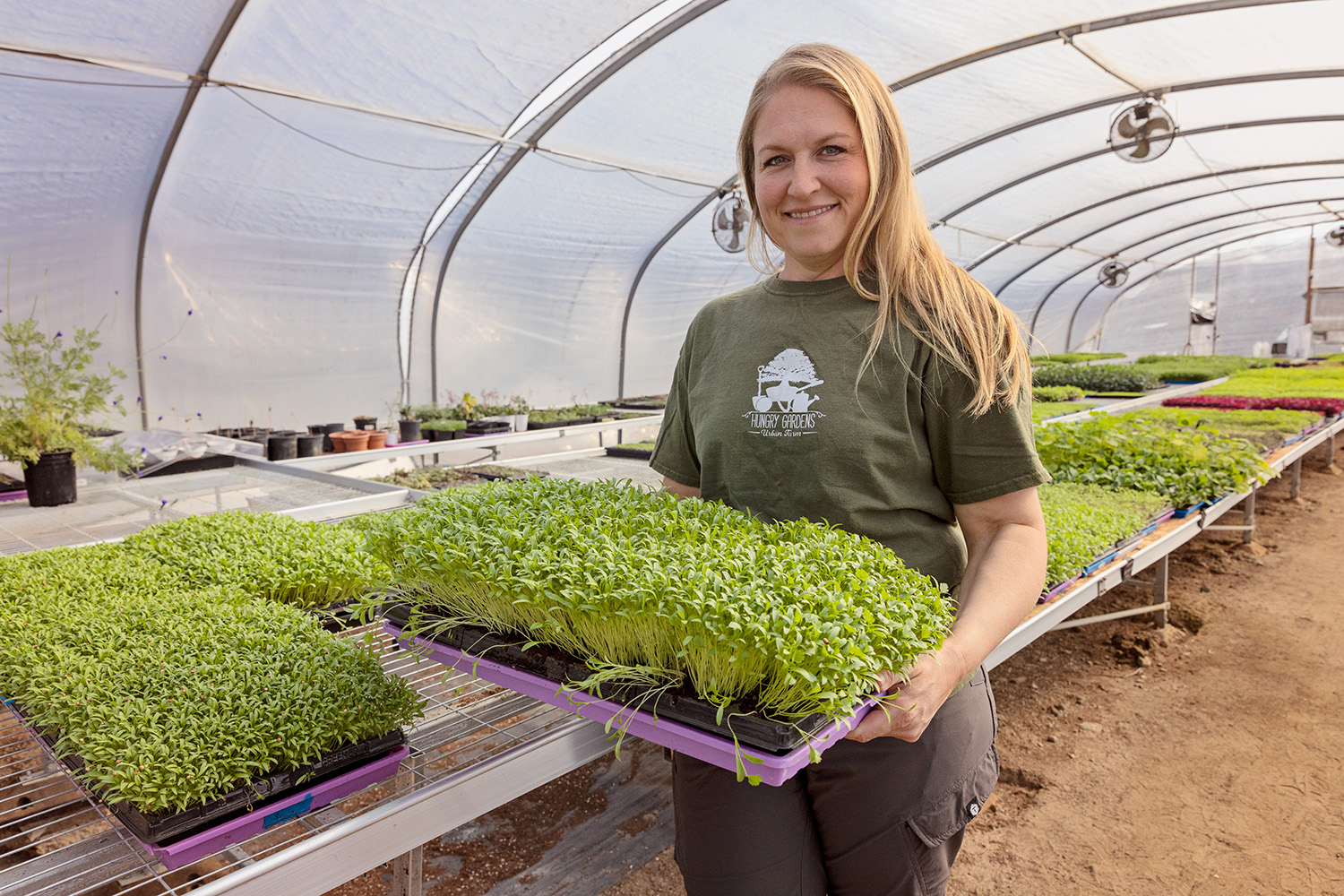
Joni Albers operates Los Angeles-based Hungry Gardens Urban Farm, which grows microgreens and edible flowers. She encourages other farmers and home gardeners to try growing microgreens because the young seedlings require little space and pack nutrition. The farm earns part of its income building gardens and farms for various organizations, restaurants and homeowners.
Photo/Lori Fusaro


By Linda DuBois
Microgreens and edible flowers can add a visual pop to entrées, side dishes, desserts and drinks. Drew Rosenberg, executive chef of CUT by Wolfgang Puck in Beverly Hills, agrees. But that’s not why he’s a big fan.
“The most important thing for me is flavor,” Rosenberg said, adding that the culinary gems are important in bringing together a dish’s overall taste and texture.
Microgreens are young seedlings of edible plants, mostly vegetables and herbs, that usually taste like more potent versions of the mature plants.
Rosenberg sources his microgreens from Hungry Gardens Urban Farm in Los Angeles. Owner Joni Albers, who founded the company in 2020, grows the plants in a residential area with large lots popular with horse owners.
Aside from their ability to add flavor and texture to dishes, microgreens also pack nutrition. A plant’s microgreens have the same volume of antioxidants, vitamins and minerals as the full-grown version, Albers noted.
Photo/Lori Fusaro
“Interestingly enough, the amount of nutrients that a seed starts with just gets spread out over a bunch of water and fiber as the plant gets bigger,” she said. “Eating microgreens is a way of ingesting highly nutrient-dense vitamins and minerals.”
That’s why she encourages other farmers and home gardeners to try growing microgreens.
“Microgreens have such a small footprint. You can grow so much nutrition in such a little space,” she said. “I see it as a future source of nutrition that can be produced in your immediate area, whether it’s in your house or down your street.”
Hungry Gardens started out growing organic heirloom produce, but it now focuses on microgreens and edible flowers. Its other primary source of income is building gardens and farms for various organizations, restaurants and homeowners.
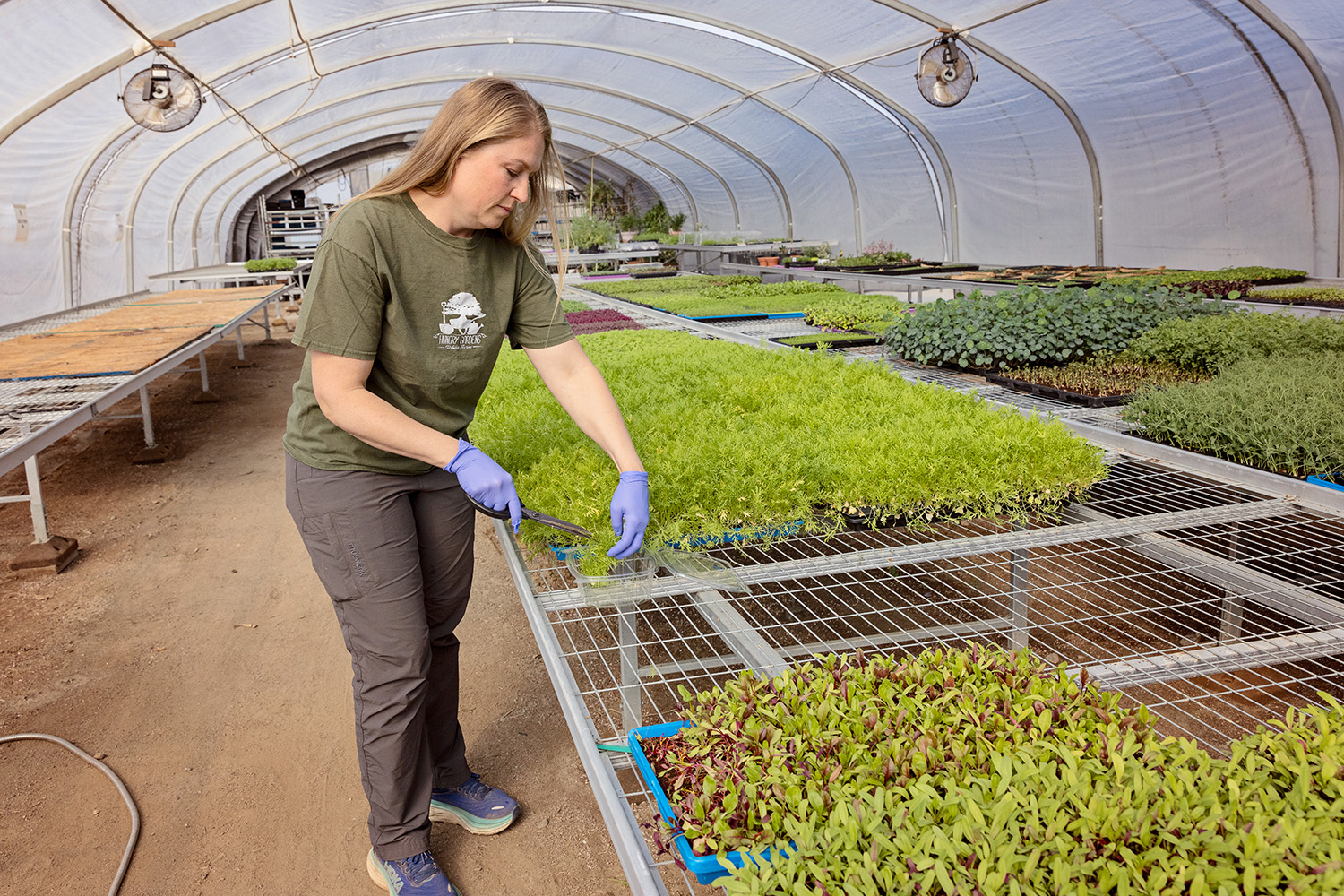
The microgreens grow from seven to 45 days, depending on the variety, in shallow soil-filled trays on tables in two greenhouses. The edible flowers take longer, but they continue to produce for up to six months. They are all seasonal crops, but growing them in greenhouses extends the season, allowing Albers to plant and harvest different varieties year-round.
The farm includes almost 6,000 square feet of greenhouse, plus 1,000 square feet of outdoor space filled with perennials and other crops.
At what stage of growth microgreens are harvested depends on the plant variety, Albers said.
“Within the anatomy of a seedling, you have what’s called the cotyledon leaf, and that’s the first leaf that emerges when a seedling pops open,” she said. “Then the next set of leaves that come out are the first true leaves.”
Some microgreens are the cotyledon leaves, and others are the first true leaves, she said.
“Like, for arugula, we don’t want the first true leaf to emerge,” she said. “The same thing for radish, because it gets fibrous and it loses its texture and its flavor. But then there are some, like cilantro, where we really want that first set of true leaves.”
Photo/Lori Fusaro
Albers sells about two-thirds of her products to Los Angeles restaurants, including several with Michelin stars, with the other third going to distributors who serve nearby areas such as Orange County, Las Vegas and San Diego.
Her most in-demand microgreen is micro cilantro, which is wildly popular in Southern California. Another favorite is Sweet Lupina, one of the only edible lupine varieties, which Albers described as having “a strong pea flavor and a succulent texture.”
Chef Rosenberg either mixes microgreens into ingredients or places them on top of a dish, depending on what he’s making. Some he cooks and others he uses raw, often seasoned with a little oil and salt to bring out the flavor.
He has several that he buys regularly, including the Japanese herb kinome, the young leaves from sansho pepper plants.
“Sansho is a peppercorn berry that gives you a peppery, citrusy numbing sensation on your tongue,” Rosenberg said, adding the leaves “add a very interesting flavor” to his fish, sashimi and crudos.
His favorite is Cantaloupe Micro, which he said tastes like cucumber melon with a great texture.
“Joni’s always trying new stuff, always sending samples,” he said. “Every week I’m getting something different.”
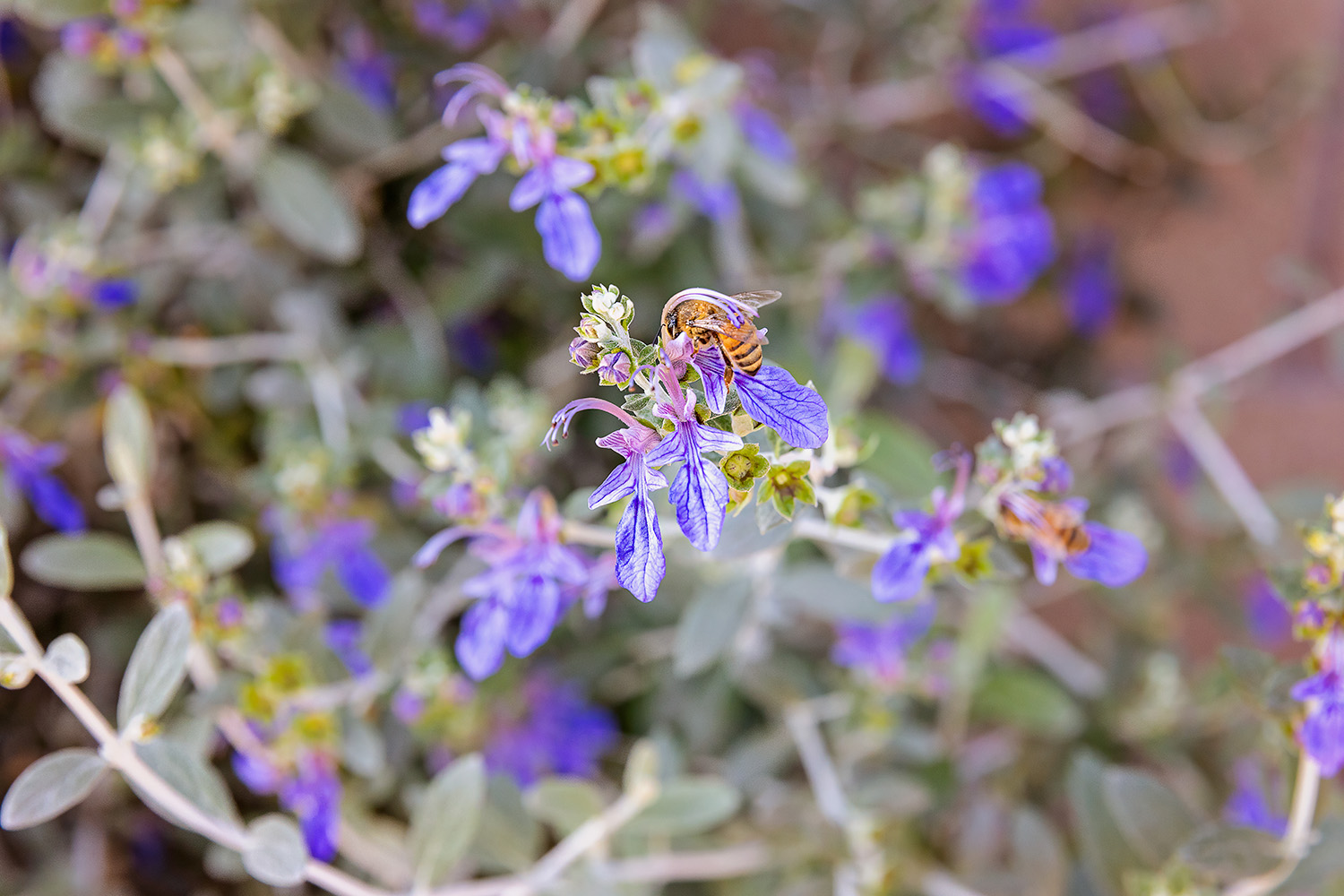
Among Albers’ most popular edible flowers are Chocolate Bells, a bright purple and yellow bell-shaped flower that tastes like chocolate.
While chefs have their favorites, they also want to keep things fresh.
“All of my chefs are looking for things that are not like what everybody else has,” Albers said, adding she is constantly seeking plant varieties from all over the world that aren’t commercially grown in the United States.
However, it never fails that shortly after she starts growing something brand new, some commercial growers start growing the same thing.
“And then it’s time to move on to something else,” she said, chuckling. “The fortunate thing is we have an incredible seed diversity in the world, and it just takes time and effort to locate those.”
Linda DuBois is assistant editor of California Bountiful® magazine, where a version of this story appeared in the Summer 2025 issue.
See related news stories...
• Research trial looks at using urban settings to grow crops
• Farm-to-table restaurateur returns to farming roots
• Courts: Crops not grown in soil can be sold as organic





.svg.png)
