


From the Fields: Robin Lynde


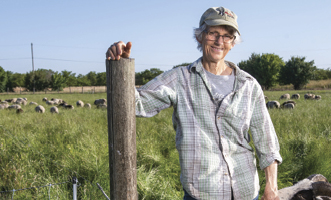
I have Jacob sheep, a rare breed that’s spotted and horned. I shear them at the end of January, so they’re about halfway through their wool growth. They look good. Oct. 1 is when I usually start breeding. I like to get back to what my regular flock size is. I had 91 lambs this spring, and I have to get back to 55, 60 sheep, so I have to sell either adults or lambs.
My sheep are on irrigated pasture most of the time. With the drought, we’ve been limited on water to some degree, so the pasture hasn’t been irrigated as well. I’m supplementing with alfalfa hay. It’s super expensive. I used to irrigate every three weeks, and this year it’s been every five or six weeks because of the limitations on water. We haven’t taken nearly as big a hit that other areas have on irrigation, but our pasture is kind of old, and our flood irrigation system is not what I’d like it to be. We were trying to see if we could get in on some of the grant money that’s available, working with the Natural Resources Conservation Service to upgrade our irrigation, but we didn’t get selected for this year.
I sell a lot of value-added products—fiber, yarn and things I weave from it. I’m doing a show in October at an artist co-op in Davis. I am calling it “Shades of Black and White” because my sheep are black and white. I’m also a vendor at Lambtown, a sheep and fiber festival in Dixon during the first weekend of October. We didn’t have it for a couple years because of the pandemic, but it’s back. It’s of interest to mostly people that are knitters, spinners, weavers, anybody that is interested in sheep or fiber. I have to get psyched up for that.





.svg.png)
