


From the Fields: Dick Peixoto


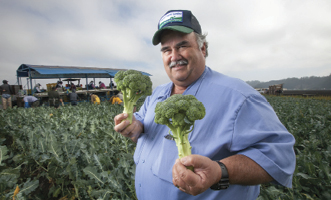
We have about 45 different items that are in production this time of year. We’re harvesting everything right now. All our production is in the Pajaro Valley. We’re also getting ready to plant down in the desert. In this area, we’re almost done planting for the year. We’ve still got to harvest until about Thanksgiving. It should be steady harvest from here till then.
Our biggest problem this year is labor. Every day we have problems getting enough labor to get all the harvesting and cultural practices done. We have a lot of our own labor, and we also have five different labor contractors that we use to try to cover the different jobs that we have.
The weather has been fairly mild this year, so that hasn’t been a problem. Other areas have water shortages, but we’re very fortunate. We have recycled water from the city of Watsonville. We’re short on the district water, but we can make it up with well water.
In this area, lettuce is probably our biggest crop. There’s a disease—impatiens necrotic spotted wilt virus—that’s attacking the crop. It’s spread by thrips that carry it from plant to plant. It’s a big problem for the lettuce farmers because when the virus gets into the plant, it kills the plant. We try to control the insects the best we can.
There’s also verticillium and fusarium, two diseases that affect us. Those also affect lettuce and some of the cauliflower in this area. They seem to be more prevalent in a lot of vegetables, whether organic or conventional. They’ve become more of a problem because they’re getting more established. For organic, we have crop rotations that can break the cycles of the diseases, so that helps.





.svg.png)
