


Researchers share latest advancements in dry beans
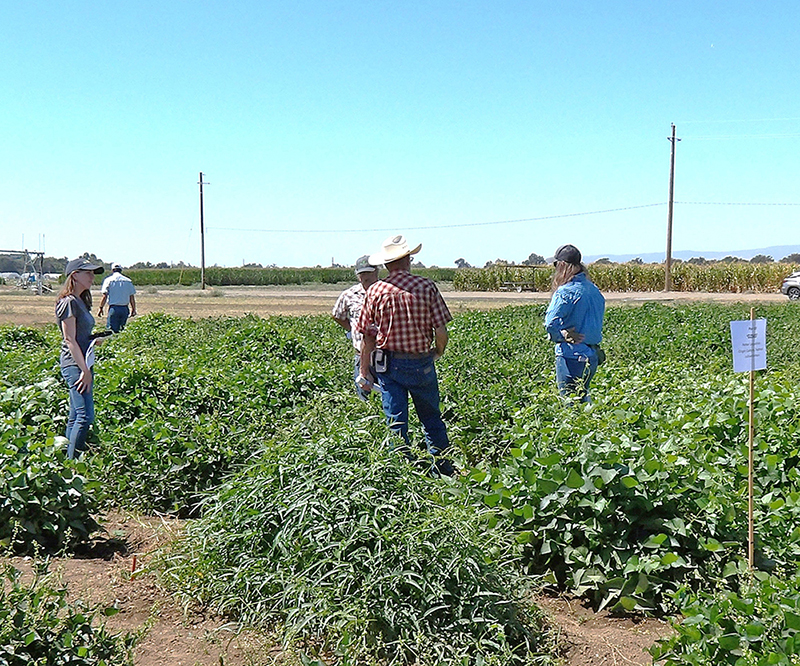
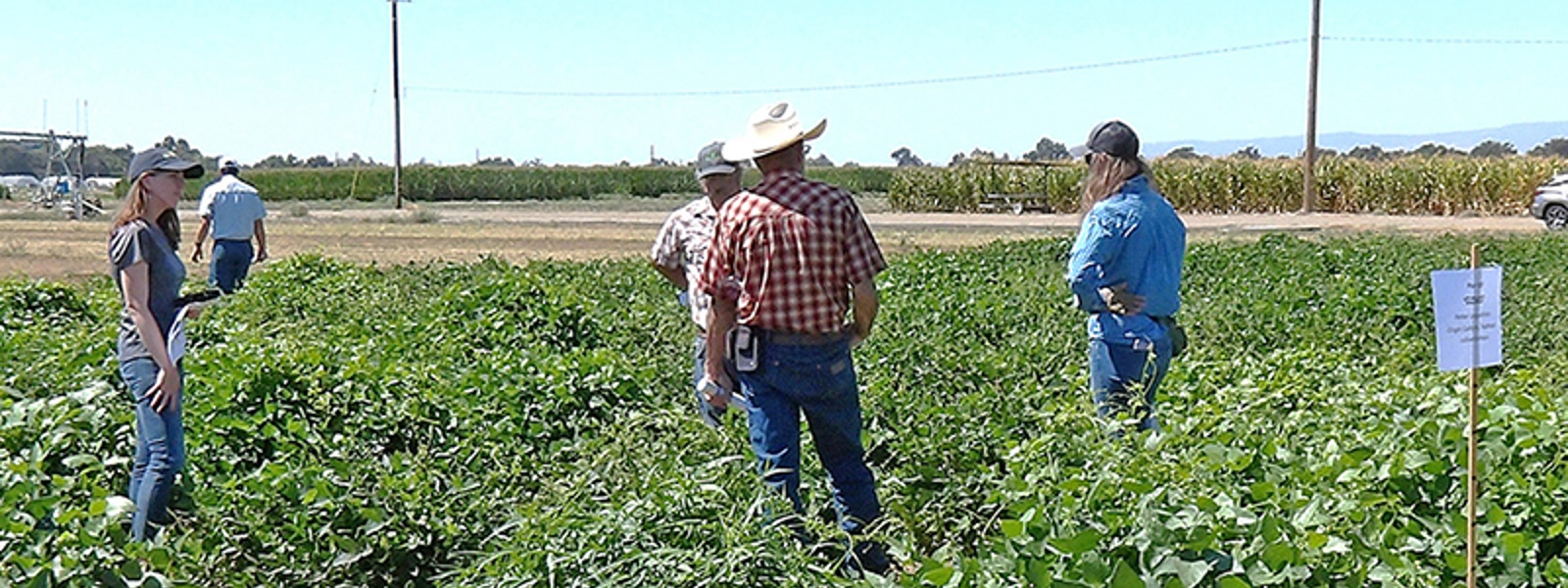
Christine Diepenbrock, left, assistant professor of plant sciences at the University of California, Davis, leads a group of attendees through a field plot during the annual Dry Bean Field Day in Davis.
Photo/Mark Billingsley


By Mark Billingsley
Phenome types, anti-lygus-bug advancements and soil nutrient density measurements are all part of the research that goes into producing one of California’s notable field crops. But it always comes down to this: Do people appreciate the look and taste of lima, black-eyed and garbanzo beans?
At the annual Dry Bean Field Day in August, University of California, Davis, researchers described advancements in breeding and upcoming consumer testing to determine preferences.
Consumer testing will be done in October and November, with focus groups to be organized in early 2026, UC Davis postdoctoral researcher Jaclyn Adaskaveg said during the early portion of the event. Adaskaveg presented the work she and others have been conducting to make dry beans more palatable and nutritious to consumers.
Photo/Mark Billingsley
Christine Diepenbrock, a UC Davis assistant professor of plant sciences and an organizer of the field day, said attendees expressed “a lot of excitement” about sensory consumer work being carried out by Jean-Xavier Guinard and Yukina Murata in UC Davis Food Science and Technology, in collaboration with her lab and a U.S. Department of Agriculture Specialty Crop Research Initiative project team.
“There has been consistent interest from both the research and production sides in food science as it pertains to lima beans, which is great news,” she said. “We have been getting into the nutritional aspects also, including through a collaboration with the USDA Agricultural Research Service.”
Research results Adaskaveg presented focused on aspects including cooking time, flavor and texture, and appearance.
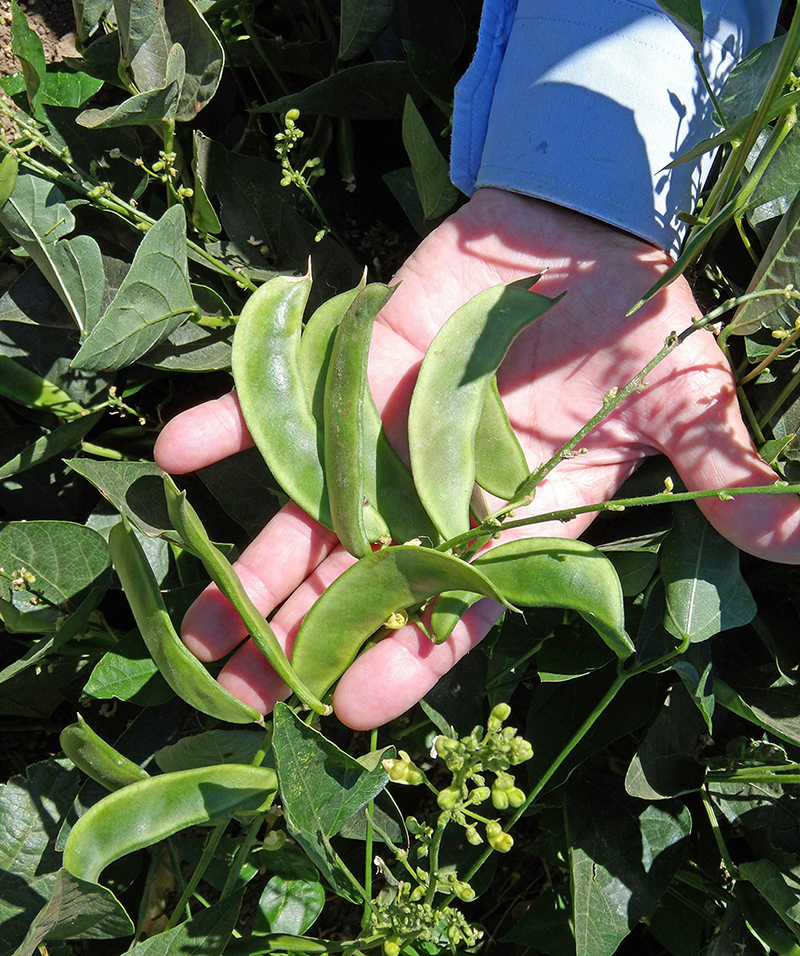
Large-seeded types of lima beans have stronger flavors than baby seeded, and white- and green-seeded limas have more sweet flavors compared to darker colored beans, which tend to be more bitter, the initial taste test among researchers showed.
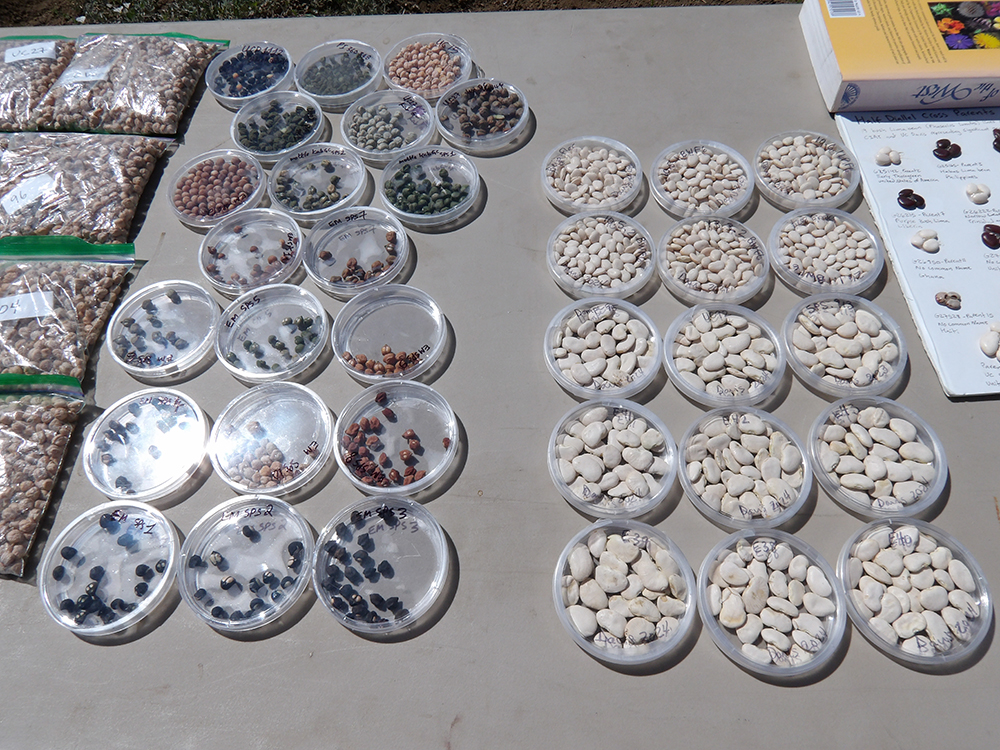
The morning was filled with discussions and presentations from 15 researchers. Approximately 15 growers attended the field day. Agenda items included research on adaptation traits, weed identification and management processes, common bean seed diversity, and drone and computer modeling hardware advances to monitor planted crops, as well as the lima bean consumer quality results.
“This event is a chance to get the growers’ thoughts on some of the next varietal candidates likely to come out of the breeding programs,” Diepenbrock said. “We’ve worked on making these events as hands-on and interactive and with as many display items and interesting things to view as possible. We try to make the most of the in-person opportunity, and we appreciate the attendees taking the time out of their busy schedules to make the trip.”
Photo/Mark Billingsley
Jim Wallace made the drive from Colusa to see and hear about the advances made in his lima bean cash crop. Wallace is the co-owner of Wallace Brothers Farms and Colusa Produce Corp., and a member of the California Dry Bean Advisory Board. He said he sees the value in the dry bean field days and makes the trip every time UC Davis holds one.
“Every important variety that we’re producing in California today came out of this program—Luna, Beija Flor, Dompe 93, Haskell, Black-eyed Type 50. All of these are UC varieties that were developed in this program,” said Wallace, who grows mostly baby limas and black-eyed beans.
“They’re improving our yields per acre, and that’s a really slow process,” he added. “But when you go all the way back to my father’s farm, he’d get 15 to 18 bags of limas, and that was acceptable. Today, we’re producing high 20s and low 30s, and that’s because of improved disease and pesticide resistance.”
Wallace said the improved pest resistance to lygus bugs in UC Luna, in particular, has improved sales. Processors don’t want to see a visual defect on the surface of the seed, so a lygus sting is unacceptable, he said.
“We used to have to toss all of that,” Wallace said. “But now (researchers) breed in this resistance, and we get a bush crop that grows short season, upright, is easy to harvest and has very good, white color. That’s all about breeding, and it’s all coming out of this university program.”
Earl Ranario, a graduate student studying biological systems engineering, is developing a motorized rover with cameras onboard to monitor crops and give data to researchers in the lab. He was on hand at the field day to show attendees what his group is working on.
“We can strap on a bunch of cameras. There’s one centered on the top and two on either side to give us computer vision analysis,” Ranario said of the rover that’s approximately the size of a washing machine. “We can count the number of flowers, build AI models to detect these pods and flowers, count them on single plots and scale them up to a full field. The rover and cameras account for genotype, and we give that data to plant breeders to do some selection of favorable traits.”
The biggest benefit, Ranario said, is efficiency. He said 10 student researchers took five hours to count two beds of beans, whereas the rover counted the entire field in four hours.
“That means more data, so better models and better interpretation of the data,” he said.
Mark Billingsley is a reporter in Carmichael. He can be reached at agalert@cfbf.com.
See related news stories...
• Farm makes heirloom, specialty vegetables its focus
• Chico State farm focuses on regenerative practices
• Fava beans add nitrogen, and pods can be sold fresh






.svg.png)
